A Collaborative Effort for Ash in the Northeast

October 20, 2023

Written by Maggie Mansfield

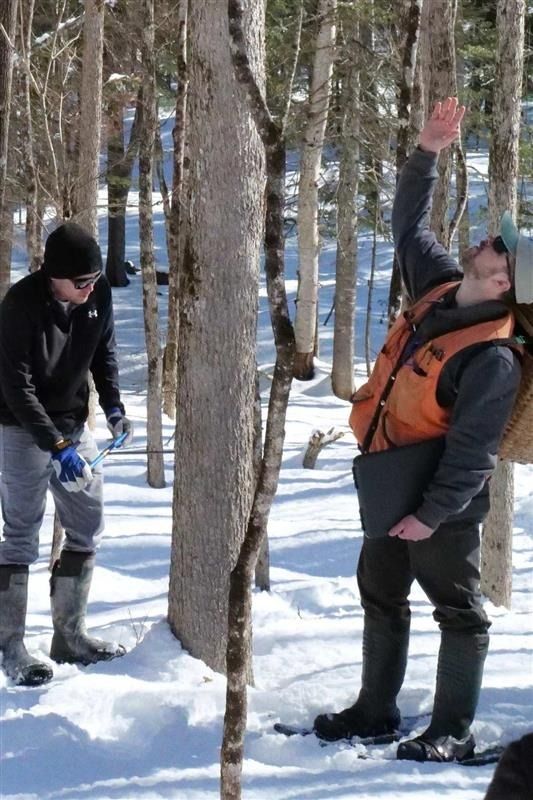
Tyler Everett and Tom Newell demonstrate the traits of basket quality black ash

The Forest Stewards Guild has been awarded a project under the USDA Forest Service Landscape-scale Restoration program to sustain ash across the Northeast in the face of emerald ash borer (EAB). As forestry and natural resource professionals, we periodically find ourselves watching in horror as some new pest or disease sweeps through our forests, overturning past practices, complicating plans, and breaking our hearts. So it has been with EAB, now causing widespread ash mortality as it spreads across the Northeast. Addressing such a destructive force requires innovative thinking, regional partnership, and complex problem solving. 

The Guild is honored to collaborate with Tribal partners from Akwesasne and Wabanakik, as well as dedicated individuals and organizations in New York, Massachusetts, Vermont, and Maine working to preserve ash for future generations. USDA Forest Service funding will be used to coordinate and ensure knowledge sharing across the Northeast, establish demonstration areas, create and distribute outreach materials, and host workshops and events for foresters and land managers to learn about and test emerging approaches for addressing EAB in ash stands. 

Black ash (called brown ash in Maine) is a revered species to Indigenous communities of the Northeast, central to basketmaking, oral traditions, ceremonies, and legends. This project will elevate Indigenous voices and priorities to people within the forestry community whose decisions will determine the fate of Northeastern forests. In doing so, we hope to both preserve ash across the landscape and support Indigenous communities that have been burdened with the cultural and societal impacts of colonization over the centuries. 

Though this project is only just launching, Guild staff are already involved in efforts to maintain ash within Northeastern forests. The success of this work depends on partnerships developed over years of collaboration, and in particular cross-cultural relationships between Indigenous and non-Indigenous individuals and groups. In preparation for deepening this work, Guild staff have strengthened existing and built new partnerships with Tribal researchers and natural resource professionals, state agencies, academics, non-profits, and others across the region. 

Amanda Mahaffey, Deputy Director, has participated in Maine’s Brown Ash Task Force, a group that formed decades ago when the Maine Indian Basketmakers Alliance approached researchers at the University of Maine to help investigate a general decline in black ash health. With other Guild members and collaborators, Amanda has contributed to two recent peer-review articles (Species Preservation in the Face of Novel Threats: Cultural, Ecological, and Operational Considerations for Preserving Tree Species in the Context of Non-Indigenous insects and Pathogens and Towards Tree Species Preservation: Protecting Ash Amidst the Emerald Ash Borer Invasion in the Northeast) and a brand-new outreach publication (Managing Northeastern Forests Threatened by Emerald Ash Borer) outlining the opportunities to alter the trajectory of EAB’s impacts. These publications add to the 2019 workshops and 2020 publications developed with Vermont partners (For Foresters: Ten Recommendations for Managing Ash and For Landowners: 10 Recommendations to Help You Manage Ash in Your Woods).   

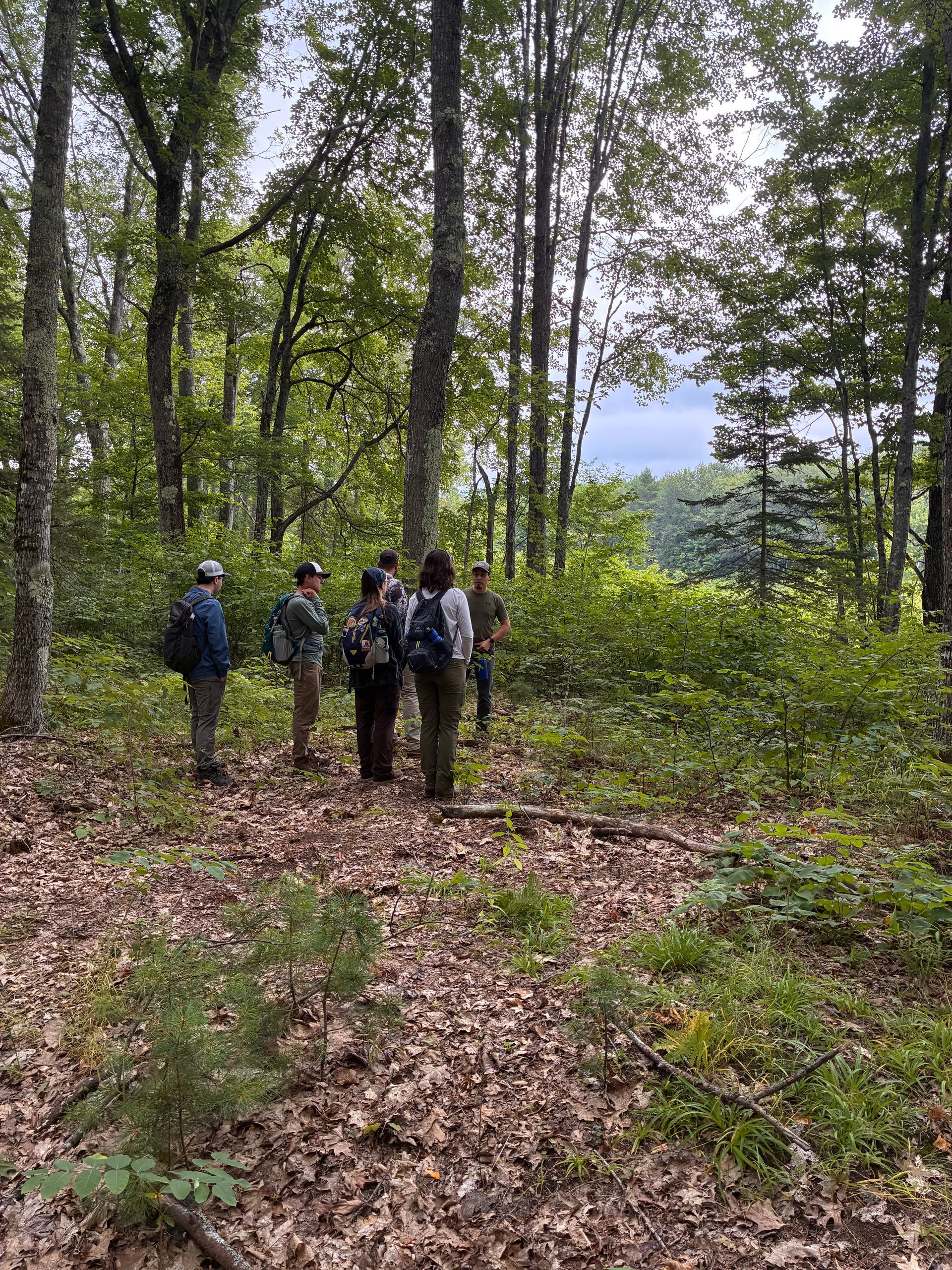
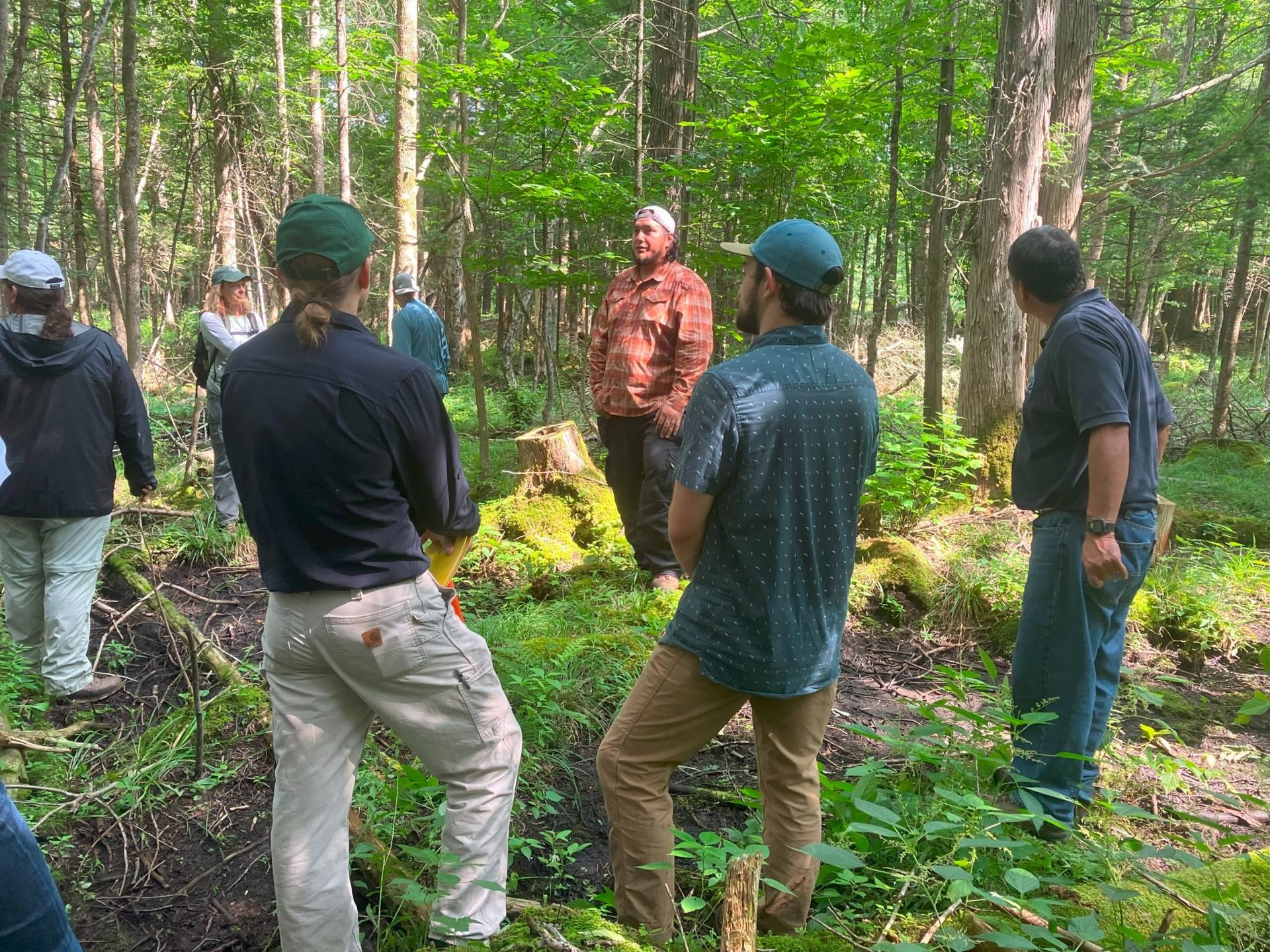
Basket makers, Tribal and non-Tribal natural resource managers, and researchers discuss black ash silviculture

In July 2023, Maggie Mansfield, Northeast Region Manager, attended the Basket Makers Ash Resource Gathering hosted by the Mohawk St. Regis Tribe in Akwesasne. Over several days, basket makers, Tribal natural resource managers, and a wide range of professionals working to preserve ash shared knowledge, grief, and hope for this culturally significant tree species. Attendees built connections and relationships, shared strategies for navigating the ecological and societal aspects of ash and EAB management, and planned for the continued spread of EAB. In March 2023, Amanda and Maggie facilitated a panel elevating Tribal perspectives on managing ash in the face of EAB at the Northeastern Forest Pest Council meeting in Lake George, NY. 

Northeastern forests and their inhabitants have lived through, and learned from, the near total loss of several tree species in the past century. Though the stories of American chestnut, American elm, and the extensive ash mortality seen across the Midwest present a chilling preview of one potential future, it is still possible to take actions that will maintain ash within our forests. This project, built on learning from other regions, informed by local research, and guided by Tribal perspectives, aims to re-write the story for ash species while there is still time. Over the next three years, we look forward to sharing more about ash, its management, and project outcomes with you. 

To learn more about the Guild’s work in sustaining Northeast ash, contact Maggie at maggie@forestguild.org

Recent Posts

By Aidan Juhl April 16, 2026
Written by Colleen Robinson
April 14, 2026
Written by Shannon Maes
April 14, 2026
In September 2025, the Guild launched a three-person Forest Stewards Apprenticeship (FSA) crew to work with the Penobscot Nation’s Department of Natural Resources (PN DNR). Over the course of their six-month season, apprentices Agenor Duhon, Gabe Stewart, and Jacob Baker shared a season of learning, collaboration, and hands-on stewardship of Penobscot Tribal lands.
April 14, 2026
This week, I stepped into the role of crew leader. We worked a full 40-hour week, splitting our time between Clifton Farms and a prescribed burn operation. On the first day in the field, we completed hack-and-squirt treatments on trees that had been marked the previous week. For the remainder of the week, we focused on marking trees for future hack-and-squirt work, maintaining a steady pace and ensuring accuracy in our selections.
April 7, 2026
As Guild members, our practice is fundamentally grounded in field observation. We know intuitively that forests are dynamic, living communities. Yet, for decades, the high-level systems used to value our work, specifically the carbon accounting ledgers tied to international frameworks like the Paris Agreement, have treated forests as static, quantifiable blocks of land. In a recent commentary published in One Earth, I argue that these legacy measurement, reporting, and verification (MRV) frameworks are failing. Ledger accounting relies on crude land-use delineations and outdated technology, effectively penalizing the natural, seasonal flux of the ecosystems we manage every day. By forcing landscapes into rigid “forest” versus “non-forest” binaries, such legacy systems miss the complex reality on the ground. But a major shift is underway.
March 18, 2026
Women have always been a part of forestry. Historically, women often helped guide family decisions about when to cut, which trees to save, and how best to steward their land for the next generation. Historical accounts from the Southern Appalachians describe women’s roles in decisions about timber harvesting and prioritizing long-term forest health. These often-uncredited contributions are even reflected in Aldo Leopold’s A Sand County Almanac (1949), in which describes his stewardship philosophy informed not only by his professional experience, but by shared responsibility, where the perspectives of his wife and daughters played an important role.
March 18, 2026
Although rural regions often host the highest concentrations of public and private forest land, they typically lack the sustainable workforce necessary for active management and stewardship. How do we address this foundational problem in forest conservation?
March 18, 2026
The Forest Stewards Guild has a unique dual mandate: practice and promote forest stewardship. Personally, I think the combination of practicing forest management and promoting best practices is what makes the Guild a vibrant and impactful organization.
February 17, 2026
We celebrate the remarkable career and legacy of Leslie (Les) Benedict, who has provided visionary leadership and dedicated service to the stewardship of forests, championing the preservation of the ecological and culturally important black ash. Benedict, a member of the Saint Regis Mohawk Tribe in Akwesasne, north of the Adirondacks in upstate New York, recently retired after serving as the Assistant Director of the Tribe’s Environment Division for over 35 years.
February 17, 2026
The Forest Stewards Guild has been working to support the National Park Service on forest stewardship projects throughout the eastern U.S. This month we are in the midst of a project to protect mounds at Effigy Mounds National Monument near Harpers Ferry Iowa. This site was designated as a National Monument in 1949 and preserves over 200 mounds built between 800 and 2,500 years ago. Mounds at this site include conical, linear, compound, and effigy mounds – constructed in the shape of animals. Please see the National Park Service page for more information about the mounds, the people who built them, and how to visit the site. The lidar images on that website of the Marching Bears and other mound groups are fascinating.
Show More