Carbon Markets Made Accessible to Family Forest Owners

October 20, 2023

Written by Josh Fain, LandYield 

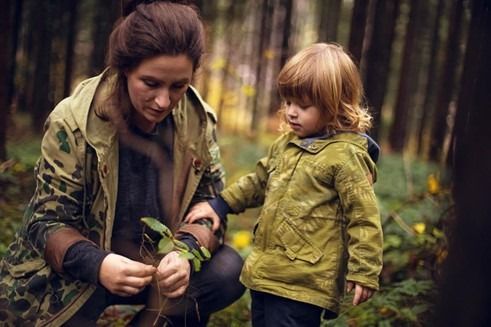
Photo of woman and child in the woods looking at a leaf

Editors note: Josh Fain is a Guild member who has been working on forest carbon for years. He shared a project in the PNW in 2020 (Unlocking Carbon Markets for Family Forest Owners in the Pacific Northwest) and discusses a new program below.  

Family forest owners collectively manage one-third of all forests in the United States. With such a significant footprint, these landowners hold immense potential for making meaningful strides in carbon reduction and addressing climate change. Studies have made clear the important role forests and climate smart forestry practices like extending harvest rotations have to play in capturing and storing carbon and mitigating the effects of greenhouse gas emissions on the climate. 

However, carbon markets have not been accessible to family forest owners in the past due to a number of factors, including the high cost of project development and monitoring, the low price of carbon, and the long-term contracts required for participation. 

As our Position Statement on Forest Carbon Offset Credits highlights, “Forests have tremendous potential to mitigate climate change.” The Guild Position Statement also recognizes the complexity of carbon offset programs and notes that “only carbon offset credits that assure additionality and permanence, and can be independently verified as doing so, can facilitate achieving the full climate mitigation potential of well-managed forests.”

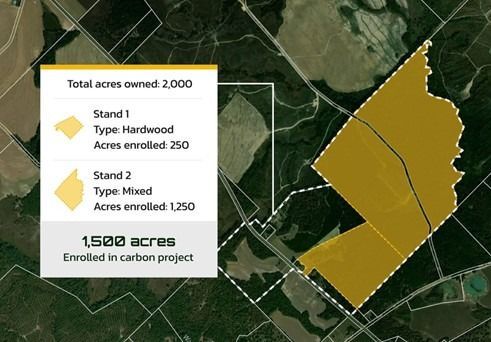
Photo of LandYield’s easy online mapping tool

Introducing the LandYield carbon program 

LandYield is a new program that is changing the landscape of the carbon market by making it accessible to family forest owners with between 40 and 5,000 acres. By utilizing the latest in high-resolution satellite imagery combined with ground data from the U.S. Forest Service to streamline and accelerate the mapping and monitoring of forest carbon, LandYield effectively eliminates the previously prohibitive costs of participation for landowners while issuing high-integrity offsets by adhering to rigorous American Carbon Registry standards. 

LandYield’s program also offers a number of other benefits to family forest owners, including: 

  • Flexible participation: Landowners can choose to enroll only the acres they want and have the flexibility to continue using their land for other purposes, such as recreation and hunting. 
  • Guaranteed revenue: Landowners receive quarterly payments for up to 20 years for the carbon their forests sequester. 
  • Expert support: LandYield’s team of forestry and carbon experts manages all monitoring and reporting requirements, so landowners can focus on enjoying their forests. 

Benefits of Carbon Projects for Family Forest Owners 

Family forest owners express values that make them particularly well-suited for carbon projects. They often prioritize preserving recreational opportunities, wildlife habitats, the beauty of the land and family legacy when making forest management decisions. In addition to the financial benefits of participating in a carbon program, there are several other environmental benefits for family forest owners, including improved biodiversity, water and soil quality, and the improved aesthetics of an older forest. Revenue from carbon programs like LandYield can also help alleviate pressure on family forest owners to sell or develop their land, helping ensure their environmental legacy for future generations. 

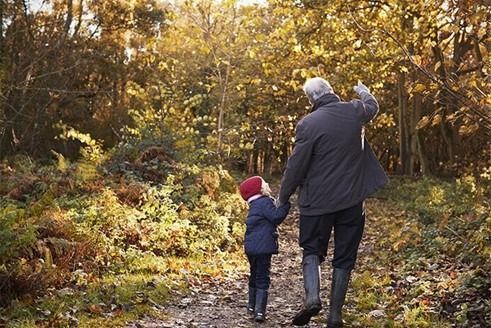
Photo of adult and child walking in the woods

How to Get Involved 

If you are interested in learning more about carbon programs, there are a few things you can do: 

  • Visit the LandYield website (https://landyield.com/) to learn more about the program, get a free revenue estimate and contact the team with any questions. 
  • Visit Penn State Extension Forest Owner Carbon and Climate Education website for a list of resources: FOCCE | Resources (psu.edu) 
  • Use the resources available on the Forest Stewards Guild website and look out for upcoming webinars about forest carbon programs: https://foreststewardsguild.org/?s=carbon 

In the crucial years ahead, carbon-smart forest management can make a substantial difference for our climate and communities. 

Recent Posts

By Aidan Juhl April 16, 2026
Written by Colleen Robinson
April 14, 2026
Written by Shannon Maes
April 14, 2026
In September 2025, the Guild launched a three-person Forest Stewards Apprenticeship (FSA) crew to work with the Penobscot Nation’s Department of Natural Resources (PN DNR). Over the course of their six-month season, apprentices Agenor Duhon, Gabe Stewart, and Jacob Baker shared a season of learning, collaboration, and hands-on stewardship of Penobscot Tribal lands.
April 14, 2026
This week, I stepped into the role of crew leader. We worked a full 40-hour week, splitting our time between Clifton Farms and a prescribed burn operation. On the first day in the field, we completed hack-and-squirt treatments on trees that had been marked the previous week. For the remainder of the week, we focused on marking trees for future hack-and-squirt work, maintaining a steady pace and ensuring accuracy in our selections.
April 7, 2026
As Guild members, our practice is fundamentally grounded in field observation. We know intuitively that forests are dynamic, living communities. Yet, for decades, the high-level systems used to value our work, specifically the carbon accounting ledgers tied to international frameworks like the Paris Agreement, have treated forests as static, quantifiable blocks of land. In a recent commentary published in One Earth, I argue that these legacy measurement, reporting, and verification (MRV) frameworks are failing. Ledger accounting relies on crude land-use delineations and outdated technology, effectively penalizing the natural, seasonal flux of the ecosystems we manage every day. By forcing landscapes into rigid “forest” versus “non-forest” binaries, such legacy systems miss the complex reality on the ground. But a major shift is underway.
March 18, 2026
Women have always been a part of forestry. Historically, women often helped guide family decisions about when to cut, which trees to save, and how best to steward their land for the next generation. Historical accounts from the Southern Appalachians describe women’s roles in decisions about timber harvesting and prioritizing long-term forest health. These often-uncredited contributions are even reflected in Aldo Leopold’s A Sand County Almanac (1949), in which describes his stewardship philosophy informed not only by his professional experience, but by shared responsibility, where the perspectives of his wife and daughters played an important role.
March 18, 2026
Although rural regions often host the highest concentrations of public and private forest land, they typically lack the sustainable workforce necessary for active management and stewardship. How do we address this foundational problem in forest conservation?
March 18, 2026
The Forest Stewards Guild has a unique dual mandate: practice and promote forest stewardship. Personally, I think the combination of practicing forest management and promoting best practices is what makes the Guild a vibrant and impactful organization.
February 17, 2026
We celebrate the remarkable career and legacy of Leslie (Les) Benedict, who has provided visionary leadership and dedicated service to the stewardship of forests, championing the preservation of the ecological and culturally important black ash. Benedict, a member of the Saint Regis Mohawk Tribe in Akwesasne, north of the Adirondacks in upstate New York, recently retired after serving as the Assistant Director of the Tribe’s Environment Division for over 35 years.
February 17, 2026
The Forest Stewards Guild has been working to support the National Park Service on forest stewardship projects throughout the eastern U.S. This month we are in the midst of a project to protect mounds at Effigy Mounds National Monument near Harpers Ferry Iowa. This site was designated as a National Monument in 1949 and preserves over 200 mounds built between 800 and 2,500 years ago. Mounds at this site include conical, linear, compound, and effigy mounds – constructed in the shape of animals. Please see the National Park Service page for more information about the mounds, the people who built them, and how to visit the site. The lidar images on that website of the Marching Bears and other mound groups are fascinating.
Show More