USFWS Umbagog Interns Articles

October 9, 2026

 The Paper Birch: A Central Character in the Story of Ecological Succession 

Written by Ann Kovach 

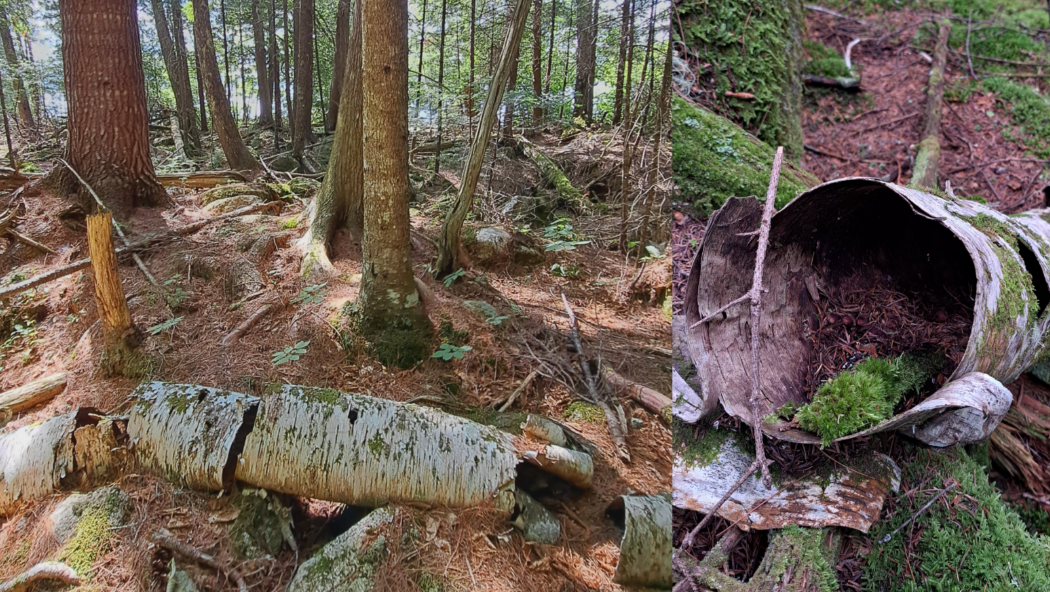
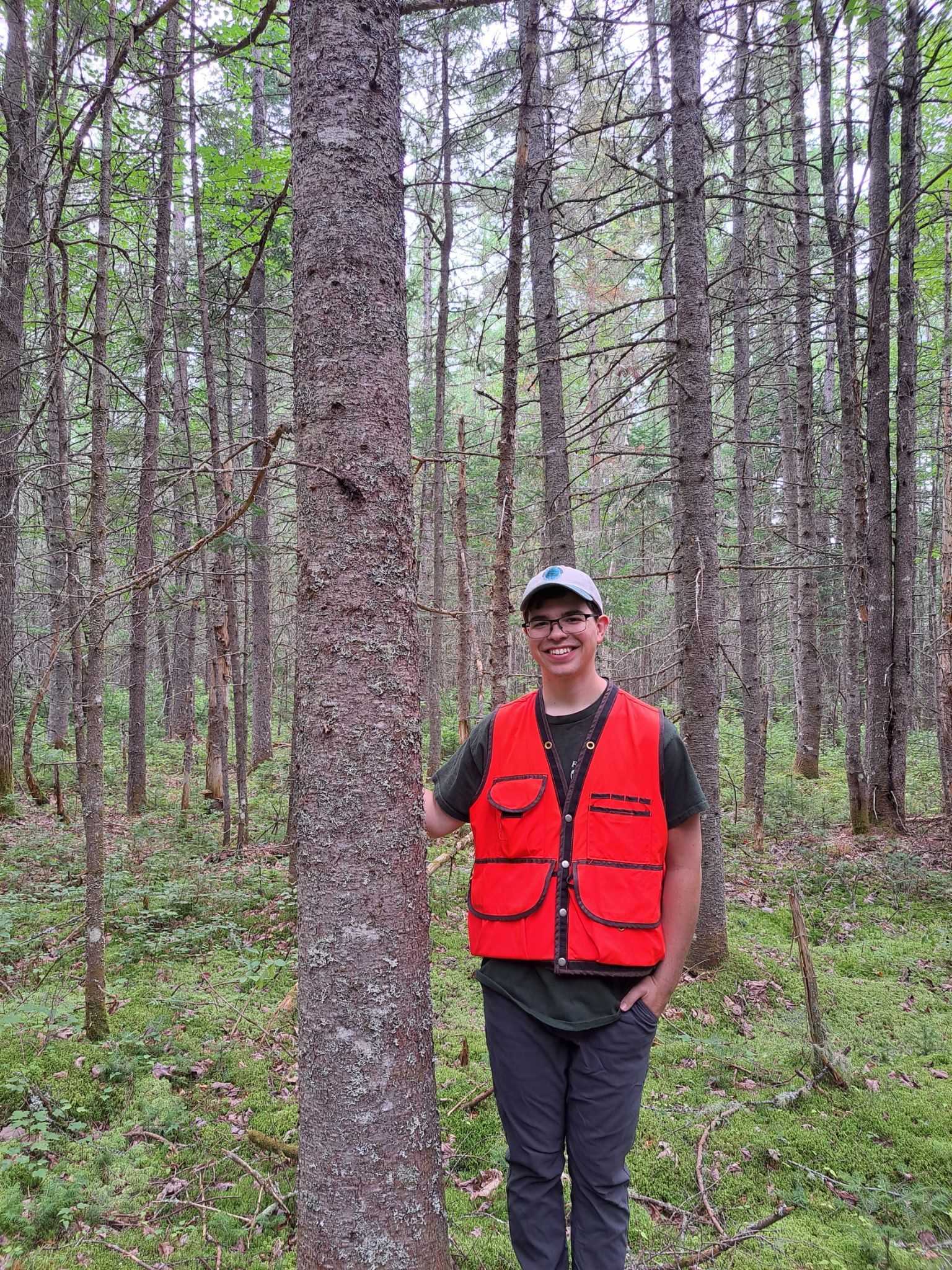
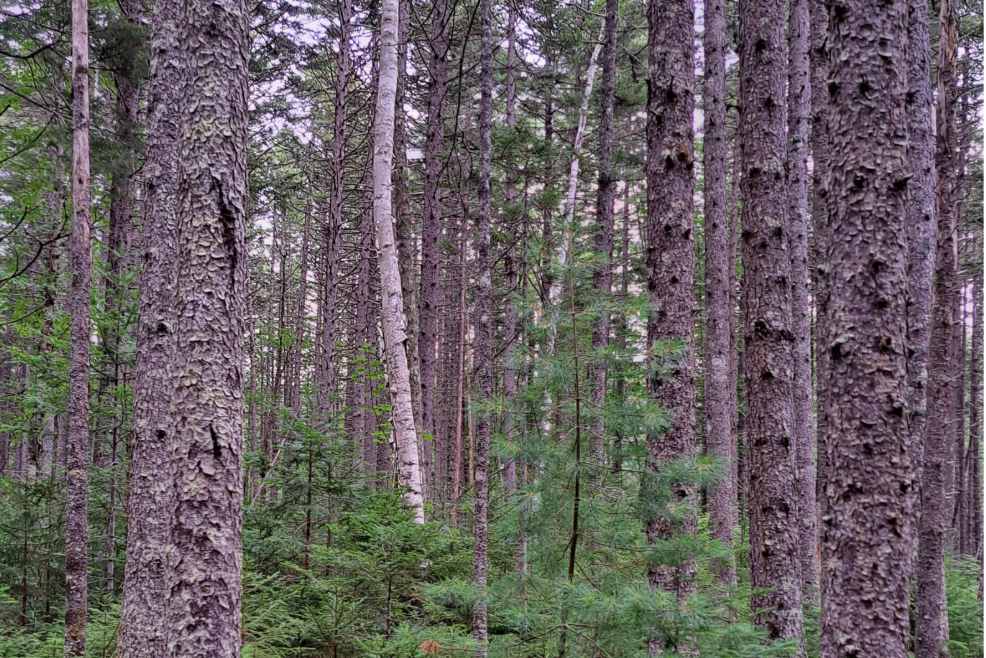
As my crewmate and I approach one of the long-term monitoring plots we have been tasked with establishing for a study on forest response to disturbances, I take in my surroundings. The ground is softened by a blanket of sphagnum moss, woodsorrel, and goldthread. Above us red spruce and balsam fir trees tower, some with dead branches adorned with old man’s beard lichen. This plot is situated in a spruce-fir forest—one of the many forest types found in the Umbagog National Wildlife Refuge, which sits in the transition zone between deciduous and boreal forests in northern New Hampshire and western Maine. I notice a tree with strikingly white bark peeling off in wide sheets dotted among the conifers. The fact that this paper birch stands out amongst its coniferous neighbors is one clue that suggests the forest is in a later stage of ecological succession. 


Paper birch (Betula papyrifera) belongs to the Betulaceae, or ‘birch’, family and is native to the more northern latitudes of North America. Its leaves are doubly serrated and arranged alternately on slender twigs. The trunk’s bark is dotted with conspicuous lenticels, pores that facilitate gas exchange. These pores elongate with age, resulting in the characteristic shredding, peeling, and furrowing of the bark. 


Paper birch is a pioneer species because it is one of the first trees to colonize an open area after a disturbance such as a wildfire or clearcutting and is well-adapted for harsh environments that other species cannot withstand. Paper birch can endure exposure to direct sunlight because its white bark is reflective, a characteristic that helps it grow quickly without overheating in areas with little shade. Additionally, the seeds of paper birch are lightweight and winged, allowing them to travel from undisturbed forest to barren land. 


Pioneer species kickstart ecological succession by improving environmental conditions so that less hardy plants can colonize the disturbed area. For instance, leaf litter decomposes quickly under birch trees, enriching the soil with high concentrations of minerals such as calcium, potassium, and phosphorus that can be used by other species. During early-succession, shrubs such as common bearberry, blueberries, and raspberries crowd the understory beneath a sparse canopy of paper birch, big-toothed aspen, and quaking aspen. Most of the trees begin germinating around the same time, which forms an even-aged stand.  
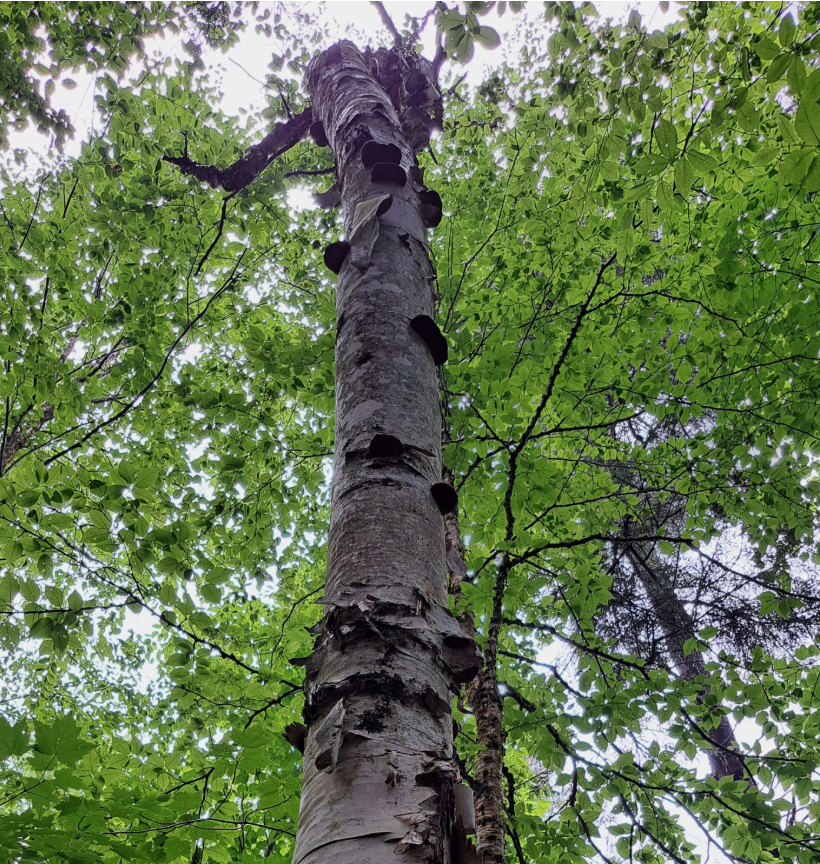
Yellow birch, red maple, and white pine replace the previously established community during mid-succession as the seedlings of paper birch and other early-successional trees fail to compete with these more shade-tolerant species. A lack of direct sunlight also restricts what can grow in the understory and leads to a reduced shrub layer. As the first cohort of paper birch trees weaken due to old age and competition, they stop expending resources to produce an antimicrobial chemical known as betulin and commonly succumb to fungal infections. However, the story of ecological succession continues without paper birch.  


Eventually, the mid-successional community is replaced with shade-loving trees that dominate a late-successional canopy, including sugar maple, American beech, and eastern hemlock. The age diversity of a stand increases during this stage of succession; as older trees die and leave behind canopy gaps, the reintroduction of sunlight to the forest floor facilitates the flourishing of younger trees and the return of a denser understory. At this point, live paper birches are only sparsely present in these gaps.  


A forest community will eventually reach a climactic state where the composition of species present remains fairly stable. In the northeastern United States, a climax forest may be dominated by the red spruce and balsam firs found in many of our long-term monitoring plots in Umbagog. However, forests are dynamic, and the process of ecological succession will start from the beginning with the establishment of pioneer species after another disturbance. 

One attribute we studied in our long-term monitoring plots this summer was the presence of characteristics that make these forests valuable for wildlife. While a forest undergoes many changes as ecological succession occurs, it is beneficial to wildlife at all stages. For example, the opened, shrubby areas of an early-successional forest are important for American woodcocks and ruffed grouse. American woodcocks complete mating rituals in clearings with few trees and build nests underneath the dense understory of young hardwood forests. Thickets of shrub are essential for New England cottontail rabbits to avoid predators, while berry bushes in early-successional habitat provide an important food source for black bears. Paper birch trees themselves provide many benefits for wildlife: snowshoe hares and beavers browse their seedlings, moose and white-tailed deer munch the twigs, many birds eat the buds and seeds, and yellow-bellied sapsuckers drill lines of holes into the bark to extract sap. 


As the forest transitions to a late-successional stage, structural complexity is introduced through downed wood, standing snags, and increasing age class diversity. Dead wood provides important habitat for insects, fungi, lichen, and mosses as well as cavities for nesting animals. Many bird species are reliant on the structural complexity provided by these forests. The brown creeper, for example, hunts for insects that live within the bark of old trees. Paper birch can make up a substantial portion of the dead wood in a late-successional forest, especially since its bark is highly resistant to decay.  


As my season as a Forest Monitoring Technician in the Refuge Stewardship Partnership with the Guild and U.S. Fish & Wildlife Service comes to a close, I reflect on what the paper birches of Umbagog have taught me about ecological succession. I look forward to many more summers of encountering this iconic tree while hiking and studying the dynamic forests of the Great North Woods. Whether as a resilient pioneer in disturbed areas, a white beacon poised among the spruces, a towering snag teeming with fungal life, or a coiled scroll of bark on the forest floor, the presence (or absence) of this central character will continue to provide insights into the evolving stories of the woodlands I explore. 

What Plot 10 Revealed About Life Under a Canopy Gap 

Written by Aidan Eckles

I throw my arms up in despair as I look down at the unidentifiable seedling, barely more than two inches tall. I call my crewmate, Anna, over for a second opinion. As we study the small, wrinkled leaves, she notes having similar seedlings in her quadrant of our nested, 12-foot regeneration plot. As we puzzle these seedlings, we notice the obvious thing about plot 10: the break in the tree canopy in this otherwise densely forested part of Umbagog National Wildlife Refuge. Data collection has only just begun under this gap, and I am already noticing differences between here and other long term monitoring plots I have worked on in the Northern New Hampshire and Western Maine Woods encircling Lake Umbagog. 


Anna and I work in 12, 24, and 58.9-foot circles to install long-term monitoring plots and collect baseline forest health data. This is our second week as Forest Monitoring Technicians and we have settled into a routine, moving through six Standard Operating Procedures in a detailed protocol designed to capture snapshots of the Northern Forest as it responds to changes in precipitation and temperature, introduced plants and insects, timber harvests, tree plantings, and other human and environmental impacts over time. 


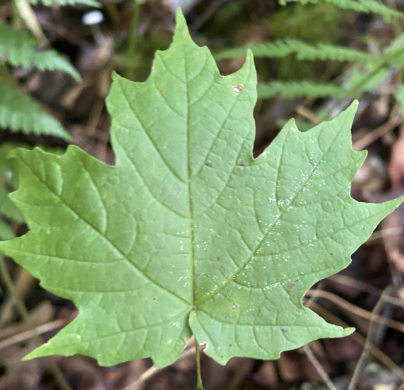
Plot 10 has 80 sugar maple seedlings, all between two and six inches. Sugar maple leaves are identifiable by having 5 main lobes without any serrations. They can be differentiated from other common maple species in the Northeast by looking for a smooth “U” shape between lobes as opposed to a “V” shape. This is a pattern I have become familiar with through my coursework and projects in the University of Maine’s Forestry Program. At the end of August, I will begin my third year, just days after completing my role as a long-term forest monitoring technician with the Refuge Stewardship Partnership project, a collaboration between the Forest Stewards Guild and the U.S. Fish and Wildlife Service. 


Plot 10 has very few trees, and sparse canopy cover, possibly due to a blowdown. Umbagog’s Refuge biologist, Sean Flint, has shown us similar gaps in other areas that resulted from a severe storm in 2018, which may have affected this plot as well. There is little midstory competition in Plot 10, with no saplings to record and very few seedlings taller than one foot. As a result, the sugar maples in this plot receive much more sunlight than they would under a denser canopy. 

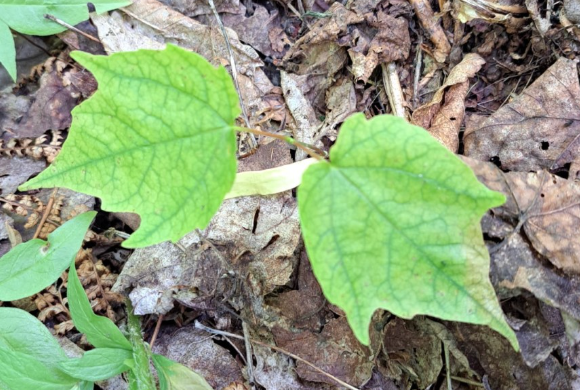
The maple seedlings I am measuring here look like no sugar maples that I have ever seen. Some are so mishappened they have entirely lost their characteristic lobes and are almost unidentifiable. Almost all of these seedlings are yellowish or discolored. Due to the unique location of this plot, I immediately begin to wonder if the high levels of sunlight these seedlings are receiving is changing the shape of the leaves. 


While light is necessary for plants to conduct photosynthesis, there can be such a thing as too much light. Plants can only process a certain amount of light energy, until it reaches what is called the light saturation point. From that point, additional light provides no extra benefit, but it does come with a cost. In order to perform photosynthesis, plants need to take in carbon dioxide through little holes in their leaves, called stomata. While this is happening, plants are losing water through those stomata. The more light there is, the more water loss the seedlings suffer. 


According to the US Forest Service, in a 5-year study, sugar maple seedlings in 65% shade grew taller than seedlings exposed to different amounts of shade. This study found that as shade greatly increased or decreased, heights were reduced. The study also found that the seedlings needed much more water to survive when exposed to more than 55% sunlight (Godman et al., 1990). 


This makes sense, because sugar maples are well adapted for advance regeneration instead of early successional growth. Advance regeneration is when a tree develops in the understory until it senses a gap in the canopy. The tree is then poised to take over as the dominant tree in an area. Surviving at low light levels helps the sugar maple take advantage when canopy gaps appear. 


Not all sugar maple seedlings survive to maturity. Less than half make it through their first year after germination, and many more will die within the first ten years. Studies show that naturally regenerating seedlings need shade until they reach around 2-4 feet tall. When they are overexposed to sunlight, they may show signs of stress such as leaf bleaching, where leaves turn yellow, white, or brown; changes in leaf shape, including curling or reduced surface area; and stunted growth (BiologyInsights Team, 2026). These are all symptoms that I notice in the seedlings under the canopy gap in plot 10. 

For me, one of the greatest rewards of fieldwork is noticing the small pieces, patterns, and processes unfolding in the forest, then finding research that helps bring those observations into focus. 


References: 

BiologyInsights Team. (2026, January 21). Can Seedlings Get Too Much Light? - Biology Insights. Biology Insights. https://biologyinsights.com/can-seedlings-get-too-much-light/ 

Godman, R., Yawney, H., & Tubbs, C. (1990, December 1). Sugar Maple. Silvics of North America; USDA. https://research.fs.usda.gov/silvics/sugar-maple 


Aidan Eckles is a Forestry and Parks, Recreation, and Tourism student at the University of Maine, Class of ’28. When he isn’t studying or measuring tree diameters, he can often be found exploring niche musical genres, especially those featuring bagpipes. As a Forest Monitoring Technician, he enjoyed spending the summer deepening his knowledge of forests and collecting data that will support research for years to come.

Recent Posts

September 17, 2026
Written by Eytan Krasilovsky 
September 14, 2026
Written by Mackenzie Alexander and Eytan Krasilovsky
September 14, 2026
The Fight to Keep Beech on the Landscape
August 27, 2026
Written by Nora Sappier
August 24, 2026
Written by Kat Smallwood
August 18, 2026
Written by Lilly Roehrig
August 18, 2026
Written by Ami Kane, Chief Development Officer
Show More