North Carolina Learning Exchange: Shared Stewardship

September 14, 2026

Written by Mackenzie Alexander and Eytan Krasilovsky

Recovery in Action through Agreements

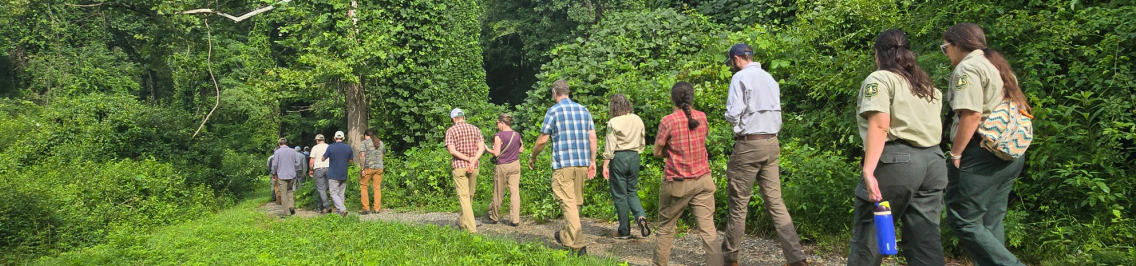
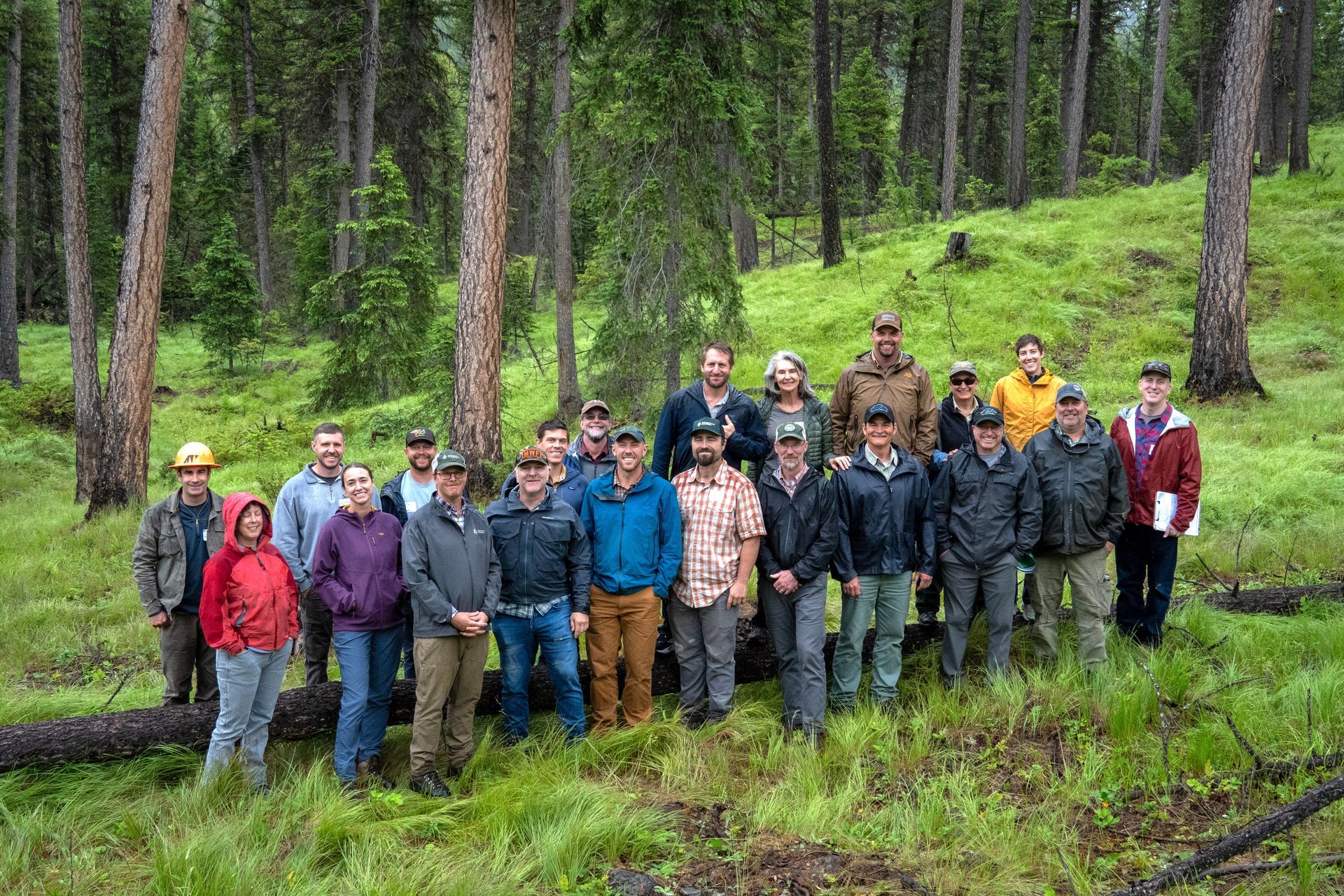
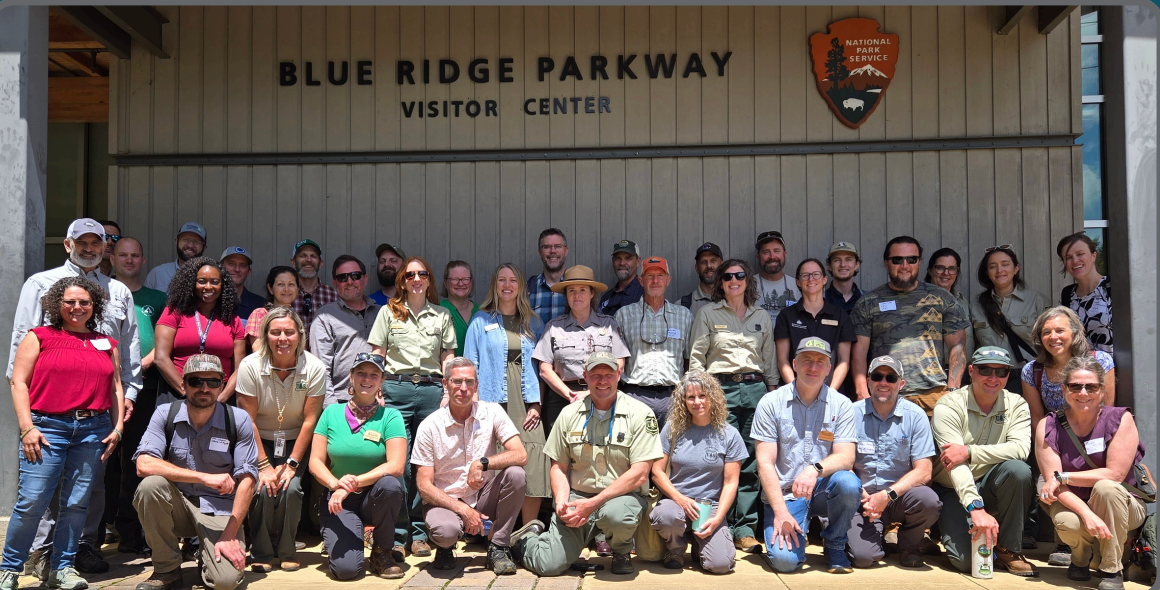
In July 2026, more than 40 people representing 21 agencies, businesses, tribes, and nonprofits came together for a peer exchange field visit to several locations on the Pisgah National Forest in western North Carolina. The group discussed how the state-federal shared stewardship framework was being used in the disaster recovery context.


On September 27 , 2024 Hurricane Helene was an unprecedented inland tropical storm that devastated Appalachia with flooding that inundated infrastructure, businesses, and residential communities. Most tragic was the unprecedented loss of over 250 lives, the impacts of which are still reverberating through the impacted communities. Some areas received over 30 inches of rainfall which led to a record 25-27 ft rise in the water levels of the rivers down in the valleys overnight. This rapid increase in water levels led to massive landslides and were paired with record high winds that caused extreme blowdown throughout the forests. Over 800,000 acres of forest were lost which was estimated to have $213 million in timber value.


The group visited 4 sites to gain a deeper understanding of how the updated Shared Stewardship Agreement was swiftly used, along with a suite of other agreements and mechanisms, to both address immediate post-disaster issues as well as undertake the first steps towards landscape and community recovery.
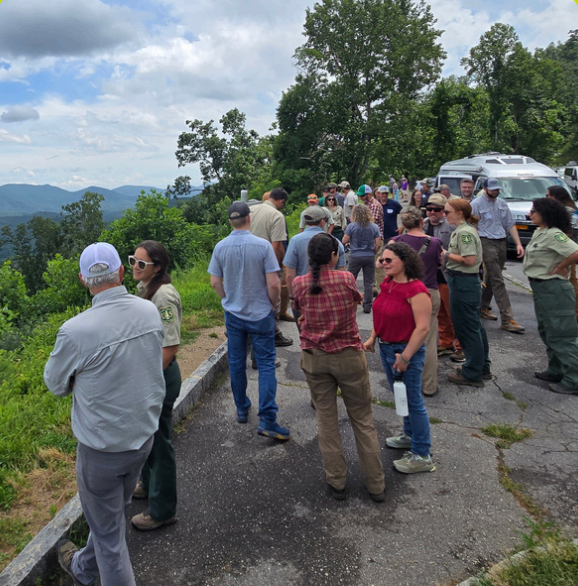
Site Visited Included:

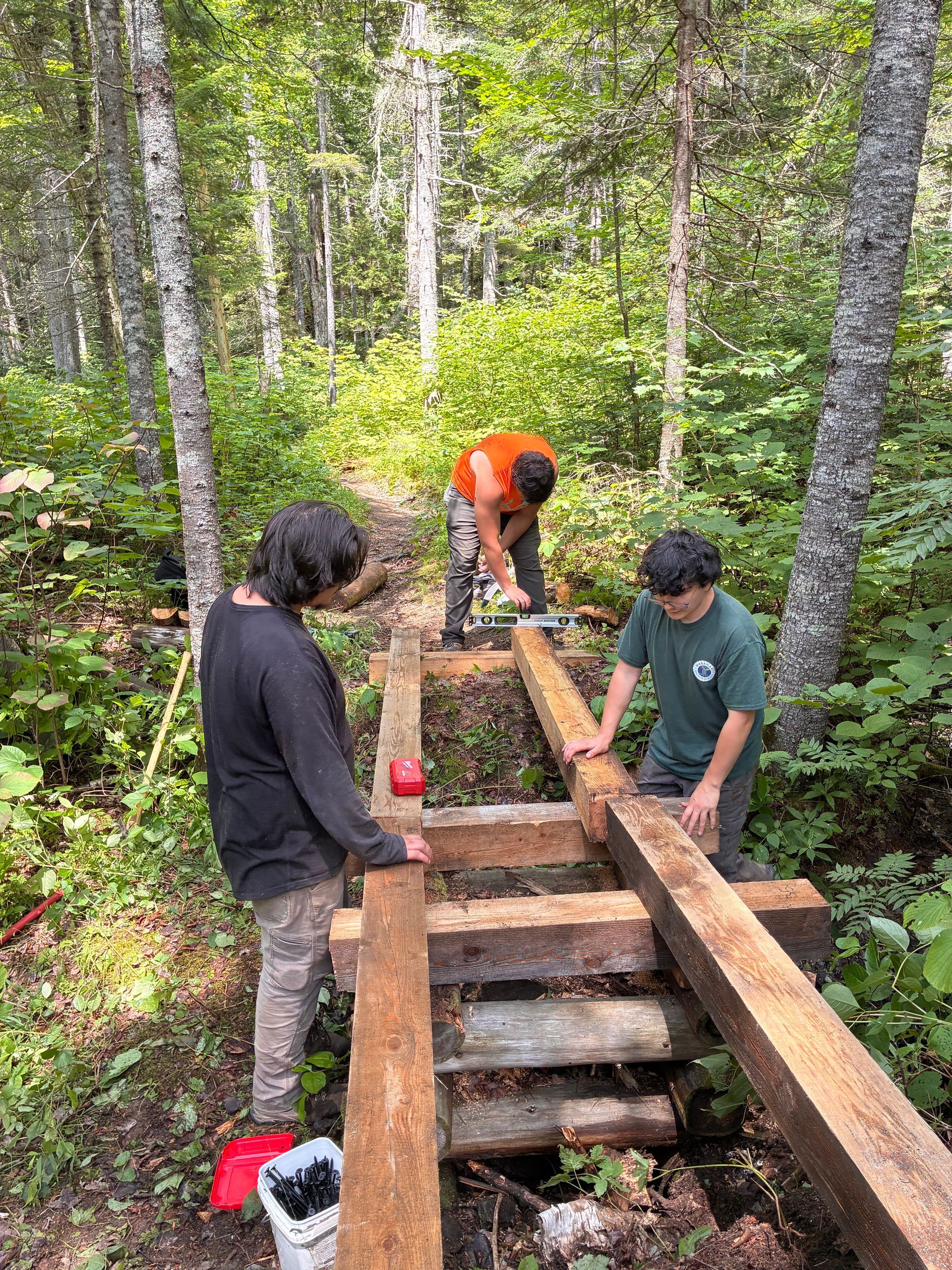
Gateway Trailhead in Old Fort – Working with the G5 Partnership, millions in private funds were raised to support recovery efforts, helping revive the economy of Old Fort while critical infrastructure was designed, permitted, and installed in record time. The trail network expanded from 6 to more than 40 miles, supporting outdoor recreation and local economies, with every mile contributing to new business development. Through community engagement, more than $4

million was raised locally, while $80 million in NGO investments supported community recovery and restoration efforts. The lack of FEMA funding placed a significant burden on local organizations and partners.


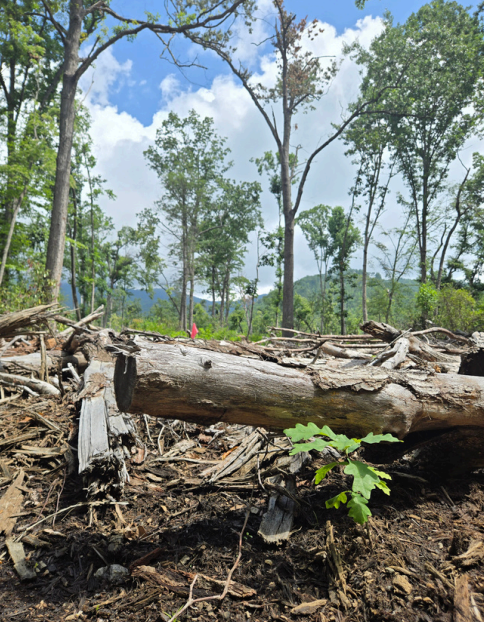
Shope Creek Salvage Area – Working with diverse partners, the USDA Forest Service addressed blowdown through reforestation, trail management, community collaboration, and wildfire risk reduction. Despite capacity and procurement challenges, timber staff planned and implemented a salvage sale, expanding it from 44 to 107 acres while coordinating with the local fire department on WUI issues. Ecoforesters updated the

management plan, sequenced non-native invasive species control, and planted approximately 10,000 trees, including 2,500 white oaks, to restore oak and pine ecosystems. Pre-Helene fuel loads averaged 6–10 tons per acre, while some areas now contain hundreds of tons per acre.


Blue Ridge Parkway Visitor Center – The Helene recovery panel emphasized that

partnerships, coordination, and shared capacity are essential for effective recovery. Panelists highlighted that no single organization can address the scale of impacts alone, making collaboration, flexible agreements, and community engagement critical. Moving forward, resilience will require investment in wildfire mitigation, restoration, and long-term landscape planning.


Blue Ridge Parkway- Tanbark Ridge Overlook – This stop highlighted the growing need for

proactive wildfire fuel reduction following Hurricane Helene, including increased use of

prescribed fire, salvage operations, and landscape-scale planning Tools like PODs (Potential Operational Delineations) which provide a strategic wildfire management framework at scale were developed, also in record time, to reduce future risk and provide fire managers with updated spatially explicit data.


Highlighted Partnerships that Aided Response & Recovery

Pisgah National Forest – The Pisgah National Forest led timber salvage, fuel break installation, reforestation, trail restoration, and watershed recovery on federal lands. Through cooperative agreements, including Good Neighbor Authority agreements, the USFS expanded capacity after staffing reductions by leveraging partners to complete on-the-ground restoration work. Impressively, over a billion dollars of recovery funds were allocated to 38 organizations (agencies, Tribes, and non-profits) in under 6-months' time. NC Wildlife Resources Commission – Partnered with the U.S. Forest Service through an expanded Good Neighbor Authority (GNA) agreement to support Hurricane Helene recovery efforts on the Pisgah and Nantahala National Forests. NCWRC is helping increase restoration capacity by supporting projects focused on infrastructure repairs, watershed restoration, invasive species management, and wildlife habitat improvements.


The Nature Conservancy - Key restoration partner helping expand workforce capacity and technical expertise through cooperative agreements that supported on-theground restoration efforts. Contributed to collaborative restoration planning by partnering with Conserving Carolina, EcoForesters, and other organizations to increase capacity for reforestation and landscape recovery. National Park Service - Collaborated with the U.S. Forest Service on timber salvage, hazardous fuel reduction, and restoration where management areas overlapped. The Blue Ridge Parkway also assigned 12 project leads to coordinate recovery work. Eastern Band of Cherokee - Helped guide recovery by ensuring Cherokee cultural values, history, and sacred perspectives remained part of restoration planning. Emphasized meaningful partnership, relationship-building, and expanding capacity through collaboration rather than working in isolation.


G5 Trail Collective of Camp Grier - Mobilized immediately following Hurricane Helene by fundraising for community recovery. Notes indicate the organization and community raised nearly $1 million in the first year and approximately $3 million to support homes, vehicles, and other recovery needs. G5 also partnered with the USFS to expand and restore trail systems that support local economies and outdoor recreation.

Key Takeaways

Relationships were central to the response and recovery efforts. Throughout the day, partners emphasized the importance of prior relationships and consistent communication, which allowed frequent discussions about how to quickly allocate recovery funding through agreements. Attendees also noted the importance of giving each other grace, as everyone was navigating challenges both at work and in their personal lives.


Partners also emphasized the importance of recognizing what they did not know, when developing agreements. Rather than identifying specific projects, agreements were structured around the activities needed to address storm response and recovery. This approach provided flexibility in an extremely dynamic operating environment and avoided unnecessary constraints, while also reducing the administrative burden of repeatedly modifying agreements—a particularly important consideration given existing staff capacity limitations.


Attendees voiced repeatedly throughout the day that capacity is the limiting factor. The scale of the disaster required partners to assess the scope of impacts on public lands and determine how to match response and recovery efforts accordingly. The Pisgah National Forest undertook an extremely expedited Watershed Restoration Action Planning (WRAP) process to identify the factors contributing to the loss of watershed functionality and determine priority and complementary projects needed to address those losses. These partnerships provided important co-benefits, including expanded capacity, shared responsibility and coordination, stronger long-term relationships, more effective resource use, incorporation of diverse perspectives, and increased adaptability.


Significant challenges remain, including limited capacity to implement recovery work, managing increased wildfire risk, maintaining long-term partnerships and coordination, balancing immediate recovery with long-term forest resilience, implementing flexible agreements effectively, and ensuring meaningful community engagement and

education

Recent Posts

September 14, 2026
The Fight to Keep Beech on the Landscape
August 27, 2026
Written by Nora Sappier
August 24, 2026
Written by Kat Smallwood
August 18, 2026
Written by Lilly Roehrig
August 18, 2026
Written by Ami Kane, Chief Development Officer
August 18, 2026
Written by Eytan Krasilovsky. Photos by Hannah Niknow.
August 12, 2026
Written by Kaden Gray
By Daisy Smith August 10, 2026
Written by Madison Morton
Show More