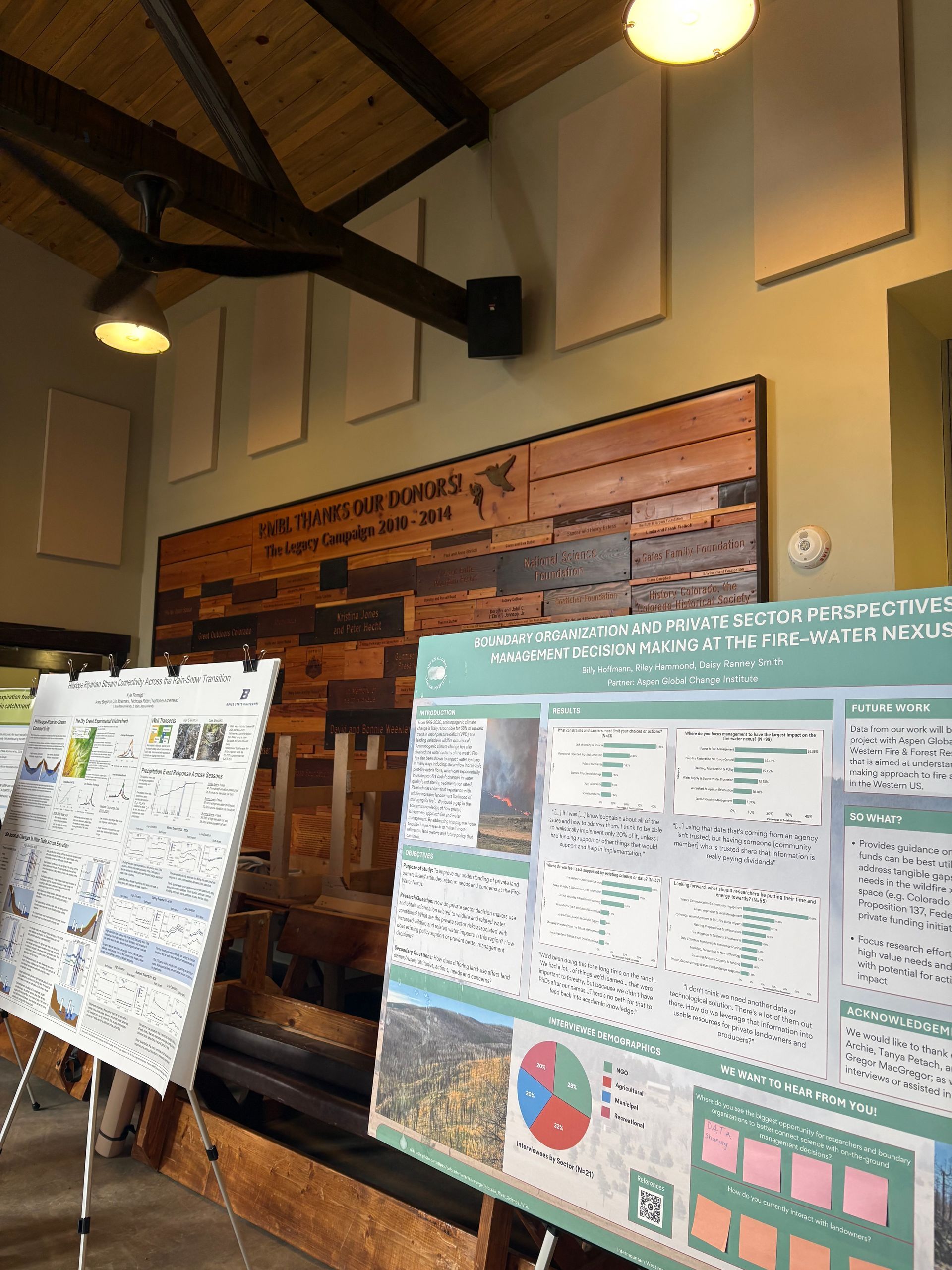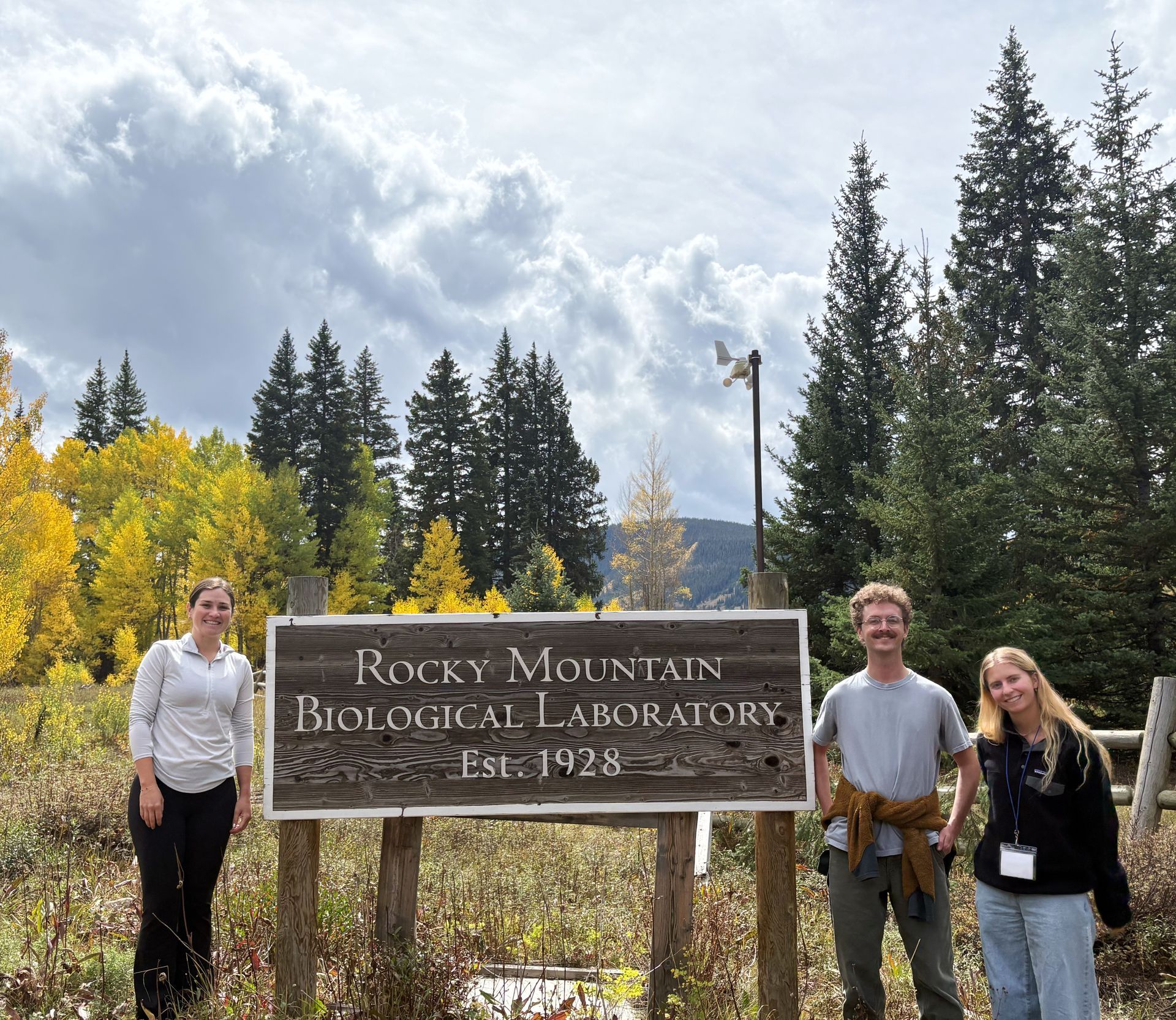
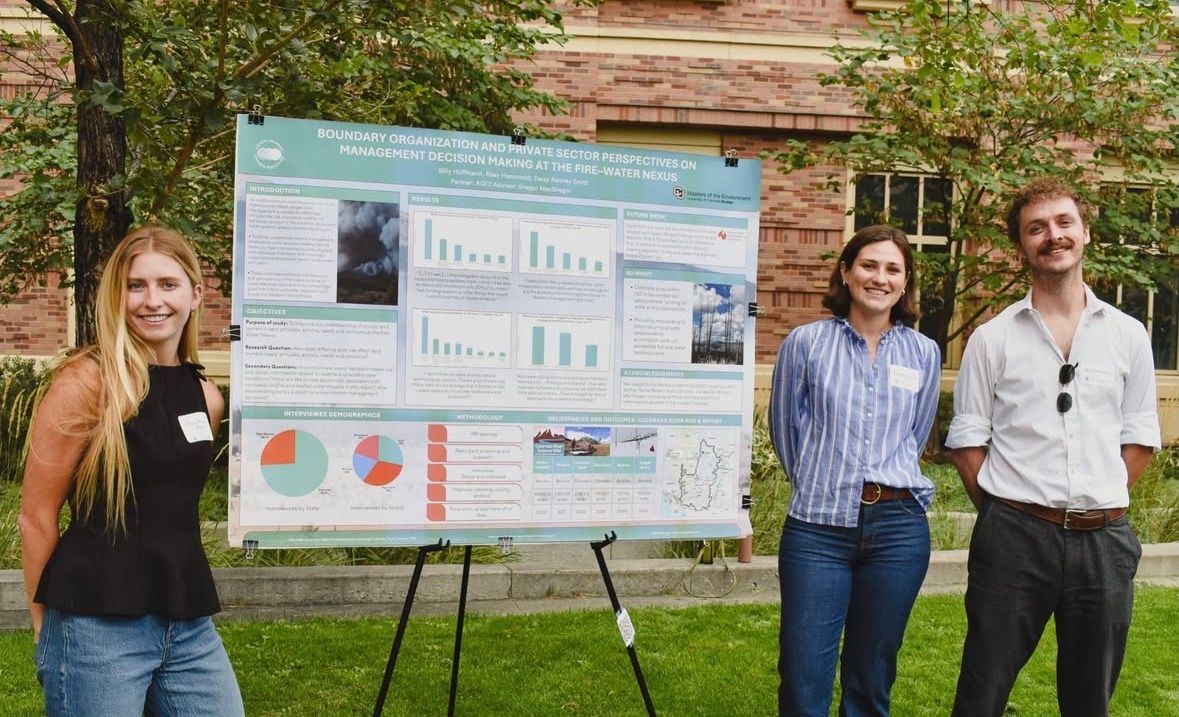
As the end of the year approaches, so does the conclusion of the University of Colorado Boulder’s Master of the Environment capstone season. Over the past nine months, myself and a team of two other graduate students have been researching private landowner and boundary organization decision-making at the fire-water nexus. For this social science-based project we partnered with Aspen Global Change Institute (AGCI), a nonprofit based in Basalt, Colorado, whose mission is to advance global change science and solutions.
Our work began in February when we met with our partners and faculty advisor to refine our scope of work and establish the project’s goals. Together, we identified two primary deliverables.
Colorado River Science Wiki – A Series of Case Studies
Our first deliverable focused on developing content for an interactive GIS map informed by wildfire case studies throughout the Colorado River Basin and published on the Colorado River Science Wiki page. These case studies examined the effects of wildfire on hydrological processes and functions throughout the Colorado River Basin and were broken down by, background information, primary impacts, and secondary impacts to provide a detailed overview of wildfires that burned significant acreage within the basin. Although the Colorado River Science Wiki site doesn’t draw a significant amount of human engagement, AI is one of its primary users. By contributing accurate, accessible, and well-organized information through these case studies and the accompanying interactive map, we hope to improve the quality and reach of information about wildfire impacts on water resources in the Colorado River Basin.
Our team has completed the case studies and development of the interactive map is underway.
Understanding Decision Making at the Fire–Water Nexus
Our second but most substantial deliverable was a qualitative review of private landowners' decision making. The goals of this synthesis are to identify the needs and knowledge gaps of private-sector decisionmakers, improve the relevance and accessibility of fire–water science, and inform future research and management strategies across the Western United States.
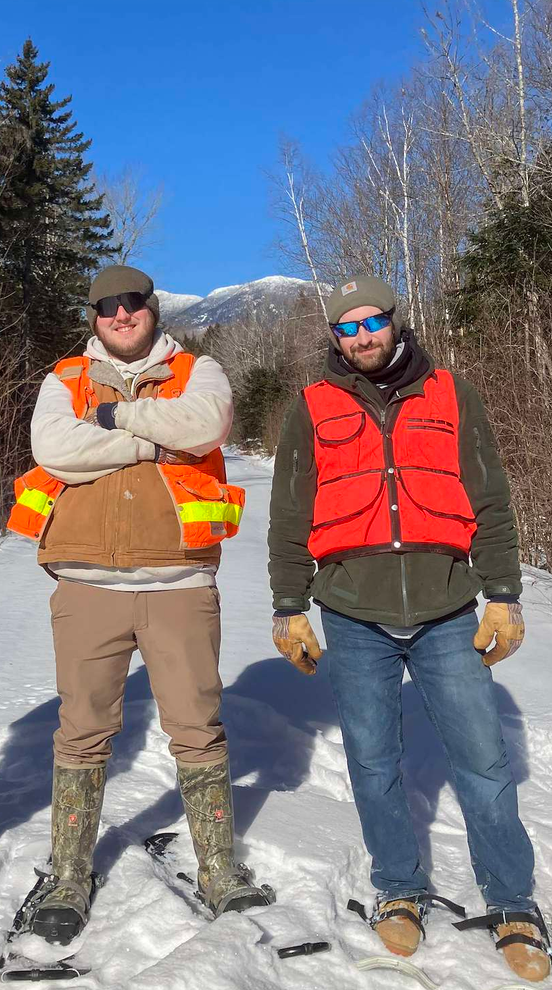
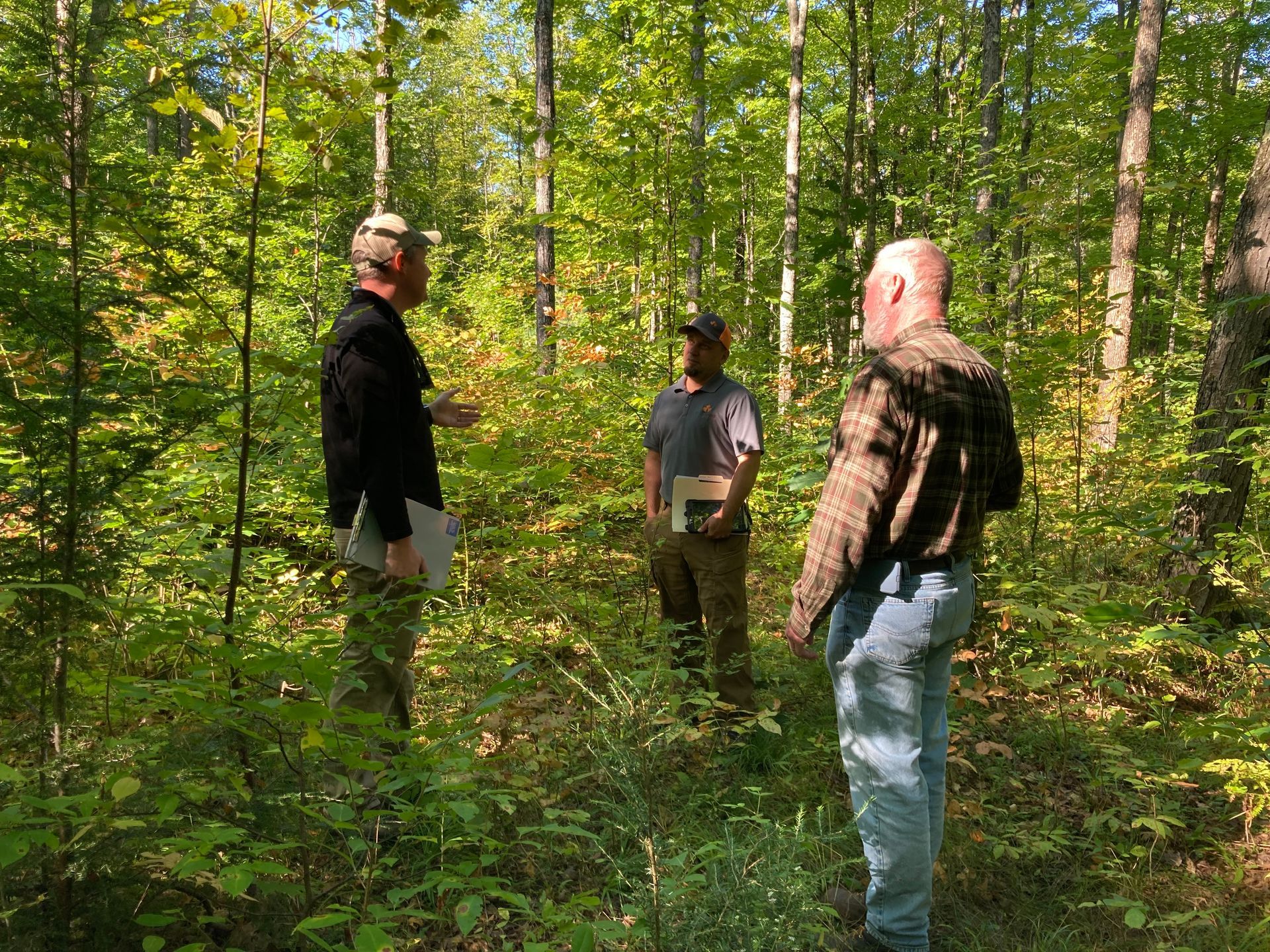
During the first few months of our project, we reviewed existing literature and identified a significant gap in research surrounding private land management in the context of increasing wildfire risk and water resources. Our next step was to obtain Institutional Review Board (IRB) approval to conduct group and individual interviews with stakeholders across Colorado and New Mexico in the next phase of the project over the summer.
Through these conversations, we sought to better understand how landowners and users access and apply information about wildfire, the risks and challenges they face as wildfire impacts increase, and how existing policies and regulations support or hinder effective land and water management.
Some sample interview questions included:
- What are the most consequential decisions you make that impact water and are influenced by wildfire?
- What types of information or data do you currently rely on to understand fire impacts on water resources? And how do you use it (for planning, communication, research?)
- At what points in the wildfire lifecycle (pre-fire, during fire, immediate post-fire, long-term recovery) do water-related decisions matter most to you?
- How do you currently interact with researchers/managers/owners around fire and water issues?