The Ninth American Forest Congress

January 16, 2025

Written by Zander Evans

The first U.S. American Forest Congress was in 1882 and focused on tree planting in conjunction with the first National Arbor Day. Now we’re looking forward to the Ninth American Forest Congress this summer and a whole new set of challenges. To understand the opportunity of this Forest Congress and the role the Guild can play, it is worth looking back to passed congresses.

Since 1882, periodic American Forest Congresses have targeted the forest issues of the day and led to significant changes. President Roosevelt addressed the Second Congress in 1905 and called for a national forest reserve and a federal agency to manage those forests, helping to spur the creation of the U.S. Forest Service. The Third Congress in 1946 charted a course to use our forests to meet the nation’s post-war needs while simultaneously continuing long-term recovery. To modern readers, statements from the Sixth Congress in 1975 hint at trouble brewing, or at least hubris. For example: 

“I trust we can all agree that man—and especially we as managers and stewards of the resources entrusted to us by the public or our stockholders — must continue to exert influence over the natural process into which we long ago thrust ourselves.” 

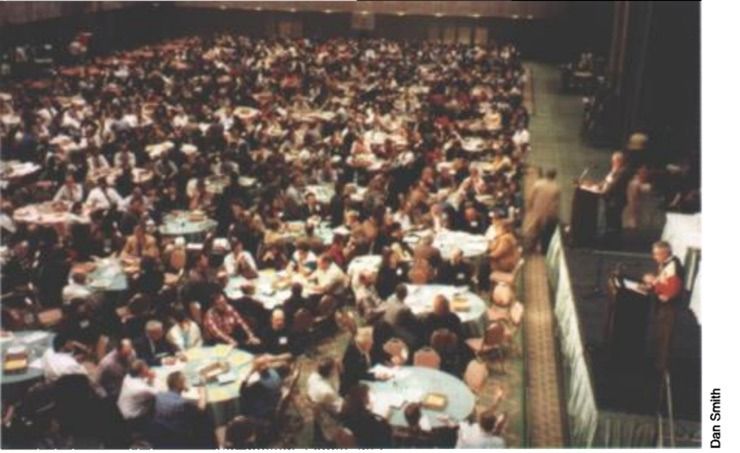
This confident and controlling approach was challenged by the evidence of ecological damage and the rise of the environmental movement. Twenty years later, a different approach was needed for the Seventh Congress. The breadth and diversity of participation at the Seventh Congress in 1996 far exceeded the previous six. In fact, it may still be the most diverse national forest-focused gathering in our history. Leading up to the Sixth Congress, 51 local roundtables and 43 collaborative meetings contributed to the vision and principles of the Congress. 

The Seventh Congress was an important turning point in the modern history of forests and forestry because it built bridges and emphasized collaboration. Participants worked to escape the polarized framing of the ‘timber wars’ and focus on zones of agreement not unanimity. They used a process that avoids the agree/disagree dichotomy by adding a middle choice ‘I may not like it, but I can live with it’. For example, 976 of the 1,007 participants were at least willing to live with the statement: 

In the future, our forests will be held in a variety of public, private, tribal, land grant, and trust ownerships by owners whose rights, objectives, and expectations are respected and who understand and accept their responsibilities as stewards. 

Other statements were more controversial. For example, only 54% of participants were very comfortable the principle that: 

In the future, our forests will be managed on the basis of a stewardship ethic with respect, reverence, and humility. 

The Seventh Congress helped spur the creation of the Communities Committee, which focused on the interdependence of America’s forests and the vitality of communities. The Guild didn’t exist as a fully-fledged organization at the time of the Seventh Congress, but we have grown to embody many of the shared values that emerged from the Congress such as: 

In the future, our forests will be shaped by natural forces and by human actions that reflect the wisdom and values of an informed and engaged public, community and social concerns, sound scientific principles, local and indigenous knowledge and the need to maintain options.

While there were numerous calls for the Congress to reconvene at the regional or national level to build on the broad zone of agreement identified, another American Forest Congress wasn’t called for 26 years. 

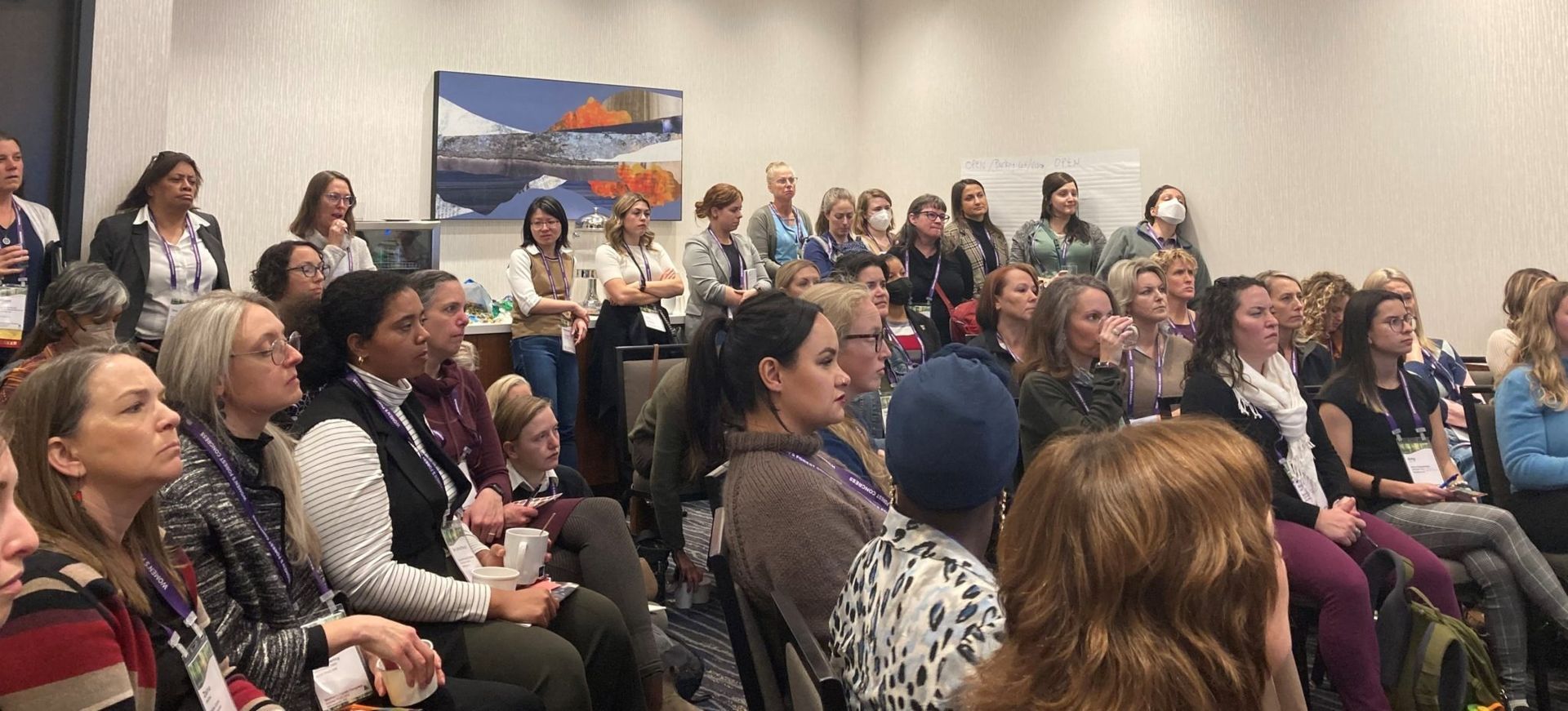
The 2022 congress was the Women’s Forest Congress. The Congress was designed to inspire and empower women and was the culmination of years of work by women leaders who know it was time for a space dedicated to elevating the voices of women in forestry. Women’s Congress sessions highlighted the important role that women landowners play in forest stewardship. The Congress program flowed through an arc of experience woven of the five themes: Leadership for Equity and Inclusion; Workforce Opportunities for Increasing Recruitment, Retention, and Advancement; Women as Catalysts for Change; Addressing Today’s Greatest Forest Challenges; and Supporting Each Other. 

The Ninth Congress comes at a time of significant stress for forests. The damaging impact of uncharacteristically sever wildfires, novel insect outbreaks, and shifting precipitation regimes hardly needs to be reiterated here. The organizers’ goal is to convene 500 forestry professionals and leaders for three days to identify transformative actions for the next century of forest stewardship. Their goal is to invite new perspectives, broaden cross-sector collaboration, explore innovations, and tackle persistent barriers to our capacity, workforce, economic, and stewardship goals.

This is perfect timing for the Guild as we celebrate our 30th anniversary and look toward our next 30 years of expanding, positive impact. Like in 2022, Guild staff are helping with the planning efforts for the Ninth Congress. We will ensure your values and experience are represented. Stay tuned, as we will share updates and insights with members as the Ninth Congress takes shape for July 15 – 18, 2025 in Washington, D.C. 

Recent Posts

By Aidan Juhl April 16, 2026
Written by Colleen Robinson
April 14, 2026
Written by Shannon Maes
April 14, 2026
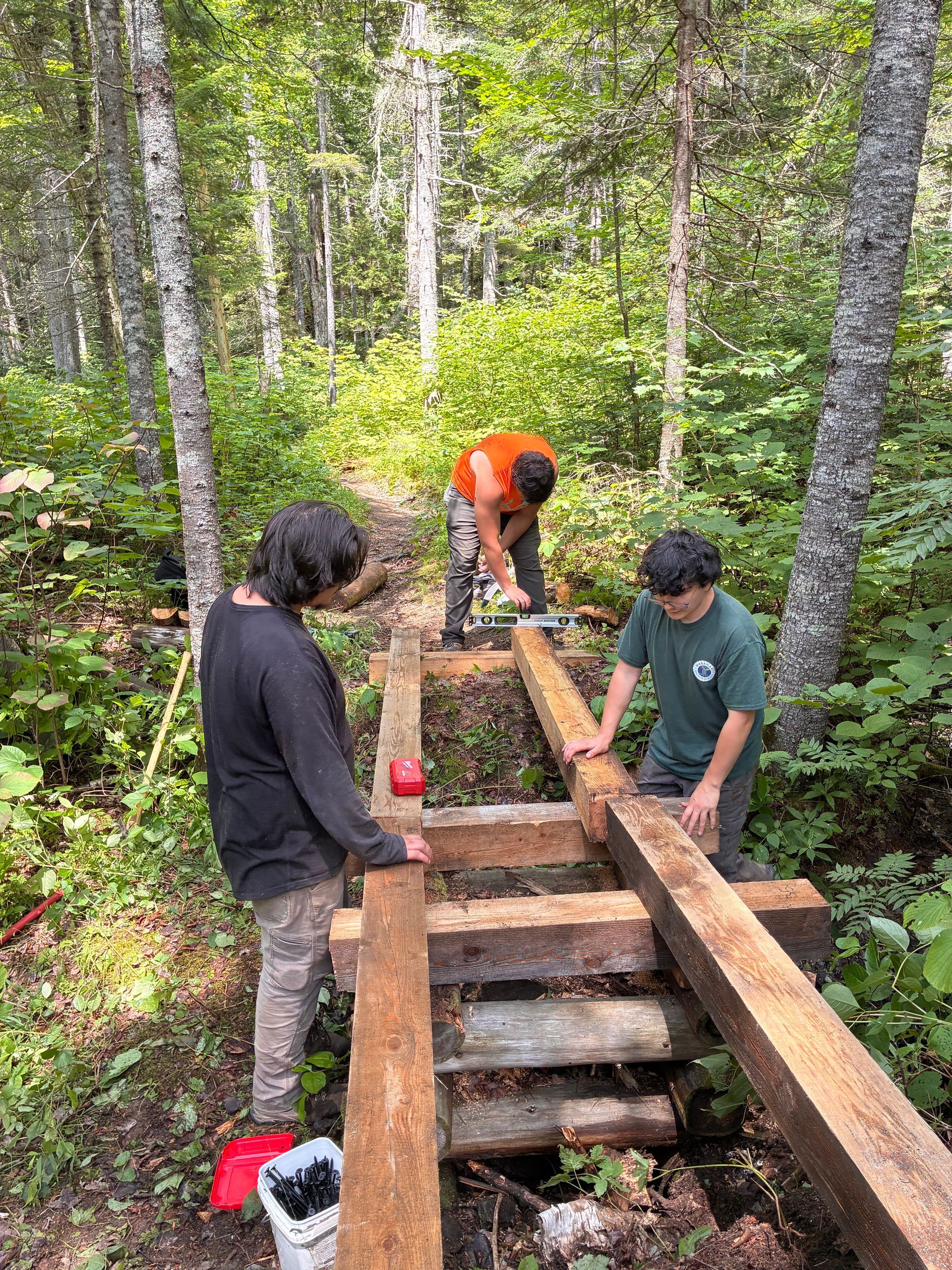
In September 2025, the Guild launched a three-person Forest Stewards Apprenticeship (FSA) crew to work with the Penobscot Nation’s Department of Natural Resources (PN DNR). Over the course of their six-month season, apprentices Agenor Duhon, Gabe Stewart, and Jacob Baker shared a season of learning, collaboration, and hands-on stewardship of Penobscot Tribal lands.
April 14, 2026
This week, I stepped into the role of crew leader. We worked a full 40-hour week, splitting our time between Clifton Farms and a prescribed burn operation. On the first day in the field, we completed hack-and-squirt treatments on trees that had been marked the previous week. For the remainder of the week, we focused on marking trees for future hack-and-squirt work, maintaining a steady pace and ensuring accuracy in our selections.
April 7, 2026
As Guild members, our practice is fundamentally grounded in field observation. We know intuitively that forests are dynamic, living communities. Yet, for decades, the high-level systems used to value our work, specifically the carbon accounting ledgers tied to international frameworks like the Paris Agreement, have treated forests as static, quantifiable blocks of land. In a recent commentary published in One Earth, I argue that these legacy measurement, reporting, and verification (MRV) frameworks are failing. Ledger accounting relies on crude land-use delineations and outdated technology, effectively penalizing the natural, seasonal flux of the ecosystems we manage every day. By forcing landscapes into rigid “forest” versus “non-forest” binaries, such legacy systems miss the complex reality on the ground. But a major shift is underway.
March 18, 2026
Women have always been a part of forestry. Historically, women often helped guide family decisions about when to cut, which trees to save, and how best to steward their land for the next generation. Historical accounts from the Southern Appalachians describe women’s roles in decisions about timber harvesting and prioritizing long-term forest health. These often-uncredited contributions are even reflected in Aldo Leopold’s A Sand County Almanac (1949), in which describes his stewardship philosophy informed not only by his professional experience, but by shared responsibility, where the perspectives of his wife and daughters played an important role.
March 18, 2026
Although rural regions often host the highest concentrations of public and private forest land, they typically lack the sustainable workforce necessary for active management and stewardship. How do we address this foundational problem in forest conservation?
March 18, 2026
The Forest Stewards Guild has a unique dual mandate: practice and promote forest stewardship. Personally, I think the combination of practicing forest management and promoting best practices is what makes the Guild a vibrant and impactful organization.
February 17, 2026
We celebrate the remarkable career and legacy of Leslie (Les) Benedict, who has provided visionary leadership and dedicated service to the stewardship of forests, championing the preservation of the ecological and culturally important black ash. Benedict, a member of the Saint Regis Mohawk Tribe in Akwesasne, north of the Adirondacks in upstate New York, recently retired after serving as the Assistant Director of the Tribe’s Environment Division for over 35 years.
February 17, 2026
The Forest Stewards Guild has been working to support the National Park Service on forest stewardship projects throughout the eastern U.S. This month we are in the midst of a project to protect mounds at Effigy Mounds National Monument near Harpers Ferry Iowa. This site was designated as a National Monument in 1949 and preserves over 200 mounds built between 800 and 2,500 years ago. Mounds at this site include conical, linear, compound, and effigy mounds – constructed in the shape of animals. Please see the National Park Service page for more information about the mounds, the people who built them, and how to visit the site. The lidar images on that website of the Marching Bears and other mound groups are fascinating.
Show More