Women’s Forest Congress – at long last

November 16, 2022

Written by Amanda Mahaffey, complied by Colleen Robinson

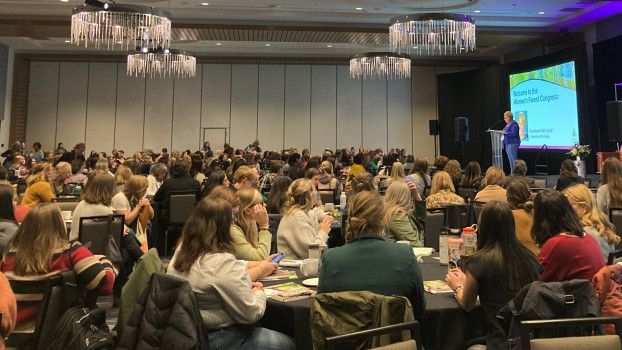
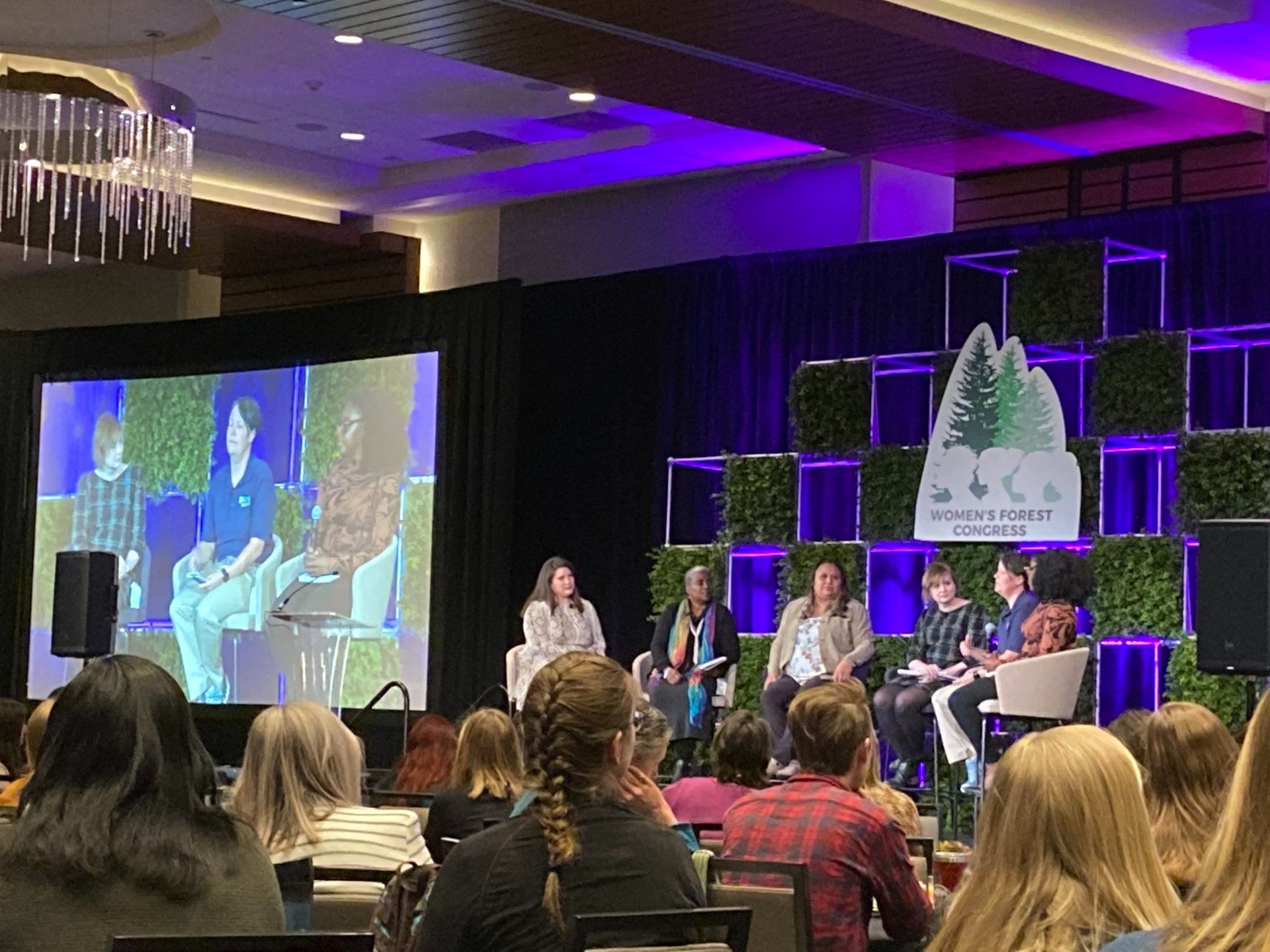
I was in a room with 500 women foresters. What?! When did that happen, ever? It happened at the inaugural Women’s Forest Congress this October in Minneapolis, Minnesota.

Opening remarks at Congress.

About the Congress:

The Congress was designed to inspire and empower women in the forest sector. This event was the culmination of years of work by women leaders in the field who felt that now was the time for a space dedicated to elevating the voices of women in the forestry profession. Congress sessions highlighted the important role that women landowners play in forest stewardship. No surprise, several Guild members were involved.

The Women’s Forest Congress challenges organizations in the forest and forest products sector to:

FOSTER workforce opportunities for all women through mentorship programs, professional development, scholarships, with a particular focus on reaching out to those who need help or are asking for assistance in any part of their journey.

BROADEN recruiting practices to include wider networks, and build a pipeline of talent by connecting with and showcasing forests and the forest and forest products sector to youth and students, creating job shadowing and internship opportunities, etc.

BUILD workplace systems that support mental health coverage, and include training and programs promoting healthy lifestyles, such as family leave, flexible work schedules, generous vacation plans, social opportunities, and holistic wellness programs.

PROMOTE a variety of working environments, encourage flexibility, and ensure all work environments are fully accessible.

ENABLE employees to prioritize mental, emotional, physical, and spiritual health and model healthy behaviors for others.

CREATE a safe, inviting, and welcoming workspace for all resulting in greater wellness, increased retention, higher productivity, improved creativity, and heart-centered decision-making.

ASSESS compensation for women and promote paths to pay equity at all levels, including discrepancies in intersectional identities, communities, and demographics.

INTENTIONALLY IDENTIFY and support more women and those from underrepresented groups to achieve leadership positions.

INCREASE the use of storytelling in conferences, trainings, and workshops.

APPLY models and frameworks to generate and realize solutions to the greatest forest challenges that are built on women’s strengths, such as inclusive, collaborative, and multi-scale holistic thinking.

The participants of the 2022 Women’s Forest Congress, our supporters, and partners commit ourselves to advance these actions through our organizations, networks, partnerships, and spheres of influence.

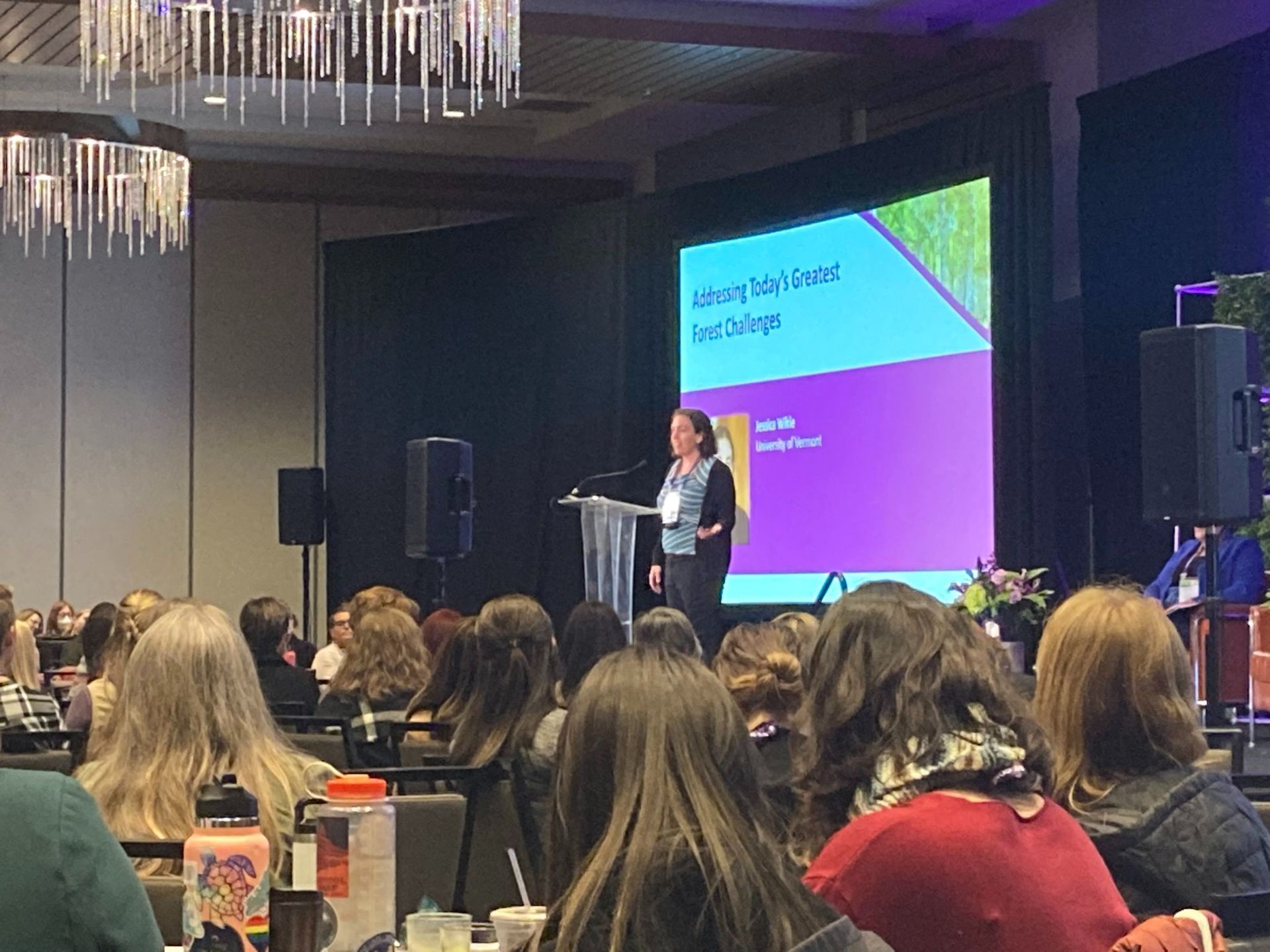
Jess Wikle presenting

Amanda’s story:


The Women’s Forest Congress was unlike any conference I have ever been to. The focus was not on forestry knowledge, though this group could offer a wealth of that, but rather on building connections and community so that together, we might address the world’s greatest forest challenges. Why a Women’s Forest Congress? Data and experience show that women are sadly underrepresented in the field and in leadership positions within the sector. The women who attended came from industry, academia, non-profit, government, and everything in between. We represented 38 states, 3 Canadian provinces, and 8 other countries. We came as leaders, mid-career professionals, young foresters, and students. We came to share our passion for igniting a new role for women in forestry.

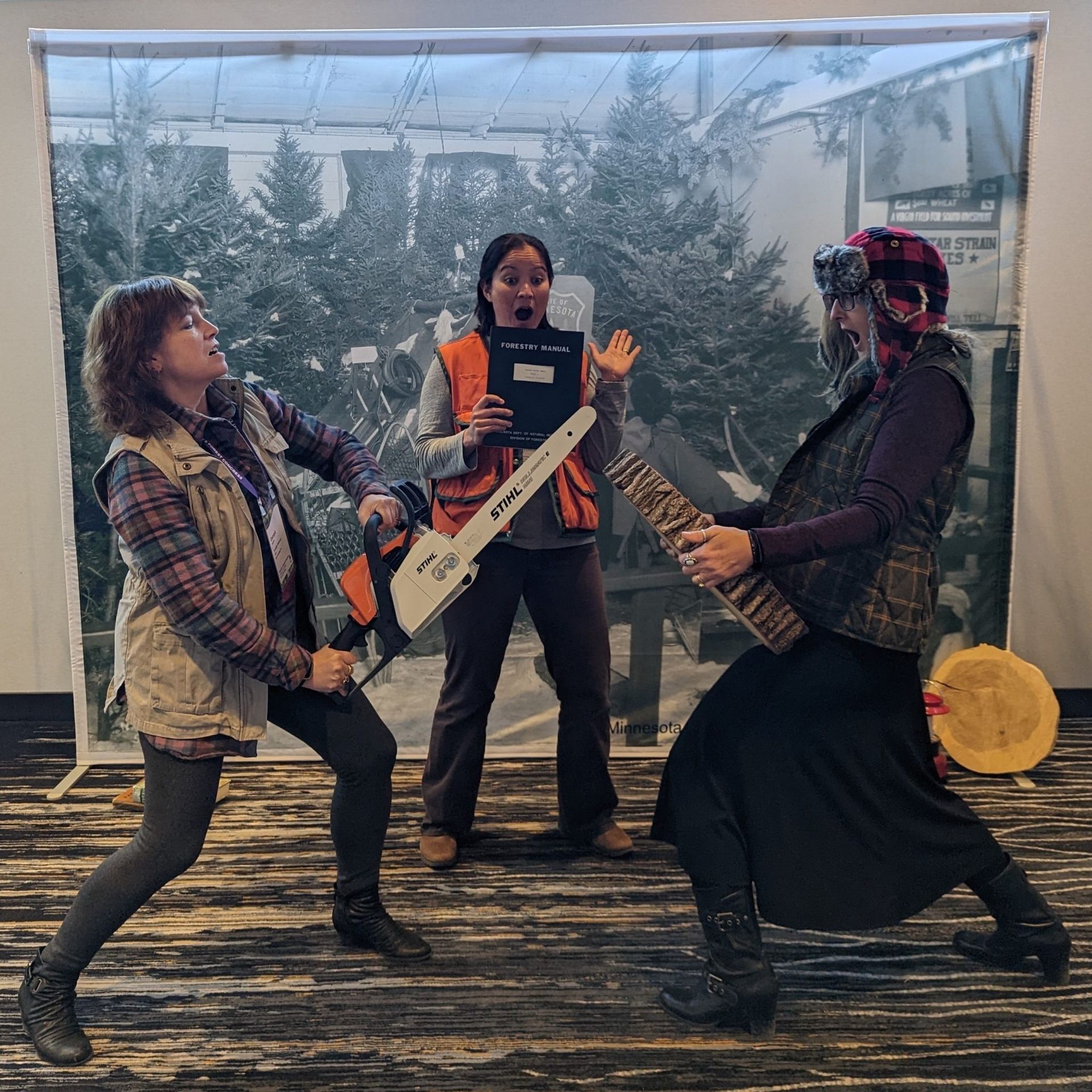
Women having fun with photo op at Congress.

The Congress program flowed through an arc of experience woven of the five themes of the Congress: Leadership for Equity and Inclusion; Workforce Opportunities for Increasing Recruitment, Retention, and Advancement; Women as Catalysts for Change; Addressing Today’s Greatest Forest Challenges; and Supporting Each Other. Inspirational speakers from inside and outside the forestry profession taught us to commit ourselves to embodying the values of diversity, equity, and inclusion. To never give up in our determination to blaze a path for girls who will come after us. To have each other’s backs and affirm our truths. To support each other and lift each other up. To tell herstory in our sector’s history in the past, present, and future. To paddle upstream together and breathe in the world around us. To laugh, dance, and celebrate who we are.

Jessica Leahy speaks as a member of the WFC advisory council.

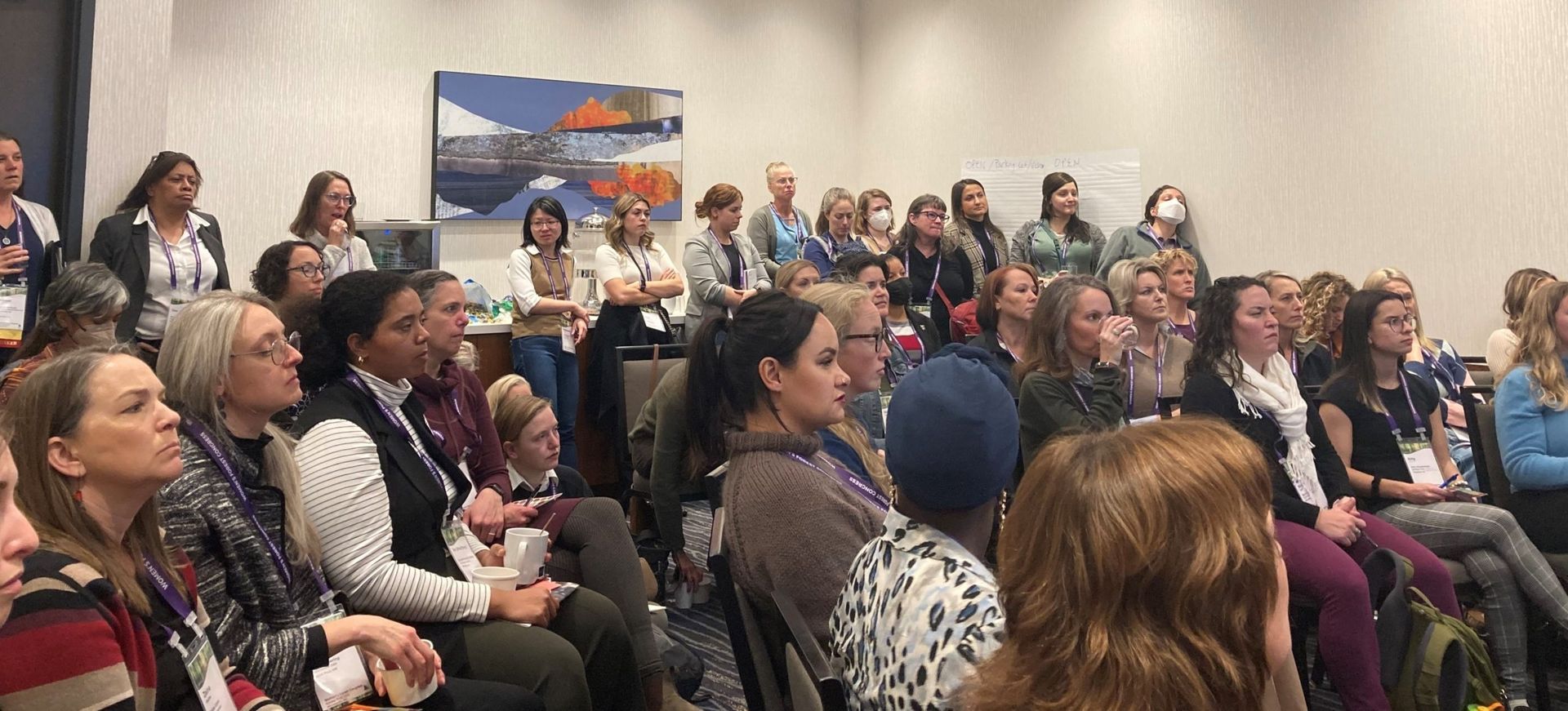
Breakout sessions were more like collaborative workshops than one-way presentations. Rooms were packed to overflowing with women asking good questions, providing input in world cafés, and building connections through small group discussions. Special spaces for creativity, wellness, and nursing mothers set this meeting apart from traditional forestry conferences. In the midst of all this activity, delegates worked diligently to articulate declarations that would come out of the Congress and establish a shared vision for the future of women in forestry. We heard powerful individual stories and universal support for one another. This special gathering of women was made even more impactful because of our shared experiences through the pandemic, which had a pronounced effect on women.

My mind is blown by the experience of the 2022 Women’s Forest Congress. This landmark gathering invited us to bring our whole selves, on equal footing with our colleagues, and with plenty to accomplish together. As I return home, I know inside that I am changed by this experience. I am ready to inspire, train, and empower the women around me to be the change we want to see, to work together to steward our forests for the future.

I am a woman forester. I am a catalyst for change. With others, I will rise, and we will shape the future.

Women in a Congress session

Recent Posts

By Aidan Juhl April 16, 2026
Written by Colleen Robinson
April 14, 2026
Written by Shannon Maes
April 14, 2026
In September 2025, the Guild launched a three-person Forest Stewards Apprenticeship (FSA) crew to work with the Penobscot Nation’s Department of Natural Resources (PN DNR). Over the course of their six-month season, apprentices Agenor Duhon, Gabe Stewart, and Jacob Baker shared a season of learning, collaboration, and hands-on stewardship of Penobscot Tribal lands.
April 14, 2026
This week, I stepped into the role of crew leader. We worked a full 40-hour week, splitting our time between Clifton Farms and a prescribed burn operation. On the first day in the field, we completed hack-and-squirt treatments on trees that had been marked the previous week. For the remainder of the week, we focused on marking trees for future hack-and-squirt work, maintaining a steady pace and ensuring accuracy in our selections.
April 7, 2026
As Guild members, our practice is fundamentally grounded in field observation. We know intuitively that forests are dynamic, living communities. Yet, for decades, the high-level systems used to value our work, specifically the carbon accounting ledgers tied to international frameworks like the Paris Agreement, have treated forests as static, quantifiable blocks of land. In a recent commentary published in One Earth, I argue that these legacy measurement, reporting, and verification (MRV) frameworks are failing. Ledger accounting relies on crude land-use delineations and outdated technology, effectively penalizing the natural, seasonal flux of the ecosystems we manage every day. By forcing landscapes into rigid “forest” versus “non-forest” binaries, such legacy systems miss the complex reality on the ground. But a major shift is underway.
March 18, 2026
Women have always been a part of forestry. Historically, women often helped guide family decisions about when to cut, which trees to save, and how best to steward their land for the next generation. Historical accounts from the Southern Appalachians describe women’s roles in decisions about timber harvesting and prioritizing long-term forest health. These often-uncredited contributions are even reflected in Aldo Leopold’s A Sand County Almanac (1949), in which describes his stewardship philosophy informed not only by his professional experience, but by shared responsibility, where the perspectives of his wife and daughters played an important role.
March 18, 2026
Although rural regions often host the highest concentrations of public and private forest land, they typically lack the sustainable workforce necessary for active management and stewardship. How do we address this foundational problem in forest conservation?
March 18, 2026
The Forest Stewards Guild has a unique dual mandate: practice and promote forest stewardship. Personally, I think the combination of practicing forest management and promoting best practices is what makes the Guild a vibrant and impactful organization.
February 17, 2026
We celebrate the remarkable career and legacy of Leslie (Les) Benedict, who has provided visionary leadership and dedicated service to the stewardship of forests, championing the preservation of the ecological and culturally important black ash. Benedict, a member of the Saint Regis Mohawk Tribe in Akwesasne, north of the Adirondacks in upstate New York, recently retired after serving as the Assistant Director of the Tribe’s Environment Division for over 35 years.
February 17, 2026
The Forest Stewards Guild has been working to support the National Park Service on forest stewardship projects throughout the eastern U.S. This month we are in the midst of a project to protect mounds at Effigy Mounds National Monument near Harpers Ferry Iowa. This site was designated as a National Monument in 1949 and preserves over 200 mounds built between 800 and 2,500 years ago. Mounds at this site include conical, linear, compound, and effigy mounds – constructed in the shape of animals. Please see the National Park Service page for more information about the mounds, the people who built them, and how to visit the site. The lidar images on that website of the Marching Bears and other mound groups are fascinating.
Show More