How Digital Intelligence is Catching Up to Field Stewardship

April 7, 2026

Written by Chris Woodall of CTrees 

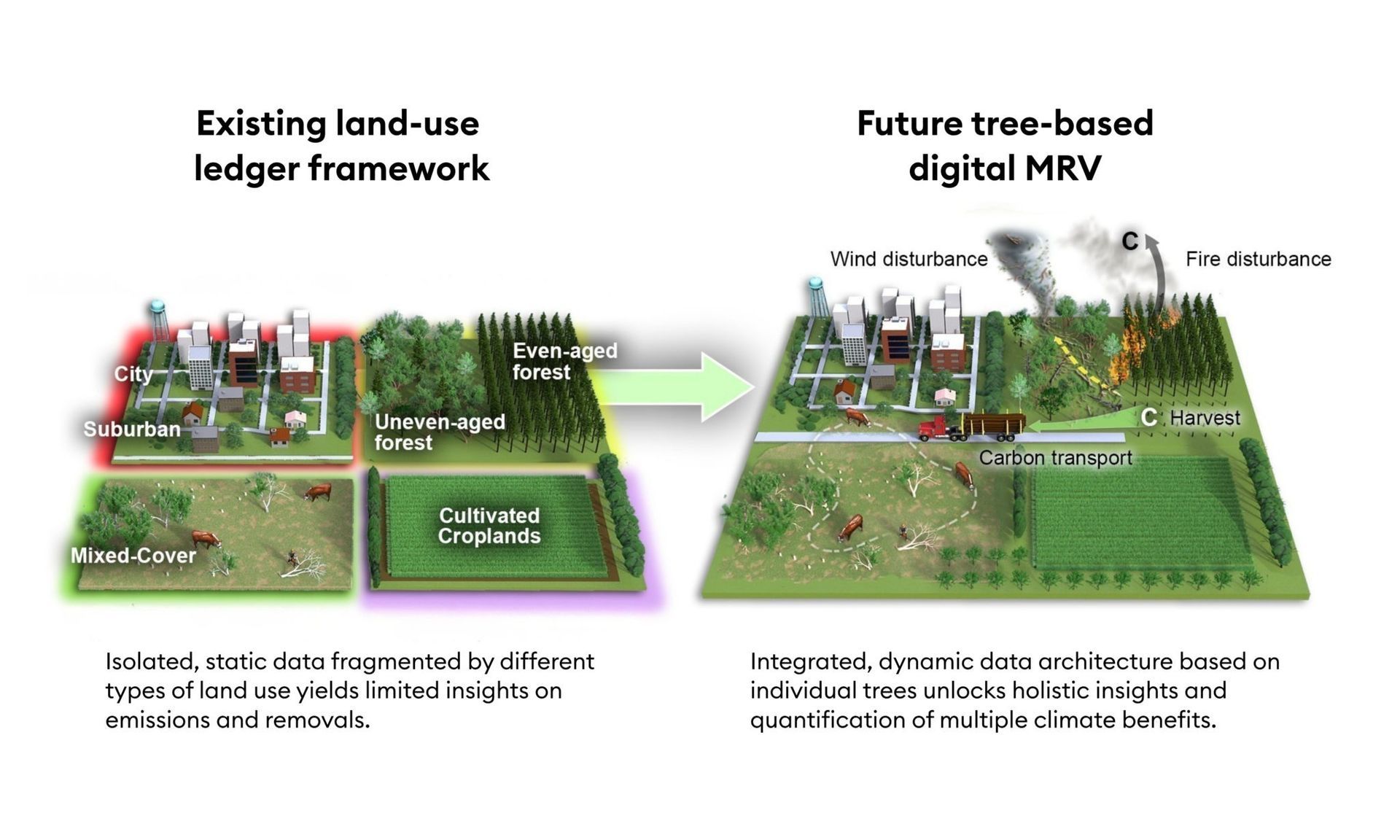
As Guild members, our practice is fundamentally grounded in field observation. We know intuitively that forests are dynamic, living communities. Yet, for decades, the high-level systems used to value our work, specifically the carbon accounting ledgers tied to international frameworks like the Paris Agreement, have treated forests as static, quantifiable blocks of land. In a recent commentary published in One Earth, I argue that these legacy measurement, reporting, and verification (MRV) frameworks are failing. Ledger accounting relies on crude land-use delineations and outdated technology, effectively penalizing the natural, seasonal flux of the ecosystems we manage every day. By forcing landscapes into rigid “forest” versus “non-forest” binaries, such legacy systems miss the complex reality on the ground. But a major shift is underway.

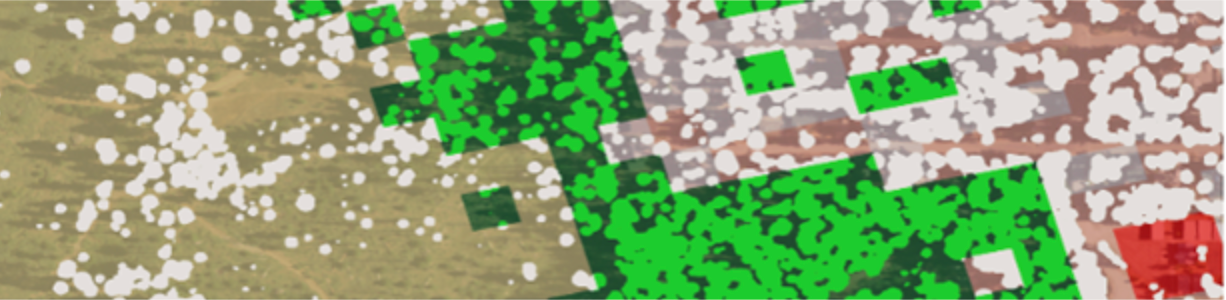
Technology has finally matured enough to see the landscape as a forester does: tree by tree. In basic terms, “digital intelligence” just means giving our computers the ability to instantly translate massive piles of raw data, like a satellite picture or a drone scan, into a working, real-time map of the forests, helping us make decisions on the ground. In the past, remotely sensed observations could crudely define somebody’s concept of a “forest” separate from a “woodland” all the while ignoring field-level observations and local knowledge. The future is dynamic identification of individual trees deeply connected to field observations and communities. This is the promise of tree-centric digital MRV (dMRV). 

At its core, dMRV is the application of digital intelligence to natural ecosystems. It harnesses continuous data flows from satellites, ground sensors, and field plots, combining them with AI to construct a dynamic, real-time “digital twin” of our tree populations. By tracking individual trees, we can bypass confounding public policy and crude land-use classes. It means a tree’s ecological value is recognized whether it is standing in a dense uneven-aged forest, an agroforestry system, or an urban canopy. 

I recognize that terms like “AI” and “digital intelligence” can sound disconnected from the dirt, paint, and humility of field forestry. There is a valid fear that AI could relegate our work into opaque algorithms driven by pure capitalism, with uncertain implications for vital ecosystem processes we steward. But we have a window to shape this architecture. In addition to realizing machine-driven efficiency, we can tether transparent AI systems to local community values and a more dynamic accounting of natural capital. 

What each forester and landowner knows about their specific parcel can now feed into a broader web of forest insights, similar to the way encyclopedias and almanacs transformed knowledge in the past. In this vision, foresters use AI to amplify our hard-earned ecological knowledge, not replace it. While my thesis focuses heavily on voluntary carbon markets and the post-Paris Accord landscape, the universe this technology opens up is vastly more expansive. By observing individual trees, we can better guide climate-adaptive management, monitor biodiversity, and connect rural stewards to new, transparent markets. The accelerating technological changes of 2026 suggest this reality will arrive faster than we expect. As forest stewards, we are committed to the long haul. By embracing this new digital architecture, we ensure that the deep, localized knowledge we gather in the woods translates directly into healthier local ecosystems and a stable global climate. The ledger is dead; living stewardship starting with the individual tree is the future. 

To access the OneEarth Commentary (published on March 2026) visit here. 


Recent Posts

By Aidan Juhl April 16, 2026
Written by Colleen Robinson
April 14, 2026
Written by Shannon Maes
April 14, 2026
In September 2025, the Guild launched a three-person Forest Stewards Apprenticeship (FSA) crew to work with the Penobscot Nation’s Department of Natural Resources (PN DNR). Over the course of their six-month season, apprentices Agenor Duhon, Gabe Stewart, and Jacob Baker shared a season of learning, collaboration, and hands-on stewardship of Penobscot Tribal lands.
April 14, 2026
This week, I stepped into the role of crew leader. We worked a full 40-hour week, splitting our time between Clifton Farms and a prescribed burn operation. On the first day in the field, we completed hack-and-squirt treatments on trees that had been marked the previous week. For the remainder of the week, we focused on marking trees for future hack-and-squirt work, maintaining a steady pace and ensuring accuracy in our selections.
March 18, 2026
Women have always been a part of forestry. Historically, women often helped guide family decisions about when to cut, which trees to save, and how best to steward their land for the next generation. Historical accounts from the Southern Appalachians describe women’s roles in decisions about timber harvesting and prioritizing long-term forest health. These often-uncredited contributions are even reflected in Aldo Leopold’s A Sand County Almanac (1949), in which describes his stewardship philosophy informed not only by his professional experience, but by shared responsibility, where the perspectives of his wife and daughters played an important role.
March 18, 2026
Although rural regions often host the highest concentrations of public and private forest land, they typically lack the sustainable workforce necessary for active management and stewardship. How do we address this foundational problem in forest conservation?
March 18, 2026
The Forest Stewards Guild has a unique dual mandate: practice and promote forest stewardship. Personally, I think the combination of practicing forest management and promoting best practices is what makes the Guild a vibrant and impactful organization.
February 17, 2026
We celebrate the remarkable career and legacy of Leslie (Les) Benedict, who has provided visionary leadership and dedicated service to the stewardship of forests, championing the preservation of the ecological and culturally important black ash. Benedict, a member of the Saint Regis Mohawk Tribe in Akwesasne, north of the Adirondacks in upstate New York, recently retired after serving as the Assistant Director of the Tribe’s Environment Division for over 35 years.
February 17, 2026
The Forest Stewards Guild has been working to support the National Park Service on forest stewardship projects throughout the eastern U.S. This month we are in the midst of a project to protect mounds at Effigy Mounds National Monument near Harpers Ferry Iowa. This site was designated as a National Monument in 1949 and preserves over 200 mounds built between 800 and 2,500 years ago. Mounds at this site include conical, linear, compound, and effigy mounds – constructed in the shape of animals. Please see the National Park Service page for more information about the mounds, the people who built them, and how to visit the site. The lidar images on that website of the Marching Bears and other mound groups are fascinating.
February 17, 2026
Climate change will impact different forest ecosystems in varying ways, and management strategies to adapt forests to these risks varies across ecosystem conditions, management goals, and desired future conditions specific to the target location. The Adaptive Silviculture for Climate Change (ASCC) Network was established in 2009 in response to this need for localized, operational examples of climate adaptation in different ecosystem contexts. The Network is a collaborative effort to establish a series of experimental silvicultural trials across different forest ecosystems, aiming to provide managers with examples of how to integrate climate adaptation into their silvicultural planning and management actions.
Show More