Why a wildfire detection camera for Santa Fe?

August 19, 2025

Written by Eytan Krasilovsky
I’ve been asking myself the same question for a year. In my work at the Guild, we focus a lot on wildfire. We have programs dedicated to training the future wildland fire workforce (Forest Stewards Youth Corps), making communities more resilient to wildfire (Fire Adapted Communities New Mexico), and practicing and promoting prescribed fire as a critical tool in making our forests and watersheds more ready for wildfire (All Hands All Lands Burn Network. We also lead collaborative initiatives with similar goals (Greater Santa Fe Fireshed CoalitionZuni Mountains Collaborative, the 2-3-2 Partnership). What the Guild doesn’t do is wildfire response and suppression. 

So why an AI wildfire detection camera?

First, I must thank a colleague, Dr. Jonathan Frenzen. Jonathan donates a lot of his time to the Greater Santa Fe Fireshed Coalition (the Coalition) and is an active member who is also a co-chair of the Communications Committee. Through many conversations and texts in 2024, Jonathan and I discussed how: 

  • New Mexico was unprepared to respond to the wrong wildfire ignition in the wrong location under critical conditions. Fires like the 2011 Las Conchas fire spread across 40,000 acres during its first day, while the 2020 Medio Fire threatened Tribal lands and Ski Santa Fe but took over a day to locate due to its remote location. 
  • Other Western states like California have had a network of over 1,200 cameras for many years, and New Mexico deserves access to the latest technology and tools. 
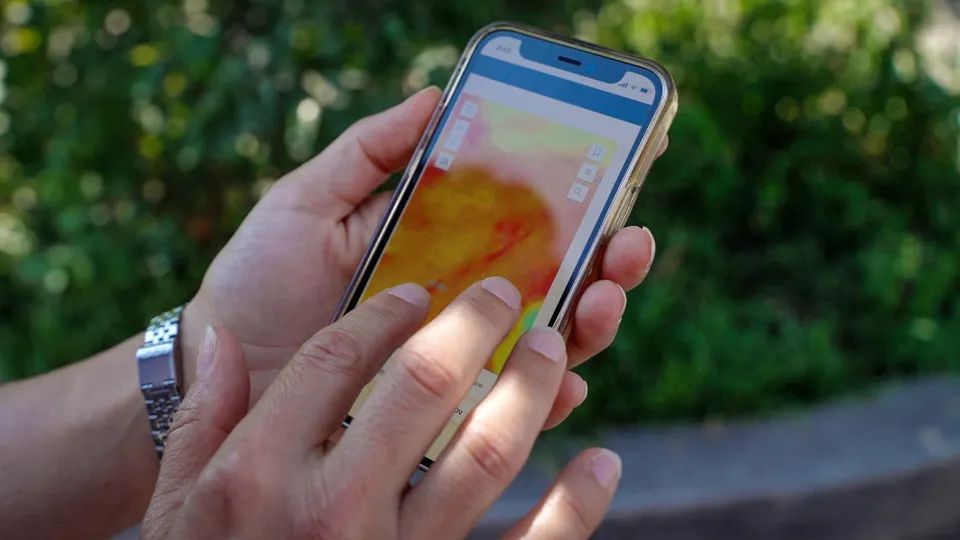
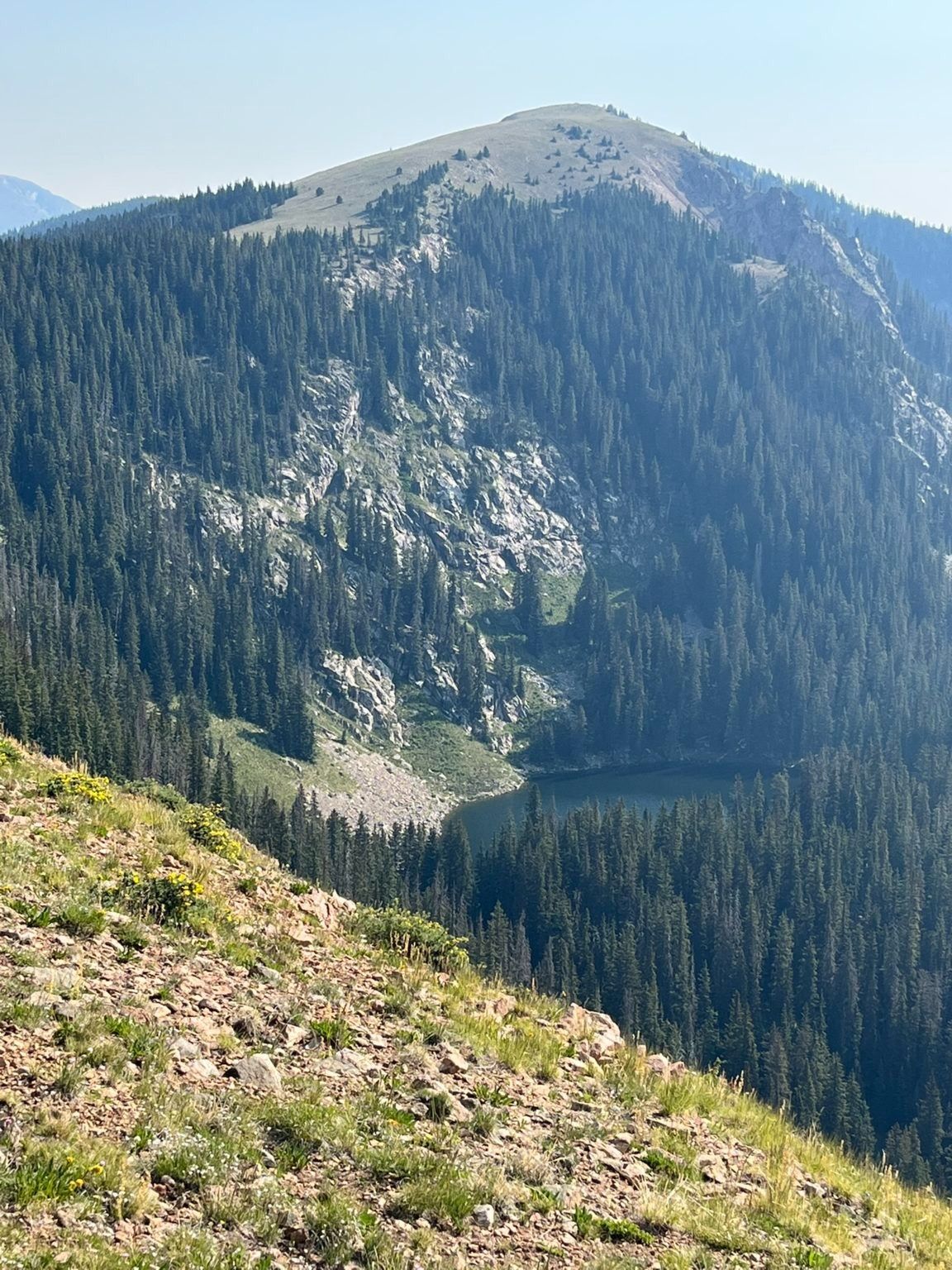
  • Artificial intelligence-enabled wildfire detection cameras not only help with wildfire detection and geolocation, but they also provide enhanced situational awareness that support wildfire management decisions and improve safety. Anytime we have wildland firefighters driving, hiking, and doing suppression activities, they Upper Santa Fe Lake, source for 40% of Santa Fe’s water encounter numerous hazards. If this technology can increase firefighters’ and public safety, it’s worth it. 
  • Camera networks that allow public access and viewing of wildfires and prescribed fires increase public understanding and awareness of wildfire, wildfire management, and prescribed fire. In my work at the Guild, we regularly take interested public, elected officials, and others out to see our forestry and prescribed fire treatments in-action. If a livestreamed camera can do something similar from the convenience of one’s phone, it will help elevate understanding of our work. 
  • The Santa Fe Municipal Watershed provides 40% of the City’s water supply while also being its cheapest and cleanest source. The upper watershed remains hidden from view, yet is critical to delivering clean water. The camera location on Tesuque Peak now provides a view into the upper watershed.

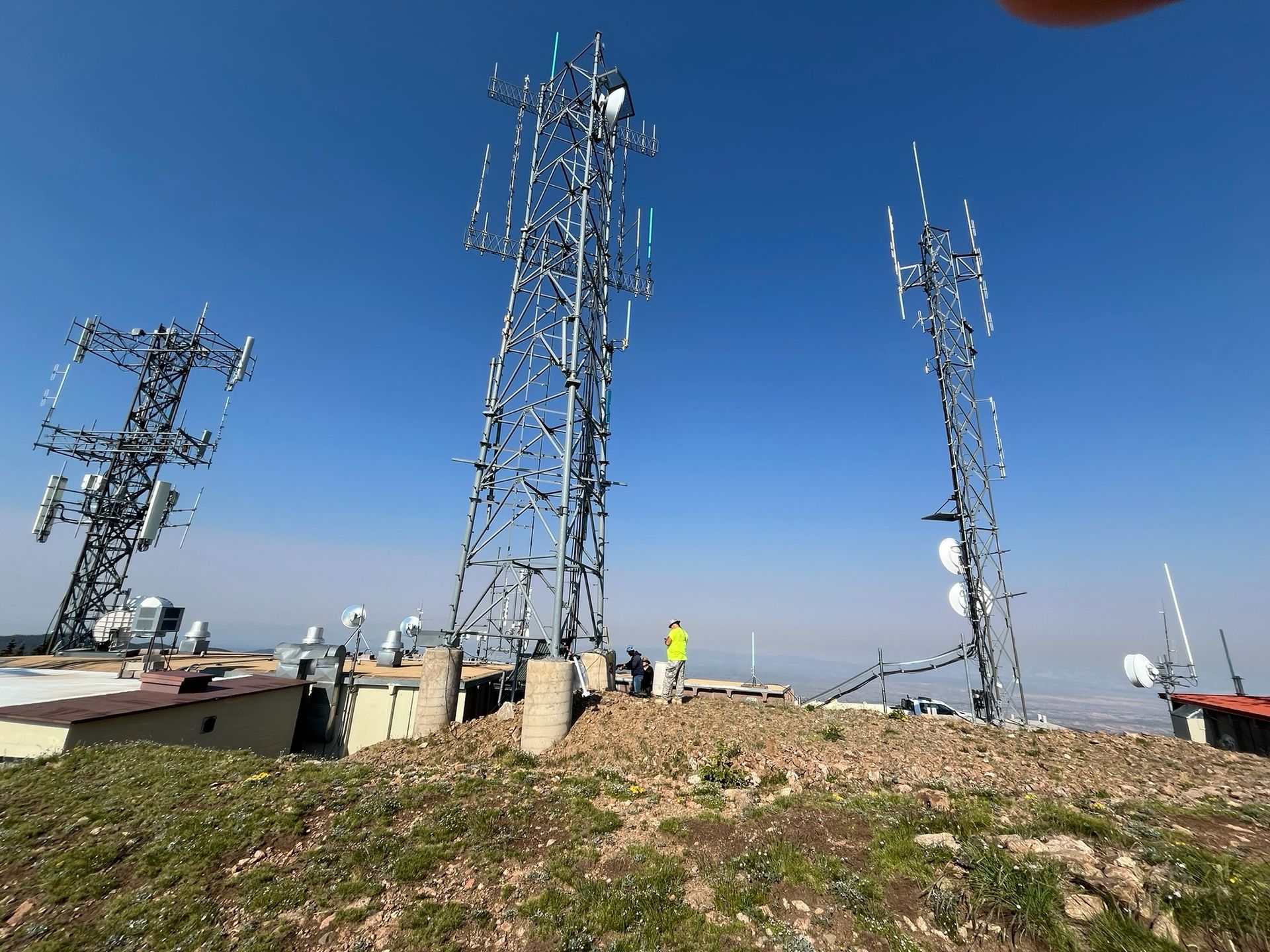
From these conversations and our rationale in hand, we secured funding from the Santa Fe Community Foundation and the Santa Fe – Pojoaque Soil and Water Conservation District to fund a camera pilot to be up and running for 1-year. Through Jonathan’s extensive research and dogged persistence, we began purchasing equipment based on a system Jonathan designed, discussions with AlertWest for their software services, and working with the company that owns the towers on Tesuque Peak. Tesuque Peak was chosen due to its geographic location, its access to power, the secure building to house the equipment, and its access via the gated Aspen Vista dirt road. 

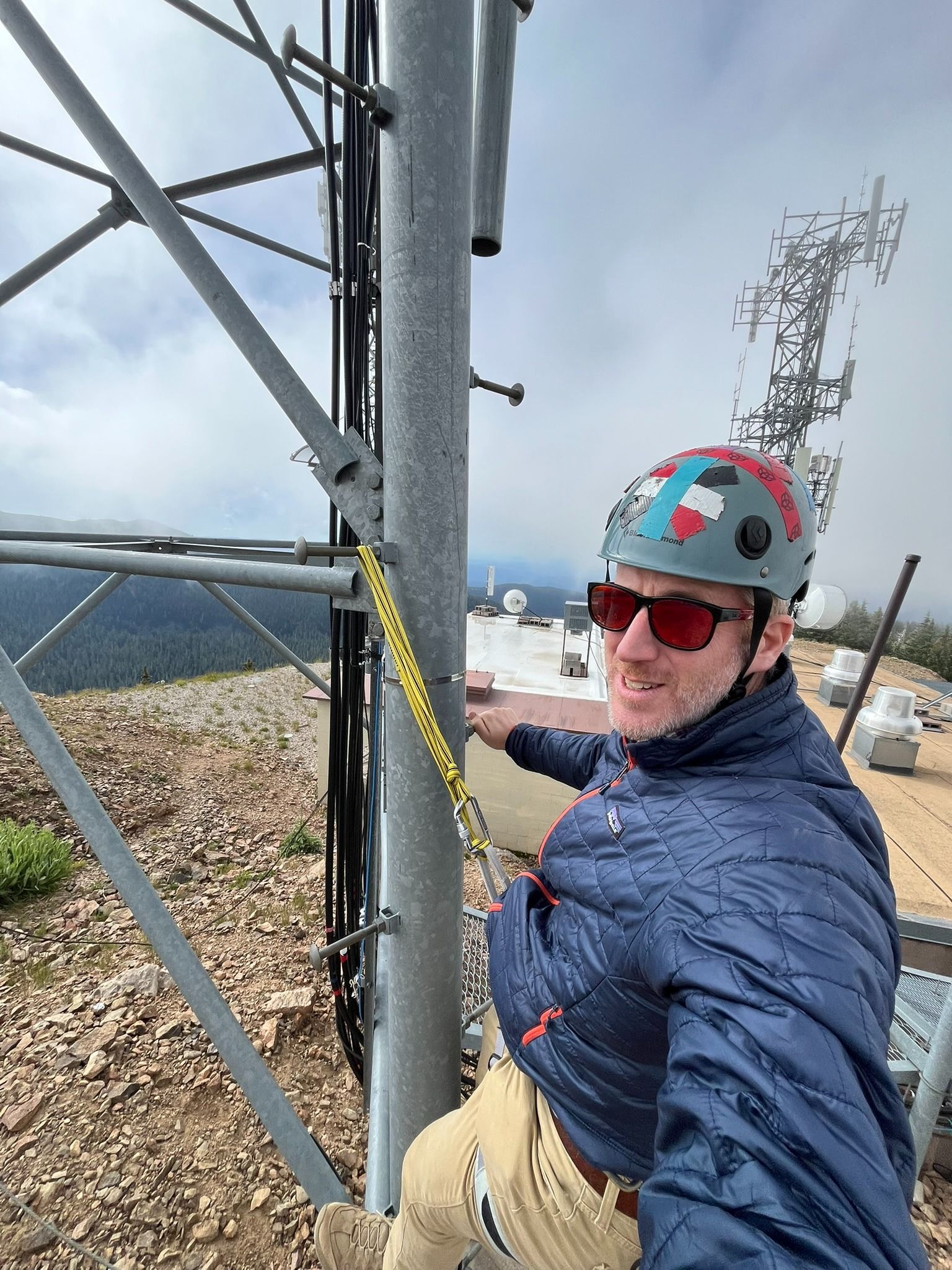
After several visits to the peak, towers were climbed, wires were patched and re-patched, gear was fortified for serious weather at 12,000’ elevation, systems were tested and adjusted, and the camera was operational mid-July 2025! https://alertwest.live/cam-console/16754 

During the first week, the AI system locked onto the Laguna Fire over 60 miles away telling us the technology was working! The next step was coordinating training sessions with local and federal wildfire response agencies to learn how to use the system and set up automated alerts. The training and integration into existing emergency response systems remains an ongoing task. Jonathan and I were excited to see the Santa Fe Interagency Dispatch Center panning and tilting the camera after a thunder cell moved over the landscape, looking for any lightning hit trees in the upper municipal watershed. 

Moving forward, we need more time to learn and integrate this technology into the landscape. Jonathan and I also want to see further piloting of this technology in New Mexico, particularly in areas less affluent than Santa Fe. We’d also like to see multiple cameras that have overlapping viewshed areas since this increases network functionality and effectiveness. While the Guild is not responding to wildfires, we are piloting and testing tools to assist wildland fire management and help us all live better with fire. 

Recent Posts

By Aidan Juhl April 16, 2026
Written by Colleen Robinson
April 14, 2026
Written by Shannon Maes
April 14, 2026
In September 2025, the Guild launched a three-person Forest Stewards Apprenticeship (FSA) crew to work with the Penobscot Nation’s Department of Natural Resources (PN DNR). Over the course of their six-month season, apprentices Agenor Duhon, Gabe Stewart, and Jacob Baker shared a season of learning, collaboration, and hands-on stewardship of Penobscot Tribal lands.
April 14, 2026
This week, I stepped into the role of crew leader. We worked a full 40-hour week, splitting our time between Clifton Farms and a prescribed burn operation. On the first day in the field, we completed hack-and-squirt treatments on trees that had been marked the previous week. For the remainder of the week, we focused on marking trees for future hack-and-squirt work, maintaining a steady pace and ensuring accuracy in our selections.
April 7, 2026
As Guild members, our practice is fundamentally grounded in field observation. We know intuitively that forests are dynamic, living communities. Yet, for decades, the high-level systems used to value our work, specifically the carbon accounting ledgers tied to international frameworks like the Paris Agreement, have treated forests as static, quantifiable blocks of land. In a recent commentary published in One Earth, I argue that these legacy measurement, reporting, and verification (MRV) frameworks are failing. Ledger accounting relies on crude land-use delineations and outdated technology, effectively penalizing the natural, seasonal flux of the ecosystems we manage every day. By forcing landscapes into rigid “forest” versus “non-forest” binaries, such legacy systems miss the complex reality on the ground. But a major shift is underway.
March 18, 2026
Women have always been a part of forestry. Historically, women often helped guide family decisions about when to cut, which trees to save, and how best to steward their land for the next generation. Historical accounts from the Southern Appalachians describe women’s roles in decisions about timber harvesting and prioritizing long-term forest health. These often-uncredited contributions are even reflected in Aldo Leopold’s A Sand County Almanac (1949), in which describes his stewardship philosophy informed not only by his professional experience, but by shared responsibility, where the perspectives of his wife and daughters played an important role.
March 18, 2026
Although rural regions often host the highest concentrations of public and private forest land, they typically lack the sustainable workforce necessary for active management and stewardship. How do we address this foundational problem in forest conservation?
March 18, 2026
The Forest Stewards Guild has a unique dual mandate: practice and promote forest stewardship. Personally, I think the combination of practicing forest management and promoting best practices is what makes the Guild a vibrant and impactful organization.
February 17, 2026
We celebrate the remarkable career and legacy of Leslie (Les) Benedict, who has provided visionary leadership and dedicated service to the stewardship of forests, championing the preservation of the ecological and culturally important black ash. Benedict, a member of the Saint Regis Mohawk Tribe in Akwesasne, north of the Adirondacks in upstate New York, recently retired after serving as the Assistant Director of the Tribe’s Environment Division for over 35 years.
February 17, 2026
The Forest Stewards Guild has been working to support the National Park Service on forest stewardship projects throughout the eastern U.S. This month we are in the midst of a project to protect mounds at Effigy Mounds National Monument near Harpers Ferry Iowa. This site was designated as a National Monument in 1949 and preserves over 200 mounds built between 800 and 2,500 years ago. Mounds at this site include conical, linear, compound, and effigy mounds – constructed in the shape of animals. Please see the National Park Service page for more information about the mounds, the people who built them, and how to visit the site. The lidar images on that website of the Marching Bears and other mound groups are fascinating.
Show More