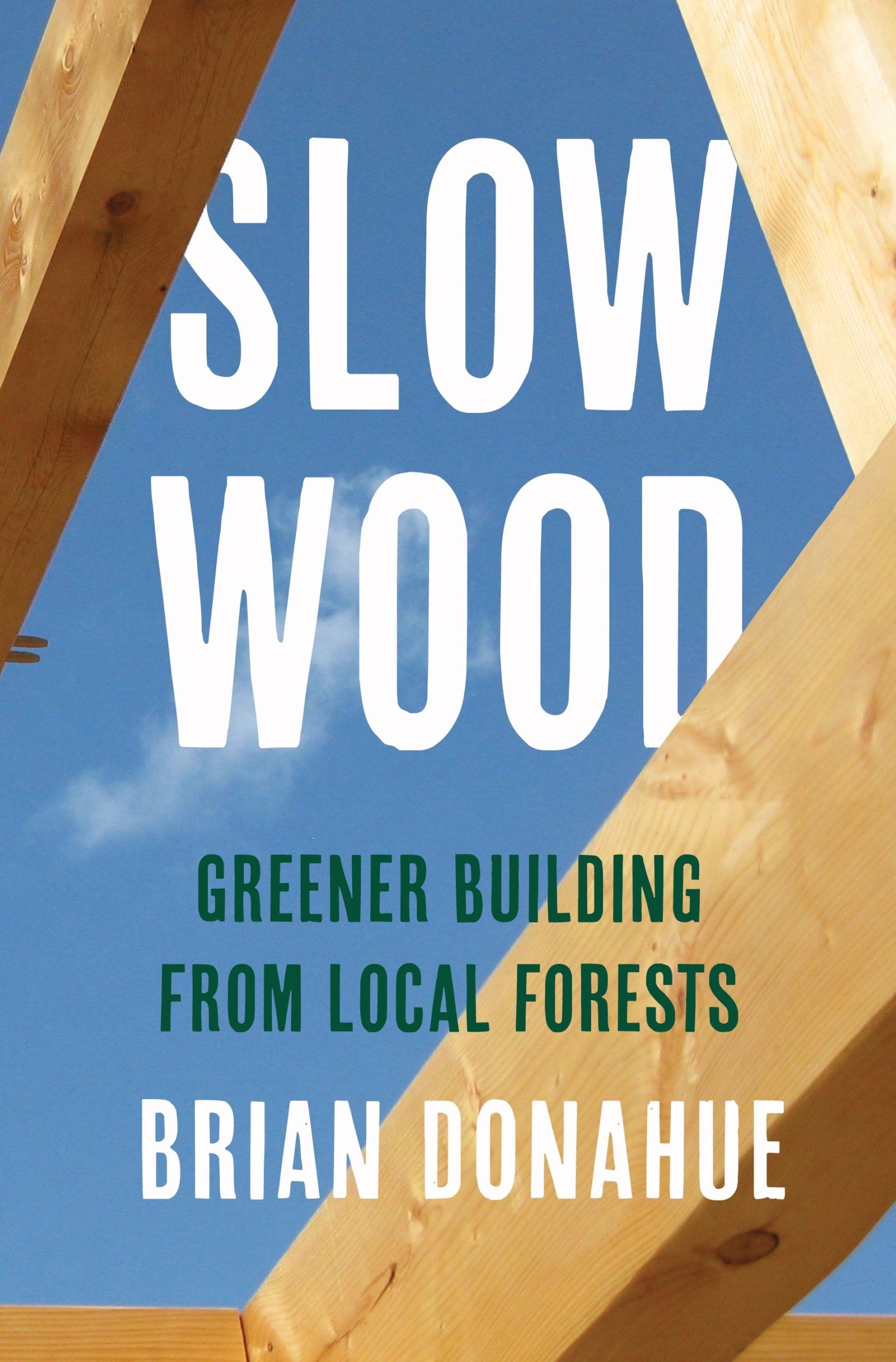
Slow Wood

June 19, 2025

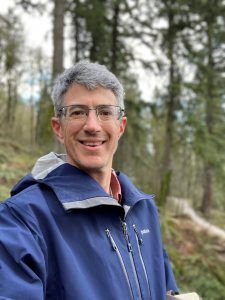
Written by Brian Donahue  

Slow Wood is a cheerful book in troubled times. 

The book was always meant to be cheerful. It’s about building a timber-frame house from our farm woodlot—a “worst first” house—and more broadly, about building with local wood as a way of advancing ecological forestry. Beautiful houses should come from beautiful forests: a hopeful message. 

We built the house in 2011, and I chipped away at the book for years, while teaching, running the farm, and writing other things. I did not foresee how difficult the world would become by the time the book finally appeared. Maybe I should have.   

I started working in the woods half a century ago, cutting firewood and timber for a suburban community farm and forest organization I helped get started during the energy crisis of the 1970s. I wrote about those adventures in another book called Reclaiming the Commons   . At the time, many of us believed that the world was running out of oil and would soon encounter hard limits to growth, and that we would be forced to rely on local sources for more of our food and wood, like it or not.   

Well, it didn’t turn out that way, and instead, we have seen an enormous surge in fossil fuel combustion, globalized resource extraction, and waste dumping, doing damage to ecosystems and homelands around the world. Imposing meaningful limits upon ourselves in any equitable and sustainable way is proving extremely difficult.   Slow Wood   is a cheerful book because increased reliance on responsibly produced local and regional wood is not a hardship, but a joy. Using more local food and wood is still an important part of any solution to our grinding crisis of planetary degradation, however partial and tardy, as well as a means to build community and constituency. What more can I say? I am not by nature an optimistic person; just a hopeful one.   

I use the term “slow wood” as an analogy to slow food and as shorthand for ecological forestry, with its long rotations, restrained cutting, and legacy trees that mimic natural rhythms and structure. I also use it to mean houses that are similarly built to last, using local and regional wood where it makes sense. Done strategically, this adds negligible incremental costs to everything else involved in home construction but generates immeasurable benefits for rural communities.

We built a timber-frame house with wood drawn from a low-grade thinning of a hundred-year-old mixed hardwood and softwood stand, typical for central Massachusetts. Lincoln Fish was our forester, Ed Klaus did the logging, Dave Bowman and Neil Godden were our framers. The best quality red oak and white pine stayed in the woods, lower-quality oak and pine made up the bulk of the timber sale (along with lots of firewood), and we built primarily with hemlock and black birch. The lowest of the low-grade, according to the market—but these woods are strong and beautiful!   

We used hemlock for the frame, but also hemlock two-bys for subflooring (ceilings) and one-bys for board-and-batten doors—the byproducts of sawing the beams. We used birch for flooring, trim, and kitchen cabinets. I cut a few crooked black cherries that provided curved frame braces, along with porch posts, windowsills, and stair risers. I thinned some suppressed sugar maples for loft ladders and stair treads.   

In the book, I use these trees—hemlock, cherry, birch, and maple—to provide the narrative thread for managing the forest and building the house. In addition, I use them to tell the story of the changing relationship between Americans and their forests over the past few centuries—basically, the loss of local connection, the rise of industrial extraction, and the ongoing struggle of conservation and stewardship to make a real difference. In the conclusion, I make the case for returning to a local and regional approach to providing most (not all) of our wood. Here I draw on the research we did for Beyond the Illusion of Preservation, led by Caitlin Littlefield and a fine crew of foresters and ecologists known well to the Forest Stewards Guild.   

Members of the Guild won’t learn much you don’t already know from Slow Wood  —though I hope you will enjoy it, and now and then nod along in agreement. I didn’t write it primarily for you. I wrote it for a broad environmental audience whose first instinct is never to cut trees but just let them grow. If we didn’t need wood, I might agree. But we do need wood, and I want to show as vividly as possible that we can get that wood while supporting other ecological and social values and creating beauty in the world.   

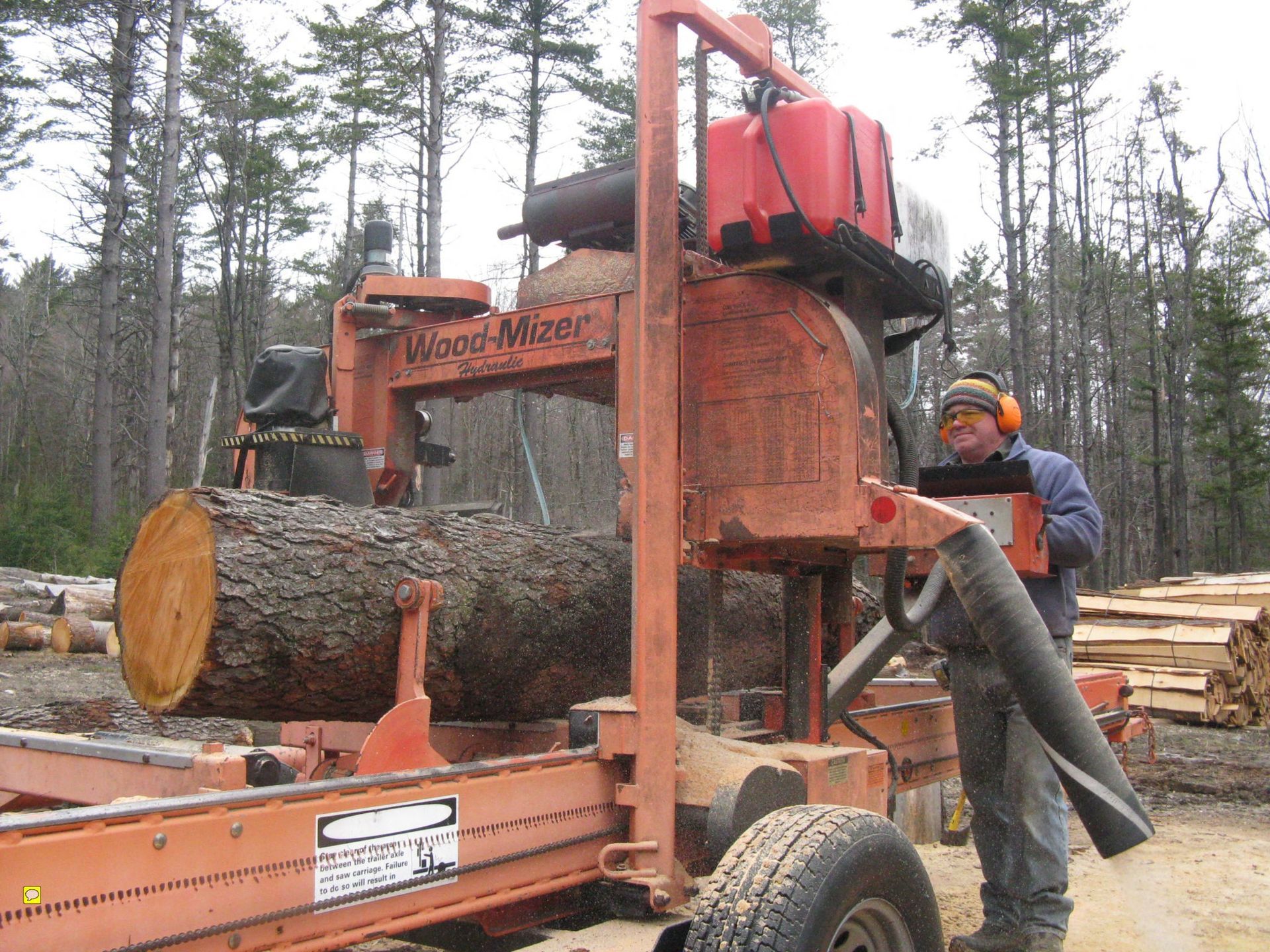
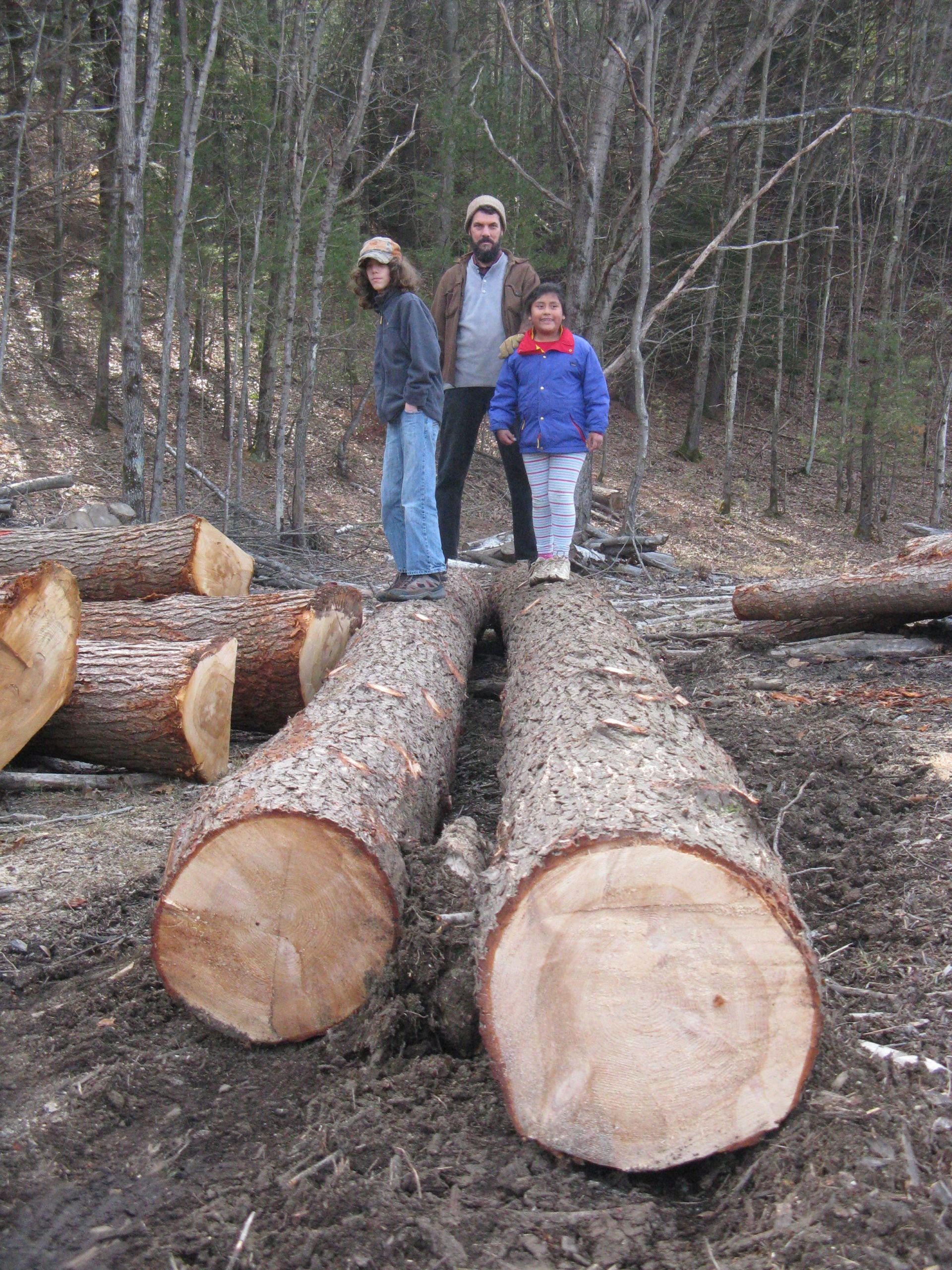
Again, you know all this. What I need from you—other than giving the book to as many people as you can think of who don’t yet see this bigger picture—is to help me find my audience. I can give reasonably entertaining talks for woodland owner associations, college courses, environmental groups, land trusts, garden clubs, you name it. I have lots of nice pictures of trees being cut down and a house being built from them, and a compelling argument that this is a good thing. 

I am not trying to convince anyone that forests intrinsically need to be managed. As co-author of   Wildlands and Woodlands, I am all for extensive untrammeled wild places. I am trying to convince my fellow environmentalists that because we need wood, the forests that provide that wood need to be managed better than is generally now the case. Slow Wood is designed as a tool to help us get that simple message across, while navigating the rip tides that Guild members know only too well: misguided antipathy to all cutting on the one hand, and the rigors of competing with industrial extraction on the other.   

I’d be grateful for any opportunity to help communicate this hopeful message: we can meet our wood needs and still do well by our forests. And I am sorry that Slow Wood appears at a time when so many Guild members who have made this their life’s work, or who want to, are suffering such cruel setbacks. Don’t give up the fight. We need you.   


Recent Posts

By Aidan Juhl April 16, 2026
Written by Colleen Robinson
April 14, 2026
Written by Shannon Maes
April 14, 2026
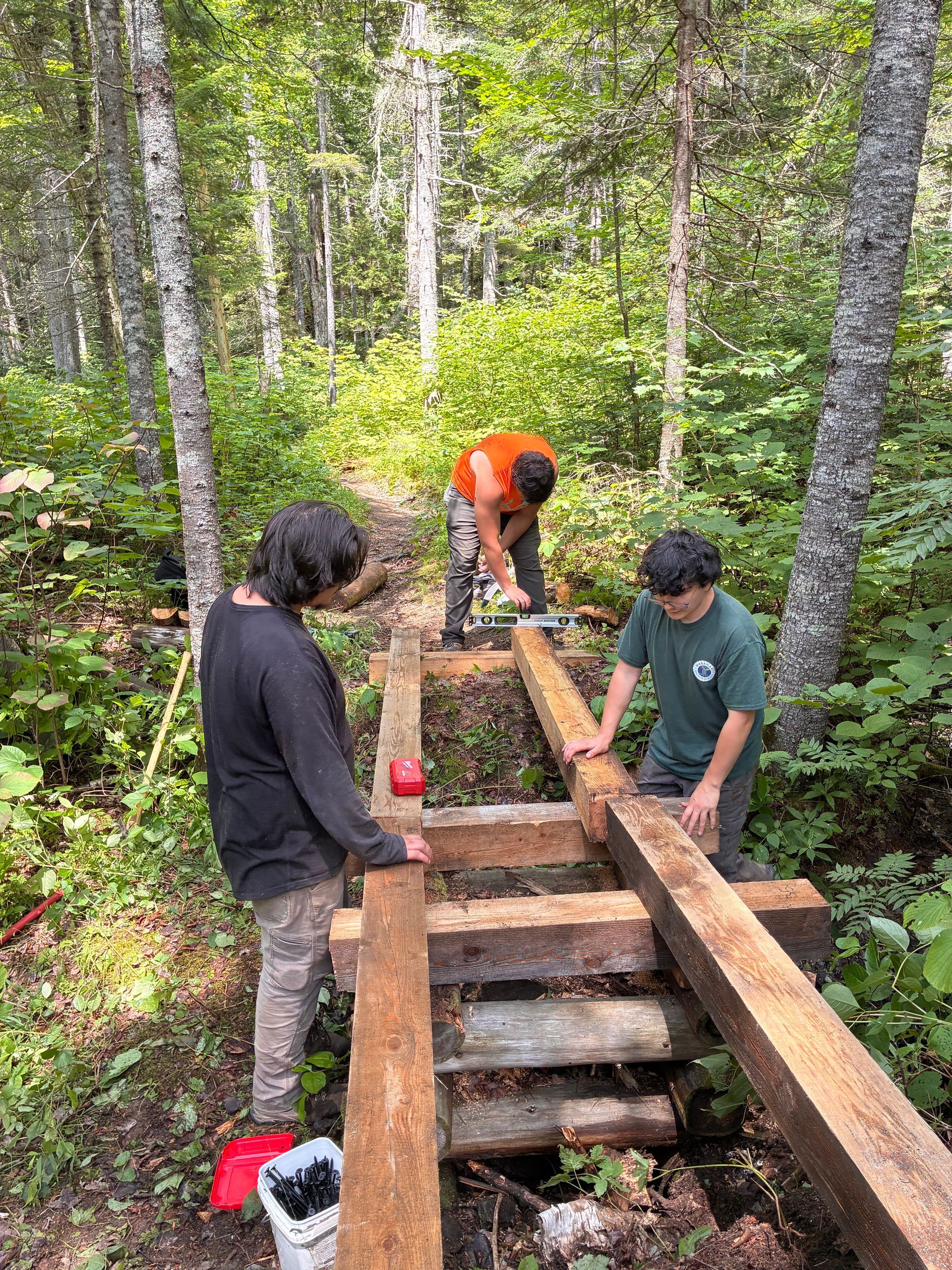
In September 2025, the Guild launched a three-person Forest Stewards Apprenticeship (FSA) crew to work with the Penobscot Nation’s Department of Natural Resources (PN DNR). Over the course of their six-month season, apprentices Agenor Duhon, Gabe Stewart, and Jacob Baker shared a season of learning, collaboration, and hands-on stewardship of Penobscot Tribal lands.
April 14, 2026
This week, I stepped into the role of crew leader. We worked a full 40-hour week, splitting our time between Clifton Farms and a prescribed burn operation. On the first day in the field, we completed hack-and-squirt treatments on trees that had been marked the previous week. For the remainder of the week, we focused on marking trees for future hack-and-squirt work, maintaining a steady pace and ensuring accuracy in our selections.
April 7, 2026
As Guild members, our practice is fundamentally grounded in field observation. We know intuitively that forests are dynamic, living communities. Yet, for decades, the high-level systems used to value our work, specifically the carbon accounting ledgers tied to international frameworks like the Paris Agreement, have treated forests as static, quantifiable blocks of land. In a recent commentary published in One Earth, I argue that these legacy measurement, reporting, and verification (MRV) frameworks are failing. Ledger accounting relies on crude land-use delineations and outdated technology, effectively penalizing the natural, seasonal flux of the ecosystems we manage every day. By forcing landscapes into rigid “forest” versus “non-forest” binaries, such legacy systems miss the complex reality on the ground. But a major shift is underway.
March 18, 2026
Women have always been a part of forestry. Historically, women often helped guide family decisions about when to cut, which trees to save, and how best to steward their land for the next generation. Historical accounts from the Southern Appalachians describe women’s roles in decisions about timber harvesting and prioritizing long-term forest health. These often-uncredited contributions are even reflected in Aldo Leopold’s A Sand County Almanac (1949), in which describes his stewardship philosophy informed not only by his professional experience, but by shared responsibility, where the perspectives of his wife and daughters played an important role.
March 18, 2026
Although rural regions often host the highest concentrations of public and private forest land, they typically lack the sustainable workforce necessary for active management and stewardship. How do we address this foundational problem in forest conservation?
March 18, 2026
The Forest Stewards Guild has a unique dual mandate: practice and promote forest stewardship. Personally, I think the combination of practicing forest management and promoting best practices is what makes the Guild a vibrant and impactful organization.
February 17, 2026
We celebrate the remarkable career and legacy of Leslie (Les) Benedict, who has provided visionary leadership and dedicated service to the stewardship of forests, championing the preservation of the ecological and culturally important black ash. Benedict, a member of the Saint Regis Mohawk Tribe in Akwesasne, north of the Adirondacks in upstate New York, recently retired after serving as the Assistant Director of the Tribe’s Environment Division for over 35 years.
February 17, 2026
The Forest Stewards Guild has been working to support the National Park Service on forest stewardship projects throughout the eastern U.S. This month we are in the midst of a project to protect mounds at Effigy Mounds National Monument near Harpers Ferry Iowa. This site was designated as a National Monument in 1949 and preserves over 200 mounds built between 800 and 2,500 years ago. Mounds at this site include conical, linear, compound, and effigy mounds – constructed in the shape of animals. Please see the National Park Service page for more information about the mounds, the people who built them, and how to visit the site. The lidar images on that website of the Marching Bears and other mound groups are fascinating.
Show More