Remembering Richard Hart

April 10, 2025

Written by Mary Snieckus

Sincere appreciation to Sharon McCann for providing biographical information  

The ideas that led to the Guild’s 1997 founding were simple yet profound. First, that forestry could be practiced to result in better forest conditions over time and sustainably provide for human needs. Termed ecological forestry, early leaders, including Henry Carey and Steve Harrington, started to learn about forest practitioners managing forests with this philosophy, and went to visit them and see their work. That led to the second idea critical to the Guild’s identity: that ecological forestry practitioners needed a way to connect with one another to share the “spark” – the observations, experiences, and questions that animate their practice.   

Noted  ecologist  Richard Hart was involved in these early Guild gatherings and embodied the “spark”. A keen observer and systems thinker, he was a remarkable person who led a life of curiosity and connection.   

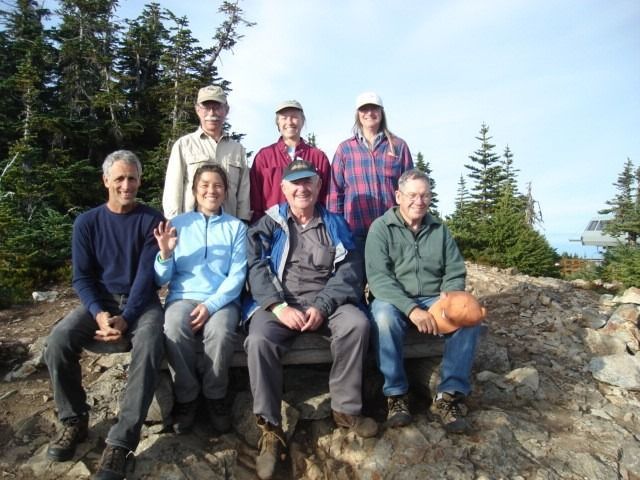
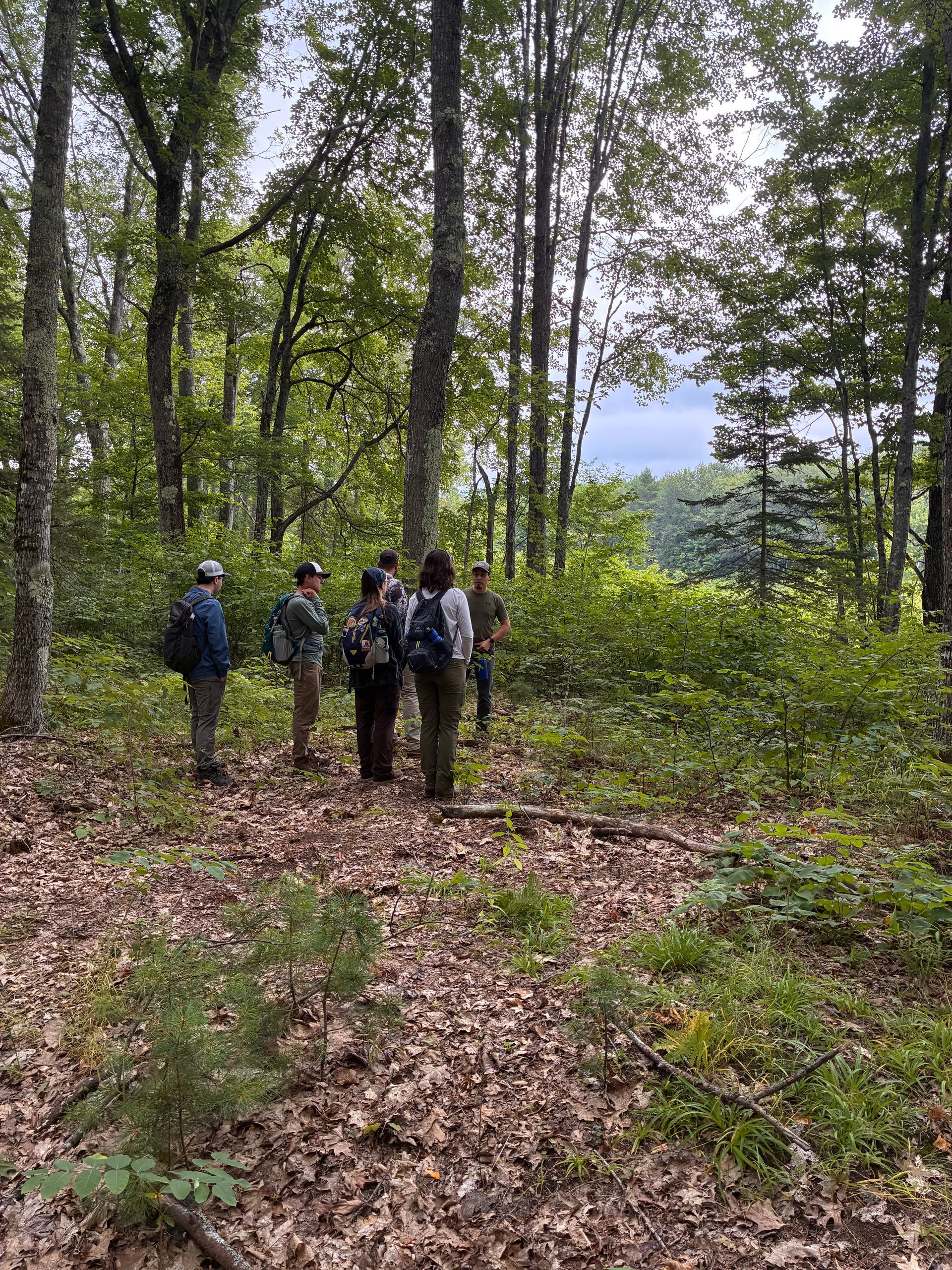
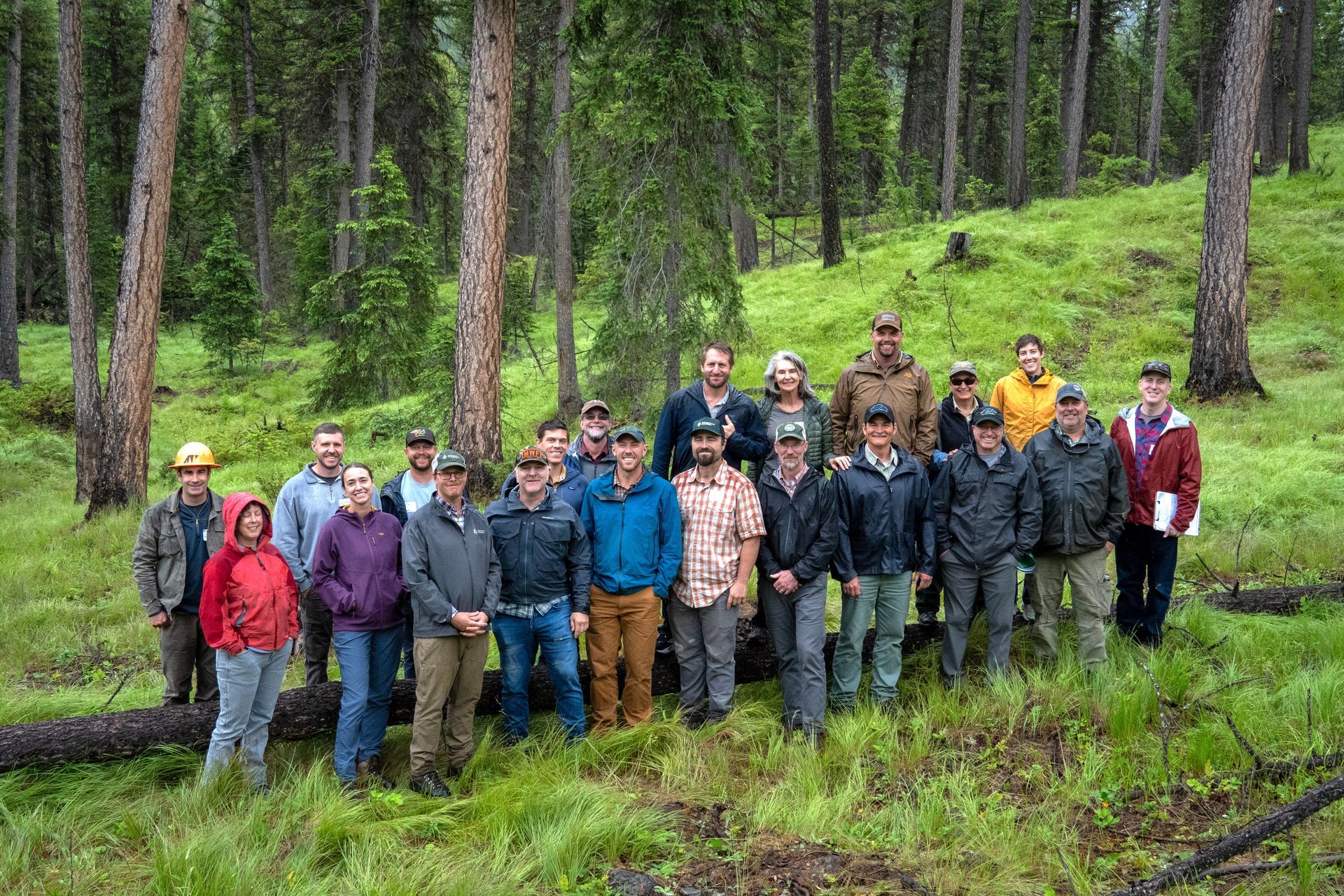
Guild gathering in 2009 made up of 7 people

Richard’s introduction to environmental stewardship began as the watershed shepherd of the Christian Brothers vineyard in Napa Valley, California, where he joined the Catholic monastic order to become a teaching monk at the age of 14. His formal monastic and university education prepared him to teach at secondary and post-secondary schools in California. While a monk he obtained a Master’s degree in Ecclesiology (sacred architecture) in Rome and designed Catholic churches. Soon after he left monastic life at 25, Richard worked as a designer/planner for the architectural firm of William Pereira & Associates in Los Angeles on projects including the TransAmerica building in San Francisco, developments in Abidjan, Ivory Coast and Oahu, Hawaii, and Los Angeles International Airport.

Richard was a multi-talented innovator. Notable projects and accomplishments included:  

  • working with R. Buckminster Fuller on the refinement of his World Games Symposiums;  

  • co-recipient of the California Golden Bell Award for innovative secondary education;  

  • consultant to the California Dept. of Education for environmental education curriculum  

  • developer of mineral water processing technology for the USA and China; and  

  • designing and implementing the largest biophysical monitoring plan at the time for the US Forest Service and Lake County, Oregon.  

From the 1990s to 2005, Richard’s deep love and respect for Nature led him to pursue knowledge of the natural sciences, and work in environmental conservation and sustainability. He used his skills as an educator and innovator, along with his natural warmth, genuine caring and ability to communicate, to build community among the many forest conservation groups in California and Oregon. He was well respected by forest activists, forest scientists and Forest Service/Bureau of Land Management professionals. Over the years, Richard was funded by numerous organizations, including Sustainable Northwest and the Ford Foundation. Richard was a forestland assessor and contributing member of the Forest Stewardship Council.   

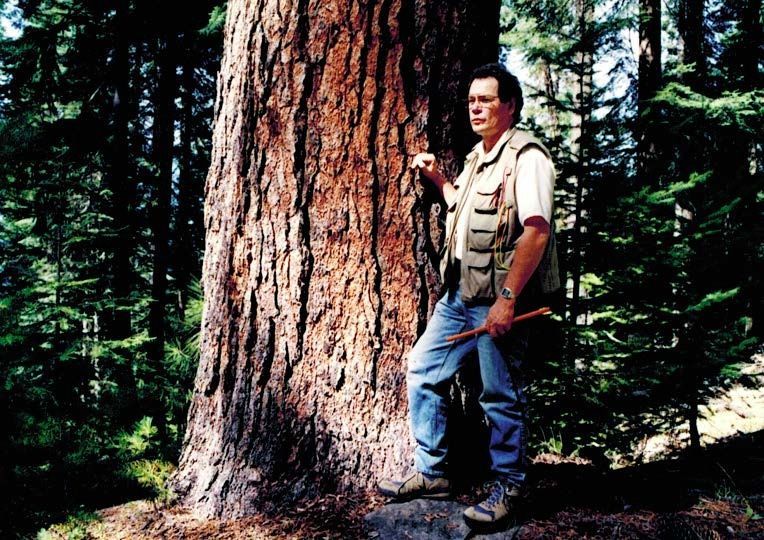
I met Richard during the four years he was contracted to monitor the health of the Chewaucan watershed in Lake County ineastern Oregon. This was the last major project he took on before retiring in 2005. He was supported by the Forest Stewards Guild to teach biophysical monitoring across the US. When I spent time with Richard and his crew of young adults in their watershed, the Chewaucan, they were collecting data to assess the impact of forest management practices on streams.  But more than that, he took time with them to linger around the big trees, and on that day, we sat in one area he named a specific Ponderosa pine tree “P-pine”. We sat with the tree, listening to the birds who perched in its branches, smelling the butterscotch scent of the bark on the sunny side, and feeling the sunlight filter through the swaying branches. We talked about the life of the tree, how it was connected to bugs, the soil, and the salmon.  And then we talked about how we are all connected through time and with the earth through the elements of our bodies and the spark of our souls. Those were days in the woods when collecting data may have been the reason for being out there, but it was also an opportunity for profound, deep grounding and connection with the place because of being there with Richard. As a result of his work with the Guild teaching biophysical monitoring, Richard estimated that his methodology was adapted for use by forest-based communities on nearly 3 million acres around the country.   

David Perry, a respected professor of ecosystem studies in forest science at Oregon State University, knew Richard. Quoted in an article published in a 1996 issue of the International Journal of Ecoforestry, Dr. Perry said: “Richard has beg  un to quantify some issues of sustainability like water quality and soil compaction. Before Richard, there was poor monitoring being done. Richard began to get out and measure things and teach others to do it, including people in the Forest Service and environmental organizations . . . . He really set things in motion by judging how close we are to meeting environmental objectives.” Dr. Perry called Richard “a pioneer in terms of translating some of the science into the field and teaching people simple techniques for measurement.”   

Richard was a mentor and friend to me, and to so many others. His varied life made him a patient and thoughtful listener. One of his gifts was a deep understanding of how to connect with people, because he was ready for them, when and where they were ready for him.

 I knew Richard as a contemplative, observant man with a mischievous sense of humor. He noticed things, both about the world around him and the people in it. Our conversations invariably started with what was going on in the forests around us, wherever we each were, before we could get to what was going on within us.

The last time I saw Richard was when he hosted a summer Guild gathering at his home on Vancouver Island, British Columbia. He wanted to show us the work he was doing to help a friend who owned a large, forested acreage to manage it sustainably. We spent the day in the woods sharing observations and experiences about what made that system work. And learning from each other. Richard was joyful in a place he loved with people who shared his sense of wonder. We were treated to a dinner he grilled for us, where he continued telling stories with a twinkle in his eyes. In the evening of that long summer day, we all walked to the beach to admire the last of the daylight turn the Coast Mountains and Salish Sea pink, then purple, then deep black as the stars burned brightly. We stood quietly; in awe of the day we had shared together.   

Earlier in the day Richard had smiled as he handed me a poem by Rumi:  

 On a day   

 when the wind is perfect   

 the sail just needs to open and the world is full   

 of beauty.   

 Today is such a    

 day.   

Indeed, it was.   

I’m very grateful Richard was a part of my life, and the lives of so many. He is always in our hearts.  

Recent Posts

By Aidan Juhl April 16, 2026
Written by Colleen Robinson
April 14, 2026
Written by Shannon Maes
April 14, 2026
In September 2025, the Guild launched a three-person Forest Stewards Apprenticeship (FSA) crew to work with the Penobscot Nation’s Department of Natural Resources (PN DNR). Over the course of their six-month season, apprentices Agenor Duhon, Gabe Stewart, and Jacob Baker shared a season of learning, collaboration, and hands-on stewardship of Penobscot Tribal lands.
April 14, 2026
This week, I stepped into the role of crew leader. We worked a full 40-hour week, splitting our time between Clifton Farms and a prescribed burn operation. On the first day in the field, we completed hack-and-squirt treatments on trees that had been marked the previous week. For the remainder of the week, we focused on marking trees for future hack-and-squirt work, maintaining a steady pace and ensuring accuracy in our selections.
April 7, 2026
As Guild members, our practice is fundamentally grounded in field observation. We know intuitively that forests are dynamic, living communities. Yet, for decades, the high-level systems used to value our work, specifically the carbon accounting ledgers tied to international frameworks like the Paris Agreement, have treated forests as static, quantifiable blocks of land. In a recent commentary published in One Earth, I argue that these legacy measurement, reporting, and verification (MRV) frameworks are failing. Ledger accounting relies on crude land-use delineations and outdated technology, effectively penalizing the natural, seasonal flux of the ecosystems we manage every day. By forcing landscapes into rigid “forest” versus “non-forest” binaries, such legacy systems miss the complex reality on the ground. But a major shift is underway.
March 18, 2026
Women have always been a part of forestry. Historically, women often helped guide family decisions about when to cut, which trees to save, and how best to steward their land for the next generation. Historical accounts from the Southern Appalachians describe women’s roles in decisions about timber harvesting and prioritizing long-term forest health. These often-uncredited contributions are even reflected in Aldo Leopold’s A Sand County Almanac (1949), in which describes his stewardship philosophy informed not only by his professional experience, but by shared responsibility, where the perspectives of his wife and daughters played an important role.
March 18, 2026
Although rural regions often host the highest concentrations of public and private forest land, they typically lack the sustainable workforce necessary for active management and stewardship. How do we address this foundational problem in forest conservation?
March 18, 2026
The Forest Stewards Guild has a unique dual mandate: practice and promote forest stewardship. Personally, I think the combination of practicing forest management and promoting best practices is what makes the Guild a vibrant and impactful organization.
February 17, 2026
We celebrate the remarkable career and legacy of Leslie (Les) Benedict, who has provided visionary leadership and dedicated service to the stewardship of forests, championing the preservation of the ecological and culturally important black ash. Benedict, a member of the Saint Regis Mohawk Tribe in Akwesasne, north of the Adirondacks in upstate New York, recently retired after serving as the Assistant Director of the Tribe’s Environment Division for over 35 years.
February 17, 2026
The Forest Stewards Guild has been working to support the National Park Service on forest stewardship projects throughout the eastern U.S. This month we are in the midst of a project to protect mounds at Effigy Mounds National Monument near Harpers Ferry Iowa. This site was designated as a National Monument in 1949 and preserves over 200 mounds built between 800 and 2,500 years ago. Mounds at this site include conical, linear, compound, and effigy mounds – constructed in the shape of animals. Please see the National Park Service page for more information about the mounds, the people who built them, and how to visit the site. The lidar images on that website of the Marching Bears and other mound groups are fascinating.
Show More