Pathways to Sustain Ash: Insights from the Guild’s Ash Seed Collection Series

April 15, 2025

Written by Michelle Giles and Rachel Swanwick

This spring, the Sustaining Ash Partners Network (SAP-Ne) hosted a three-part event series, “Pathways to Sustain Ash,” to highlight the importance of seed collection in ash stewardship. SAP-Ne promotes ash protection across the Northeast and is managed by the Forest Stewards Guild’s Northeast program manager, Rachel Swanwick. 

The two webinars and accompanying field tour, challenged the prevalent narrative that ash preservation is a lost cause due to the invasion of the emerald ash borer (EAB). Hundreds attended the series, including conservation leaders, concerned citizens, and partners from Tribal Nations, government agencies, universities, and NGOs.   

Why Preserve Ash Seed?   

In the kick-off webinar, “Why Preserve Ash Seed,”  Dr. Nate Siegert from the USDA Forest Service shared updates on ash and EAB infestations. He noted that EAB is “the most destructive insect to invade North America,” stressing that management actions like seed collection can serve as a critical lifeboat to protect the future of ash.   

For Tribal Nations like the Saint Regis Mohawk Tribe, preserving ash seeds is a vital cultural practice. Jessica Raspitha, the Tribe’s Land Resources Program Manager, discussed their efforts to ensure future generations can access brown, also known as black ash for traditional basket making. The Tribe’s seed collection efforts are part of a broader strategy to conserve and restore ash. Their seeds are stored for use in their native plant nursery or shared with neighboring Tribes.   

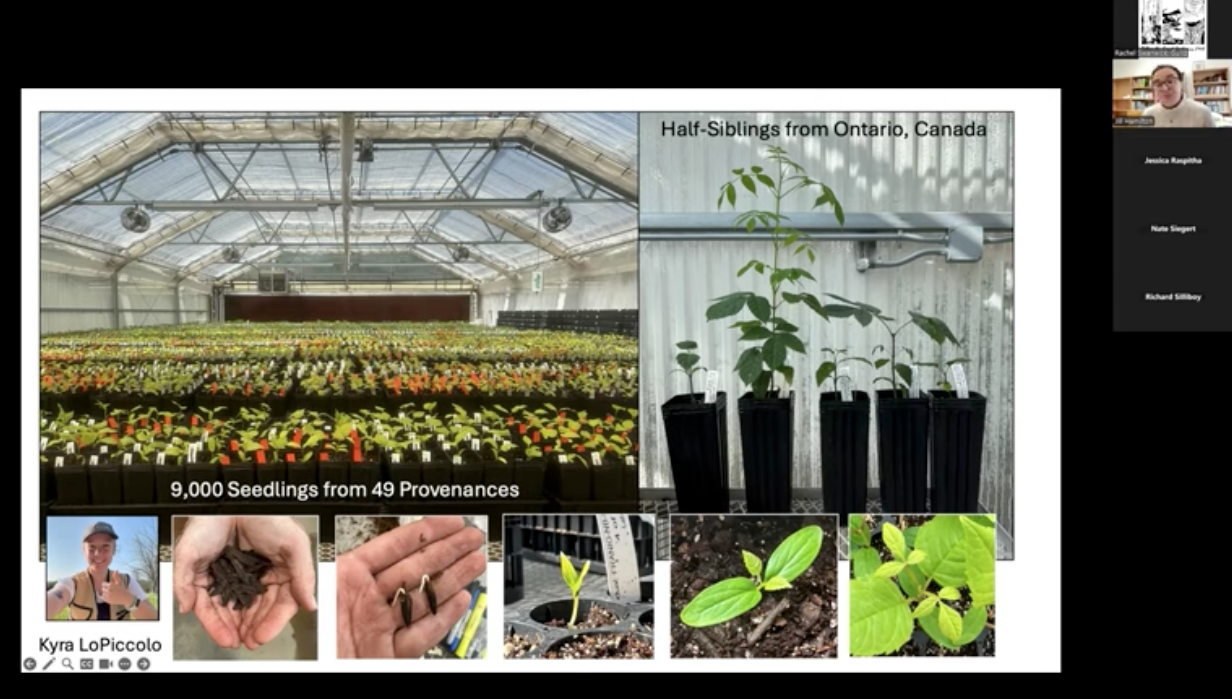
Dr. Jill Hamilton from Penn State and Jeff Carstens from the USDA-Agricultural Research Service highlighted the importance of preserving the genetic biodiversity of ash seeds. Jeff operates the “Fraxinus (ash) Repository” in Ames, Iowa, with ash comprising 20% of its collection—an increase from just 3-4% prior to EAB. Jill and her students are studying and propagating seeds from across the U.S. and Canada, creating a “genetic library of black ash”, with plans to plant 9,000 seedlings from her research greenhouse this spring in New York, Pennsylvania, and the Canadian province of Quebec. 

 The How-To of Ash Seed Preservation     

The second webinar, “ The How-to Ash Seed Preservation from Collection to Propagation,” featured  Ella McDonald and Tyler Everett from the University of Maine’s  Ash Protection Collaboration Across Wabankik   (APCAW). They emphasized the urgency of collecting ash seeds from areas affected by EAB, referencing the Brown Ash Seed Collection Manual (Francis, 2023), a key resource to learn about the seed collection process.   

S  peaker Emily Baisden, Director of the Wild Seed Project, expressed her eagerness to expand the non-profit’s intake of brown ash seed. Her facility receives seeds from hundreds of species annually, but Emily hopes to see more brown ash included among them.     

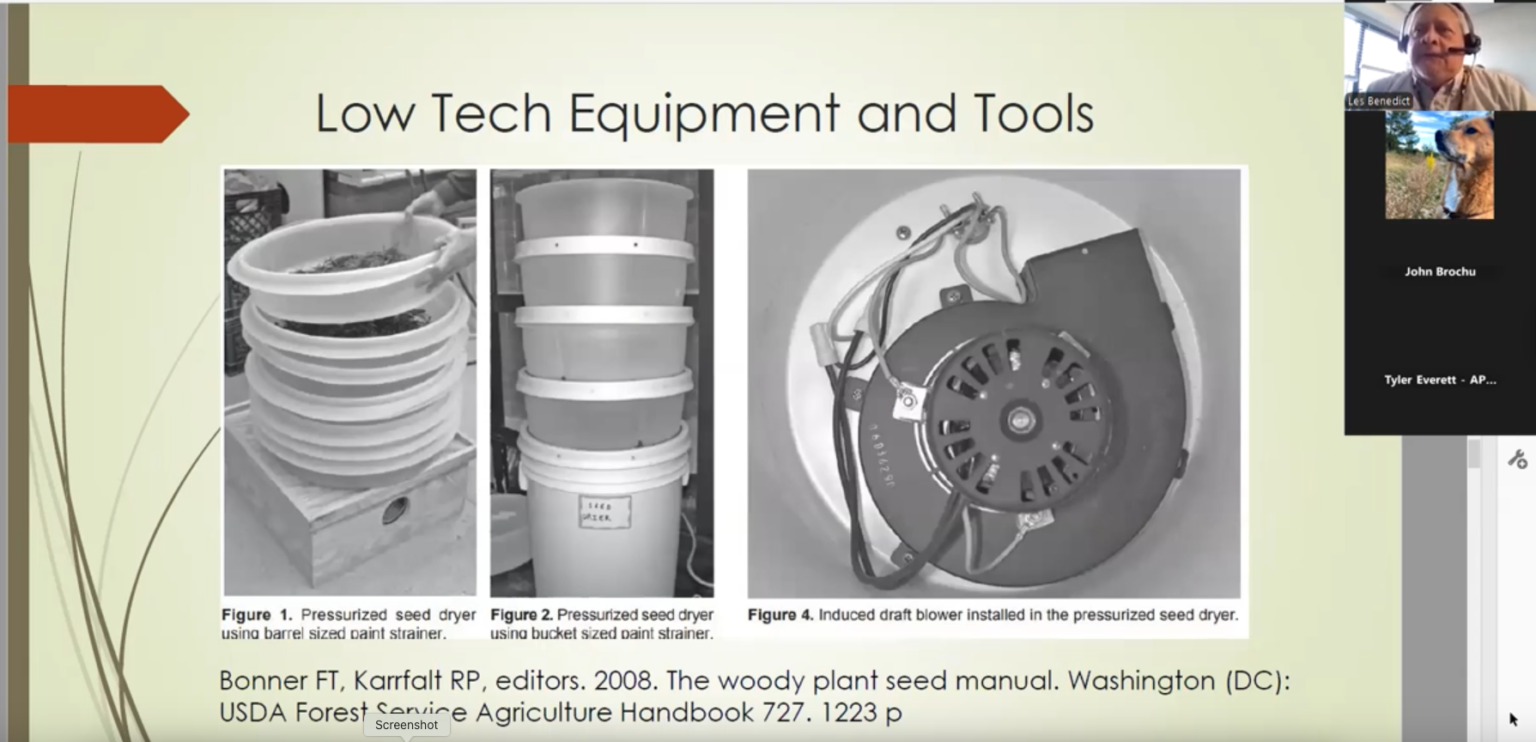
Proper seed drying is essential for seed viability, a sentiment shared by Les Benedict, the Environment Division Assistant Director with the Saint Regis Mohawk Tribe. Les has been a leader in ash preservation both for his Tribe and across the Northeast for decades. He demonstrated multiple seed drying techniques, including how to build a DIY pressurized seed dryer using common hardware materials. Following his talk, participants collaborated on planning their own seed collection cycles during an interactive breakout session.   

 The New Hampshire State Forest Nursery Field Tour     

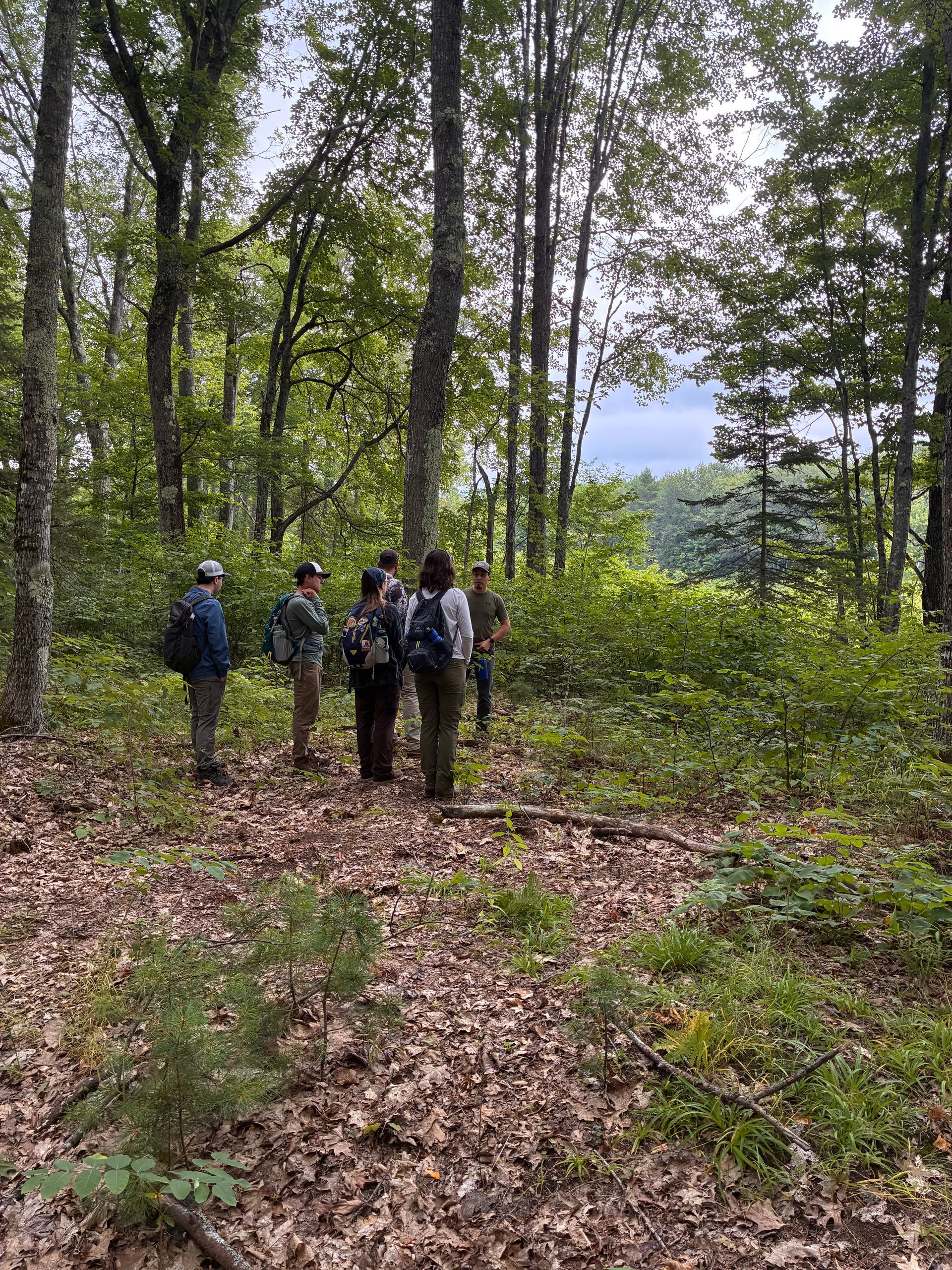
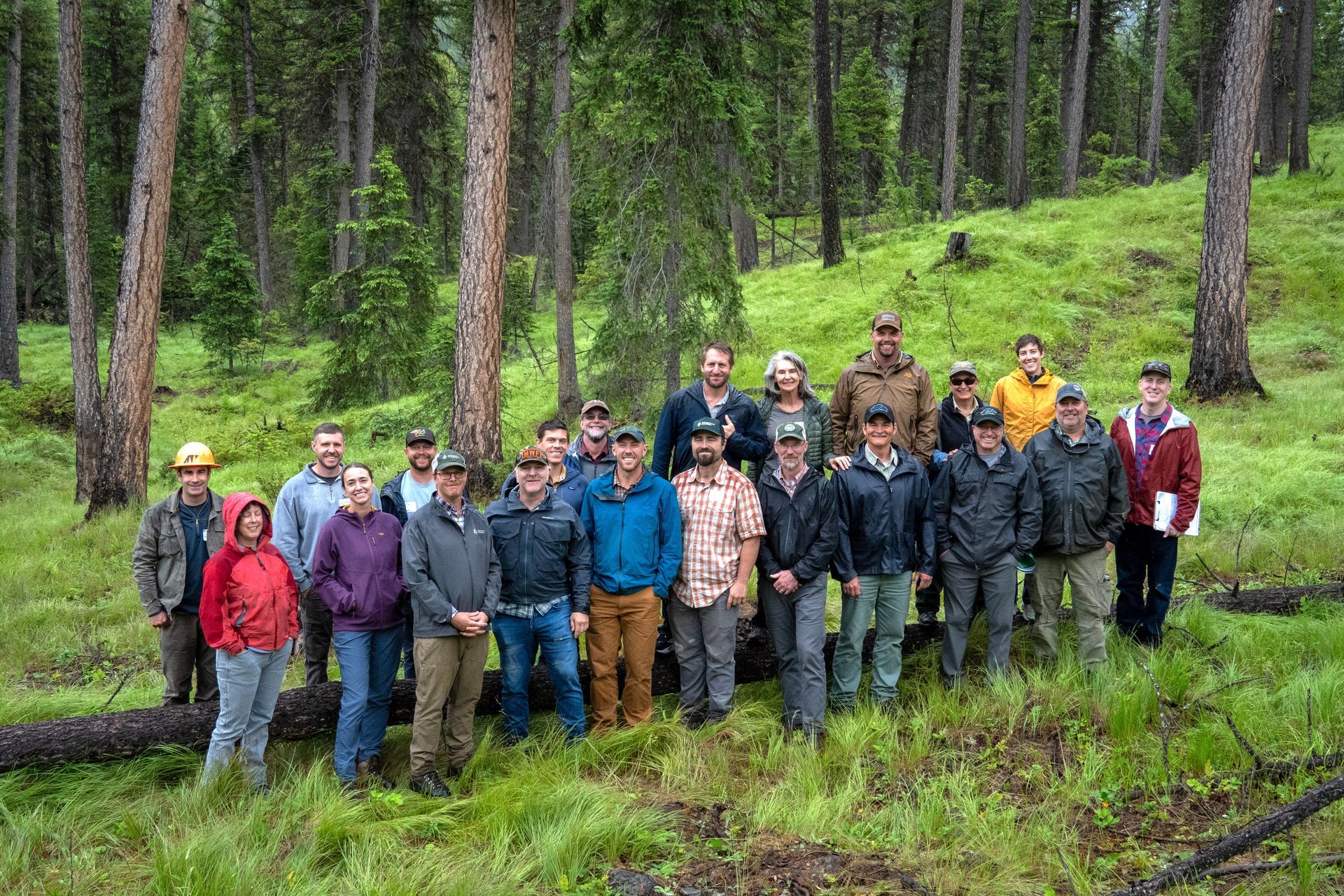
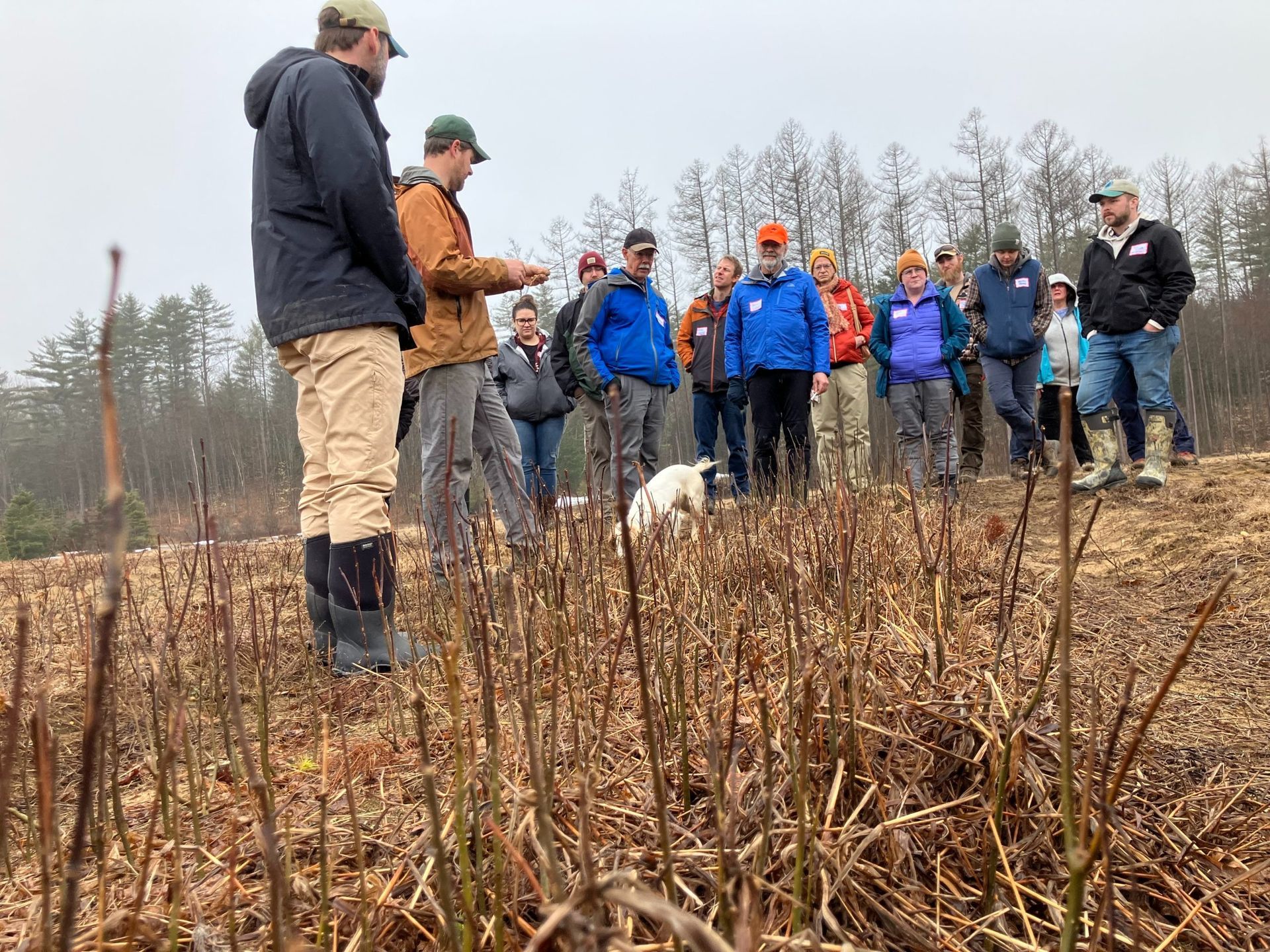
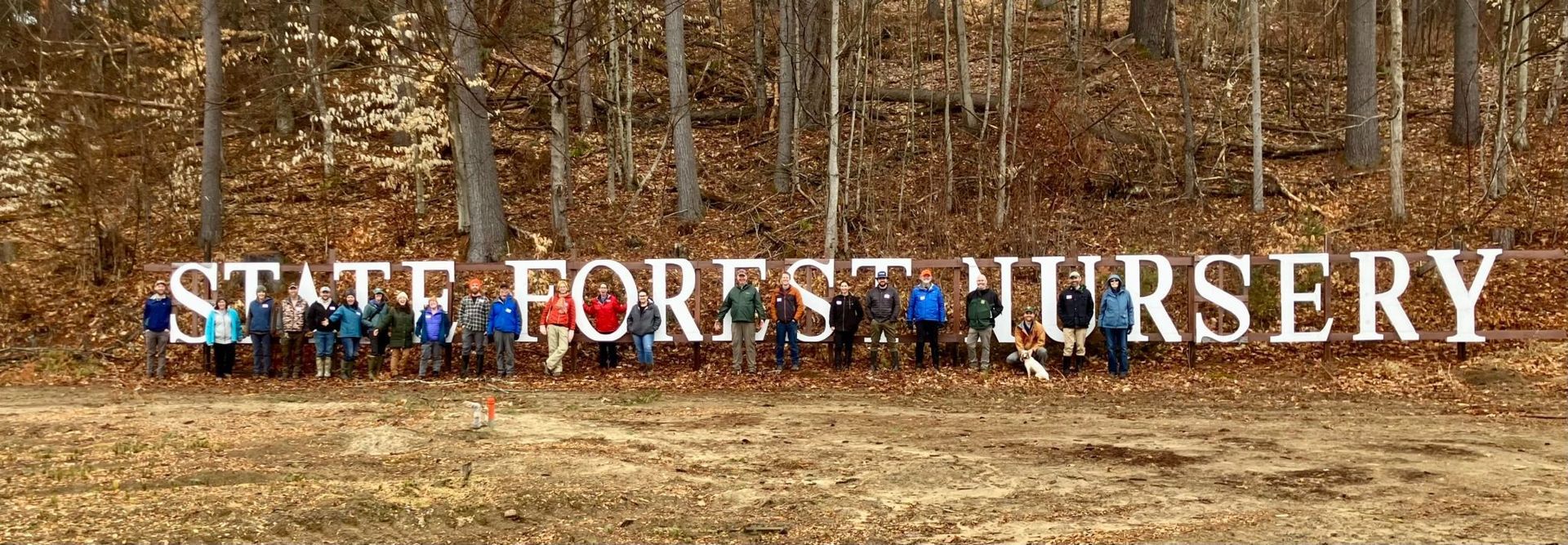
The series closed with an in-person tour of the New Hampshire State Forest Nursery. Attendees learned how Bill Davidson from the NH Di vision of Forests and Lands will manage the “aftermath forest” left by EAB; a forest without mature ash. Davidson hopes to keep EAB controlled with the help of biocontrols – a host of predatory wasp species that were released in New Hampshire in 2014.

He partnered with Billy Kunelius, the NH State Forest Nursery Manager, to propagate and plant ash seeds collected from various sites in the state to enhance ash regeneration. Billy shared insights on how seeds are sorted, cleaned, and prepared 

for planting. Attendees took part in a field walk through the nursery’s seed processing barn and 16.5 acres of planted saplings. Many of the successfully propagated ash seedlings are slated for planting in New Hampshire’s forests this spring.   

The “Pathways to Sustain Ash” event series engaged audiences both virtually and in-person, sharing the message that collecting seeds—whether to store in a seed bank or for propagation in a nursery—is an act of hope and stewardship. SAP-Ne will continue hosting events this year and is rolling out a network website to share resources on ash protection.     


Recent Posts

By Aidan Juhl April 16, 2026
Written by Colleen Robinson
April 14, 2026
Written by Shannon Maes
April 14, 2026
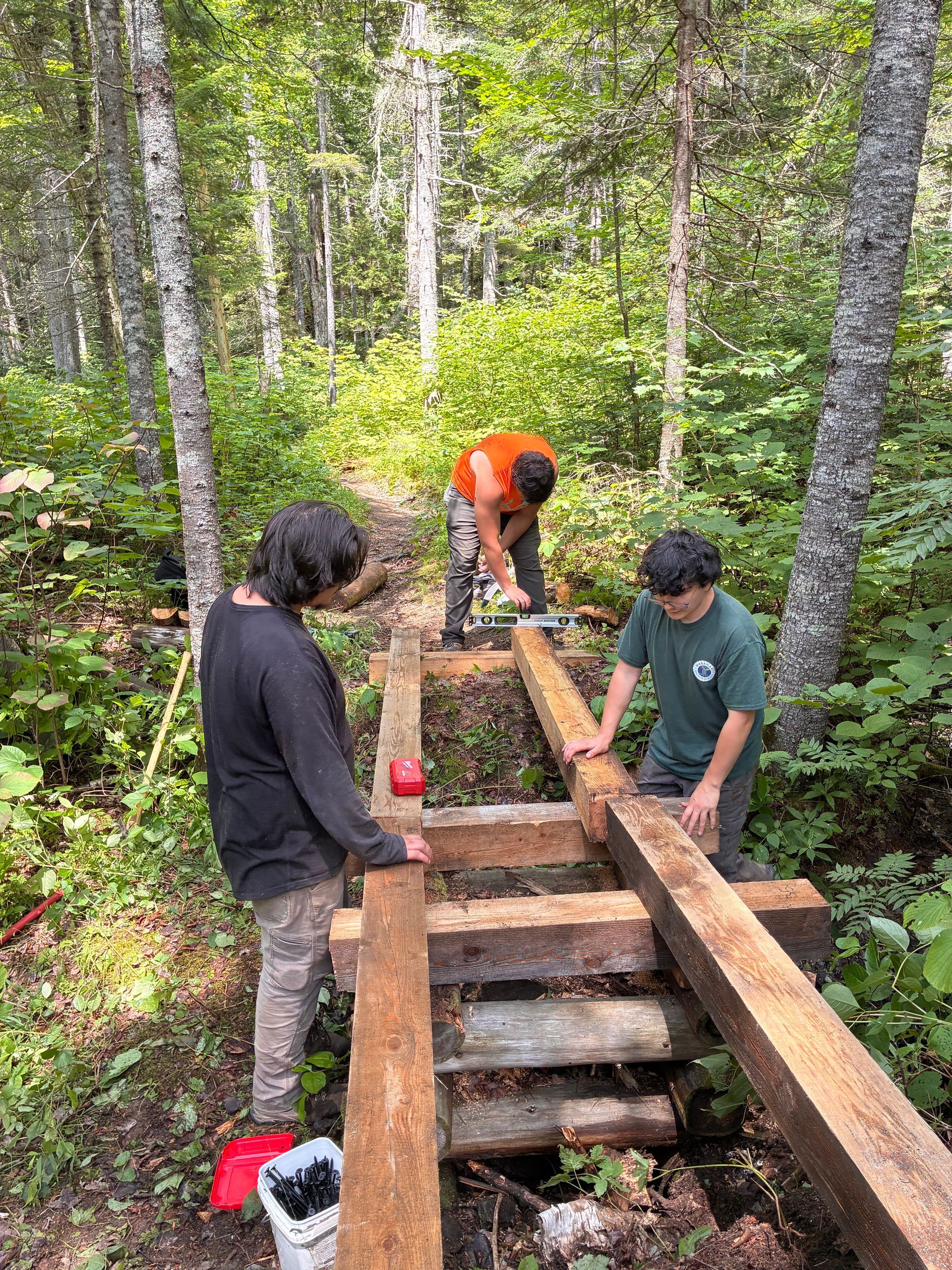
In September 2025, the Guild launched a three-person Forest Stewards Apprenticeship (FSA) crew to work with the Penobscot Nation’s Department of Natural Resources (PN DNR). Over the course of their six-month season, apprentices Agenor Duhon, Gabe Stewart, and Jacob Baker shared a season of learning, collaboration, and hands-on stewardship of Penobscot Tribal lands.
April 14, 2026
This week, I stepped into the role of crew leader. We worked a full 40-hour week, splitting our time between Clifton Farms and a prescribed burn operation. On the first day in the field, we completed hack-and-squirt treatments on trees that had been marked the previous week. For the remainder of the week, we focused on marking trees for future hack-and-squirt work, maintaining a steady pace and ensuring accuracy in our selections.
April 7, 2026
As Guild members, our practice is fundamentally grounded in field observation. We know intuitively that forests are dynamic, living communities. Yet, for decades, the high-level systems used to value our work, specifically the carbon accounting ledgers tied to international frameworks like the Paris Agreement, have treated forests as static, quantifiable blocks of land. In a recent commentary published in One Earth, I argue that these legacy measurement, reporting, and verification (MRV) frameworks are failing. Ledger accounting relies on crude land-use delineations and outdated technology, effectively penalizing the natural, seasonal flux of the ecosystems we manage every day. By forcing landscapes into rigid “forest” versus “non-forest” binaries, such legacy systems miss the complex reality on the ground. But a major shift is underway.
March 18, 2026
Women have always been a part of forestry. Historically, women often helped guide family decisions about when to cut, which trees to save, and how best to steward their land for the next generation. Historical accounts from the Southern Appalachians describe women’s roles in decisions about timber harvesting and prioritizing long-term forest health. These often-uncredited contributions are even reflected in Aldo Leopold’s A Sand County Almanac (1949), in which describes his stewardship philosophy informed not only by his professional experience, but by shared responsibility, where the perspectives of his wife and daughters played an important role.
March 18, 2026
Although rural regions often host the highest concentrations of public and private forest land, they typically lack the sustainable workforce necessary for active management and stewardship. How do we address this foundational problem in forest conservation?
March 18, 2026
The Forest Stewards Guild has a unique dual mandate: practice and promote forest stewardship. Personally, I think the combination of practicing forest management and promoting best practices is what makes the Guild a vibrant and impactful organization.
February 17, 2026
We celebrate the remarkable career and legacy of Leslie (Les) Benedict, who has provided visionary leadership and dedicated service to the stewardship of forests, championing the preservation of the ecological and culturally important black ash. Benedict, a member of the Saint Regis Mohawk Tribe in Akwesasne, north of the Adirondacks in upstate New York, recently retired after serving as the Assistant Director of the Tribe’s Environment Division for over 35 years.
February 17, 2026
The Forest Stewards Guild has been working to support the National Park Service on forest stewardship projects throughout the eastern U.S. This month we are in the midst of a project to protect mounds at Effigy Mounds National Monument near Harpers Ferry Iowa. This site was designated as a National Monument in 1949 and preserves over 200 mounds built between 800 and 2,500 years ago. Mounds at this site include conical, linear, compound, and effigy mounds – constructed in the shape of animals. Please see the National Park Service page for more information about the mounds, the people who built them, and how to visit the site. The lidar images on that website of the Marching Bears and other mound groups are fascinating.
Show More