Removing Barriers to Prescribed Fire on Private Lands in New Mexico

February 19, 2025

Written by Sarah DeMay

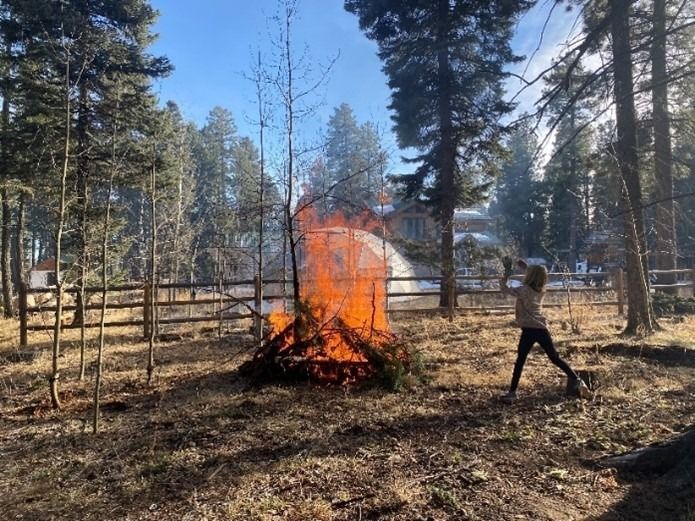
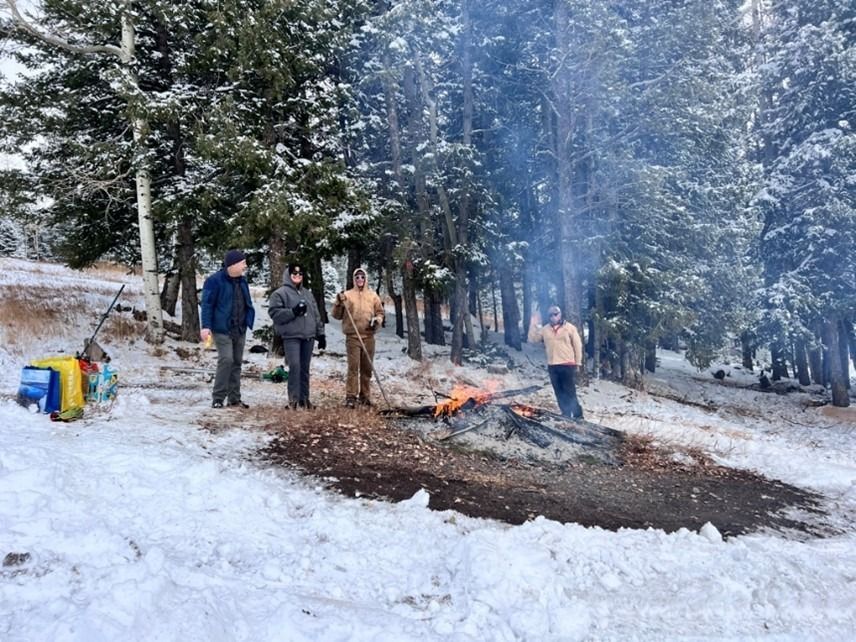
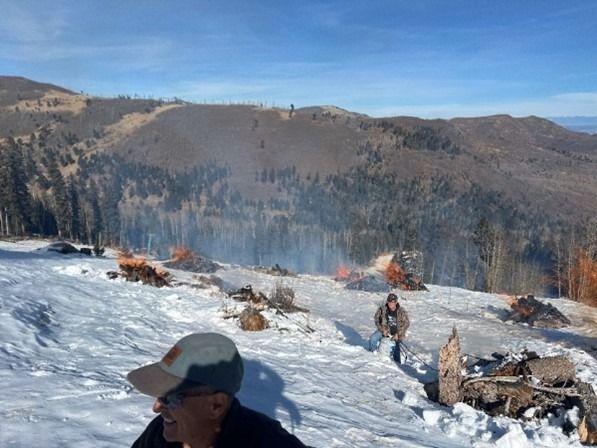
Photo of a pile burn

In 2021, the New Mexico State Legislature passed the Prescribed Burning Act (HB0057, “the Act”). This statute is intended to reduce barriers to prescribed burning on private lands, a mandate that aligns with the goals of the Forest Stewards Guild fire and fuels programs. The Act has the potential to be truly impactful in this largely rural state dominated by fire-adapted and fire-prone landscapes where decades of fire-suppression have allowed vegetation and dead and down fuels to accumulate, and where high-severity wildfire is subsequently a very real and increasingly emergent threat to forests, watersheds, communities and landowners. 

For many New Mexicans, prescribed fire (especially pile burning) is accessible, affordable, and often the only tool readily available for reducing hazardous fuels around their homes and on their own lands. 

The Act gives landowners in New Mexico the legal right to burn and provides for programs to reduce barriers, such as streamlining the burn permitting process, clarified liability, and the institution of a training and state certification program for prescribed burn managers: Prescribed Burning – Forestry

Guild staff from the Southwest office have worked closely with the New Mexico Forestry Division (EMNRD) in the development and roll-out of the Act since 2019. This work began with the initial working group that crafted the legislation and we continue to be actively engaged, making significant contributions within the Model Burn Permit working group, development of burn plan templates, and within the training and certification program; the very first Certified Pile Burn Managers in New Mexico were, in fact, both Southwest Office staff members Sarah DeMay (myself) and Sam Berry. This adds up to over five years of involvement in policy and program development, but with little to no tangible results.

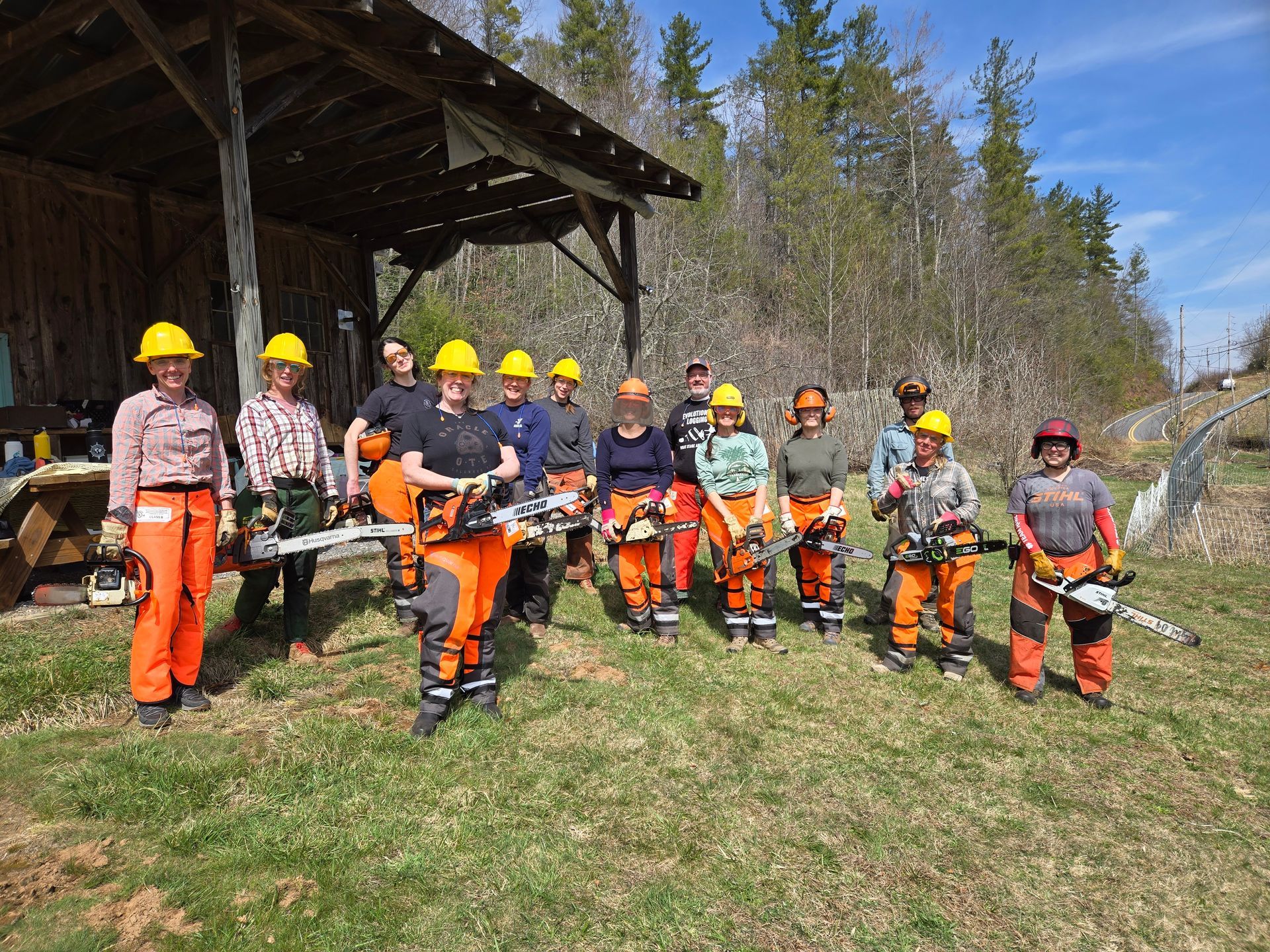
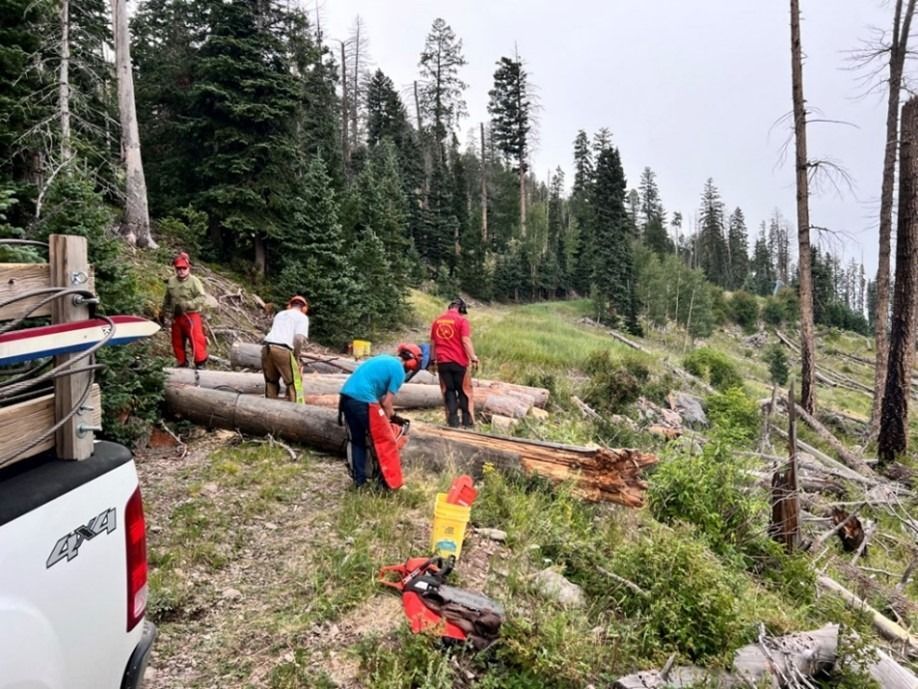
Photo of people in protective gear working around downed trees.

What we really wanted to do was put the Act to work, and get some actual burning done in 2024. We needed a piece of private land with piles to burn, people willing to work through a brand-new training and certification program, and an insufficient burn permitting process. It just so happened that I had this very scenario right next door to my home in the Jemez mountains in northern New Mexico. 

Pajarito Mountain Ski Area encompasses around 800 acres of private land nestled within the Jemez Mountains and overlooking the town of Los Alamos and the adjacent National Lab. 

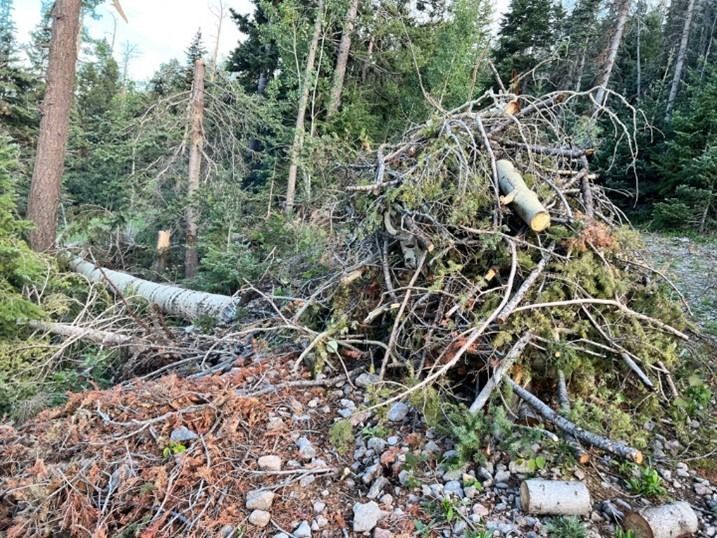
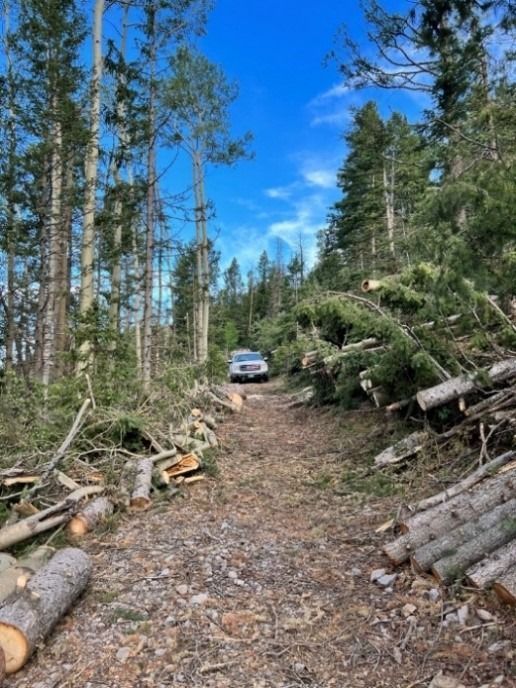
Photo of a forest trail/road with downed and piled trees from a windstorm

Forests within the ski area include both severely burned and unburned north-facing mixed conifer forest intermixed with cleared ski runs and surrounded by USFS, NPS, and county lands. Much of the area has been impacted by multiple high-severity wildfires over the past two and a half decades. Dead and down fuel loads are high and the work of cutting snags and fallen trees out of trails and ski runs never ends.   

The Pajarito Mountain Volunteer Chainsaw Crew works year-round to keep the area skiable and safe.  Any wood they can’t take as firewood or leave on the ground, they stack for winter pile burning.  Snow, colder temperatures, and higher humidities reduce fire behavior, making winter pile burning safe, affordable, and accessible.   

Volunteers have been building and burning piles at Pajarito for 80 years! 

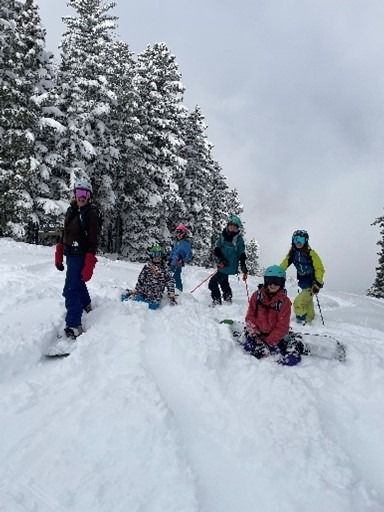
This is a true hometown, volunteer-built ski area that depends on community engagement for survival.  These folks love to ski, snowboard, hike, and bike, but they also love caring for the forest.  Clearing and reducing dead and down fuels is dual purpose– both for recreation and for hazard fuel mitigation and forest health.  Pajarito Mountain is the heart and soul of this community, and these volunteers are its stewards, keeping the forest healthy and safe and giving the gift of winter sports to future generations.

Over these eight decades, however, both the natural and political climates have changed significantly in northern New Mexico, and prescribed fire practitioners, the Pajarito crew included, have had to adapt.  With warmer weather, extended periods of drought, and heavy accumulations of vegetation and dead and down fuels, firefighters are increasingly faced with extreme fire behavior that exceeds what can be anticipated based on experience and training.  Prescribed fire, although typically used under conditions that produce low to moderate fire behavior that can be readily controlled, has also become more high-risk and difficult to accomplish.  Federal agencies have had high-profile and destructive escapes that remain at the forefront of both New Mexico’s epic vistas and collective memory.   

Not surprisingly, public support for prescribed fire has waned in recent years. Burn permitting and approval processes have become increasingly challenging due to an increase in perceived risk, liability, and the potentially catastrophic results of an escape. Luckily, many landowners and fire managers still understand that the risks associated with prescribed burning are often much lower than the risk of not burning. 

Being a local skier, it came to my attention in late fall of 2024 that Pajarito had dozens of unburned piles still sitting in the middle of ski runs with less than a month to go before the typical beginning of ski season. The situation was this: Pajarito needed to burn the piles prior to ski season for safety and the viability of the business, yet the Fire Marshal acknowledged that the Los Alamos Fire Department did not have the appropriate prescribed fire qualifications or expertise to accurately assess risk and planning for the purpose of burn permitting. I saw this impasse as an opportunity to put the Act and my new certification as a Certified Pile Burn Manager to work in a way that would benefit both Pajarito Mountain Ski Area and the community.

I invited the Los Alamos Fire Marshal to the Model Burn Permit Working Group and sent him the draft version of the permit and the original legislation. In consultation with the County Attorney, it was decided that the draft model permit was adequate if used in tandem with the burn plan template and the Pile Burn Certification and training. Luckily, a proactive Pajarito volunteer had also already completed the training and requested his Prescribed Burn Manager Workbook. He agreed to work through the Pile Burn Plan template and towards Pile Burn Manager certification. This extra effort and dedication to safety gave the Fire Marshal not only a viable process but also the confidence to issue a prescribed burn permit. 

The Pajarito Pile Burn went off without a hitch just before the holidays in late December 2024. Volunteers were able to burn dozens of piles over two days, reducing hazardous fuels and increasing enjoyment and safety for skiers and snowboarders.

And, after observation of burn planning and operations, I was able to sign off the first New Mexico Certified Pile Burn Manager workbook, recommending Brian Foley, Pajarito Chainsaw and Pile Burn Crew volunteer for 30 years, for final certification. “This example is newsworthy as one of the first in the state of New Mexico” says Wendy Servey, Los Alamos Deputy Fire Chief of Operations, adding that “with the collaboration of many… we can all rest a bit easier.”

The progressive legislation, hard work, and collaborative effort that went into building the foundation for the successful implementation of this burn, and hopefully many more, is a ray of hope. This success can, and must, light the way for many more small but significant steps towards increased landscape and community resilience to high-severity wildfire in New Mexico. 

Brian Foley successfully planned and managed the 2024 Pajarito Winter Pile Burn, becoming the first to complete both the training and the workbook. He is now a New Mexico Certified Pile Burn Manager. Photo credit: Pajarito Volunteer Chainsaw Crew.

Recent Posts

By Aidan Juhl April 16, 2026
Written by Colleen Robinson
April 14, 2026
Written by Shannon Maes
April 14, 2026
In September 2025, the Guild launched a three-person Forest Stewards Apprenticeship (FSA) crew to work with the Penobscot Nation’s Department of Natural Resources (PN DNR). Over the course of their six-month season, apprentices Agenor Duhon, Gabe Stewart, and Jacob Baker shared a season of learning, collaboration, and hands-on stewardship of Penobscot Tribal lands.
April 14, 2026
This week, I stepped into the role of crew leader. We worked a full 40-hour week, splitting our time between Clifton Farms and a prescribed burn operation. On the first day in the field, we completed hack-and-squirt treatments on trees that had been marked the previous week. For the remainder of the week, we focused on marking trees for future hack-and-squirt work, maintaining a steady pace and ensuring accuracy in our selections.
April 7, 2026
As Guild members, our practice is fundamentally grounded in field observation. We know intuitively that forests are dynamic, living communities. Yet, for decades, the high-level systems used to value our work, specifically the carbon accounting ledgers tied to international frameworks like the Paris Agreement, have treated forests as static, quantifiable blocks of land. In a recent commentary published in One Earth, I argue that these legacy measurement, reporting, and verification (MRV) frameworks are failing. Ledger accounting relies on crude land-use delineations and outdated technology, effectively penalizing the natural, seasonal flux of the ecosystems we manage every day. By forcing landscapes into rigid “forest” versus “non-forest” binaries, such legacy systems miss the complex reality on the ground. But a major shift is underway.
March 18, 2026
Women have always been a part of forestry. Historically, women often helped guide family decisions about when to cut, which trees to save, and how best to steward their land for the next generation. Historical accounts from the Southern Appalachians describe women’s roles in decisions about timber harvesting and prioritizing long-term forest health. These often-uncredited contributions are even reflected in Aldo Leopold’s A Sand County Almanac (1949), in which describes his stewardship philosophy informed not only by his professional experience, but by shared responsibility, where the perspectives of his wife and daughters played an important role.
March 18, 2026
Although rural regions often host the highest concentrations of public and private forest land, they typically lack the sustainable workforce necessary for active management and stewardship. How do we address this foundational problem in forest conservation?
March 18, 2026
The Forest Stewards Guild has a unique dual mandate: practice and promote forest stewardship. Personally, I think the combination of practicing forest management and promoting best practices is what makes the Guild a vibrant and impactful organization.
February 17, 2026
We celebrate the remarkable career and legacy of Leslie (Les) Benedict, who has provided visionary leadership and dedicated service to the stewardship of forests, championing the preservation of the ecological and culturally important black ash. Benedict, a member of the Saint Regis Mohawk Tribe in Akwesasne, north of the Adirondacks in upstate New York, recently retired after serving as the Assistant Director of the Tribe’s Environment Division for over 35 years.
February 17, 2026
The Forest Stewards Guild has been working to support the National Park Service on forest stewardship projects throughout the eastern U.S. This month we are in the midst of a project to protect mounds at Effigy Mounds National Monument near Harpers Ferry Iowa. This site was designated as a National Monument in 1949 and preserves over 200 mounds built between 800 and 2,500 years ago. Mounds at this site include conical, linear, compound, and effigy mounds – constructed in the shape of animals. Please see the National Park Service page for more information about the mounds, the people who built them, and how to visit the site. The lidar images on that website of the Marching Bears and other mound groups are fascinating.
Show More