NorthWoods Guild Gathering – an Autumnal Ramble in the Northeast Kingdom

December 14, 2023

Written by Maddie Eberly  

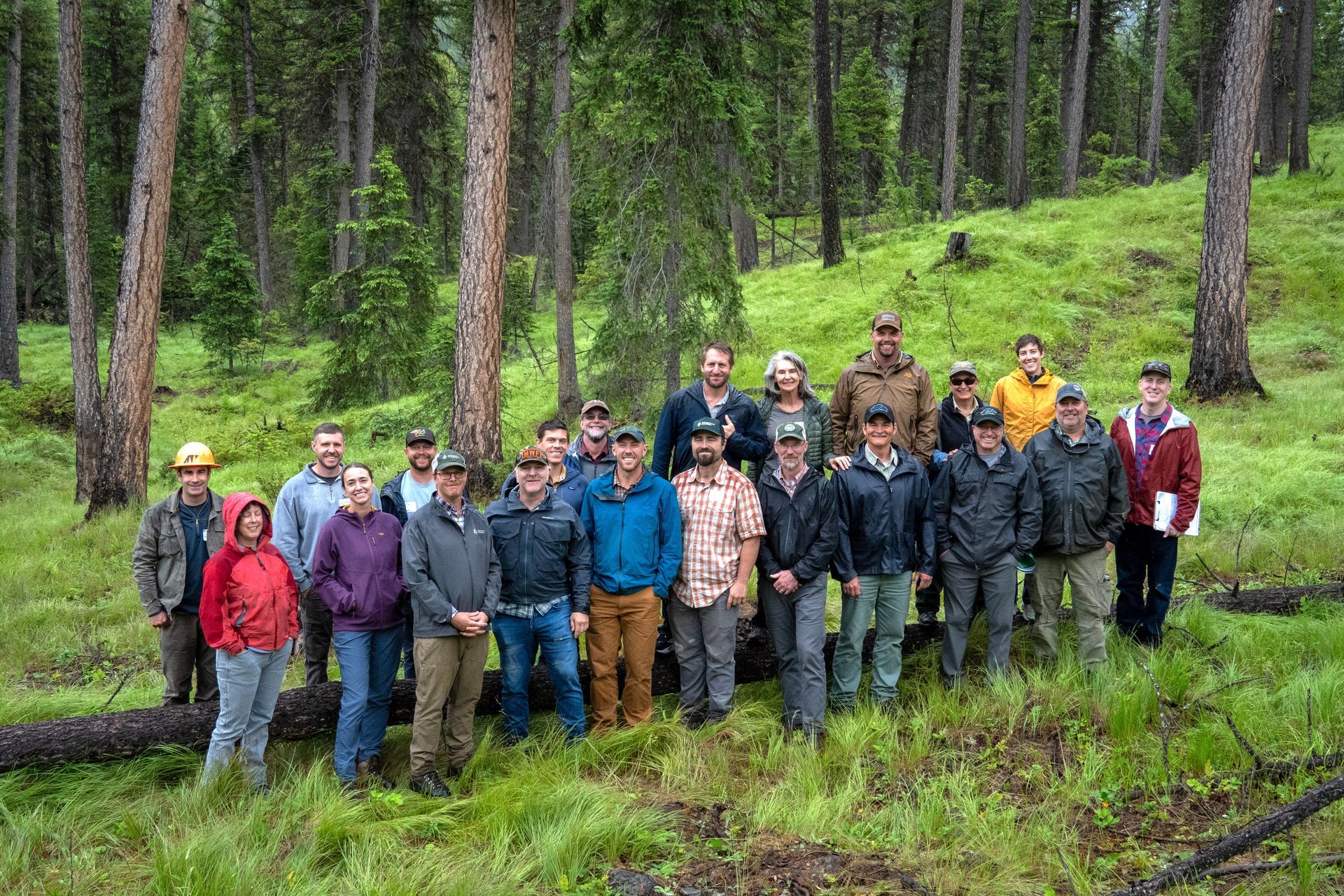
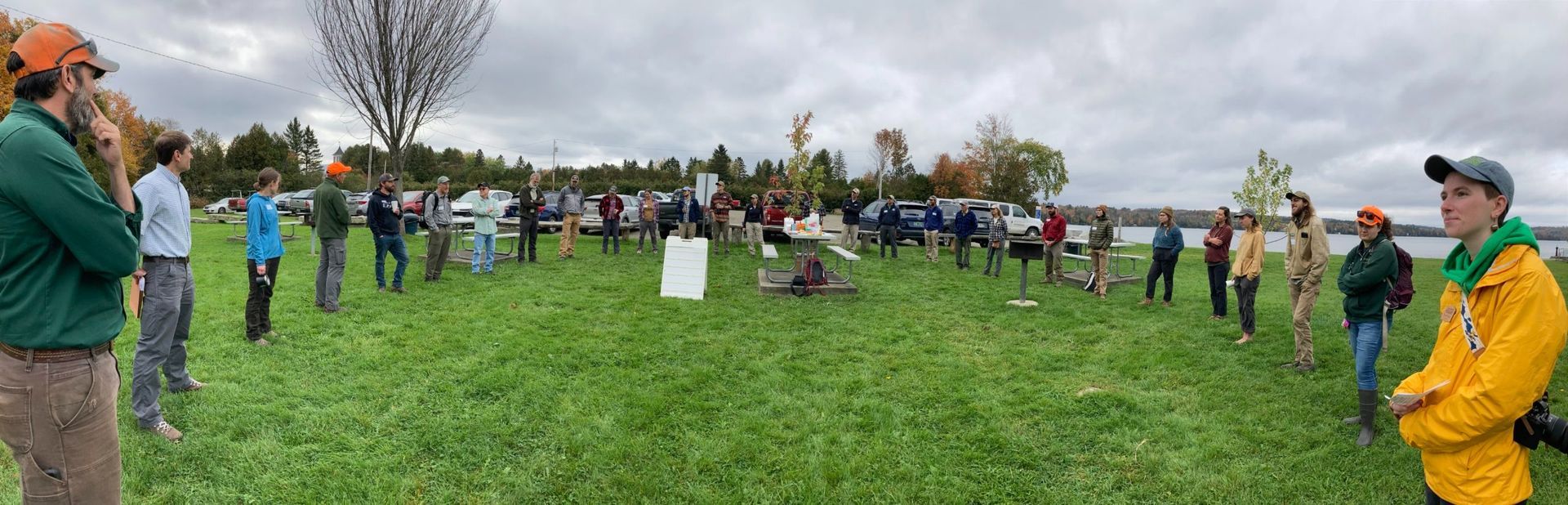
October 6thin Greensboro, Vermont was a bit grey, and the autumn chill had settled in. Yet, for the group of Guild Members gathered at the Caspian Beach parking lot, nobody seemed to notice too much. Friends and colleagues greeted each other, exchanged laughs, and sipped steaming coffee. A holler gathered folks around for an introduction circle, launching into the first day of the NorthWoods Guild Gathering. 

Our weekend host, the NorthWoods Stewardship Center, has been a longtime partner of the Guild. They embody Guild values while stewarding the forests of the Northeast Kingdom of Vermont – including the management of a Guild Model Forest! The NorthWoods Stewardship Center is a remarkable organization transforming seasonally from a small, localized staff to a large, well dispersed team of forest stewards working on projects throughout Vermont.

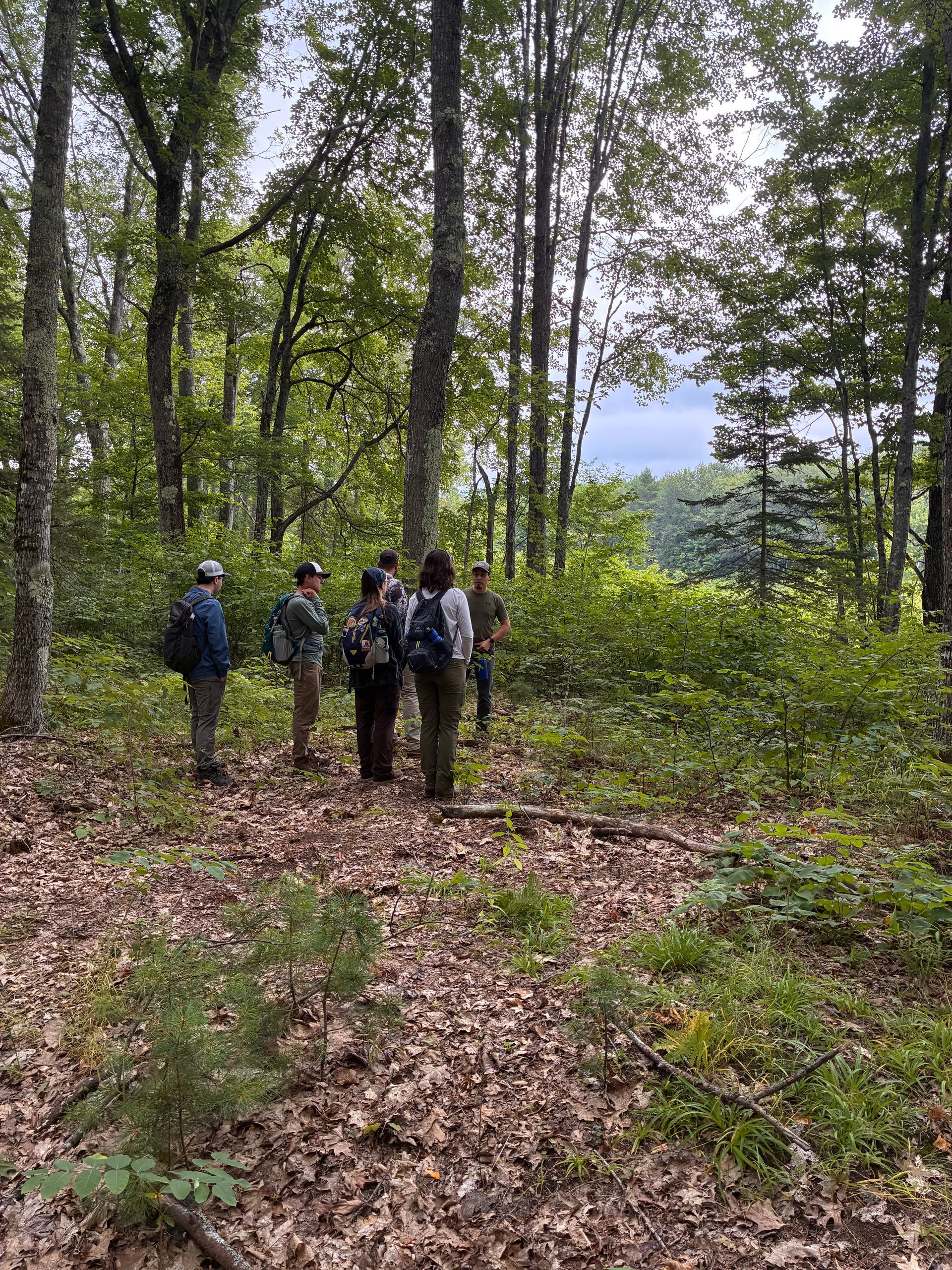
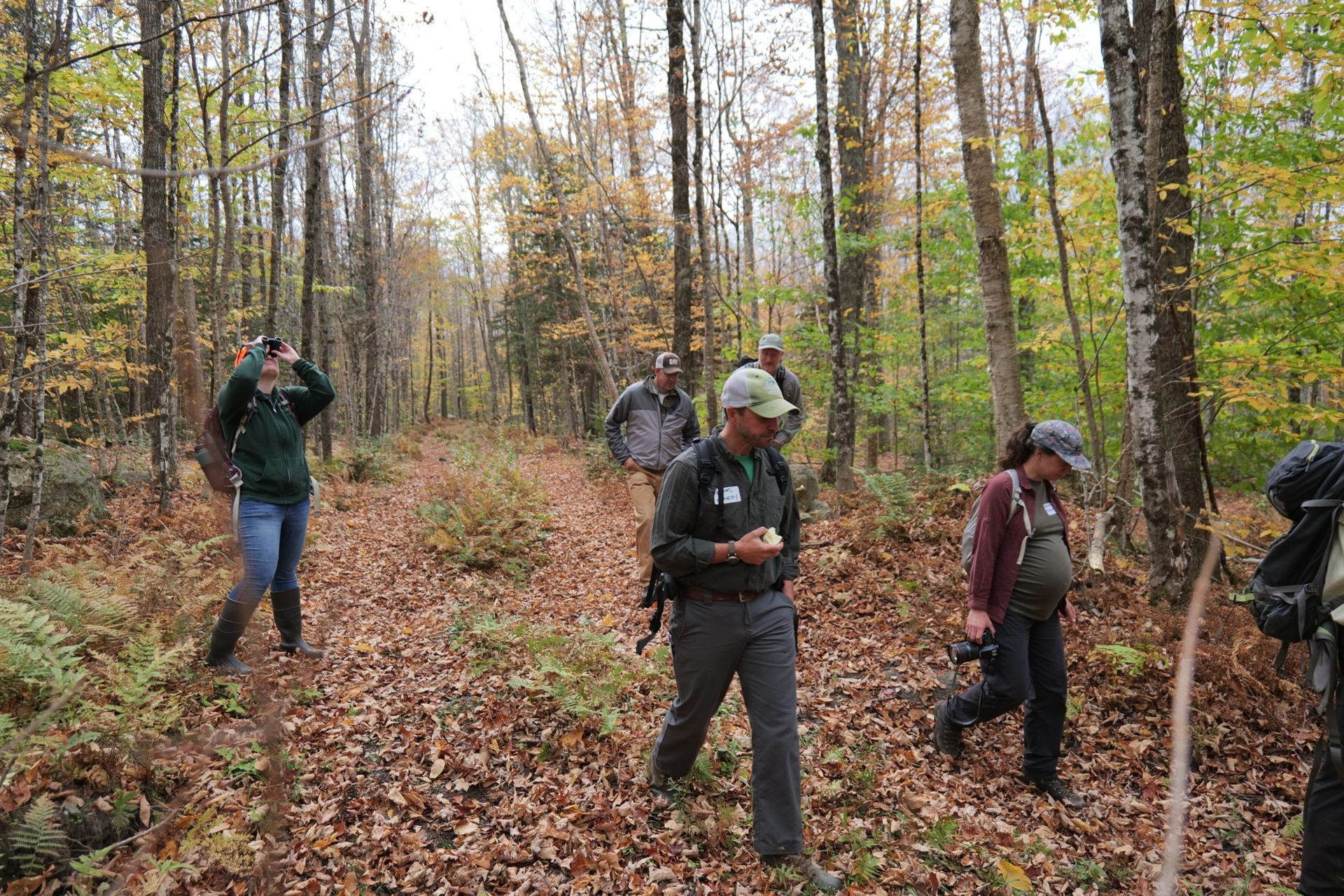
Leaving the beach, we arrived at the Vermont Land Trust’s Mud Pond location. Dan Kilborn and David McMath from the Vermont Land Trust alongside Tony D’Amato from the University of Vermont led us through the day with visits to various sites of an Adaptive Silviculture for Climate Change (ASCC) study. The ASCC study project was designed to implement experimental, climate change adapted silviculture across various landscapes to inform the decision-making processes of forest managers. 

In the evening, we gathered at the NorthWoods Stewardship Center for a delicious meal. Following dinner, Sam Perron and Devan Pensinger led a presentation about NorthWoods’ forest management, commitment to local communities, and support of early career forest stewards and students. Folks then dispersed for the evening. Some played piano as others sat in chairs and couches talking about the intersections of their work and the day’s learnings or wandered off into the woods to find Oberon, the local barred owl. 

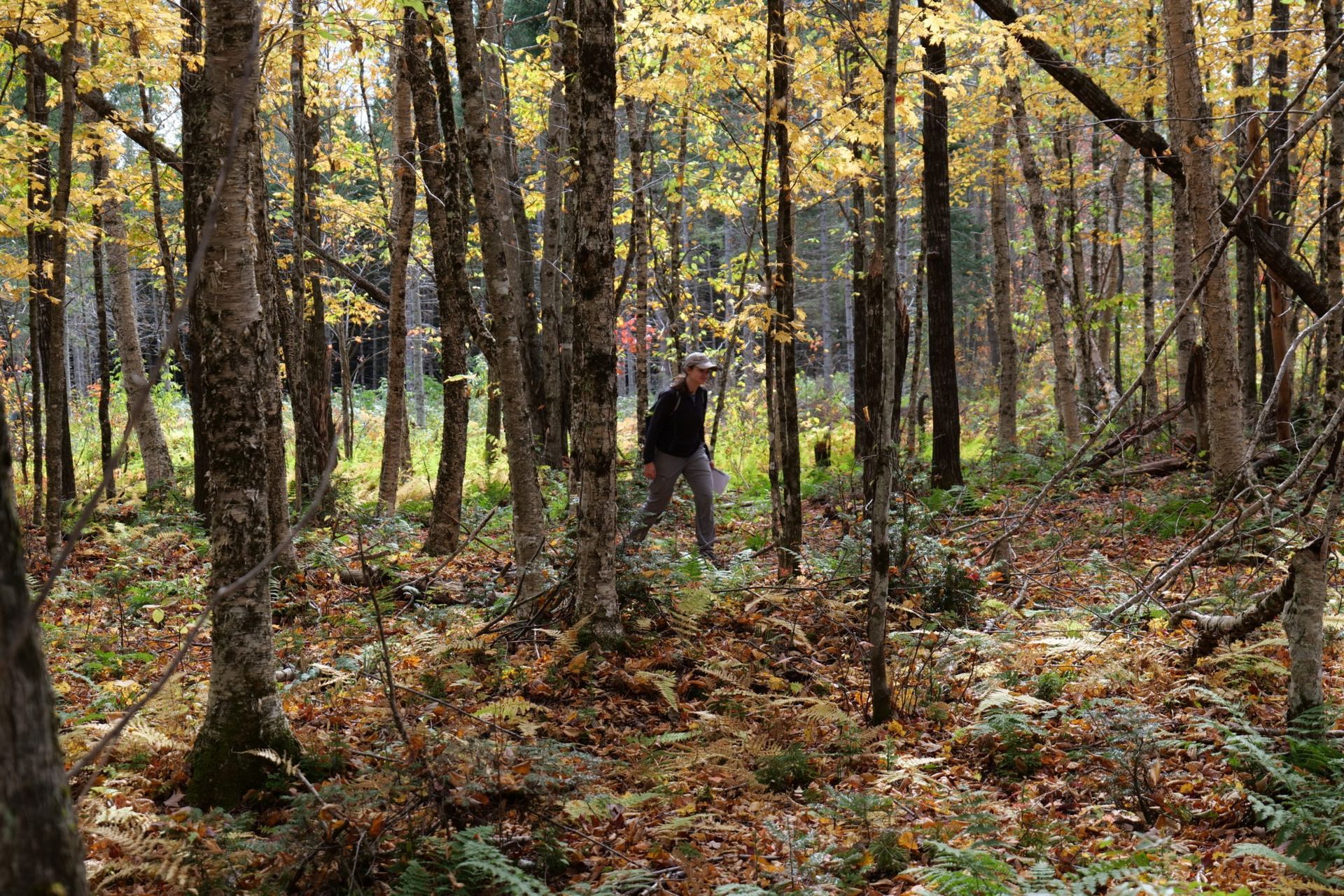
October 7th started early with coffee and breakfast at Northwoods followed by a short drive over to the Silvio O. Conte National Fish and Wildlife Refuge’s Nulhegan Division Refuge visitor center in Brunswick, Vermont. While gathered in the center’s parking lot, we were honored by a visit from Bren Whittaker, founding Guild member and recently recognized outstanding tree farmer. Stepping into the woods, Jeremy Goetz, Refuge Forester from the Nulhegan Division Refuge, and Tony D’Amato guided the group through a couple more ASCC sites managed by the U.S. Fish and Wildlife Service. At each stop, Guild members engaged in thoughtful conversations, intrigued by the management at hand and how the mixed conifer treatments differed from the previous day’s adaptation approach to northern hardwood silviculture. 

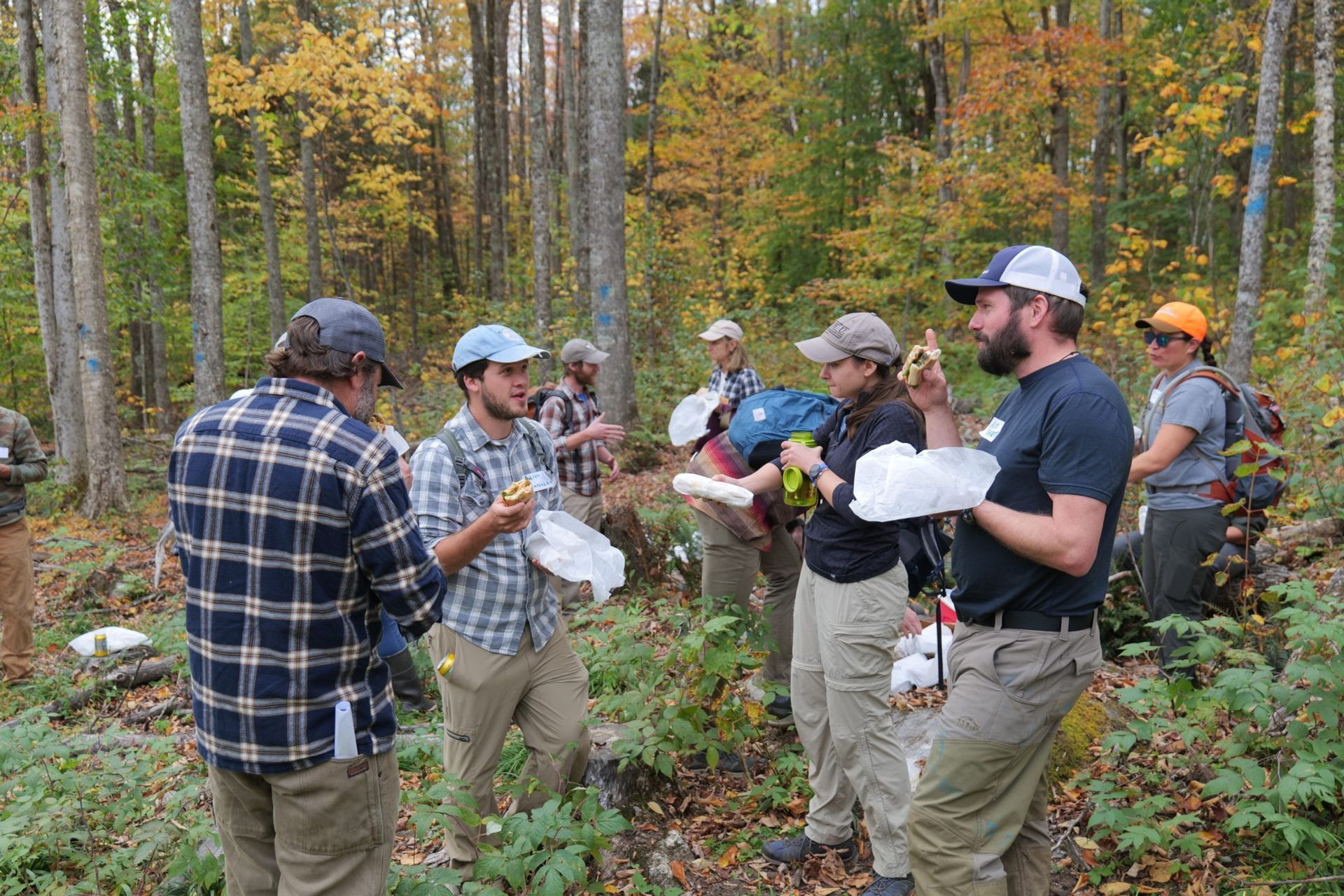
The gathering concluded with lunch and a closing circle where each attendee shared a takeaway from the two days – one of whom insisted it was the food which brought them to the gathering. Guild members were excited to learn about the climate change-focused forestry occurring in their region and connect with one another. Even if they had already visited one of the sites, there were novel conversations, new connections, and fresh observations. Longtime members were excited to see young professionals joining the gatherings, while the young professionals were excited to meet some of the original Guild members. Some folks in attendance were new to the northeast or traveled over from Maine, and all were excited to learn regional perspectives. “It’s the way life should be, but this is the way sugar maple should be!” said Tony D’Amato, taking a play at the Maine state’s slogan. Laughter bubbled up again and again. 

As the Guild members parted ways, filled with the warmth of community and the thrill of digging into silviculture, the grey skies finally let loose. The smell of petrichor drifted up as rain thundered on the windshields of the vehicles traveling away. 

Recent Posts

By Aidan Juhl April 16, 2026
Written by Colleen Robinson
April 14, 2026
Written by Shannon Maes
April 14, 2026
In September 2025, the Guild launched a three-person Forest Stewards Apprenticeship (FSA) crew to work with the Penobscot Nation’s Department of Natural Resources (PN DNR). Over the course of their six-month season, apprentices Agenor Duhon, Gabe Stewart, and Jacob Baker shared a season of learning, collaboration, and hands-on stewardship of Penobscot Tribal lands.
April 14, 2026
This week, I stepped into the role of crew leader. We worked a full 40-hour week, splitting our time between Clifton Farms and a prescribed burn operation. On the first day in the field, we completed hack-and-squirt treatments on trees that had been marked the previous week. For the remainder of the week, we focused on marking trees for future hack-and-squirt work, maintaining a steady pace and ensuring accuracy in our selections.
April 7, 2026
As Guild members, our practice is fundamentally grounded in field observation. We know intuitively that forests are dynamic, living communities. Yet, for decades, the high-level systems used to value our work, specifically the carbon accounting ledgers tied to international frameworks like the Paris Agreement, have treated forests as static, quantifiable blocks of land. In a recent commentary published in One Earth, I argue that these legacy measurement, reporting, and verification (MRV) frameworks are failing. Ledger accounting relies on crude land-use delineations and outdated technology, effectively penalizing the natural, seasonal flux of the ecosystems we manage every day. By forcing landscapes into rigid “forest” versus “non-forest” binaries, such legacy systems miss the complex reality on the ground. But a major shift is underway.
March 18, 2026
Women have always been a part of forestry. Historically, women often helped guide family decisions about when to cut, which trees to save, and how best to steward their land for the next generation. Historical accounts from the Southern Appalachians describe women’s roles in decisions about timber harvesting and prioritizing long-term forest health. These often-uncredited contributions are even reflected in Aldo Leopold’s A Sand County Almanac (1949), in which describes his stewardship philosophy informed not only by his professional experience, but by shared responsibility, where the perspectives of his wife and daughters played an important role.
March 18, 2026
Although rural regions often host the highest concentrations of public and private forest land, they typically lack the sustainable workforce necessary for active management and stewardship. How do we address this foundational problem in forest conservation?
March 18, 2026
The Forest Stewards Guild has a unique dual mandate: practice and promote forest stewardship. Personally, I think the combination of practicing forest management and promoting best practices is what makes the Guild a vibrant and impactful organization.
February 17, 2026
We celebrate the remarkable career and legacy of Leslie (Les) Benedict, who has provided visionary leadership and dedicated service to the stewardship of forests, championing the preservation of the ecological and culturally important black ash. Benedict, a member of the Saint Regis Mohawk Tribe in Akwesasne, north of the Adirondacks in upstate New York, recently retired after serving as the Assistant Director of the Tribe’s Environment Division for over 35 years.
February 17, 2026
The Forest Stewards Guild has been working to support the National Park Service on forest stewardship projects throughout the eastern U.S. This month we are in the midst of a project to protect mounds at Effigy Mounds National Monument near Harpers Ferry Iowa. This site was designated as a National Monument in 1949 and preserves over 200 mounds built between 800 and 2,500 years ago. Mounds at this site include conical, linear, compound, and effigy mounds – constructed in the shape of animals. Please see the National Park Service page for more information about the mounds, the people who built them, and how to visit the site. The lidar images on that website of the Marching Bears and other mound groups are fascinating.
Show More