Northwest Innovative Forestry Summit – a recap on the 2023 event series

November 16, 2023

Written by Rhiley Allbee

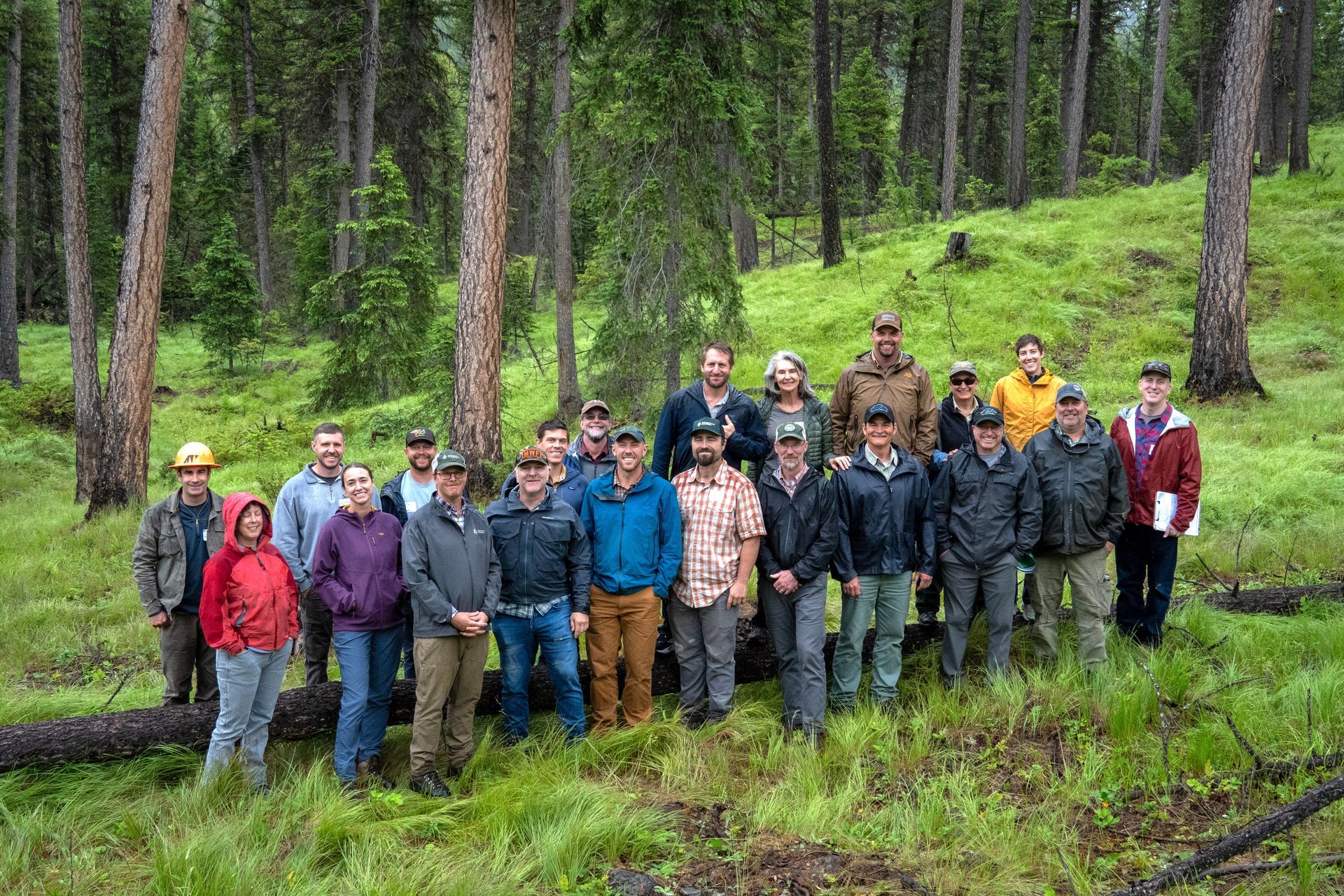
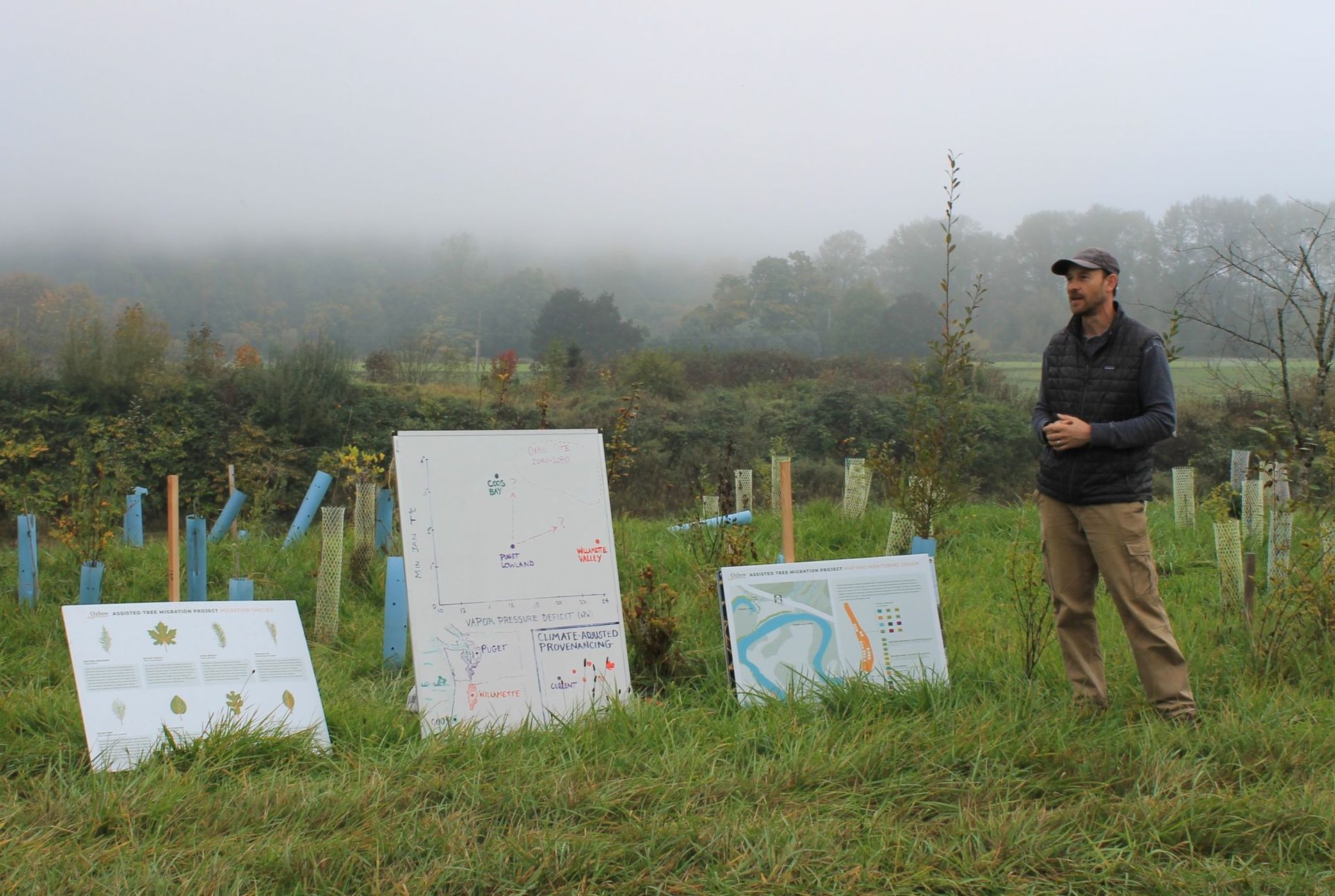
Oxbow Farm & Conservation Center’s Matt Distler, Ph.D gives an overview of a project

Working collaboratively, the Forest Stewards Guild, Northwest Natural Resource Group (NNRG), Oregon State University – College of Forestry (OSU), Intertribal Timber Council (ITC), and private forestry representatives, have continued to lead the expansion of the Northwest Innovative Forestry Summit (NIFS) as a space for regional learning, knowledge exchange, and ongoing cooperation to foster ecologically based forest management strategies. The NIFS 2023 Event Series focused on highlighting experimental forests, traditional and non-traditional, and their efforts in facilitating innovation and community within forest management and research. 

The event series was kicked off at the end of August with the online webinar From Experimentation to Innovation in the Forests of the PNW. The webinar was opened with a welcome from Klaus Puettman of OSU’s College of Forestry and a blessing from Don Motanic, enrolled member of the Confederated Tribe of the Umatilla Indian Reservation and former Technical Specialist with the ITC. Paul Anderson, Director of the Pacific Northwest Research Station, provided us with a broad-spectrum view of experimental forests and discussed the challenges of finding a balance between long-term continuity and quickly changing information needs. Paul’s presentation was followed by a panel discussion made up of participants selected to represent perspectives and experiences in forest experimentation that are not directly related to traditional experimental forests. This provoked a fruitful discussion of some of the innovative work taking place in forests throughout the PNW. Panel participants included: 

  • Brandy Saffell, Forest Conservation Specialist, Tualatin Soil and Water Conservation District 
  • Michael Wilson, Confederated Tribes of the Grand Ronde Tribal member, and former Natural Resources Department Manager 
  • Teodora Minkova, Research and Monitoring Manager for Olympic Experimental Forest, Washington Department of Natural Resources 
  • Lindsay Cornelius, East Cascades Oak Partnership Manager, Columbia Land Trust 

The second event in the NIFS 2023 Event Series was a field tour on assisted migration that highlighted two projects in western Washington: Oxbow Farm & Conservation Center’s Assisted Tree Migration Project and Adaptive Restoration at Stossel Creek, a collaborative project owned by Seattle City Light. By the end of the century, climate change projections for the Northwest region suggest an increase in average annual temperatures and increased variability in precipitation leading to more frequent and severe droughts. Both projects are looking to the future and selecting seeds and seedlings that may be better adapted to our future climate. 

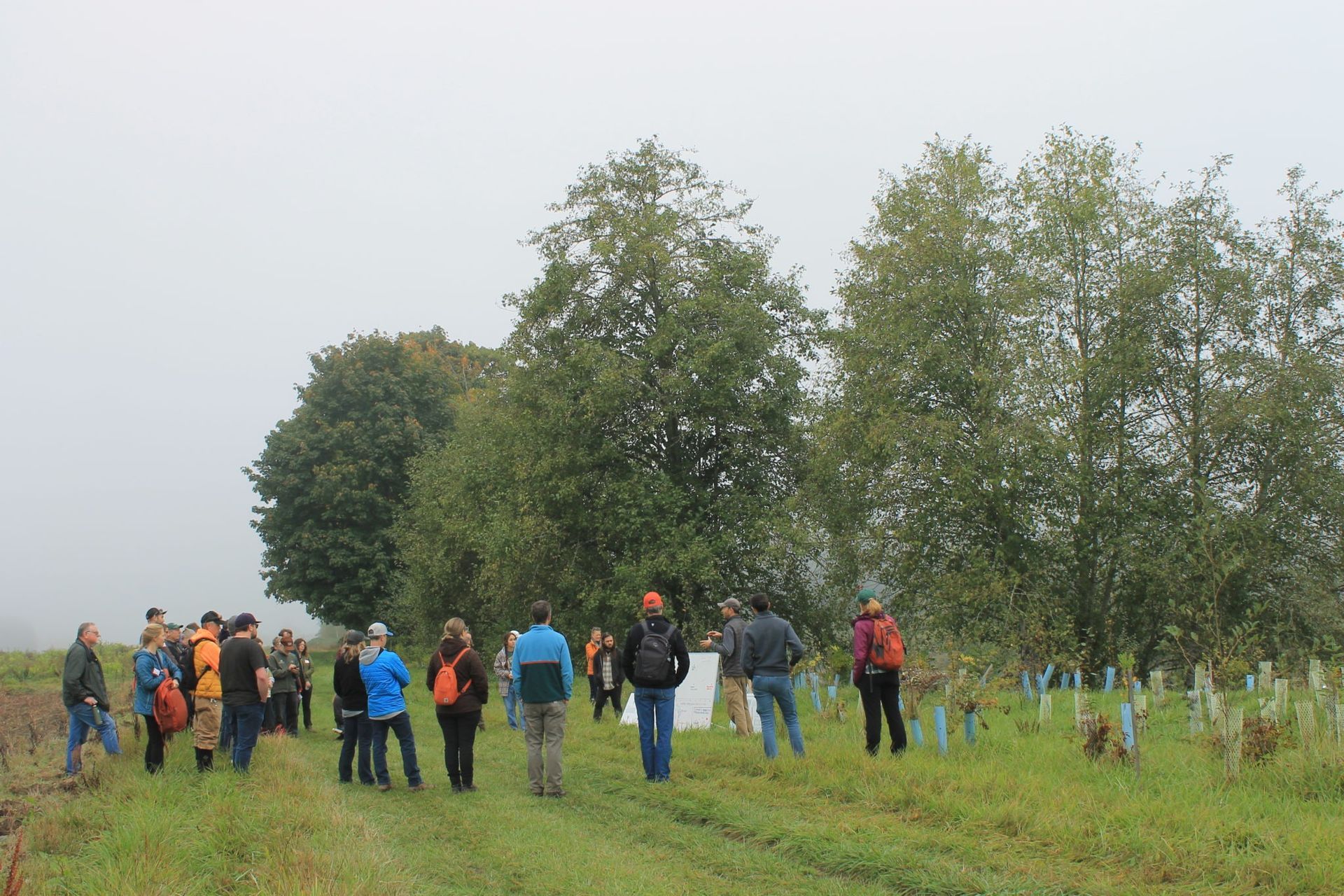
At Oxbow Farm & Conservation Center, the conservation team, headed by Matt Distler, Ph.D., has established 1.2 acres of 12 potentially climate-resilient native riparian tree species along the Snoqualmie River. Seeds and seedlings were sourced from Washington and central and southwest Oregon. Matt gave us a presentation on the ecological context, ethical considerations, and strategies for climate-resilient restoration regarding assisted migration before walking us over the project site and giving us an overview of the planting design and monitoring plan. The conservation team will be monitoring height, vigor, survivorship, and bud phenology annually for 3 years and then again in years 5 and 10. 

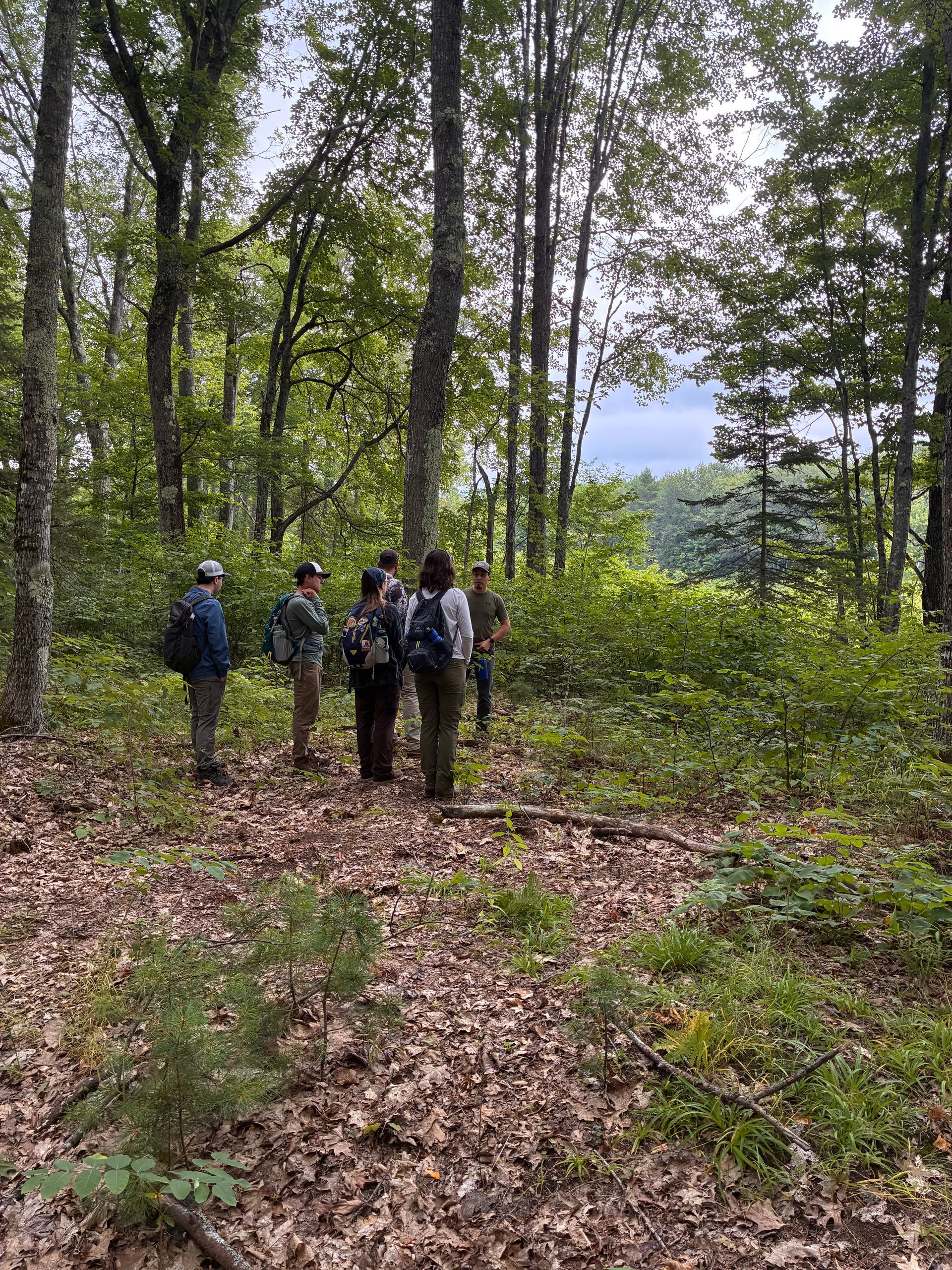
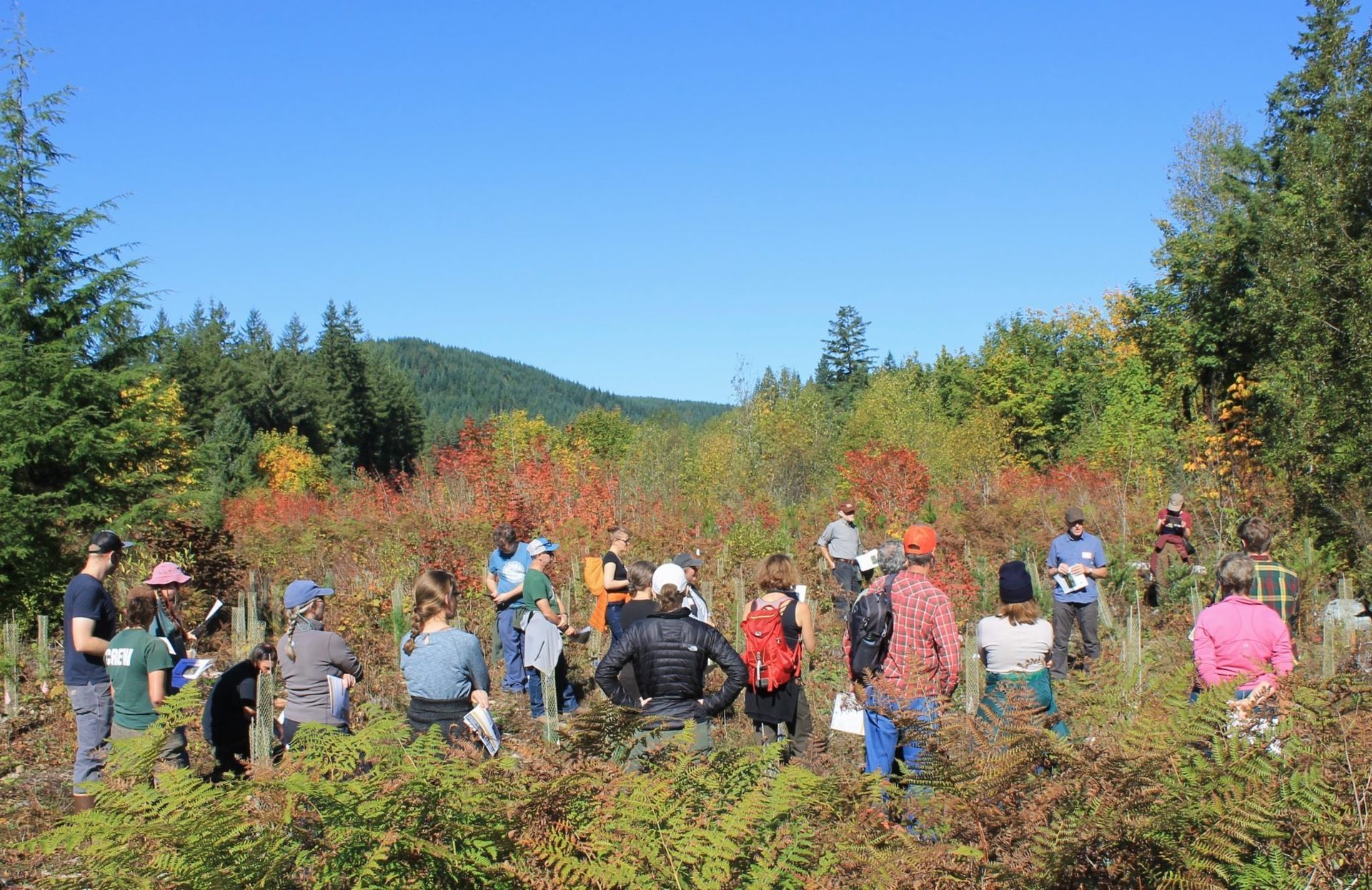
As a group, we then drove up to the Adaptive Restoration at Stossel Creek project. The site consists of 154 acres in the Tolt watershed east of Seattle, logged by a private landowner in 2012 and purchased by Seattle City Light in 2015 with funds intended to protect and restore quality salmon and steelhead habitat. Seattle City Light’s Ronda Strauch, Ph.D., provided us with the history and context of the site before Seattle Public Utilities’ Rolf Gersonde, Ph.D., gave us an overview of the project design and monitoring plan. Active restoration is taking place on 51 acres of the site with climate-adapted seedlings sourced from other regions interplanted with locally sourced seedlings as well as trees that naturally regenerated. Over the next decade, trial plots will be assessed to determine the viability of various species across the site and the success of seedlings sourced from separate locations. The project used the Seedlot Selection Toolto identify, and source seedlings from, locations with a current climate matching the projected climate for Stossel Creek in the mid and late century. 

Rolf Gersonde, Ph.D., of Seattle Public Utilities answering questions about the project design of the Adaptive Restoration at Stossel Creek.

The third event in the NIFS 2023 Event Series was scheduled to take place at the H.J. Andrews Experimental Forest in western Oregon but unfortunately had to be cancelled due to activity from the Lookout Fire. Our partners at H.J. Andrews, especially Cheryl Friesen and Fred Swanson, Ph.D., put a large amount of effort into crafting an extensive field tour and informative field tour. We thank them for their enthusiasm and their hard work. We hope to reschedule a field tour at the H.J. Andrews Experimental Forest in the future! 

Thank you to all those who attended, supported, and guided the 2023 NIFS Field Tours! We especially want to give thanks to our presenters and hosts who allowed us to share in their knowledge and work! For information on past events and updates on future events please visit www.nnrg.org/nifs/

Recent Posts

By Aidan Juhl April 16, 2026
Written by Colleen Robinson
April 14, 2026
Written by Shannon Maes
April 14, 2026
In September 2025, the Guild launched a three-person Forest Stewards Apprenticeship (FSA) crew to work with the Penobscot Nation’s Department of Natural Resources (PN DNR). Over the course of their six-month season, apprentices Agenor Duhon, Gabe Stewart, and Jacob Baker shared a season of learning, collaboration, and hands-on stewardship of Penobscot Tribal lands.
April 14, 2026
This week, I stepped into the role of crew leader. We worked a full 40-hour week, splitting our time between Clifton Farms and a prescribed burn operation. On the first day in the field, we completed hack-and-squirt treatments on trees that had been marked the previous week. For the remainder of the week, we focused on marking trees for future hack-and-squirt work, maintaining a steady pace and ensuring accuracy in our selections.
April 7, 2026
As Guild members, our practice is fundamentally grounded in field observation. We know intuitively that forests are dynamic, living communities. Yet, for decades, the high-level systems used to value our work, specifically the carbon accounting ledgers tied to international frameworks like the Paris Agreement, have treated forests as static, quantifiable blocks of land. In a recent commentary published in One Earth, I argue that these legacy measurement, reporting, and verification (MRV) frameworks are failing. Ledger accounting relies on crude land-use delineations and outdated technology, effectively penalizing the natural, seasonal flux of the ecosystems we manage every day. By forcing landscapes into rigid “forest” versus “non-forest” binaries, such legacy systems miss the complex reality on the ground. But a major shift is underway.
March 18, 2026
Women have always been a part of forestry. Historically, women often helped guide family decisions about when to cut, which trees to save, and how best to steward their land for the next generation. Historical accounts from the Southern Appalachians describe women’s roles in decisions about timber harvesting and prioritizing long-term forest health. These often-uncredited contributions are even reflected in Aldo Leopold’s A Sand County Almanac (1949), in which describes his stewardship philosophy informed not only by his professional experience, but by shared responsibility, where the perspectives of his wife and daughters played an important role.
March 18, 2026
Although rural regions often host the highest concentrations of public and private forest land, they typically lack the sustainable workforce necessary for active management and stewardship. How do we address this foundational problem in forest conservation?
March 18, 2026
The Forest Stewards Guild has a unique dual mandate: practice and promote forest stewardship. Personally, I think the combination of practicing forest management and promoting best practices is what makes the Guild a vibrant and impactful organization.
February 17, 2026
We celebrate the remarkable career and legacy of Leslie (Les) Benedict, who has provided visionary leadership and dedicated service to the stewardship of forests, championing the preservation of the ecological and culturally important black ash. Benedict, a member of the Saint Regis Mohawk Tribe in Akwesasne, north of the Adirondacks in upstate New York, recently retired after serving as the Assistant Director of the Tribe’s Environment Division for over 35 years.
February 17, 2026
The Forest Stewards Guild has been working to support the National Park Service on forest stewardship projects throughout the eastern U.S. This month we are in the midst of a project to protect mounds at Effigy Mounds National Monument near Harpers Ferry Iowa. This site was designated as a National Monument in 1949 and preserves over 200 mounds built between 800 and 2,500 years ago. Mounds at this site include conical, linear, compound, and effigy mounds – constructed in the shape of animals. Please see the National Park Service page for more information about the mounds, the people who built them, and how to visit the site. The lidar images on that website of the Marching Bears and other mound groups are fascinating.
Show More