Highlighting Author and Icon: Gloria Brown

February 14, 2022

Written by Maddie Eberly 

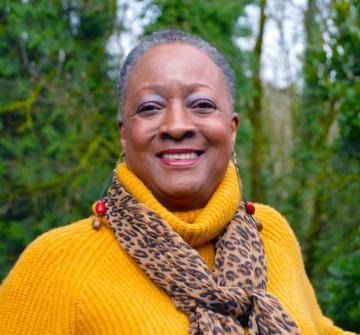
Gloria Brown

Gloria Brown was the first African American woman to hold the position of a forest supervisor with the United States Forest Service (USFS), running the Siuslaw and later the Los Padres National Forests. Throughout her career, Brown was a catalyst for change and a genuine icon in USFS. Brown credited her career to all the relationships made and people met along the way. 

Brown had not started her career in forestry. She first joined USFS as a transcriber in Washington, D.C. When her husband passed away, she was forced to move west to Missoula, Montana, continuing work with USFS. The local community was mostly white, and nearly immediately Brown and her family were subjected to blatant racism. Brown recounts this experience and others in her book, Black Woman in Green. 

Brown moved her family to Oregon in search of a safer environment, taking a new administrative position with USFS. Around this time, Brown realized she wanted to become a forest supervisor, and she needed to become a forester. Brown found a public affairs officer position and organized an appointment with the forest supervisor. Knowing that they had not published a forest management plan, she declared that if she was made public affairs officer she would take no leave or training, and work to get the forest management plan published promptly. In return, she asked for a sabbatical to go to Oregon State University to study forestry. With recommendation, she applied and got the job. The forest management plan got published, and Brown received her promised sabbatical and became a forester. Her career took off. Brown’s next position was as a deputy ranger in the Rigdon region of Idaho. She was then employed as an area manager with the Bureau of Land Management. Subsequently, Brown served in the Mount St. Helens area as manager. Then, reaching her goal, Brown became forest supervisor of the Siuslaw National Forest and later, Los Padres National Forest. 

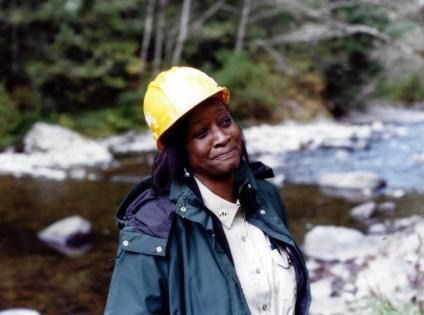
Gloria Brown

Brown made an impact everywhere she went. She advocated for the rights of women experiencing sexism in Rigdon. She received honorary memberships in Idaho with the ranchers’ and miners’ associations. With the Trust for Public Lands in Idaho, Brown facilitated returning land to the Nez Perce Tribe. At Mount St. Helens, she changed the classification of scientists performing surveys from information specialist to interpretive specialist. In the Siuslaw watershed, her team redirected the river, removed dams, and saw the swift return of salmon. The work eventually received the Thiess International Riverprize. 

Brown recounted in a 2020 interview with Rachel Kline for USFS HerStory project, “As I was doing it, I don’t think I stopped long enough to realize … or even think of myself as a change agent.” Brown repeatedly experienced racism and sexism throughout her career. Brown said diversity is still lacking in USFS. 

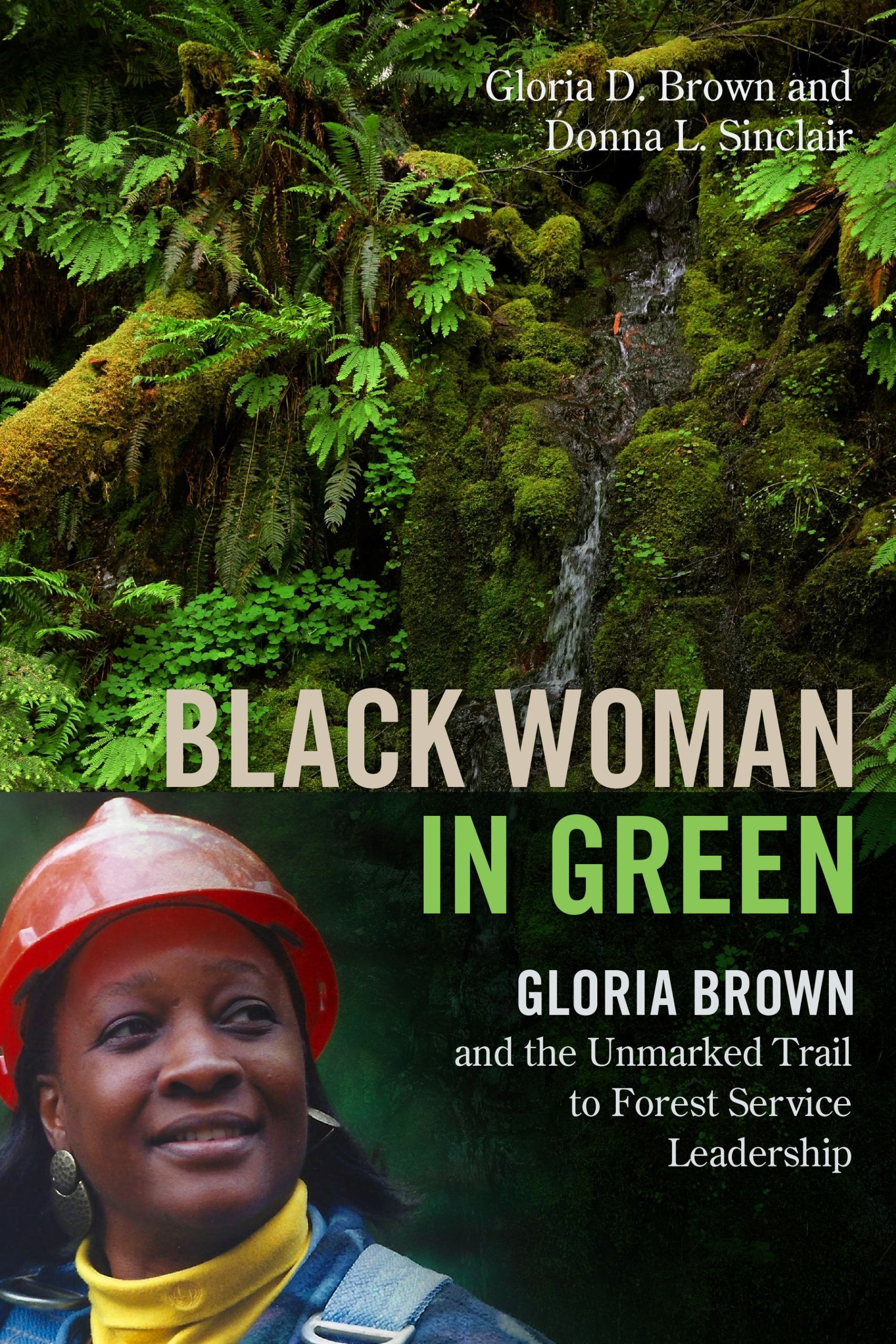
Black Woman in Green bookcover image

Gloria Brown, with Donna Sinclair, wrote Black Woman in Green: Gloria Brown and the Unmarked Trail to Forest Service Leadership, published in February of 2020 recounting her USFS service from 1974 to 2007. Brown wrote her book to tell her story to future generations of her family. Brown stated in the HerStory interview, “If you sit down and think about where you started, where you are, and where you’re going, and then once you get there, I think we all have a story.” 

Brown passed away September 7, 2021. Donna Sinclair, in her tribute to Brown, said, “She [Brown] never let anything stop her. Once she decided to advance in the agency, she strategized about how to do it. She then made it happen by sheer force of will and smarts, laced with wit and charm.” 

The full tribute can be found on the Oregon State University Press’s website.


The full USFS HerStory article with Gloria Brown can be found on the USFS’s website.


The full USFS HerStory interview can be found in the National Forest Service Library. 


Brown and Sinclair’s book, Black Woman in Green: Gloria Brown and the Unmarked Trail to Forest Service Leadership can be found on the Oregon State University Press’s website, and through other book sellers.

Editor’s note: this article was written in honor of Black History Month 2022 and highlights the first African American woman forest supervisor with the United States Forest Service (USFS).

Recent Posts

By Aidan Juhl April 16, 2026
Written by Colleen Robinson
April 14, 2026
Written by Shannon Maes
April 14, 2026
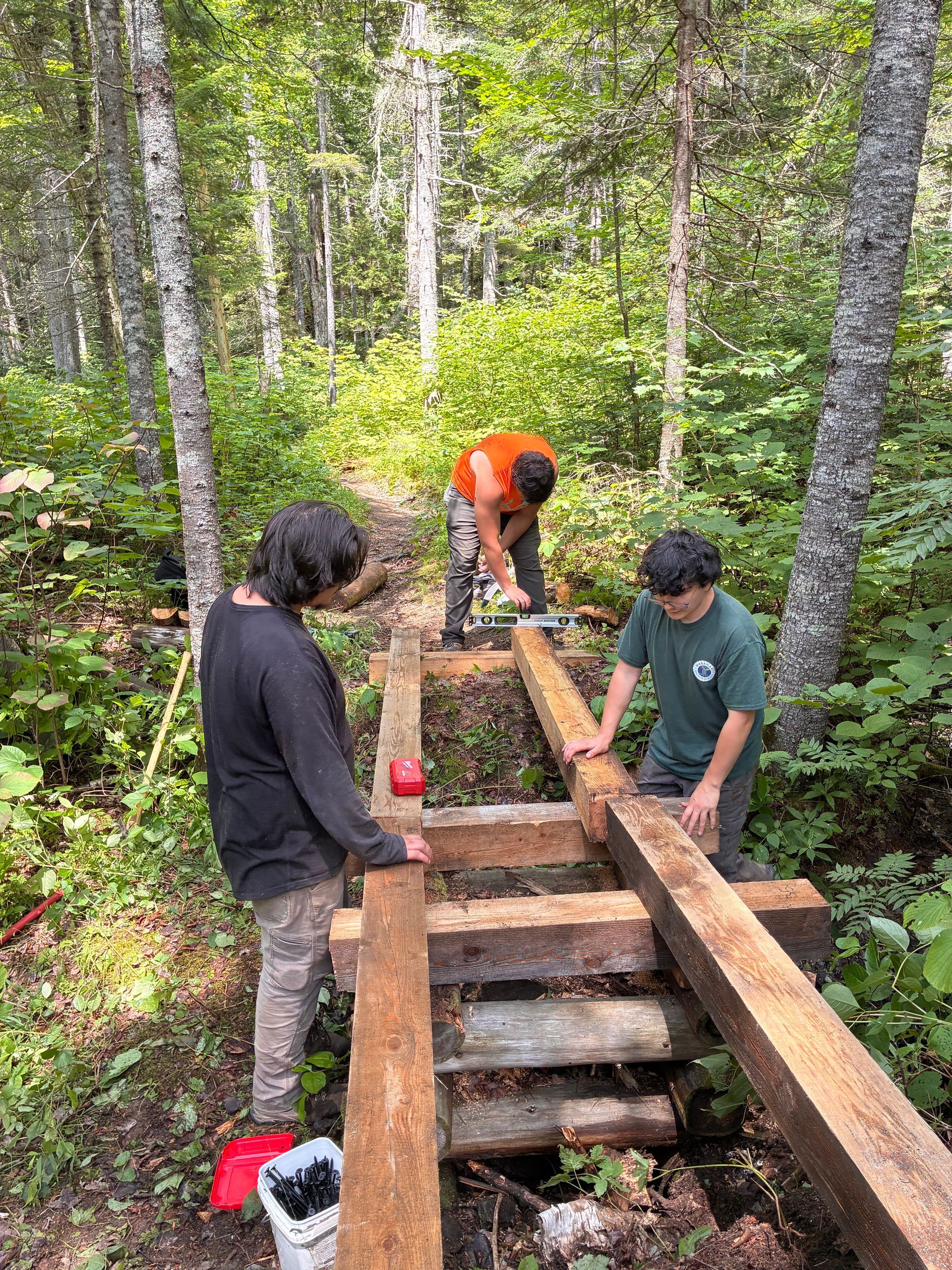
In September 2025, the Guild launched a three-person Forest Stewards Apprenticeship (FSA) crew to work with the Penobscot Nation’s Department of Natural Resources (PN DNR). Over the course of their six-month season, apprentices Agenor Duhon, Gabe Stewart, and Jacob Baker shared a season of learning, collaboration, and hands-on stewardship of Penobscot Tribal lands.
April 14, 2026
This week, I stepped into the role of crew leader. We worked a full 40-hour week, splitting our time between Clifton Farms and a prescribed burn operation. On the first day in the field, we completed hack-and-squirt treatments on trees that had been marked the previous week. For the remainder of the week, we focused on marking trees for future hack-and-squirt work, maintaining a steady pace and ensuring accuracy in our selections.
April 7, 2026
As Guild members, our practice is fundamentally grounded in field observation. We know intuitively that forests are dynamic, living communities. Yet, for decades, the high-level systems used to value our work, specifically the carbon accounting ledgers tied to international frameworks like the Paris Agreement, have treated forests as static, quantifiable blocks of land. In a recent commentary published in One Earth, I argue that these legacy measurement, reporting, and verification (MRV) frameworks are failing. Ledger accounting relies on crude land-use delineations and outdated technology, effectively penalizing the natural, seasonal flux of the ecosystems we manage every day. By forcing landscapes into rigid “forest” versus “non-forest” binaries, such legacy systems miss the complex reality on the ground. But a major shift is underway.
March 18, 2026
Women have always been a part of forestry. Historically, women often helped guide family decisions about when to cut, which trees to save, and how best to steward their land for the next generation. Historical accounts from the Southern Appalachians describe women’s roles in decisions about timber harvesting and prioritizing long-term forest health. These often-uncredited contributions are even reflected in Aldo Leopold’s A Sand County Almanac (1949), in which describes his stewardship philosophy informed not only by his professional experience, but by shared responsibility, where the perspectives of his wife and daughters played an important role.
March 18, 2026
Although rural regions often host the highest concentrations of public and private forest land, they typically lack the sustainable workforce necessary for active management and stewardship. How do we address this foundational problem in forest conservation?
March 18, 2026
The Forest Stewards Guild has a unique dual mandate: practice and promote forest stewardship. Personally, I think the combination of practicing forest management and promoting best practices is what makes the Guild a vibrant and impactful organization.
February 17, 2026
We celebrate the remarkable career and legacy of Leslie (Les) Benedict, who has provided visionary leadership and dedicated service to the stewardship of forests, championing the preservation of the ecological and culturally important black ash. Benedict, a member of the Saint Regis Mohawk Tribe in Akwesasne, north of the Adirondacks in upstate New York, recently retired after serving as the Assistant Director of the Tribe’s Environment Division for over 35 years.
February 17, 2026
The Forest Stewards Guild has been working to support the National Park Service on forest stewardship projects throughout the eastern U.S. This month we are in the midst of a project to protect mounds at Effigy Mounds National Monument near Harpers Ferry Iowa. This site was designated as a National Monument in 1949 and preserves over 200 mounds built between 800 and 2,500 years ago. Mounds at this site include conical, linear, compound, and effigy mounds – constructed in the shape of animals. Please see the National Park Service page for more information about the mounds, the people who built them, and how to visit the site. The lidar images on that website of the Marching Bears and other mound groups are fascinating.
Show More