Half-Earth: Reflections from graduate student Eric Hagen

May 11, 2020

“Half-Earth:” A wake up call, and the amount of land that needs to be dedicated to nature in order to save the majority of species on Earth from extinction. But how do we do it? And how do we both inspire and empower people to act effectively? I argue that we do it through nurturing relationships with the natural world, and simultaneously equipping people with the tools of modern conservation science. Expert authors of the UN-sponsored 2019 global biodiversity assessment tell us that conservation efforts of the past century are ultimately failing (read a summary release by Nature). Without transformational changes at the global scale the Earth faces the extinction of up to a million species, many within decades.

Here in Vermont, we have the knowledge and the tools needed to coordinate effective biodiversity conservation across the entire state, while also keeping our working forests working. But these tools aren’t yet fully utilized by government officials or the public.

For my master’s work at the University of Vermont, I partnered with the Vermont Alliance for Half-Earth to create a collection of web-based articles. These feature conservation tools and concepts embedded into stories about local people and their relationships to the natural world. I wanted to capture the emotional connection to the land that many of us feel but don’t always talk about, and tie in concepts like restoration silviculture and large landscape conservation design. My hope is these stories can be used by conservation organizations, schools, and foresters to teach about concepts that are vital to biodiversity conservation and good land management, and ultimately inspire more people to build healthy and informed relationships with the world.

One story, titled An Unusual Forest features Chittenden County Forester Ethan Tapper and his land in Vermont. “When I first bought this property, when I was laying out the timber harvest, I encountered this young bear. It was in July, and it was one of those males that overwinters with his mom its first winter and then got kicked out the following June. These young bears are like teenagers: they’re kind of dumb, or foolish, and brave, and also relatively small.” – Ethan Tapper

So, Ethan was marking trees when he heard a sound. He looked up and saw the young bear, and it immediately took off. Naturally, Ethan followed after it, all the way up a ridge where it started to climb a tree…

Read the rest of Ethan’s story. Learn about forest management, and Ethan’s relationship with wildlife and the land.

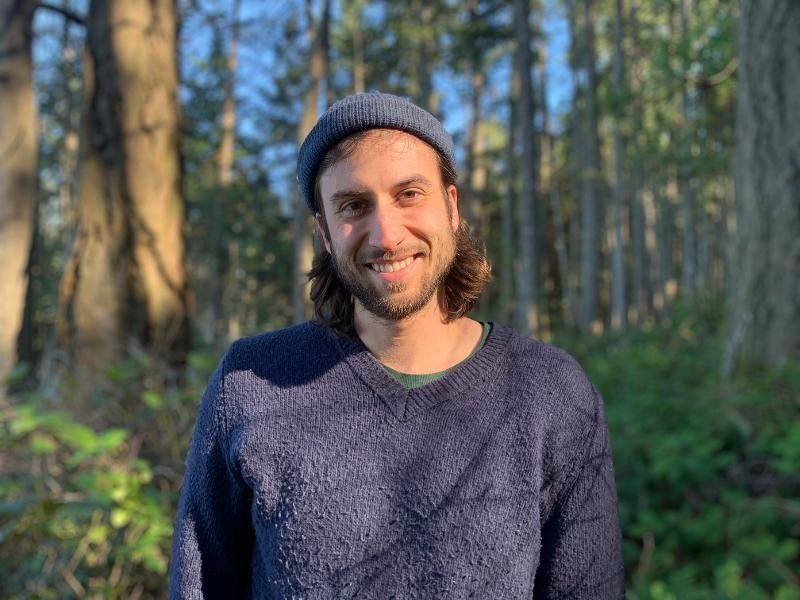
This May I’m graduating from the Field Naturalist Program, a Masters of Science program at the University of Vermont. We study interdisciplinary field science and science communication, and I’ve taken classes in botany, mycology, geology, silviculture, data analysis, and GIS. As Field Naturalists, we learn how to read the landscape, understand its pathways of regeneration, and communicate what we’ve learned with a variety of audiences – much the same as foresters. This fall I’m hoping to take my skills and experience as close as I can to Vancouver, BC, to support my partner as she begins her own master’s program there. My long-term goal is to work in restoration silviculture and landscape scale biodiversity conservation planning in Wisconsin, my home state.

Editor’s note: check out all eight story maps Eric created, including one about him, and share them if you like! A big thanks to Eric for sharing his efforts with us, and for being a Guild student member!

Recent Posts

By Aidan Juhl April 16, 2026
Written by Colleen Robinson
April 14, 2026
Written by Shannon Maes
April 14, 2026
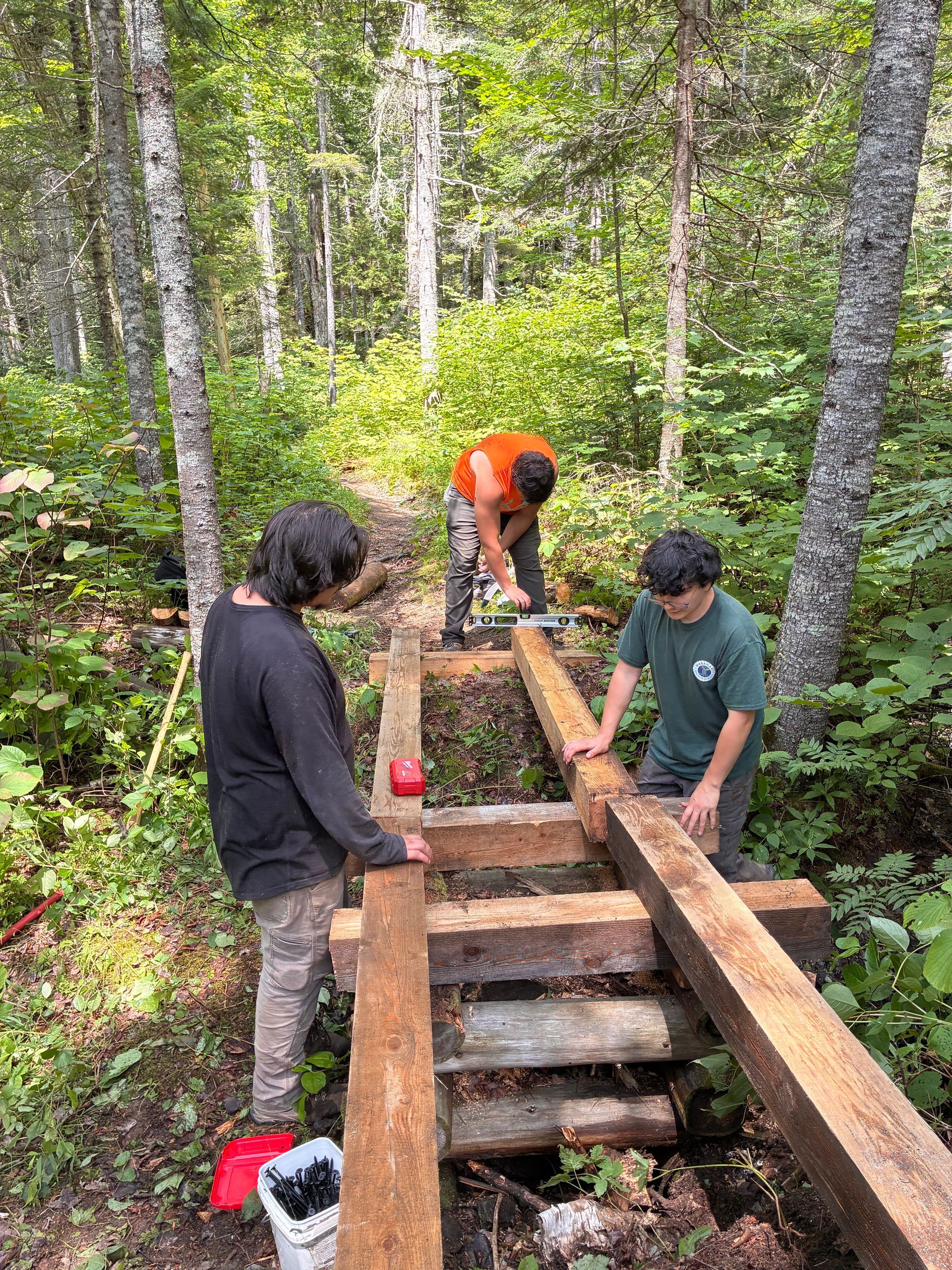
In September 2025, the Guild launched a three-person Forest Stewards Apprenticeship (FSA) crew to work with the Penobscot Nation’s Department of Natural Resources (PN DNR). Over the course of their six-month season, apprentices Agenor Duhon, Gabe Stewart, and Jacob Baker shared a season of learning, collaboration, and hands-on stewardship of Penobscot Tribal lands.
April 14, 2026
This week, I stepped into the role of crew leader. We worked a full 40-hour week, splitting our time between Clifton Farms and a prescribed burn operation. On the first day in the field, we completed hack-and-squirt treatments on trees that had been marked the previous week. For the remainder of the week, we focused on marking trees for future hack-and-squirt work, maintaining a steady pace and ensuring accuracy in our selections.
April 7, 2026
As Guild members, our practice is fundamentally grounded in field observation. We know intuitively that forests are dynamic, living communities. Yet, for decades, the high-level systems used to value our work, specifically the carbon accounting ledgers tied to international frameworks like the Paris Agreement, have treated forests as static, quantifiable blocks of land. In a recent commentary published in One Earth, I argue that these legacy measurement, reporting, and verification (MRV) frameworks are failing. Ledger accounting relies on crude land-use delineations and outdated technology, effectively penalizing the natural, seasonal flux of the ecosystems we manage every day. By forcing landscapes into rigid “forest” versus “non-forest” binaries, such legacy systems miss the complex reality on the ground. But a major shift is underway.
March 18, 2026
Women have always been a part of forestry. Historically, women often helped guide family decisions about when to cut, which trees to save, and how best to steward their land for the next generation. Historical accounts from the Southern Appalachians describe women’s roles in decisions about timber harvesting and prioritizing long-term forest health. These often-uncredited contributions are even reflected in Aldo Leopold’s A Sand County Almanac (1949), in which describes his stewardship philosophy informed not only by his professional experience, but by shared responsibility, where the perspectives of his wife and daughters played an important role.
March 18, 2026
Although rural regions often host the highest concentrations of public and private forest land, they typically lack the sustainable workforce necessary for active management and stewardship. How do we address this foundational problem in forest conservation?
March 18, 2026
The Forest Stewards Guild has a unique dual mandate: practice and promote forest stewardship. Personally, I think the combination of practicing forest management and promoting best practices is what makes the Guild a vibrant and impactful organization.
February 17, 2026
We celebrate the remarkable career and legacy of Leslie (Les) Benedict, who has provided visionary leadership and dedicated service to the stewardship of forests, championing the preservation of the ecological and culturally important black ash. Benedict, a member of the Saint Regis Mohawk Tribe in Akwesasne, north of the Adirondacks in upstate New York, recently retired after serving as the Assistant Director of the Tribe’s Environment Division for over 35 years.
February 17, 2026
The Forest Stewards Guild has been working to support the National Park Service on forest stewardship projects throughout the eastern U.S. This month we are in the midst of a project to protect mounds at Effigy Mounds National Monument near Harpers Ferry Iowa. This site was designated as a National Monument in 1949 and preserves over 200 mounds built between 800 and 2,500 years ago. Mounds at this site include conical, linear, compound, and effigy mounds – constructed in the shape of animals. Please see the National Park Service page for more information about the mounds, the people who built them, and how to visit the site. The lidar images on that website of the Marching Bears and other mound groups are fascinating.
Show More