From Leopold to Today: A Legacy of Conservation in the Upper Rio Grande
Written by Christi Bode, Southwest Project Coordinator
TRES PIEDRAS, NM
New approaches often defy the status quo.

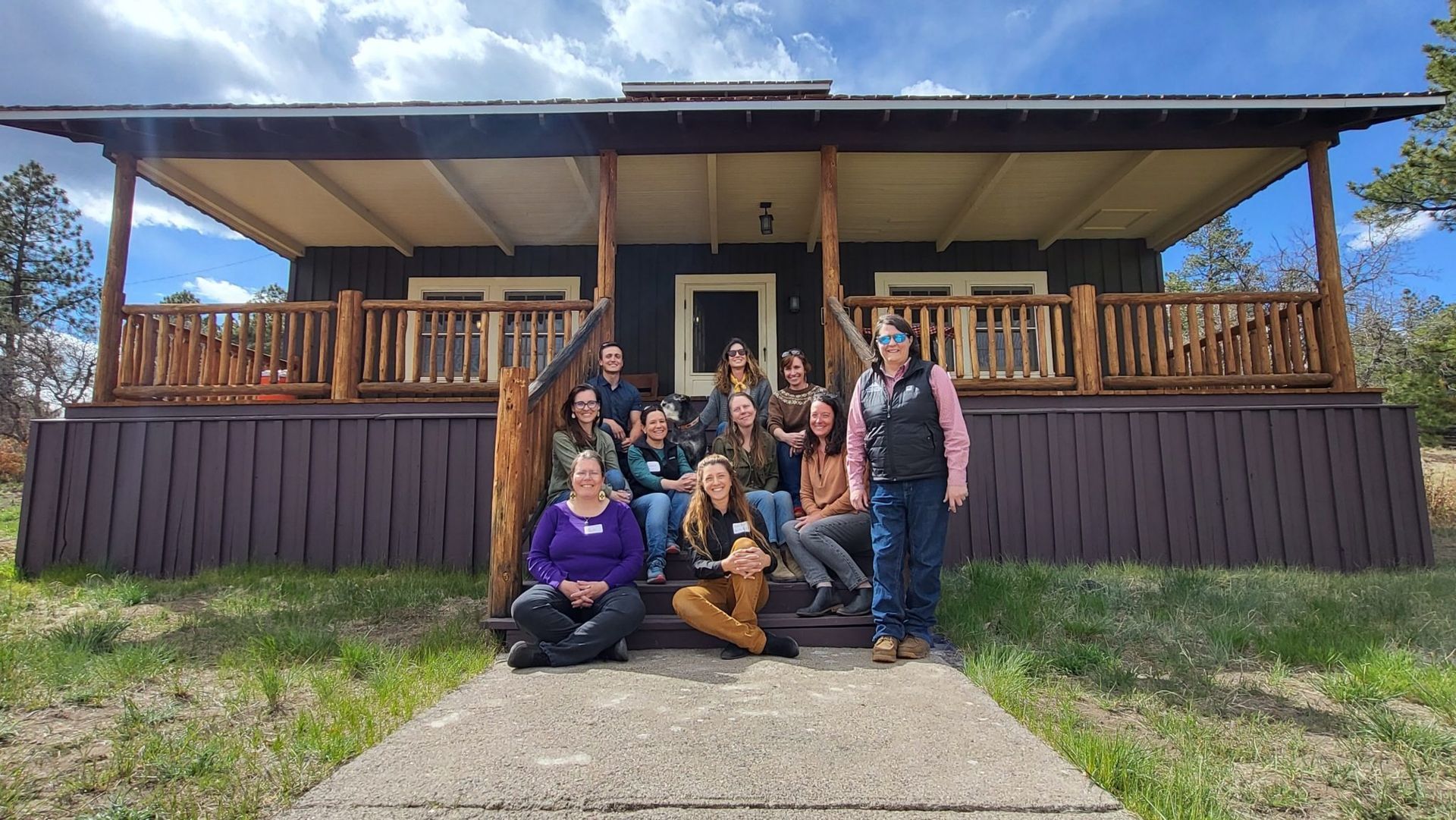
From the east-facing front porch, I take in a sweeping view of the snow-capped Sangre de Cristo Mountains. Somewhere in between the peel-log posts and jagged horizon lies the Rio Grande Gorge, a deep chasm sculpted by the interplay of geology and water. I imagine Aldo Leopold, a newly appointed supervisor of the Carson National Forest at the time, stood in this same spot in 1912, envisioning what the future of land conservation could look like: co-managing natural and human ecosystems as one.
Henry Carey, also a conservationist, arrived in Santa Fe some 70 years later and had forward-thinking ideas for the surrounding landscape. He longed to honor intrinsic values that weren’t represented within institutionalized land management. In the 1980s and ‘90s, forestry was focused on commodities while community and conservation values faded to the background. Carey founded the Forest Trust in 1984 to help landowners conserve their properties and utilize sustainable forestry practices informed by place-based knowledge. He recognized that forests defined cultures in rural communities across northern New Mexico. Private lands stewardship served as the foundation for the grander vision of the Forest Stewards Guild, which he co-founded a decade later.
A land trust or land conservancy is a community-based, nonprofit organization dedicated to permanently protecting land. Individual acts of conservation, like placing a farm or ranch under a conservation easement, amount to hundreds of thousands of acres protected across the entirety of a watershed. Private parcels adjacent to public lands connect wildlife corridors and sometimes come with an opportunity to improve land health on both sides of the fence. These places help safeguard water supplies, providing public benefit well beyond the property line. Land trusts are uniquely positioned to offer locally driven, lasting solutions that support families, rural economies, and future generations.
As a Southwest Guild employee, I think a lot about what landscape-scale impact looks like across millions of acres. Looming problems – like climate change, declining forest health and habitat degradation – reveal the need to protect larger, strategic areas that can influence systemic change. A healthy Rio Grande watershed equals the sum of all its parts, and private lands are a big piece of the puzzle: for wildlife, for rural communities, and especially for water. The region’s subsistence, spanning from the flood-irrigated meadows near Creede to the acequia-fed lands in the Sangre de Cristo foothills, is dependent on the Rio Grande and its tributaries. Any long-lasting solutions have to include landowners when thinking about sustaining an entire system.
Altogether, there’s six land trusts working throughout the Rio Grande Basin in Southern Colorado and Northern New Mexico: Rio Grande Headwaters Land Trust, Colorado Open Lands, Colorado Cattlemen’s Agricultural Land Trust, Taos Land Trust, Santa Fe Conservation Trust and the New Mexico Land Conservancy. Conversations over time with each organization deepened my understanding of the communities served and the obstacles encountered. Putting them all together in a room with well-fed bellies felt like the next obvious step.
The Land Trust Idea Exchange stemmed from the desire to create linkages across state lines and breakdown silos of competition. The Exchange fosters connectivity among place-based organizations throughout the Upper Rio Grande Basin who understand private lands conservation best.
On this late April day, less than a week after Carey’s passing, I waited on the steps of Mi Casita – also known as the Aldo Leopold House – in anticipation of my group’s arrival. The Leopold House, located in Tres Piedras, New Mexico, happened to be a central gathering place for partners along the Rio Grande. The significance of what was about to unfold in between these wooden beams – beams that have heard five lifetimes worth of chatter and ideas around conservation, felt like a full circle moment.
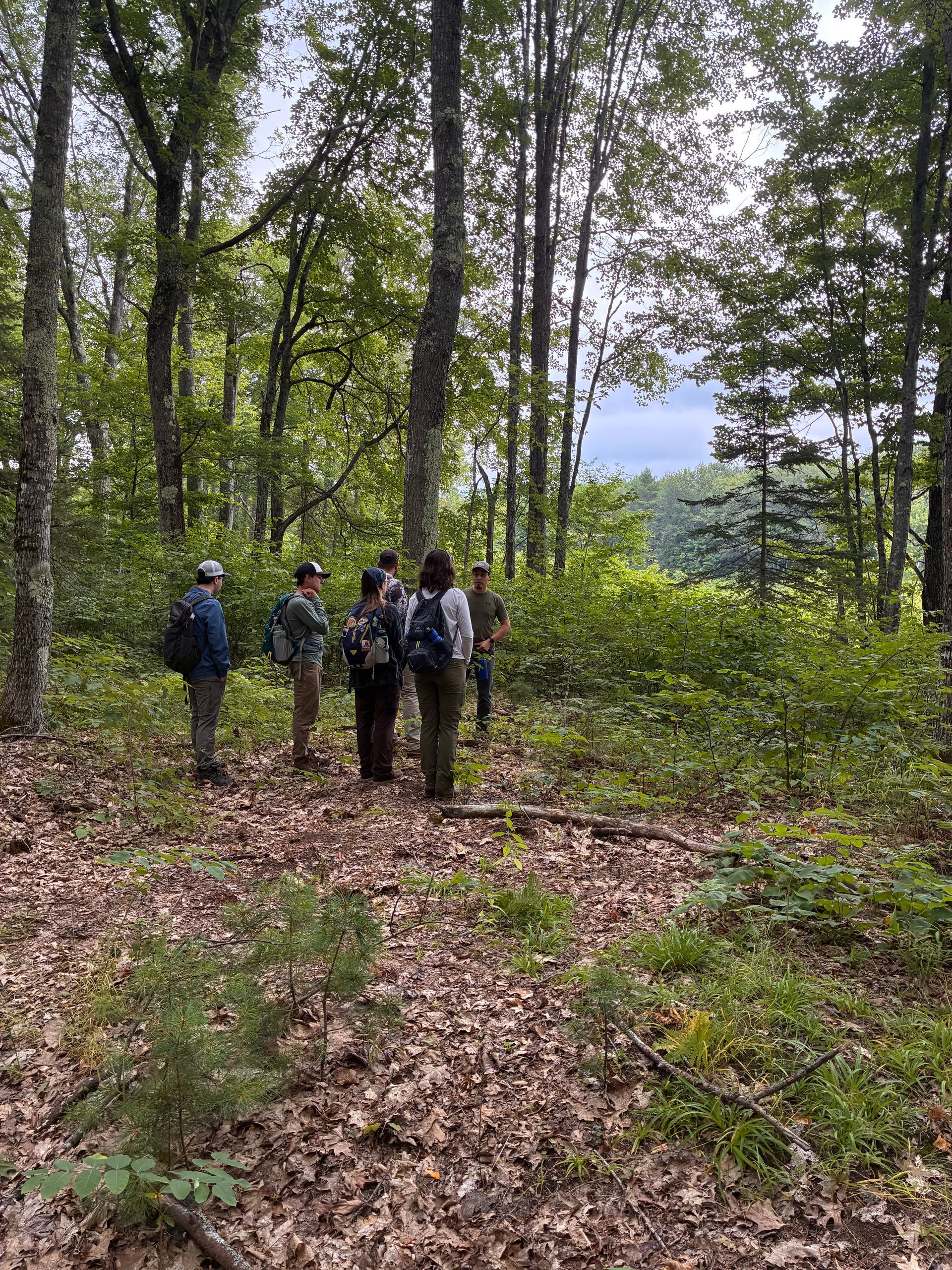
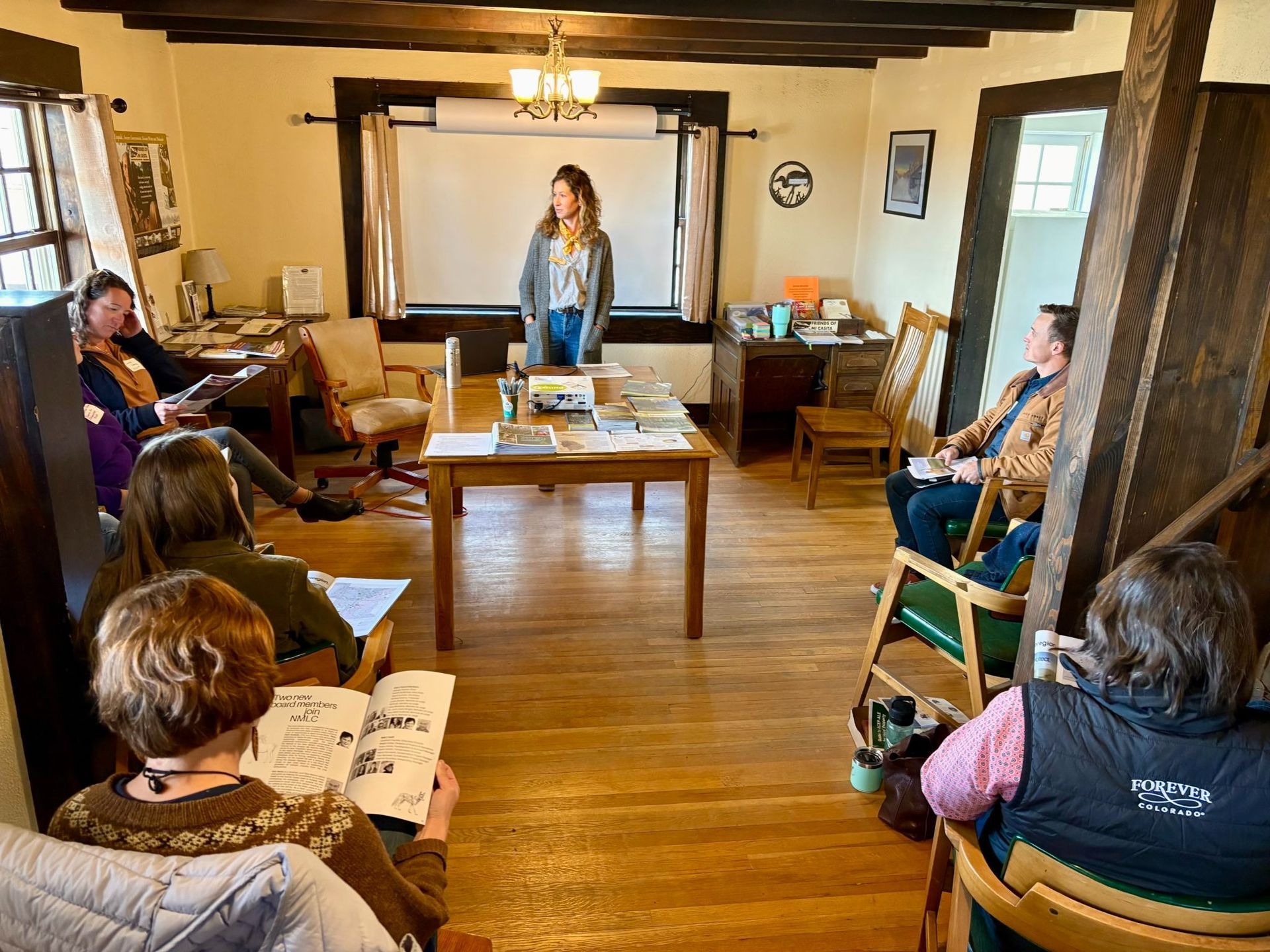
First, we introduced ourselves as people. We learned the landscape drew us in for different reasons, but we chose to stay for a mutual commitment to place. The morning was dedicated to getting to know each other’s organizations and the various conservation efforts taking place across the watershed. A joint vision and mutual priorities quickly became apparent.
A rich cultural heritage and strong agricultural tradition shape landscapes across Southern Colorado and Northern New Mexico, which is reflected in the ways land trusts serve their communities. While conservation easements are most known for safeguarding land and water from development, land trusts utilize this tool in non-traditional ways.
Despite modernization in today’s agricultural economy, acequias continue to be the social glue that holds together rural communities in this region. Acequias are community-governed, hand-built ditches dating back to the Pueblo Indians, who used a similar system of irrigation, which was later adopted by the Spanish upon their arrival over 400 years ago. Some organizations are working with acequia communities to protect cultural traditions, local food access and the ecological function that these unique systems provide.

For some land trusts, protecting open spaces within proximity of urban centers is important for public access and fostering connection with the surrounding environment.
Community engagement is fundamental to all the work that these land trusts do – from educational youth programming and land restoration workshops, to building relationships with local landowners and partners that help advance conservation efforts.
After a generous lunch portion of enchiladas and green chile and piñon apple pie (a Chili Line Depot classic), participants dug a bit deeper. What does it mean to think like a watershed, when working with a checkerboard of private parcels across the landscape? Investing time and energy into building connections with neighbors across state lines is step one.
“We share a lot culturally with Northern New Mexico and sometimes even more than with other parts of Colorado. There was a real sense of camaraderie and shared purpose that made the conversations feel both familiar and energizing,” said Jocelyn Catterson, Community Engagement Director of the Rio Grande Headwaters Land Trust.
Participants expressed a strong desire to keep the momentum of the day going and explore what a Rio Grande Land Trust cohort could look like: in-person events, site visits, knowledge sharing and more importantly, a unified space to work through ideas, challenges and solutions together. The next phase of the Land Trust Idea Exchange is anticipated for late Fall/Winter 2025.
Land conservation, including the protection and stewardship of private lands, is essential for preserving the vital functions of the Southwest’s forests and rivers. Sustaining a healthy Rio Grande watershed hinges on the combined conservation efforts of these land trusts and the landowners they support.
Recent Posts