Fire in the Northeast?

January 15, 2025

Written by Zander Evans

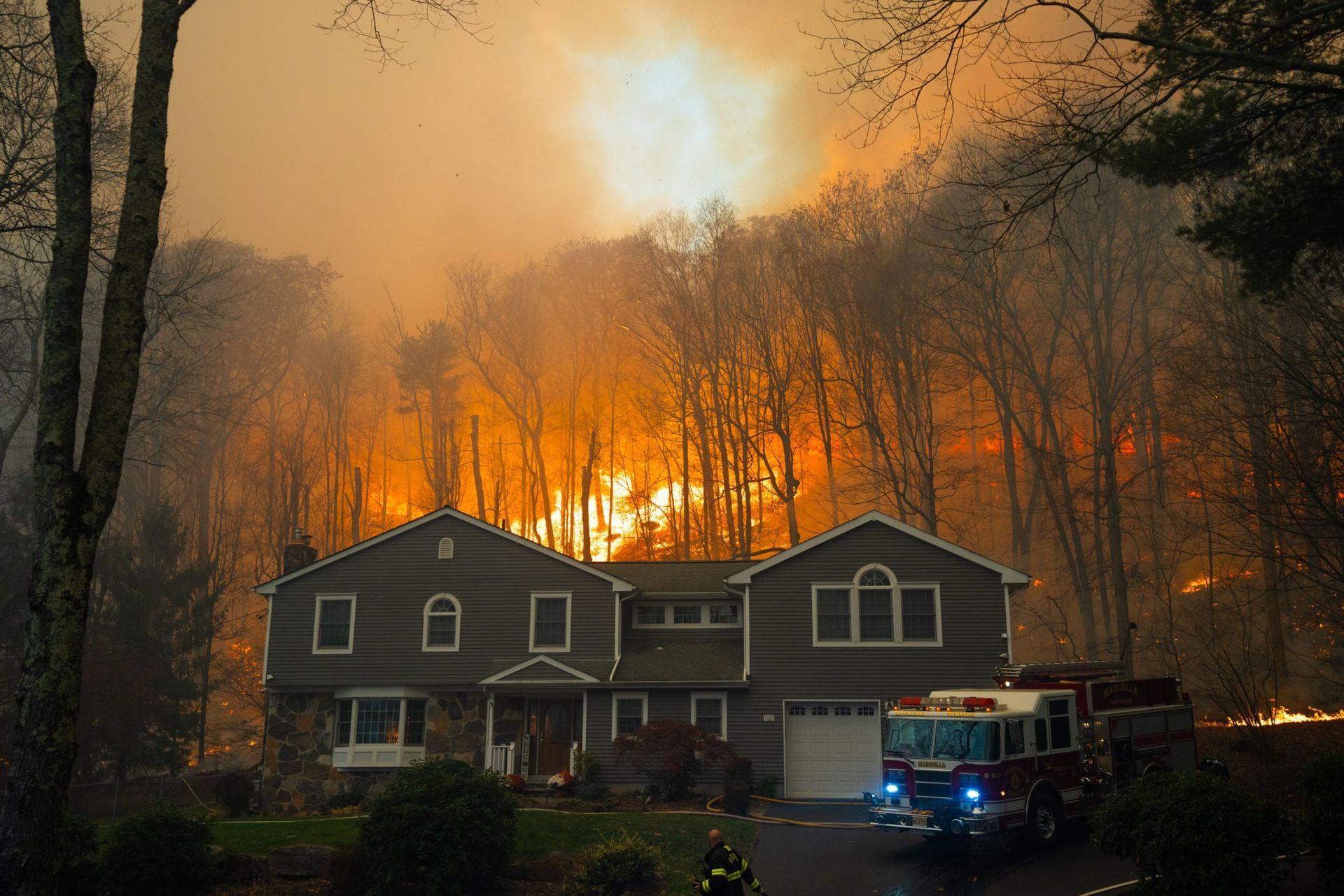
Some of us learned in school that the Northeast’s forests were nearly ‘asbestos’ and wouldn’t burn. This view ignored the ecological evidence and Indigenous stewardship and failed to acknowledge the swiftly warming climate. Last year was the hottest year on record and we are on track for at least a 1.5°C temperature increase (2°C is not unlikely). October 2024 was the all-time driest month on record for nearly 80 climate stations across the eastern half of the country – a surprise after the intense rain of Hurricane Helene. The drought in the Northeast combined with high winds to fuel wildfires – over 300 in New Jersey,150 in Connecticut, 122 in New York – as well as a 5,304-acre wildfire on the border of New York and New Jersey. 

The Guild is responding to the increasing wildfire risk and continued need for the ecological use of fire for stewardship. As usual, the Guild’s approach is based on science, built through collaboration, and focuses on practical solutions. In fact, the Guild’s Polly Weigand traveled all the way to Ireland as part of the Internation Fire Behavior and Fuels Conference to share the latest science. The conference covered a wide range of key topics: fire behavior, fire regimes, fuels management, prescribed fire, smoke, air quality and health, wildland urban interface, social science, human dimensions, and Indigenous knowledge. The Guild co-founded and continues to help lead the North Atlantic Fire Science Exchange (NAFSE), a hub for science sharing and collaboration between managers and researchers to create a resilient North Atlantic landscape. 

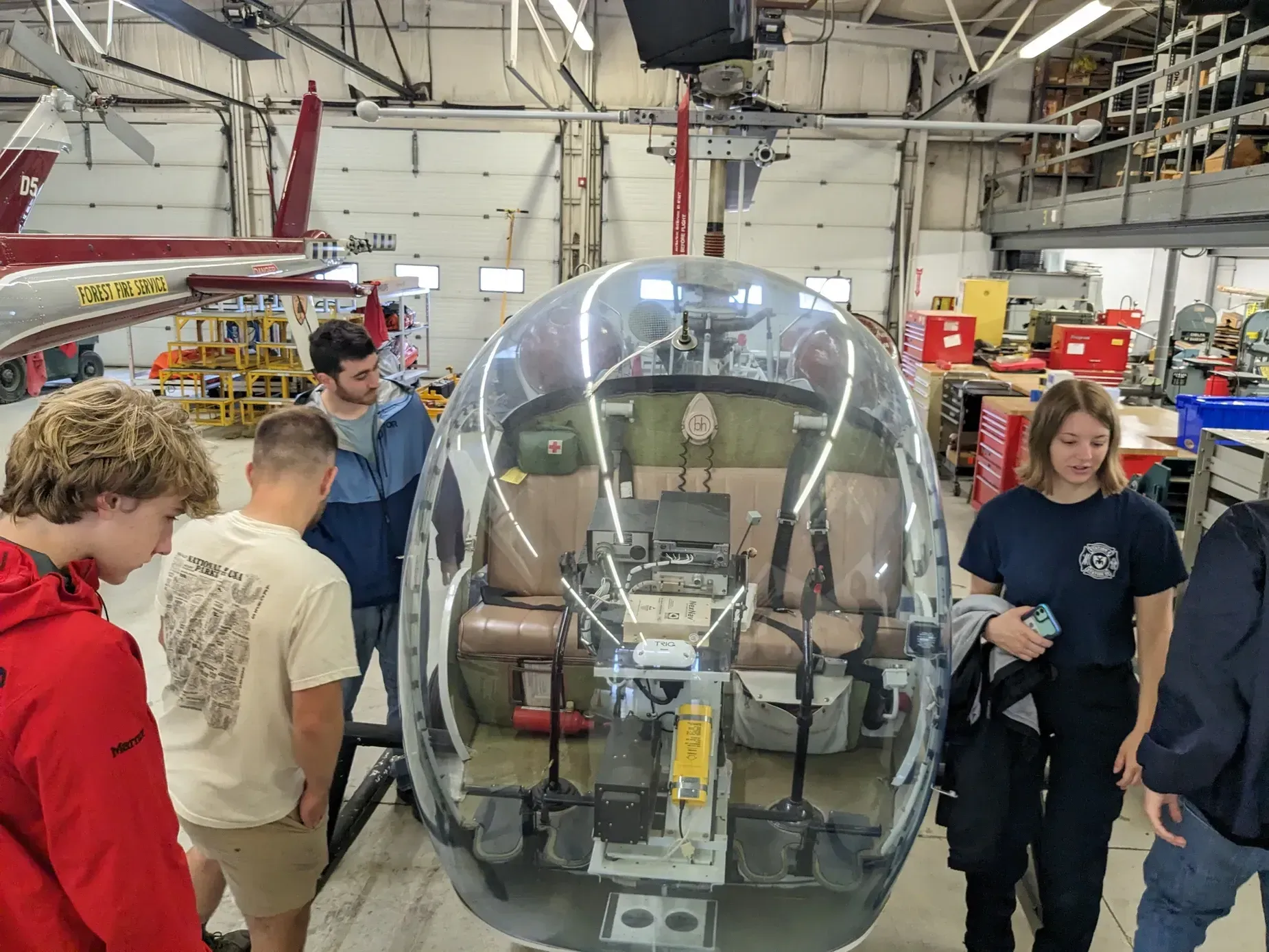
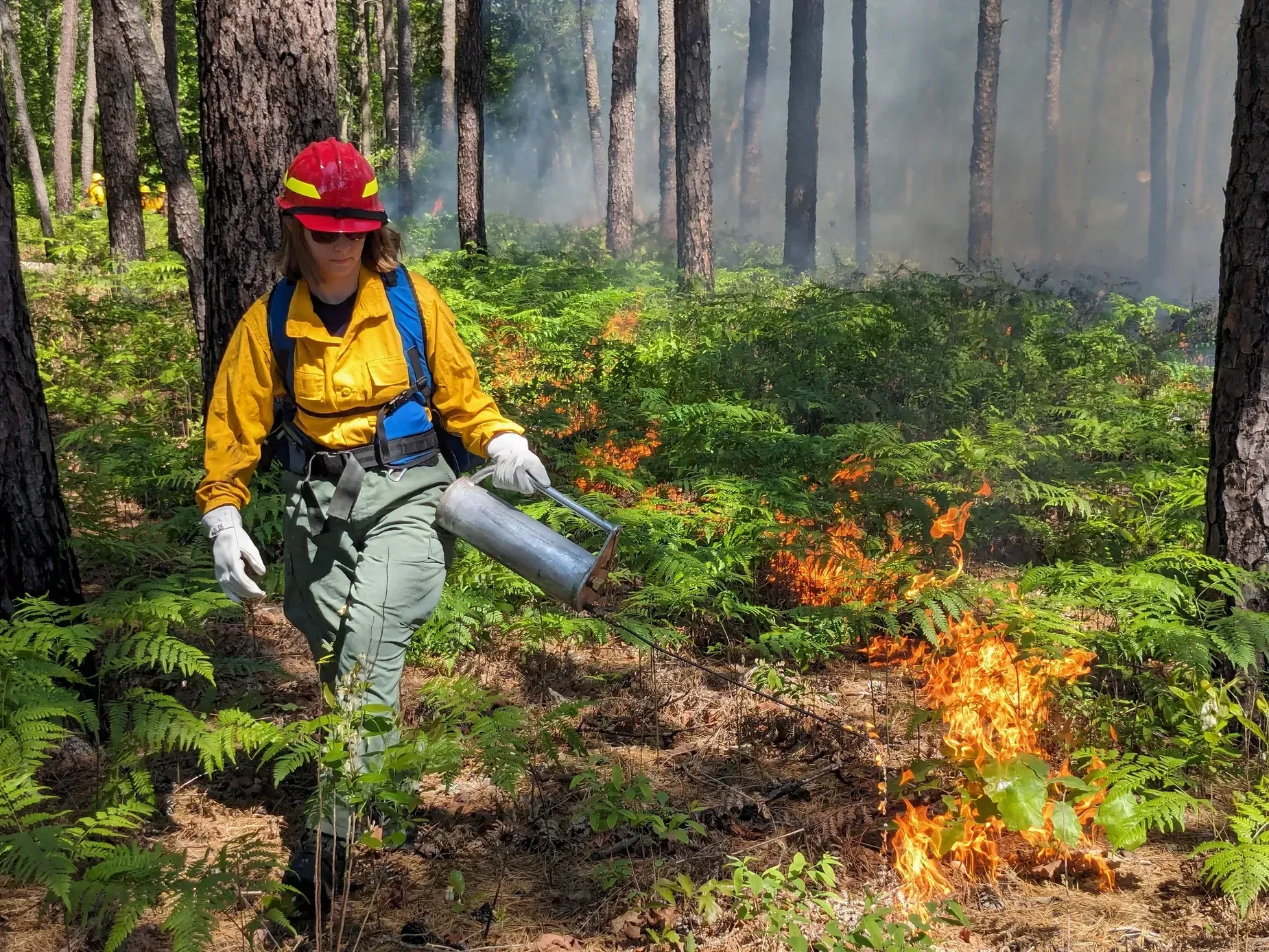
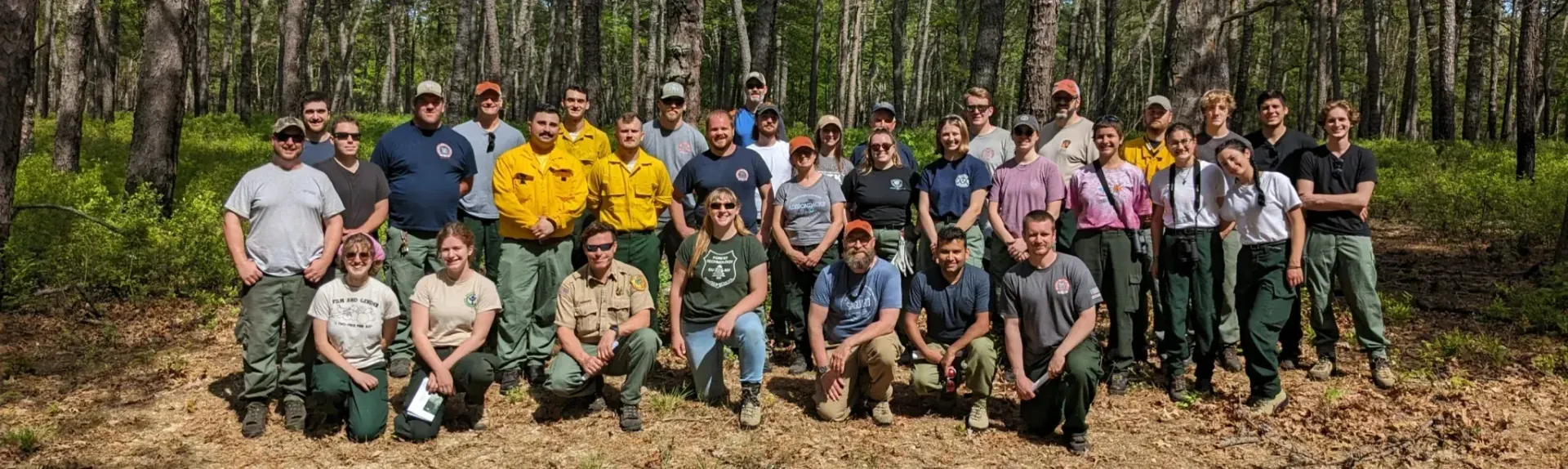
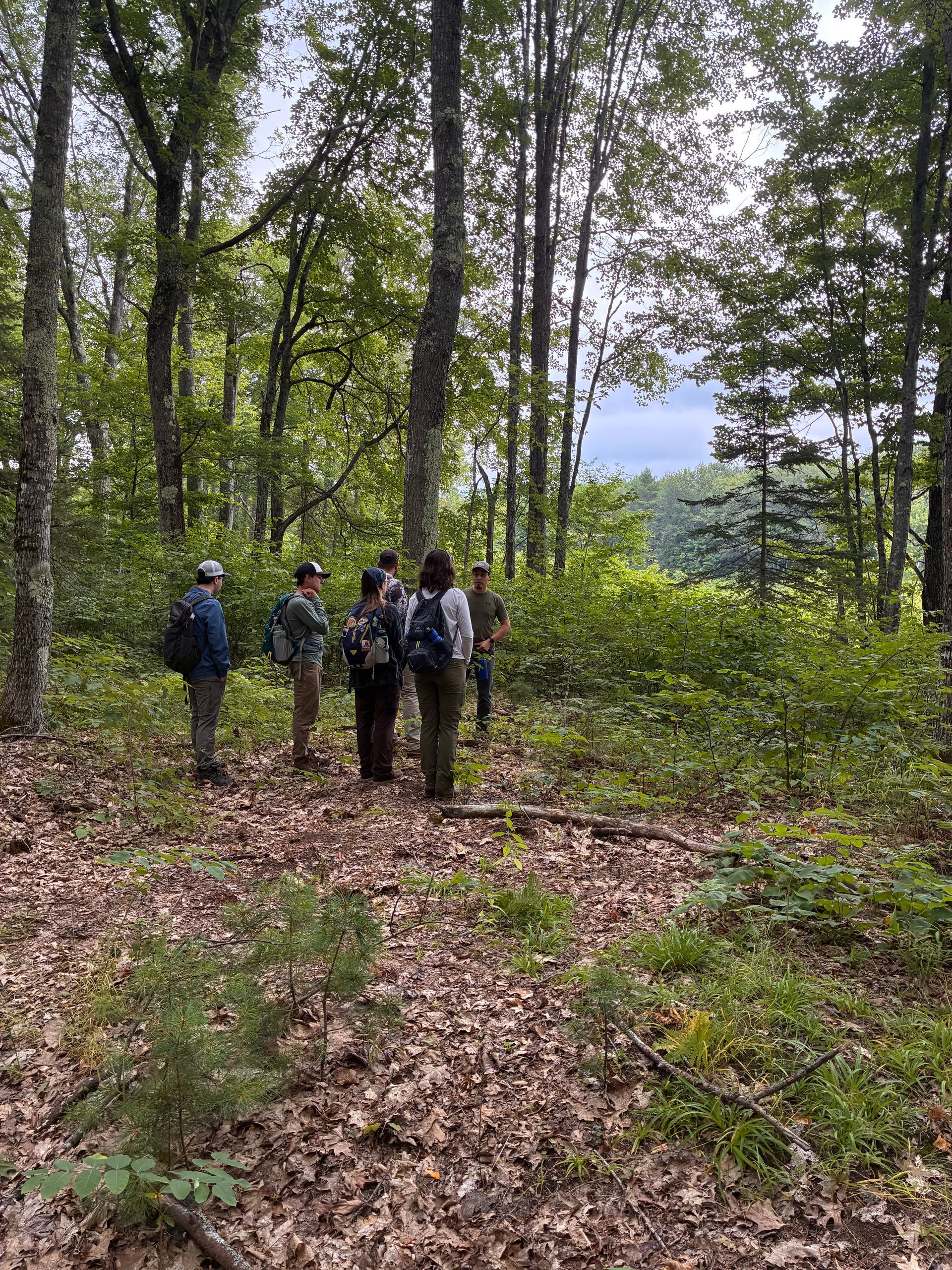
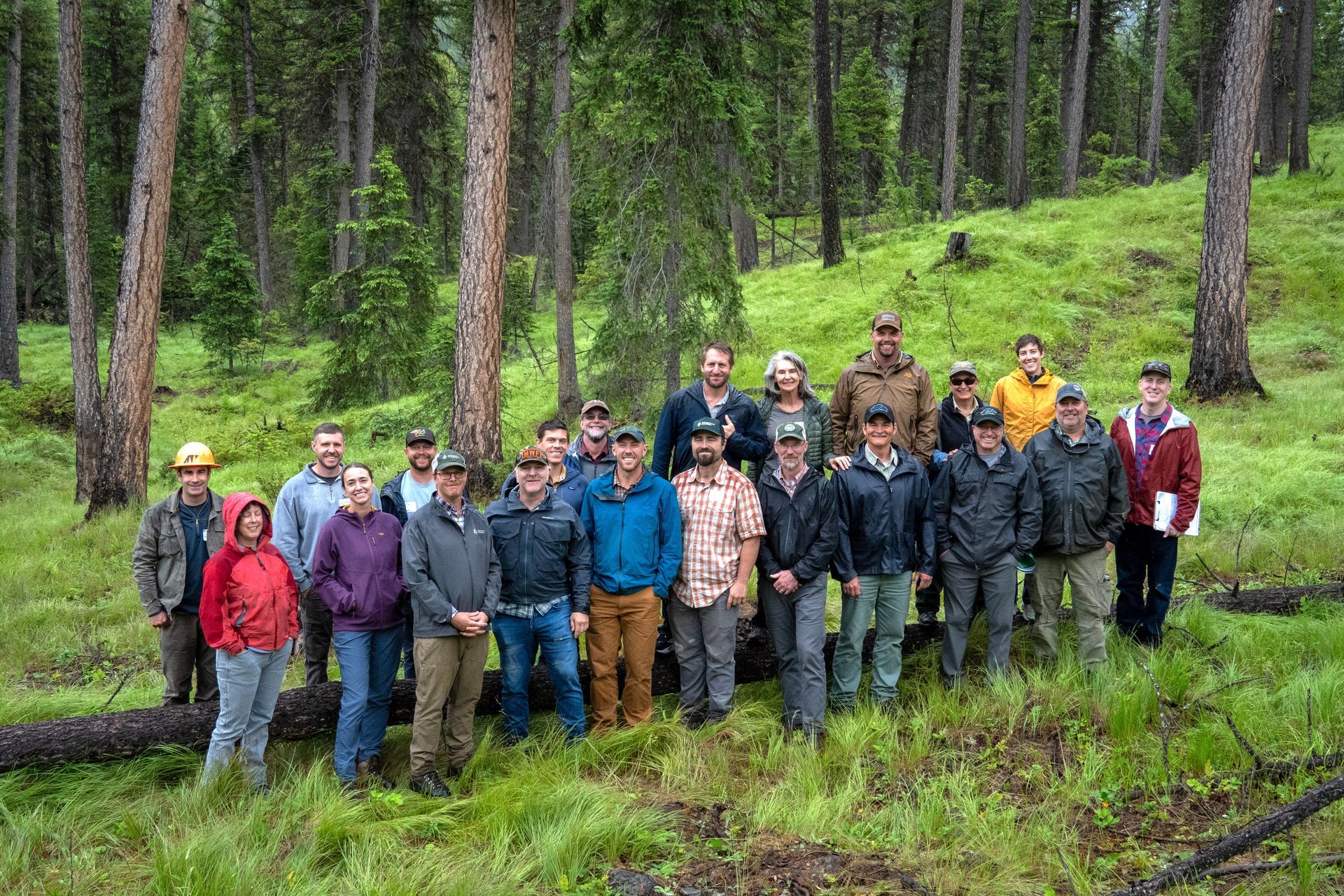
As part of NAFSE and in partnership with New Jersey Forest Fire Service, the Guild helped host a training in May 2024 to build practical experience on top of the scientific foundation. The New Jersey Fire Camp was the perfect opportunity to provide college/university students and early-career natural resource professionals with developing technical skills through the ecological application of prescribed fire. The training included a walk through the forests guided by Stockton University Professor and Guild member Matt Olson. Participants conducted a prescribed burn, and many achieved their firefighter type II qualifications. The hands-on learning environment created at the Fire Camp contributed to a greater knowledge, understanding, and awareness of prescribed fire, ecology, and wildland fire concepts. Many participants indicated how beneficial it was to actually participate in the prescribed burn versus watching videos. 

The Guild also helped put on the Northeast – Midwest Regional Prescribed Fire Science and Management Workshop, for wildland fire management partners across the 20-state region. There, we all shared region-wide, fire ecology information with the goal of expanding and maintaining the use of prescribed fire across all landscapes, jurisdictions, and fire-dependent ecosystems. The Albany Pine Bush Preserve lies within the unceded territory of the Stockbridge Munsee Community of Mohican Indians and at the eastern door of the Mohawk Nation of the Haudenosaunee Confederacy. Both nations suffered from the forced removal from much of their ancestral homelands. Research is documenting their stewardship including a 6,600-year record of oak, pine, and wildland fires. The field trip demonstrated ‘Shifting Paradigms in Restoring Fire Regimes in the Albany Pine Bush Preserve.’ Since 1991 on the Preserve, management has focused on reducing wildfire risk and improving ecosystem health (composition, structure, function) by restoring altered fire regimes. As a sign of success, they have been able to overcome a range of challenges to help recover the endangered Karner Blue butterfly (Plebejus melissa samuelis). 

The Guild is finishing a Community Wildfire Protection Plan for the Massabesic region of Maine. The plan builds on the learning and science collected in NAFSE as well as the Guild’s experience in the fire-adapted forests of the West. 

Looking forward to 2025, the Guild with NAFSE and other partners, is looking forward to a prescribed fire training exchange in Maine. It’s all part of the wide breadth of work the Guild engages in to face climate and related challenges head-on, for the benefit of forests, ecosystems, and communities today and tomorrow. Though we take pride in this work and our role in leading forward movement in many of these areas, we gratefully recognize that it takes a whole community; within the Guild, among our partners, and among those who don’t have forests on their mind every day. Thanks to everyone involved, for their shared dedication and expertise to build a more collaborative and healthy future for forests and people. The Guild is honored to support the effort. 

Recent Posts

By Aidan Juhl April 16, 2026
Written by Colleen Robinson
April 14, 2026
Written by Shannon Maes
April 14, 2026
In September 2025, the Guild launched a three-person Forest Stewards Apprenticeship (FSA) crew to work with the Penobscot Nation’s Department of Natural Resources (PN DNR). Over the course of their six-month season, apprentices Agenor Duhon, Gabe Stewart, and Jacob Baker shared a season of learning, collaboration, and hands-on stewardship of Penobscot Tribal lands.
April 14, 2026
This week, I stepped into the role of crew leader. We worked a full 40-hour week, splitting our time between Clifton Farms and a prescribed burn operation. On the first day in the field, we completed hack-and-squirt treatments on trees that had been marked the previous week. For the remainder of the week, we focused on marking trees for future hack-and-squirt work, maintaining a steady pace and ensuring accuracy in our selections.
April 7, 2026
As Guild members, our practice is fundamentally grounded in field observation. We know intuitively that forests are dynamic, living communities. Yet, for decades, the high-level systems used to value our work, specifically the carbon accounting ledgers tied to international frameworks like the Paris Agreement, have treated forests as static, quantifiable blocks of land. In a recent commentary published in One Earth, I argue that these legacy measurement, reporting, and verification (MRV) frameworks are failing. Ledger accounting relies on crude land-use delineations and outdated technology, effectively penalizing the natural, seasonal flux of the ecosystems we manage every day. By forcing landscapes into rigid “forest” versus “non-forest” binaries, such legacy systems miss the complex reality on the ground. But a major shift is underway.
March 18, 2026
Women have always been a part of forestry. Historically, women often helped guide family decisions about when to cut, which trees to save, and how best to steward their land for the next generation. Historical accounts from the Southern Appalachians describe women’s roles in decisions about timber harvesting and prioritizing long-term forest health. These often-uncredited contributions are even reflected in Aldo Leopold’s A Sand County Almanac (1949), in which describes his stewardship philosophy informed not only by his professional experience, but by shared responsibility, where the perspectives of his wife and daughters played an important role.
March 18, 2026
Although rural regions often host the highest concentrations of public and private forest land, they typically lack the sustainable workforce necessary for active management and stewardship. How do we address this foundational problem in forest conservation?
March 18, 2026
The Forest Stewards Guild has a unique dual mandate: practice and promote forest stewardship. Personally, I think the combination of practicing forest management and promoting best practices is what makes the Guild a vibrant and impactful organization.
February 17, 2026
We celebrate the remarkable career and legacy of Leslie (Les) Benedict, who has provided visionary leadership and dedicated service to the stewardship of forests, championing the preservation of the ecological and culturally important black ash. Benedict, a member of the Saint Regis Mohawk Tribe in Akwesasne, north of the Adirondacks in upstate New York, recently retired after serving as the Assistant Director of the Tribe’s Environment Division for over 35 years.
February 17, 2026
The Forest Stewards Guild has been working to support the National Park Service on forest stewardship projects throughout the eastern U.S. This month we are in the midst of a project to protect mounds at Effigy Mounds National Monument near Harpers Ferry Iowa. This site was designated as a National Monument in 1949 and preserves over 200 mounds built between 800 and 2,500 years ago. Mounds at this site include conical, linear, compound, and effigy mounds – constructed in the shape of animals. Please see the National Park Service page for more information about the mounds, the people who built them, and how to visit the site. The lidar images on that website of the Marching Bears and other mound groups are fascinating.
Show More