Birds, Bogs, and Forestry – a two-day Lowland Spruce Workshop in Minnesota

October 30, 2025

Written by Christian Nelson, Forest Stewards Guild Lake States Coordinator  

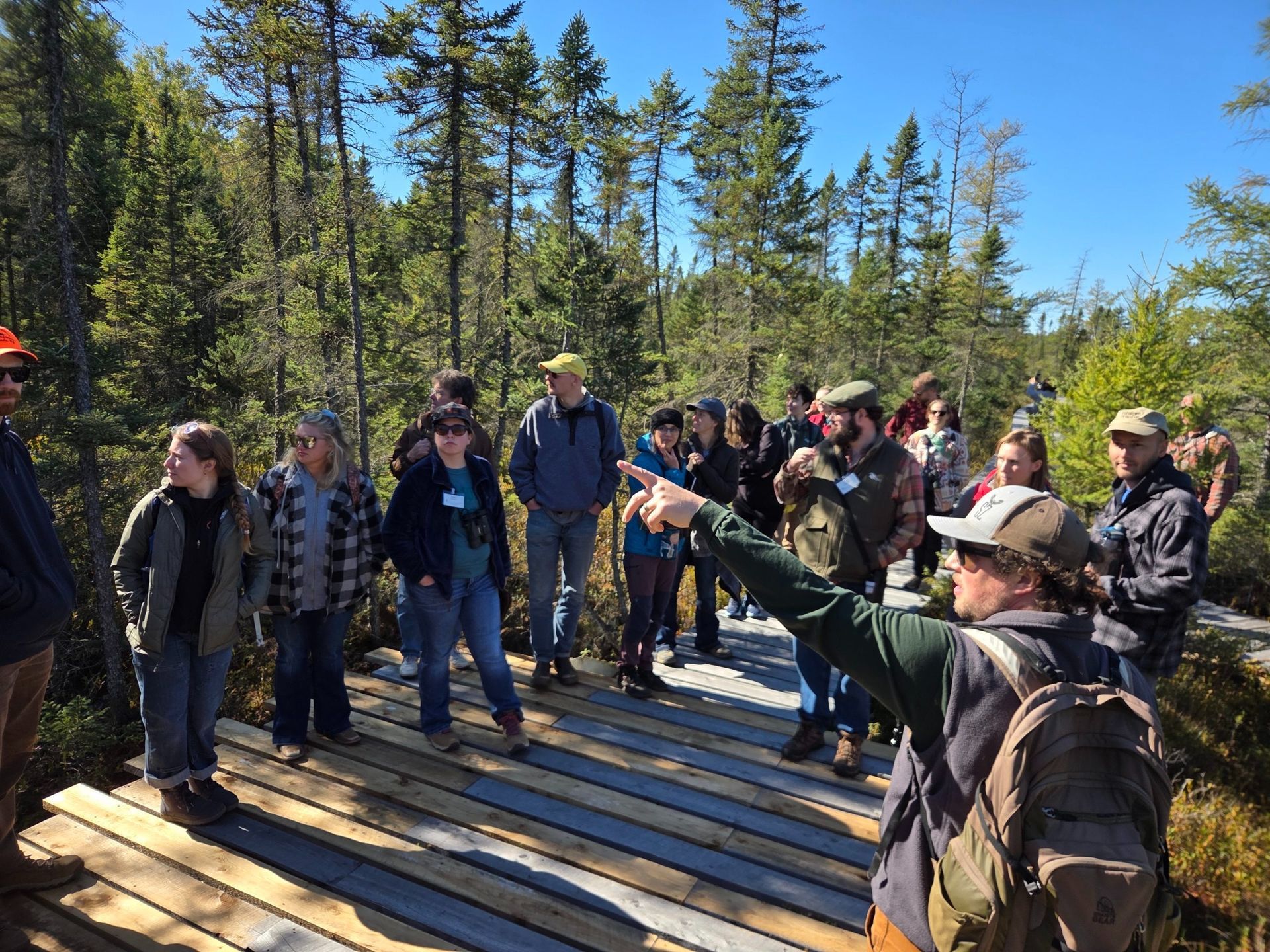
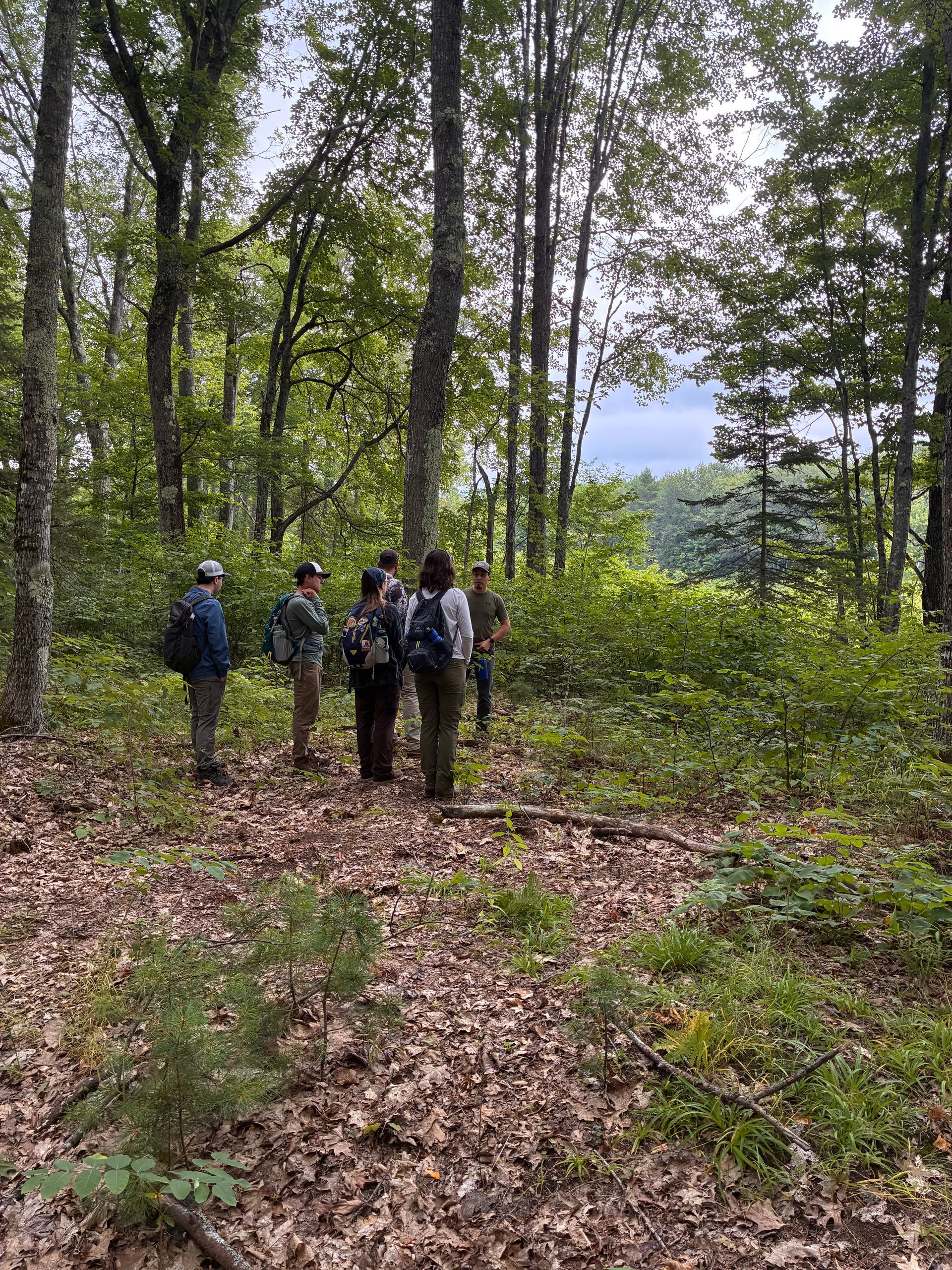
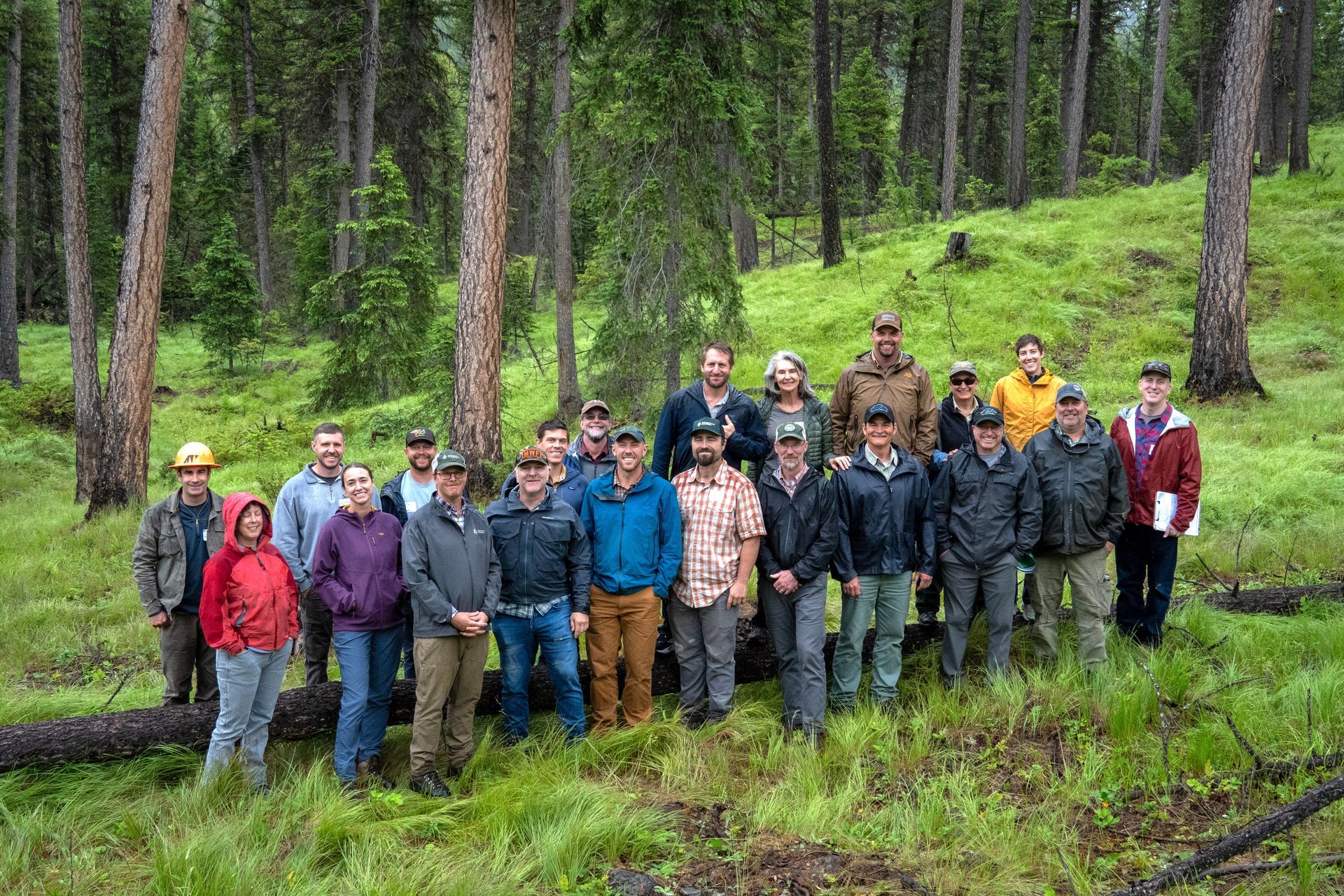
Fifty foresters and wildlife managers gathered in early October at the University of Minnesota’s Cloquet Forestry Center for a rich discussion on black spruce biology, ecology, economics, and management and capped the event with a field tour of the renowned Sax-Zim Bog. This extensive bog is one of the only places in the Lower 48 where boreal bird species can be consistently seen. The site attracts birders from across the nation, including a visit from Owen Wilson’s character in the 2011 film The Big Year starring Wison alongside Steve Martin and Jack Black. 

The two-day event was organized by American Bird Conservancy Northern Forests Conservation Delivery Network Coordinator, and Guild member, Jayme Strange, in partnership with several organizations including the Forest Stewards Guild and the University of Minnesota. The event tied in aspects of the recently completed Forestry for Minnesota Birds Guidebook.

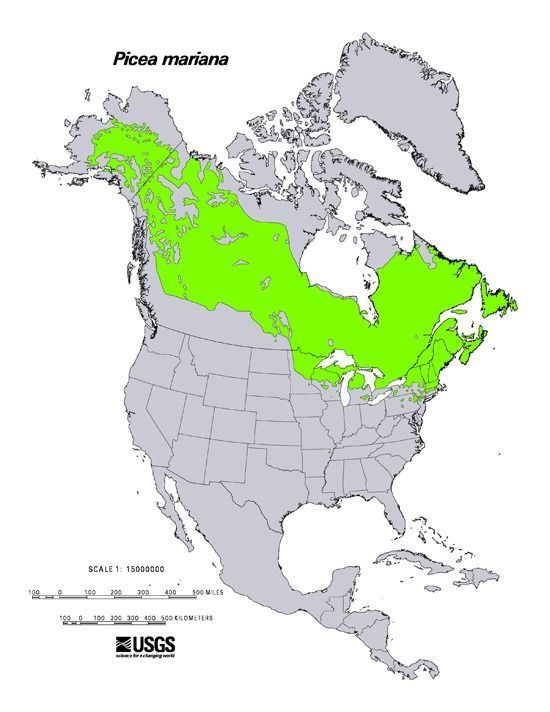
Black spruce (   Picea mariana   ) is a long-lived, boreal tree species found in areas with cold and short growing seasons. This species is at the southern extent of its range in the Great Lakes and Northeastern parts of the U.S. but is found widely across the Canadian and Alaskan boreal forest before diminishing as the boreal forest meets the tundra in the far-north.     

In Minnesota, black spruce is primarily found in low, peatland and muck soil bogs and fens that range in size from small depressions to massive bog complexes. Black spruce is also found as an upland species in the far northeastern part of the state on shallow soils over bedrock. Overall, black spruce is considered the dominant cover on roughly nine percent or 1.4 million acres of the state’s forested lands. Many of the peatland stands are nearly pure black spruce. In other areas, it grows in association with other species. On wet sites it is found in association with tamarack and northern white cedar, and on dryer sites it is found with aspen, paper birch, jack pine, red maple, white spruce, and black ash.   

Black spruce is an important economic resource in Minnesota, coming in (a distant) second place behind quaking aspen in pulpwood utilization. Black spruce produces long, strong, wood fibers that are required for producing high quality paper products. It is also utilized by sawmills when it is available in large enough diameters. As dimensional lumber it is known for straight lines, durability, light weight, and dimensional stability. The tops of small black spruce trees, especially those found in wet, near-stagnant stands, are sold across the U.S. for ornamental winter season displays, like mini-Christmas trees.

Black spruce stands also provide essential habitat for several wildlife species including the Connecticut Warbler, Golden- and Ruby-crowned Kinglet, Boreal Chickadee, Dark-eyed Junco, Spruce Grouse, Great Gray Owl, bog lemming, and snowshoe hare. The understory of black spruce stands often consists of a soft carpet of sphagnum mosses and wetland plant and shrub species like leatherleaf, cottongrass, pink, yellow, and Showy Lady Slippers (Minnesota’s state flower). Dense stands can provide cool summer habitat and warmer winter habitat with lower snow depth than adjacent areas.   

Historically, black spruce has been managed using even-aged silviculture techniques such as clear cutting and strip-cutting. Post-harvest areas are often replanted with nursery stock or aerial-seeded using planes or helicopters. Dwarf mistletoe, a native-parasitic plant that causes short-stubby growth, slow decline, and eventual mortality  ,  has long been cited as a reason to harvest all trees over five feet tall within a stand with no reserves.   

A cultural shift in forestry practices and concern for declining wildlife dependent on spruce stands, has many foresters looking for silvicultural alternatives that more closely resemble historic disturbance patterns and the resulting heterogeneity in stand structure, age, and species composition that may result. Climate issues also fuel concern for the long-term prospects of a species growing at the southern edge of its range across the U.S.   

Throughout the two-day workshop, experts made a case that concerns about dwarf mistletoe may be overstated. Pockets of mistletoe-caused mortality are often found to harbor other tree species, adding to species diversity, climate change resilience, and providing more habitat than black spruce alone. Structural diversity can be enhanced by strip cutting, or group-selection, providing continuous habitat not seen in traditionally managed clearcut areas, while reducing reforestation costs. Stand features, such as species diversity, vertical and horizontal structure, age diversity, standing dead trees, downed wood, gaps, and retained groups of living legacy trees, greatly increase the value of the stand to wildlife without degrading the short-term economic viability of management nor long-term economic value of the stand. Foresters and wildlife managers at the meeting discussed experimentation and thinking about outside-of-the-box approaches to achieve economic goals while retaining and enhancing wildlife value.

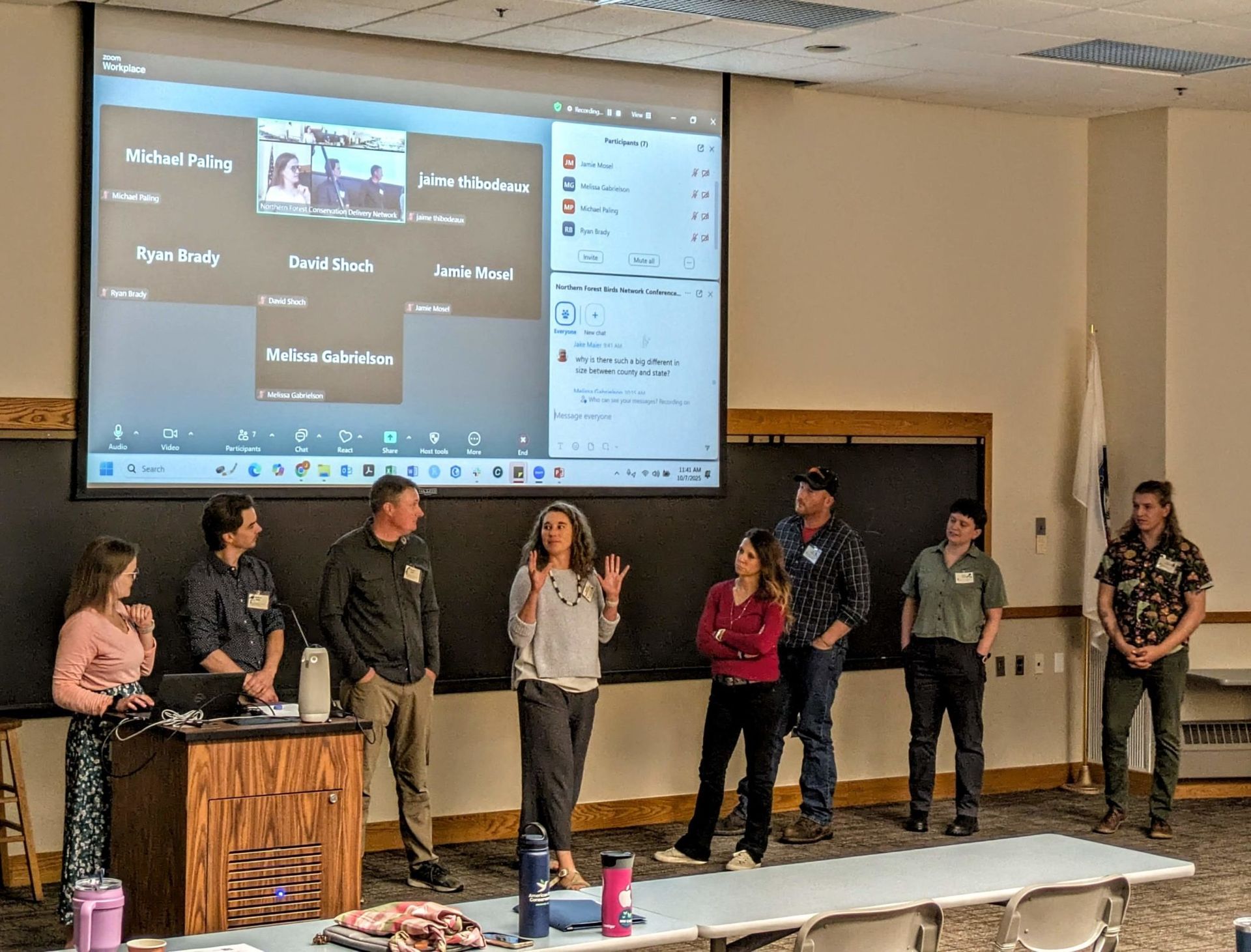
This event challenged attendees to weigh the complex tradeoffs inherent in forest management. It was particularly interesting to think about these tradeoffs in a plant community that is often overlooked and understudied yet provides critical ecological and economic benefits to the region. We did not end with a clear answer on how to proceed. That answer likely falls firmly in the land of ‘it depends’ but the discussion was rich, enlightening, and inspiring.   

The morning and afternoon first-day presentations were recorded and can be watched in their entirety on the Northern Forest Birds Network YouTube channel:https://www.youtube.com/@northernforestbirdsnetwork

Recent Posts

By Aidan Juhl April 16, 2026
Written by Colleen Robinson
April 14, 2026
Written by Shannon Maes
April 14, 2026
In September 2025, the Guild launched a three-person Forest Stewards Apprenticeship (FSA) crew to work with the Penobscot Nation’s Department of Natural Resources (PN DNR). Over the course of their six-month season, apprentices Agenor Duhon, Gabe Stewart, and Jacob Baker shared a season of learning, collaboration, and hands-on stewardship of Penobscot Tribal lands.
April 14, 2026
This week, I stepped into the role of crew leader. We worked a full 40-hour week, splitting our time between Clifton Farms and a prescribed burn operation. On the first day in the field, we completed hack-and-squirt treatments on trees that had been marked the previous week. For the remainder of the week, we focused on marking trees for future hack-and-squirt work, maintaining a steady pace and ensuring accuracy in our selections.
April 7, 2026
As Guild members, our practice is fundamentally grounded in field observation. We know intuitively that forests are dynamic, living communities. Yet, for decades, the high-level systems used to value our work, specifically the carbon accounting ledgers tied to international frameworks like the Paris Agreement, have treated forests as static, quantifiable blocks of land. In a recent commentary published in One Earth, I argue that these legacy measurement, reporting, and verification (MRV) frameworks are failing. Ledger accounting relies on crude land-use delineations and outdated technology, effectively penalizing the natural, seasonal flux of the ecosystems we manage every day. By forcing landscapes into rigid “forest” versus “non-forest” binaries, such legacy systems miss the complex reality on the ground. But a major shift is underway.
March 18, 2026
Women have always been a part of forestry. Historically, women often helped guide family decisions about when to cut, which trees to save, and how best to steward their land for the next generation. Historical accounts from the Southern Appalachians describe women’s roles in decisions about timber harvesting and prioritizing long-term forest health. These often-uncredited contributions are even reflected in Aldo Leopold’s A Sand County Almanac (1949), in which describes his stewardship philosophy informed not only by his professional experience, but by shared responsibility, where the perspectives of his wife and daughters played an important role.
March 18, 2026
Although rural regions often host the highest concentrations of public and private forest land, they typically lack the sustainable workforce necessary for active management and stewardship. How do we address this foundational problem in forest conservation?
March 18, 2026
The Forest Stewards Guild has a unique dual mandate: practice and promote forest stewardship. Personally, I think the combination of practicing forest management and promoting best practices is what makes the Guild a vibrant and impactful organization.
February 17, 2026
We celebrate the remarkable career and legacy of Leslie (Les) Benedict, who has provided visionary leadership and dedicated service to the stewardship of forests, championing the preservation of the ecological and culturally important black ash. Benedict, a member of the Saint Regis Mohawk Tribe in Akwesasne, north of the Adirondacks in upstate New York, recently retired after serving as the Assistant Director of the Tribe’s Environment Division for over 35 years.
February 17, 2026
The Forest Stewards Guild has been working to support the National Park Service on forest stewardship projects throughout the eastern U.S. This month we are in the midst of a project to protect mounds at Effigy Mounds National Monument near Harpers Ferry Iowa. This site was designated as a National Monument in 1949 and preserves over 200 mounds built between 800 and 2,500 years ago. Mounds at this site include conical, linear, compound, and effigy mounds – constructed in the shape of animals. Please see the National Park Service page for more information about the mounds, the people who built them, and how to visit the site. The lidar images on that website of the Marching Bears and other mound groups are fascinating.
Show More