
Beauty in the Bog: A Natural History of Eastern Larch

September 10, 2025

Written by Jonathan Grabowski 

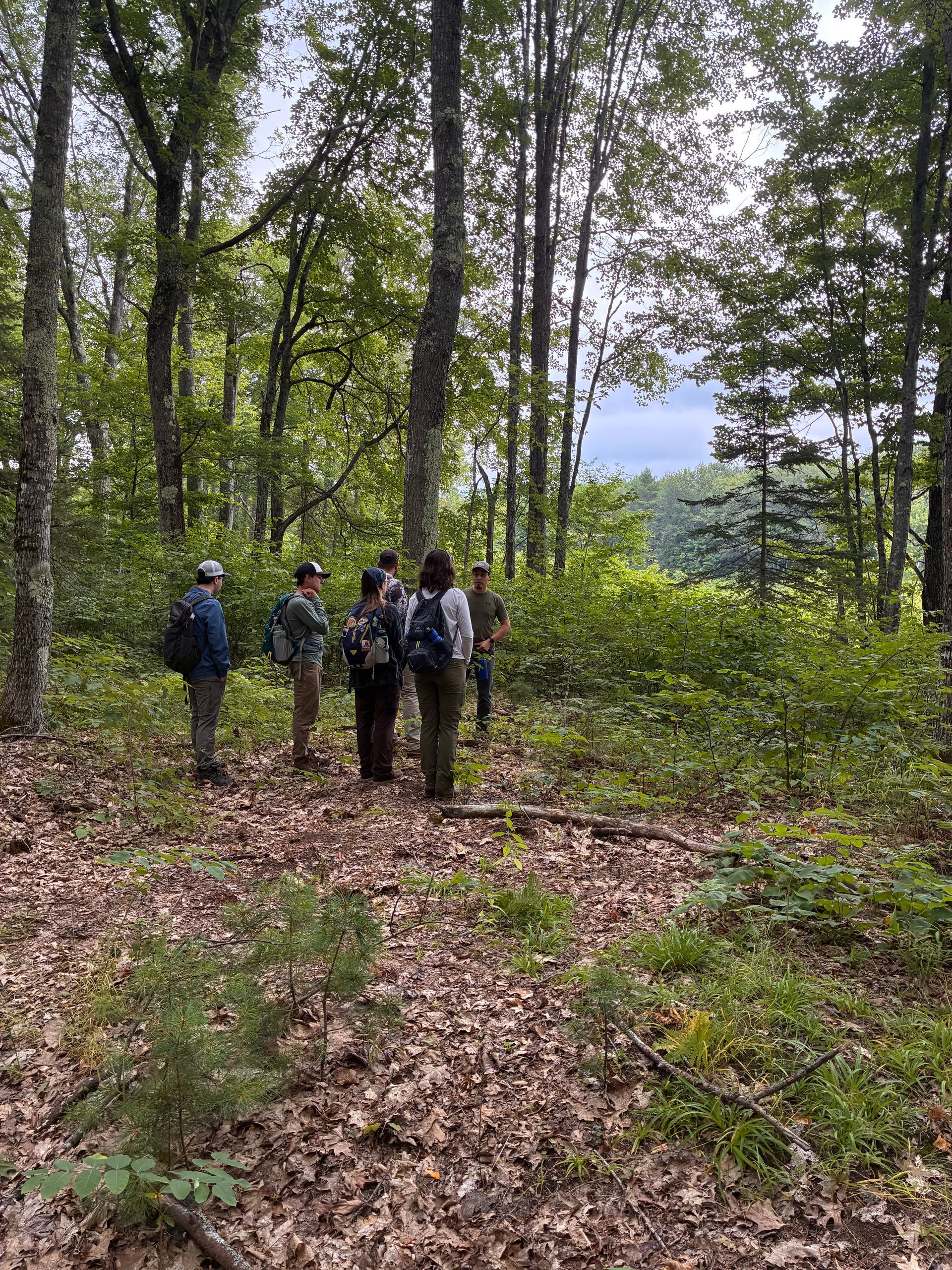
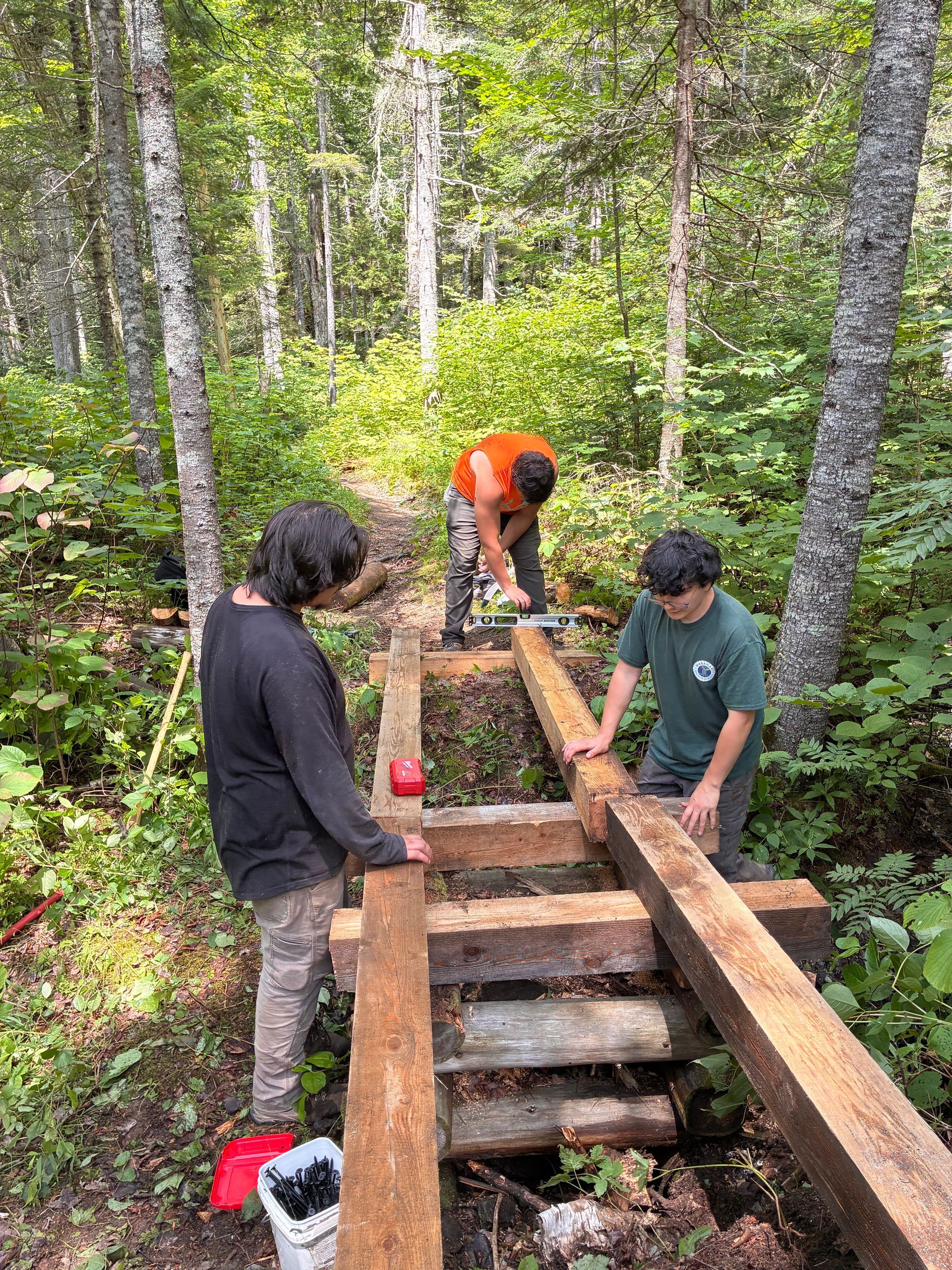
From early June to late August, I worked on the Refuge Stewardship Partnership project with the Guild as a Forest Monitoring Technician. Most of my time was spent trudging through the bogs at the Nulhegan Basin of the Silvio O. Conte National Wildlife Refuge, installing 56 long-term forest monitoring plots. During my first day in the field, my tree identification skills were tested when the Refuge’s forester, Jeremy Goetz, asked me to identify an unusual-looking conifer. 

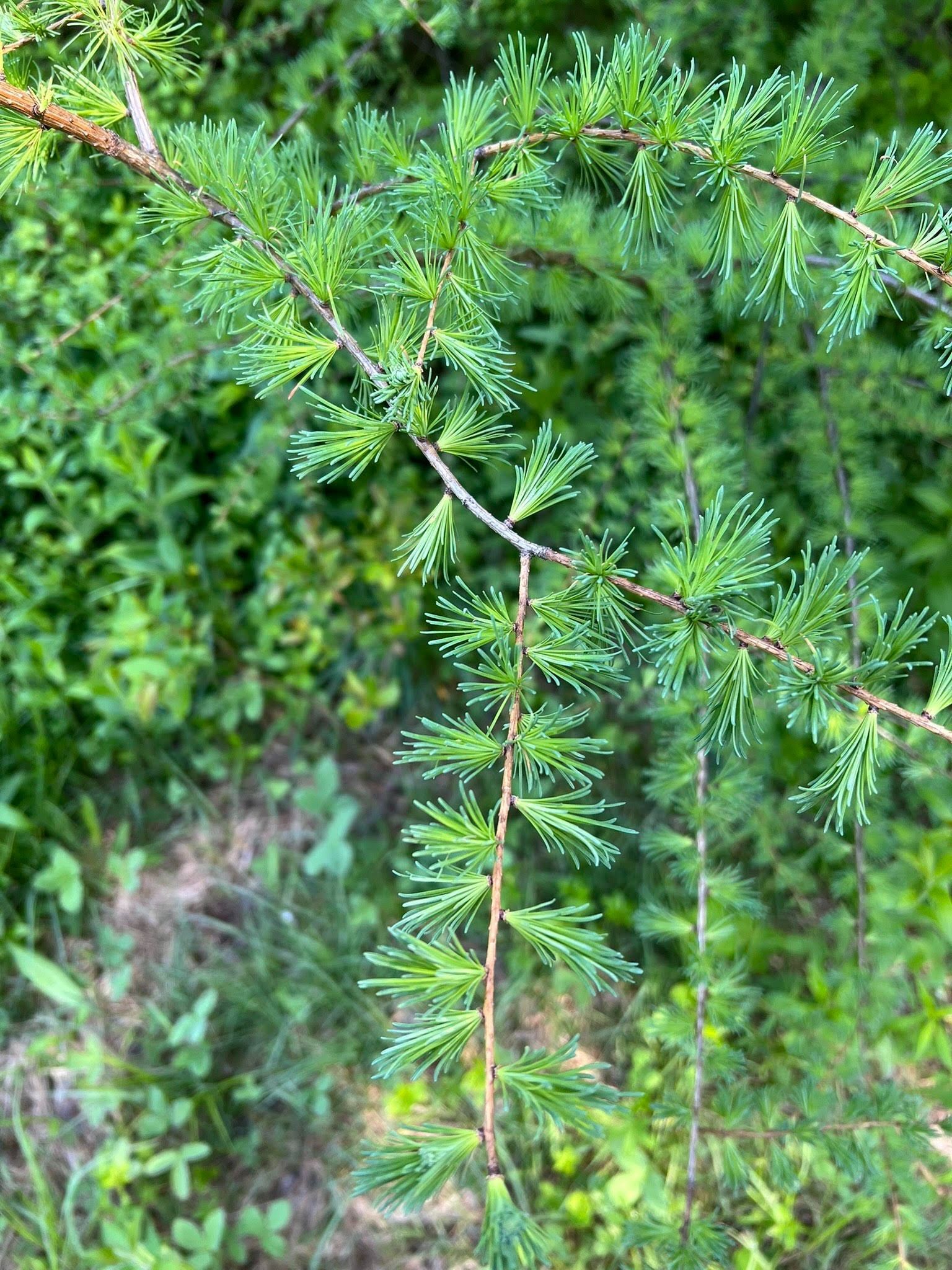
I had just learned that red spruce has sharp needles and balsam fir has flat, “friendly to touch” needles, but this tree was different since the needles were short and felt spongy. This tree seemed familiar; however, I couldn’t think of where I’d seen it before. Then I remembered that I used to take care of a tree just like this! 

I recalled spending ages watering this thirsty tree back when I was a student at Washington & Jefferson College, working as the Arboretum Technician. That’s when the name came to me: “This is an eastern larch, right?” 

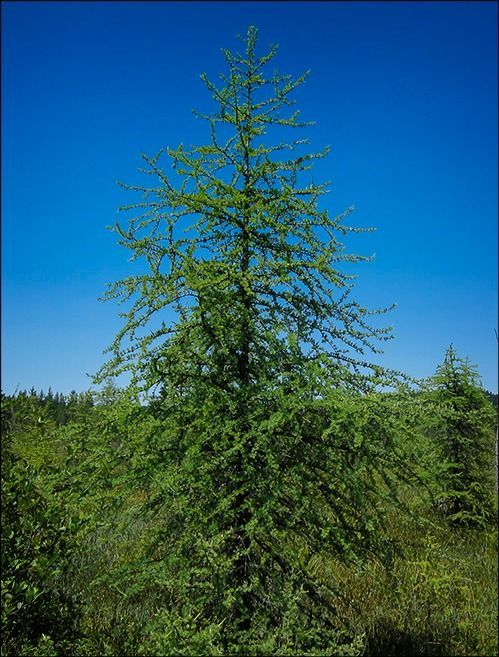
The eastern larch (Larix laricina), also known as tamarack, American larch, and hackmatack, is an extraordinary tree. Just like all the other trees in the Larix genus it is a conifer yet displays a characteristically deciduous trait. Its needles will change from a blueish green to a beautiful gold before the tree sheds them altogether in the fall.1-5 

Eastern larch can be found in New England, the Great Lakes region, extending west to Minnesota, and is also present in Alaska and Canada. There are other native larches in North America, like western larch (Larix occidentalis) and subalpine larch (Larix lyallii), which can be found in the Pacific Northwest. 

To identify an eastern larch, observe its unique needle arrangement and bark. The 1-inch-long needles stem from spur shoots along the branches in clusters of 20 to 50 and lack the waxy cuticle that is typically found on conifers. This is an evolutionary benefit for the eastern larch because it allows the tree to expend less energy on needle production.  The bark is usually a reddish gray and may look flaky or scaly.

This tree species can grow to be 40 to 80 feet tall, comparable to a 4 to 8 story building, and is commonly found in wet, peaty soils like swamps and bogs. As a seedling, an eastern larch can be transplanted outside of wet areas since it can tolerate drier soils.1,3,4 It may also be found in old cemeteries because eastern larches were planted to represent death and rebirth prior to the Civil War Era. 

At just fifteen years old, eastern larch trees can start producing cones. When young, these cones are about the size of a penny. As the season progresses and the seeds inside mature, the scales open and the cones flare out to about the size of a quarter. Larches appear top-heavy during good seed years and can be crowded with up to 20,000 cones. Seeds disperse from September to October, primarily by wind and to a lesser extent by red squirrels. 

Of all the seeds that land on the ground, only about 4 to 5 percent will actually germinate and stand a chance of growing into new trees. Seeds that don’t germinate within a year are unlikely to ever grow—unlike some seeds that can stay dormant longer, these won’t survive long in the seed bank and are commonly preyed upon by mice and voles. With the right conditions—a moist but not waterlogged substrate like sphagnum moss and plenty of sunlight—eastern larch seedlings can grow surprisingly fast, reaching 7 to 9 inches in their first year. 

Throughout history, the wood of the eastern larch has had many different uses because it is tough and highly rot resistant. The Algonquin, an Indigenous group from Canada and parts of New England, used the eastern larch’s inner bark for medicinal purposes. Cordage was made from the tree’s root string and used to sew birch bark canoes together. The common name ‘hackmatack’ comes from the Algonquin word for snowshoe, indicating the tree’s value in northern climes. 

During the colonial era, white settlers used eastern larch wood as “knees” to join the deck timbers of ships and collected its squooshy needles to stuff pillows. Today, eastern larch is used for planking, railroad ties, fence posts, telephone poles, and in shipbuilding. 

Jonathan Grabowski graduated from Washington Jefferson College with a degree in Environmental Science (class of ‘24). As a Forest Monitoring Technician with the Guild (summer of ‘25), he gained a deep appreciation for the larch trees and spongy sphagnum moss of Nulhegan, although the persistent deer flies left much to be desired. 

Recent Posts

By Aidan Juhl April 16, 2026
Written by Colleen Robinson
April 14, 2026
Written by Shannon Maes
April 14, 2026
In September 2025, the Guild launched a three-person Forest Stewards Apprenticeship (FSA) crew to work with the Penobscot Nation’s Department of Natural Resources (PN DNR). Over the course of their six-month season, apprentices Agenor Duhon, Gabe Stewart, and Jacob Baker shared a season of learning, collaboration, and hands-on stewardship of Penobscot Tribal lands.
April 14, 2026
This week, I stepped into the role of crew leader. We worked a full 40-hour week, splitting our time between Clifton Farms and a prescribed burn operation. On the first day in the field, we completed hack-and-squirt treatments on trees that had been marked the previous week. For the remainder of the week, we focused on marking trees for future hack-and-squirt work, maintaining a steady pace and ensuring accuracy in our selections.
April 7, 2026
As Guild members, our practice is fundamentally grounded in field observation. We know intuitively that forests are dynamic, living communities. Yet, for decades, the high-level systems used to value our work, specifically the carbon accounting ledgers tied to international frameworks like the Paris Agreement, have treated forests as static, quantifiable blocks of land. In a recent commentary published in One Earth, I argue that these legacy measurement, reporting, and verification (MRV) frameworks are failing. Ledger accounting relies on crude land-use delineations and outdated technology, effectively penalizing the natural, seasonal flux of the ecosystems we manage every day. By forcing landscapes into rigid “forest” versus “non-forest” binaries, such legacy systems miss the complex reality on the ground. But a major shift is underway.
March 18, 2026
Women have always been a part of forestry. Historically, women often helped guide family decisions about when to cut, which trees to save, and how best to steward their land for the next generation. Historical accounts from the Southern Appalachians describe women’s roles in decisions about timber harvesting and prioritizing long-term forest health. These often-uncredited contributions are even reflected in Aldo Leopold’s A Sand County Almanac (1949), in which describes his stewardship philosophy informed not only by his professional experience, but by shared responsibility, where the perspectives of his wife and daughters played an important role.
March 18, 2026
Although rural regions often host the highest concentrations of public and private forest land, they typically lack the sustainable workforce necessary for active management and stewardship. How do we address this foundational problem in forest conservation?
March 18, 2026
The Forest Stewards Guild has a unique dual mandate: practice and promote forest stewardship. Personally, I think the combination of practicing forest management and promoting best practices is what makes the Guild a vibrant and impactful organization.
February 17, 2026
We celebrate the remarkable career and legacy of Leslie (Les) Benedict, who has provided visionary leadership and dedicated service to the stewardship of forests, championing the preservation of the ecological and culturally important black ash. Benedict, a member of the Saint Regis Mohawk Tribe in Akwesasne, north of the Adirondacks in upstate New York, recently retired after serving as the Assistant Director of the Tribe’s Environment Division for over 35 years.
February 17, 2026
The Forest Stewards Guild has been working to support the National Park Service on forest stewardship projects throughout the eastern U.S. This month we are in the midst of a project to protect mounds at Effigy Mounds National Monument near Harpers Ferry Iowa. This site was designated as a National Monument in 1949 and preserves over 200 mounds built between 800 and 2,500 years ago. Mounds at this site include conical, linear, compound, and effigy mounds – constructed in the shape of animals. Please see the National Park Service page for more information about the mounds, the people who built them, and how to visit the site. The lidar images on that website of the Marching Bears and other mound groups are fascinating.
Show More