The Women Owning Woodlands Conference in Review: March 2022

March 17, 2022

Written by Maddie Eberly

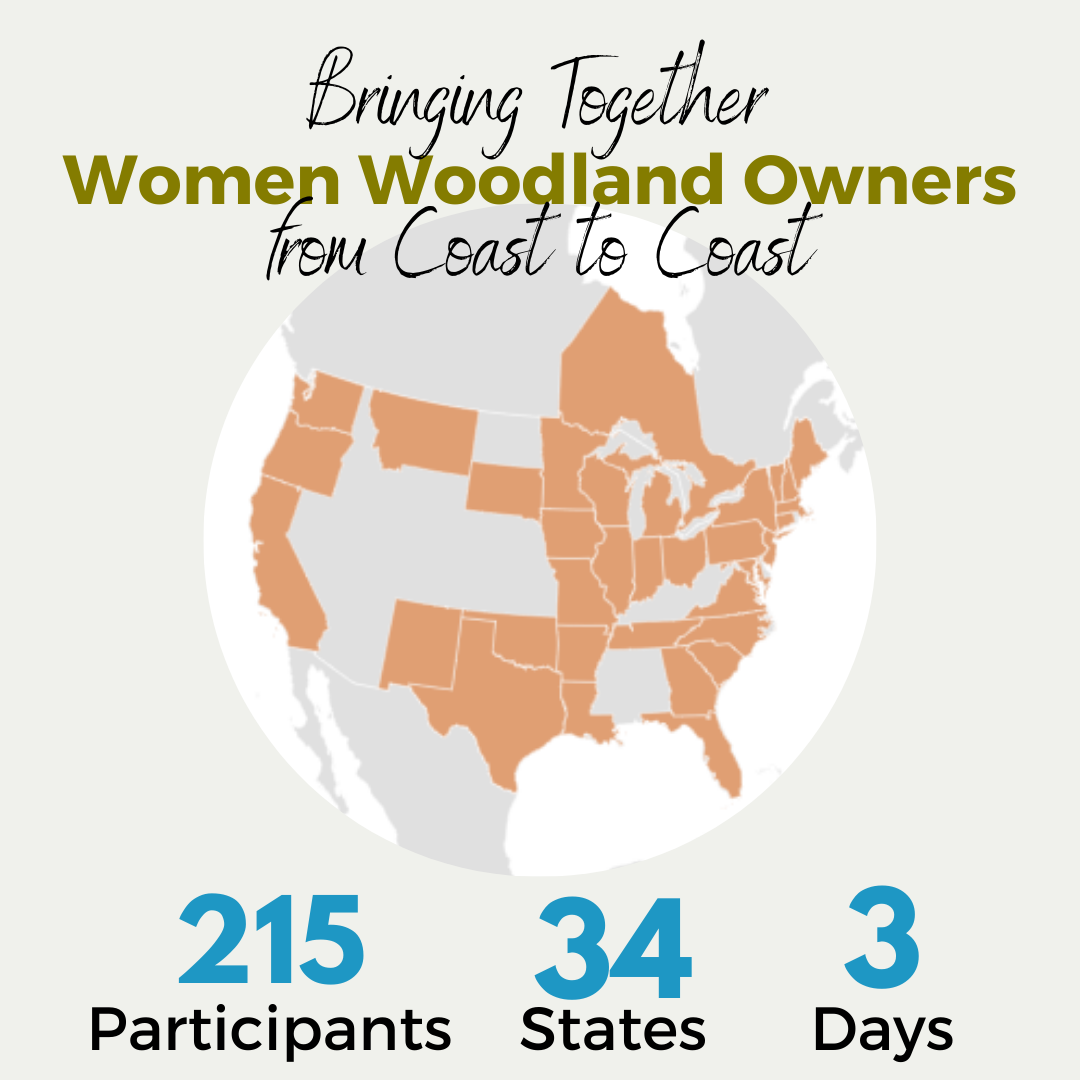
Map of locations of participants

Eager to learn from natural resource professionals while sharing stories and plans from their own lands, 215 participants gathered for the Women Owning Woodlands Conference in early March.

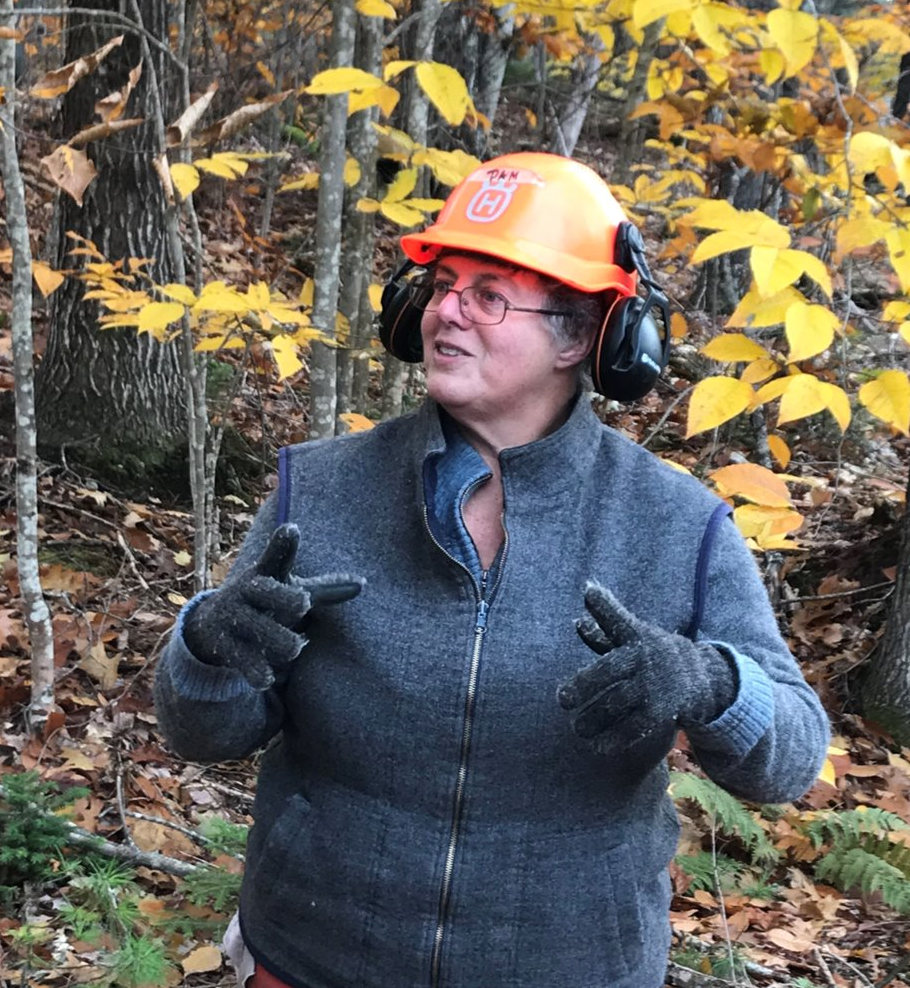
The conference began on a lively note with a presentation about Pam Wells, Maine Tree Farmer and popular women’s chainsaw safety instructor, highlighting her story as a woodland owner and of her path to forestry. When she and her husband bought their woodlands, like so many others, Pam realized she needed to learn how to be a steward and take care of the land. She learned from her forester how to get started on writing management plans, and then reenrolled in forestry courses. Wells actively harvests on her land while managing for wildlife and has become a great resource to landowners, forestry students, and others.

During Pam’s presentation, participants flooded the chat with questions and story sharing. Conference attendees were then given the option of choosing a breakout room focused on topics such as “Wildlife in Your Woods,” “Invasive Species,” and “The Fire Within Us.” The meeting closed with a thoughtful reflection on the presentations heard and how they impacted those in attendance.

Pam Wells on women’s chainsaw safety.

“This group has passion, an awesome comradery of women in conservation!” – Kristie in Pennsylvania

“I so appreciate this conference, empowering women to care for the land. …I reflect on my grandfather being a lumberman in Maine 100 years ago to the possibility of passing down our woods in MN to our daughters in the future.” – Julie in Minnesota

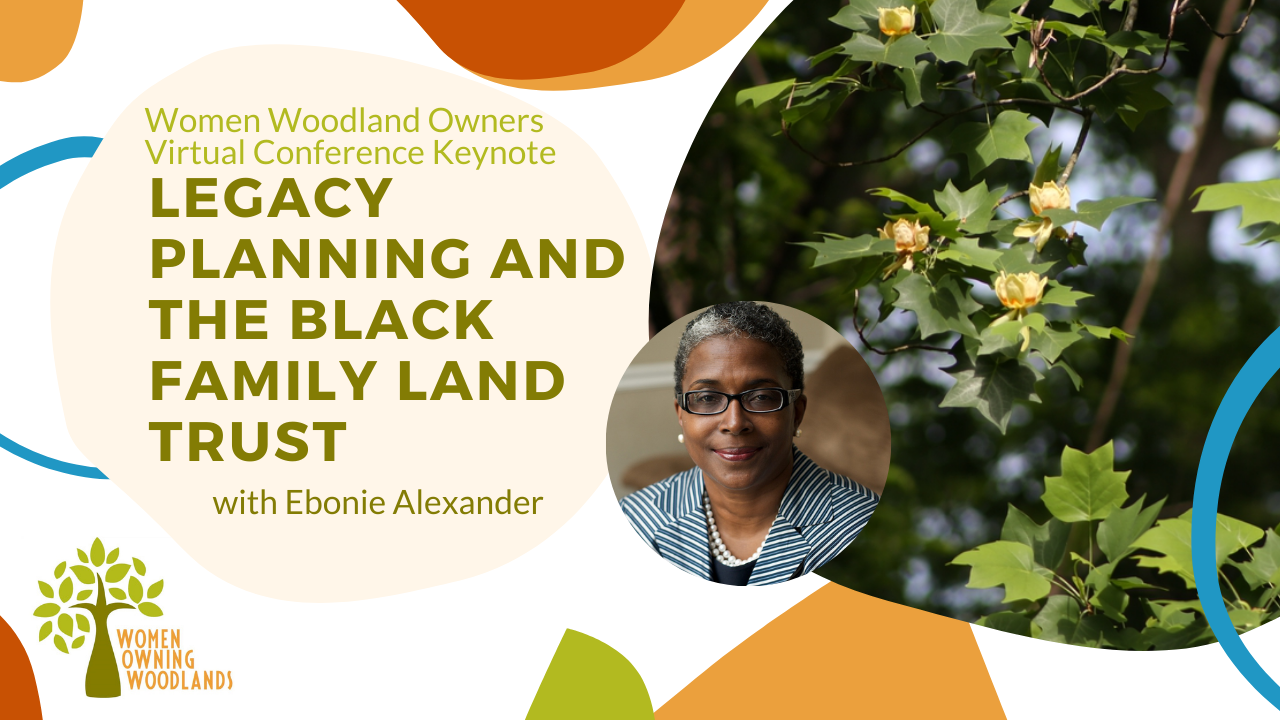
The second day brought many more knowledgeable, fabulous presenters. Ebonie Alexander, Executive Director from the Black Family Land Trust (BFLT), presented on legacy planning and her work with the BFLT. She had a robust career in the natural resources. Alexander inherited land in Virginia, where she lives today. In her keynote speech, she stated, “With every generation that you own your land, you should make the land human. I have stories about every generation that we can go back to on this land…. What they did, how they reacted, and how they lived.” Remember that spot where your sibling climbed that gigantic tree? Or the place where your parent would sit each evening soaking in the sun and listening to the evening sounds? Alexander emphasized this connection to land while telling her story and uplifted the possibility of keeping land within a family for generations to come. BFLT has worked with landowners committed to keeping land in their families. Alexander has helped lead the way to land retention and protection for many families over the years and continues to help people who want to make their land more human. After Ebonie’s presentation, conference participants had the chance to connect through small group discussions, hearing each other’s stories and connecting through stories of the land.

Ebony Alexander’s presentation opening slide

“My daughter learned to walk at our cabin in the woods.” – Stacey in Minnesota

“Our woodlands help provide a wonderful place to spend time reflecting and becoming more grounded.” WOWConference_article – Ingrid in Wisconsin

“I’m a singer/song writer and enjoyed writing and producing children’s songs about our land, while spending time on the land when my boys were little!” – Sara in Maine

Following these discussions, a “Questions & Answers” session with knowledgeable women professionals allowed participants the opportunity to have their questions answered on a variety of topics including management planning, climate change, invasive species, non-timber products, forest pests, wildfire and prescribed fire, and timber harvests. Once again, the day closed in reflection.

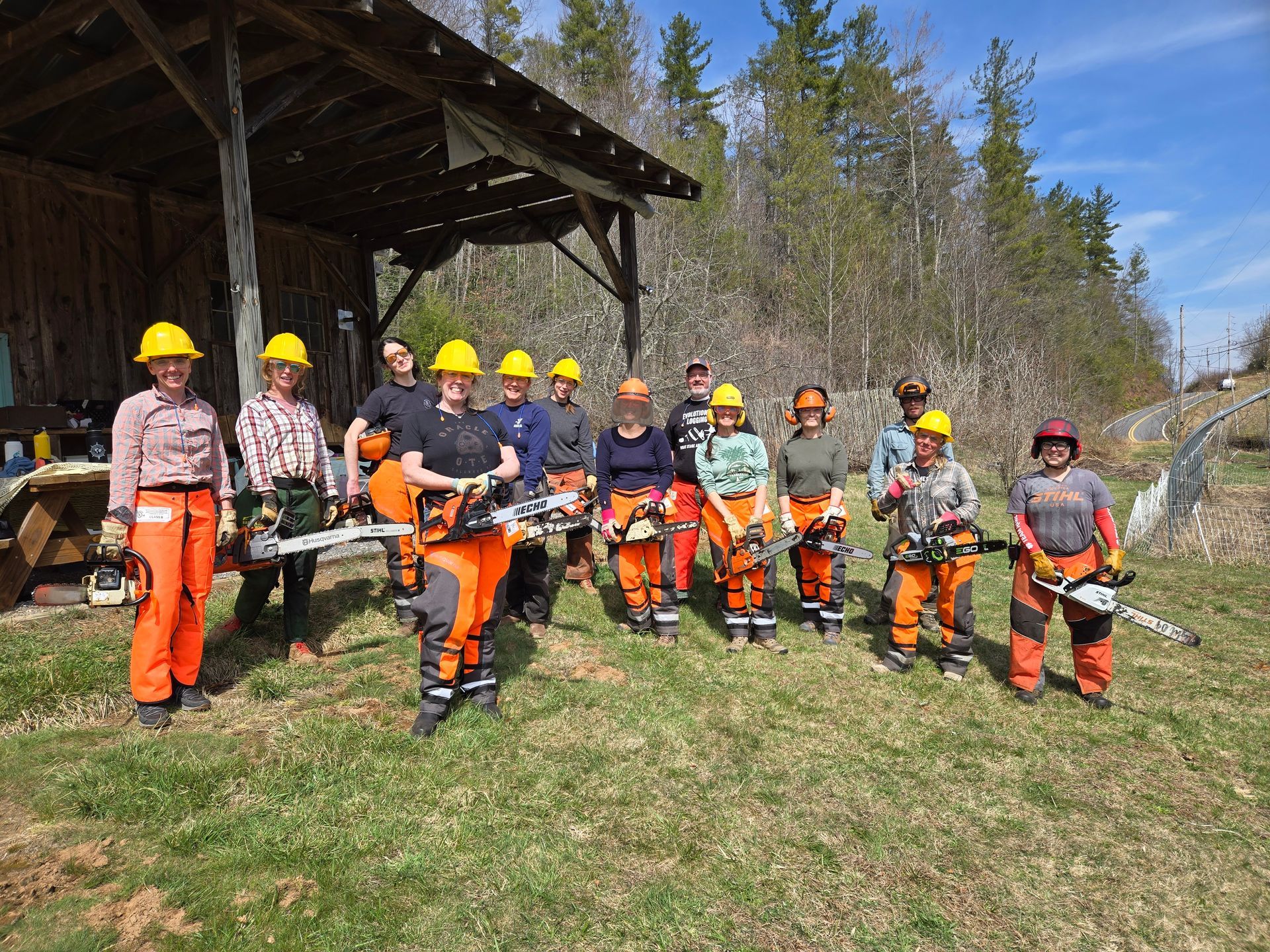
On the third and final day of gathering, participants were given the opportunity to attend two sessions of their choice to grow and develop skills to steward their land. The sessions included “Chainsaw Personal Protective Equipment for Women,” “Forest Products Beyond Timber,” “Wildlife and Working Forests,” “Tree Syruping and Mushroom Cultivation,” “Setting Goals for My Land,” and “Adapting Homes and Communities to Wildfire.” The presenters each held immense expertise in their topics and gladly welcomed the questions and discussions brought by participants. Following these sessions, everyone reconvened and reflected on what was learned and what will be done. Participants were asked to set two goals for themselves, one short-term and one long-term, that would guide them in the care of their land and connection to it.

“Short term: comprehensive walkthrough of the property with my family and inventory. Long term: working with county forester to create a plan” – Sharon in Wisconsin

 “Short and long term: spend more time” – Hoi Ning in Maine

“Short term: complete thinning operation and long term: open and maintain 2-4 miles of preexisting trails” – Patricia in Washington 

Watch Ebonie Alexander’s full presentation on the Forest Stewards Guild’s YouTube channel.

“‘Off to the woods, now’. Full of inspiration!” – Kathleen in Minnesota

Recent Posts

By Aidan Juhl April 16, 2026
Written by Colleen Robinson
April 14, 2026
Written by Shannon Maes
April 14, 2026
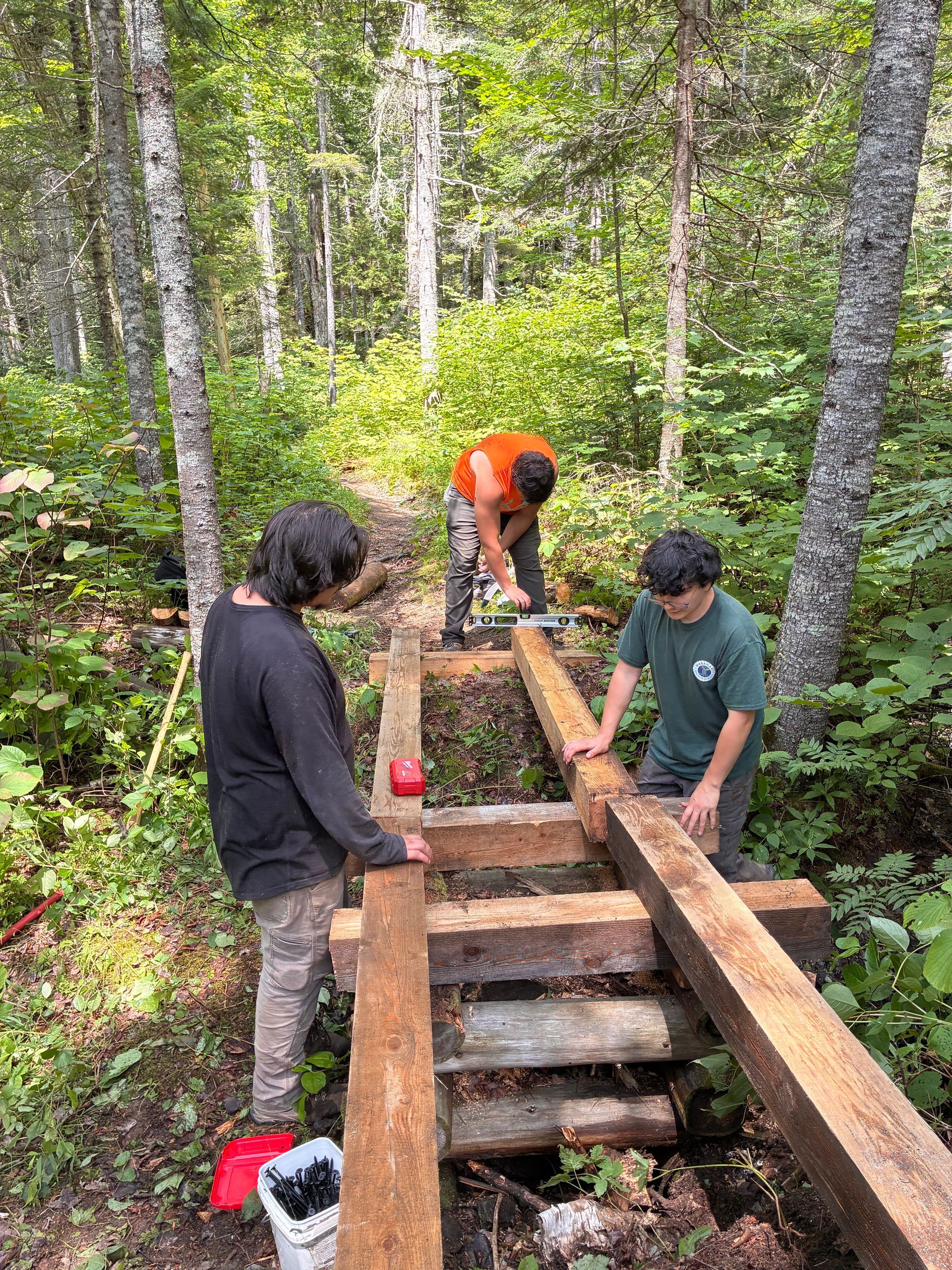
In September 2025, the Guild launched a three-person Forest Stewards Apprenticeship (FSA) crew to work with the Penobscot Nation’s Department of Natural Resources (PN DNR). Over the course of their six-month season, apprentices Agenor Duhon, Gabe Stewart, and Jacob Baker shared a season of learning, collaboration, and hands-on stewardship of Penobscot Tribal lands.
April 14, 2026
This week, I stepped into the role of crew leader. We worked a full 40-hour week, splitting our time between Clifton Farms and a prescribed burn operation. On the first day in the field, we completed hack-and-squirt treatments on trees that had been marked the previous week. For the remainder of the week, we focused on marking trees for future hack-and-squirt work, maintaining a steady pace and ensuring accuracy in our selections.
April 7, 2026
As Guild members, our practice is fundamentally grounded in field observation. We know intuitively that forests are dynamic, living communities. Yet, for decades, the high-level systems used to value our work, specifically the carbon accounting ledgers tied to international frameworks like the Paris Agreement, have treated forests as static, quantifiable blocks of land. In a recent commentary published in One Earth, I argue that these legacy measurement, reporting, and verification (MRV) frameworks are failing. Ledger accounting relies on crude land-use delineations and outdated technology, effectively penalizing the natural, seasonal flux of the ecosystems we manage every day. By forcing landscapes into rigid “forest” versus “non-forest” binaries, such legacy systems miss the complex reality on the ground. But a major shift is underway.
March 18, 2026
Women have always been a part of forestry. Historically, women often helped guide family decisions about when to cut, which trees to save, and how best to steward their land for the next generation. Historical accounts from the Southern Appalachians describe women’s roles in decisions about timber harvesting and prioritizing long-term forest health. These often-uncredited contributions are even reflected in Aldo Leopold’s A Sand County Almanac (1949), in which describes his stewardship philosophy informed not only by his professional experience, but by shared responsibility, where the perspectives of his wife and daughters played an important role.
March 18, 2026
Although rural regions often host the highest concentrations of public and private forest land, they typically lack the sustainable workforce necessary for active management and stewardship. How do we address this foundational problem in forest conservation?
March 18, 2026
The Forest Stewards Guild has a unique dual mandate: practice and promote forest stewardship. Personally, I think the combination of practicing forest management and promoting best practices is what makes the Guild a vibrant and impactful organization.
February 17, 2026
We celebrate the remarkable career and legacy of Leslie (Les) Benedict, who has provided visionary leadership and dedicated service to the stewardship of forests, championing the preservation of the ecological and culturally important black ash. Benedict, a member of the Saint Regis Mohawk Tribe in Akwesasne, north of the Adirondacks in upstate New York, recently retired after serving as the Assistant Director of the Tribe’s Environment Division for over 35 years.
February 17, 2026
The Forest Stewards Guild has been working to support the National Park Service on forest stewardship projects throughout the eastern U.S. This month we are in the midst of a project to protect mounds at Effigy Mounds National Monument near Harpers Ferry Iowa. This site was designated as a National Monument in 1949 and preserves over 200 mounds built between 800 and 2,500 years ago. Mounds at this site include conical, linear, compound, and effigy mounds – constructed in the shape of animals. Please see the National Park Service page for more information about the mounds, the people who built them, and how to visit the site. The lidar images on that website of the Marching Bears and other mound groups are fascinating.
Show More