Reflections on community forestry in Vermont

November 14, 2019

Written by Austin Dziki.

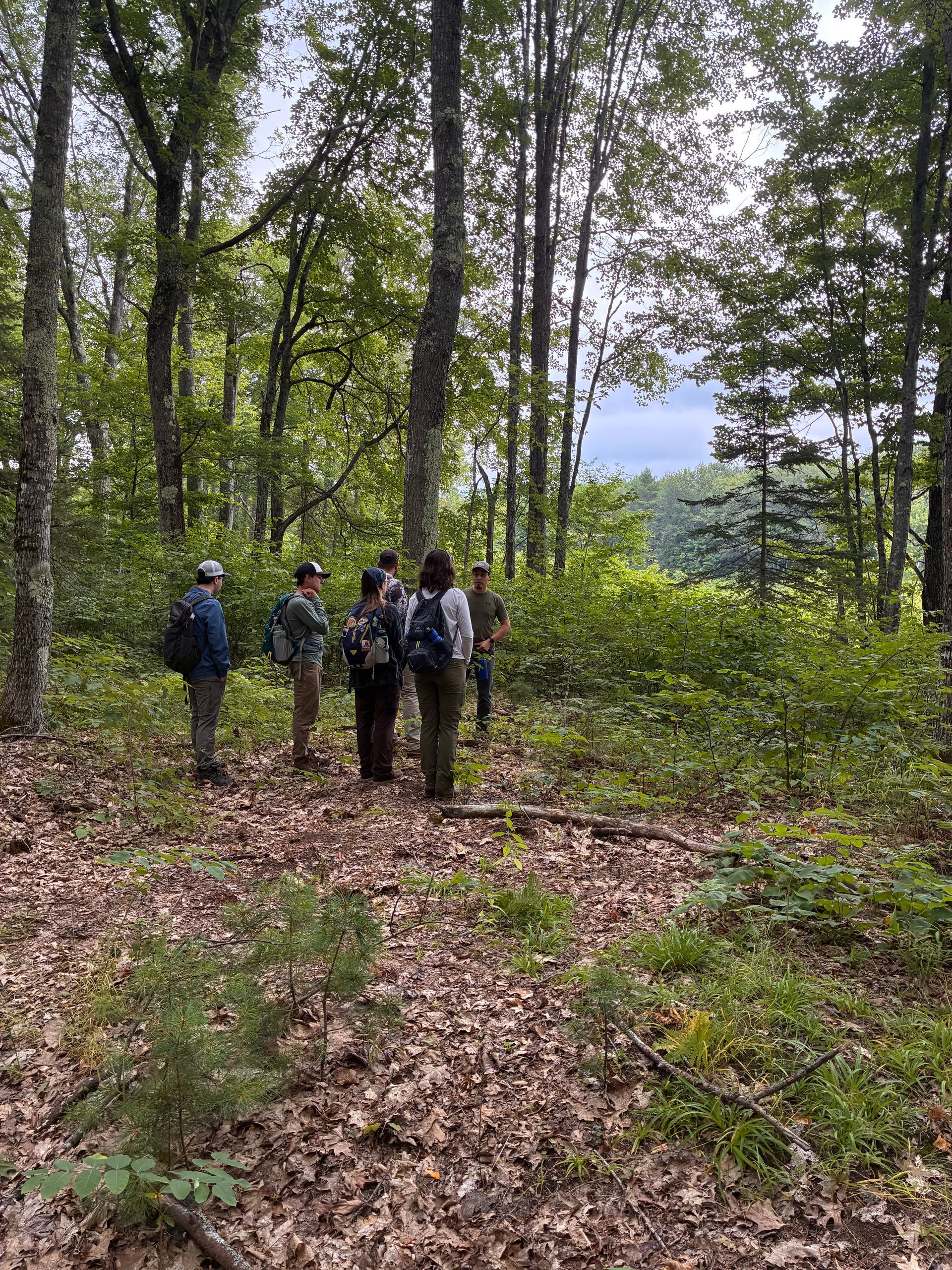
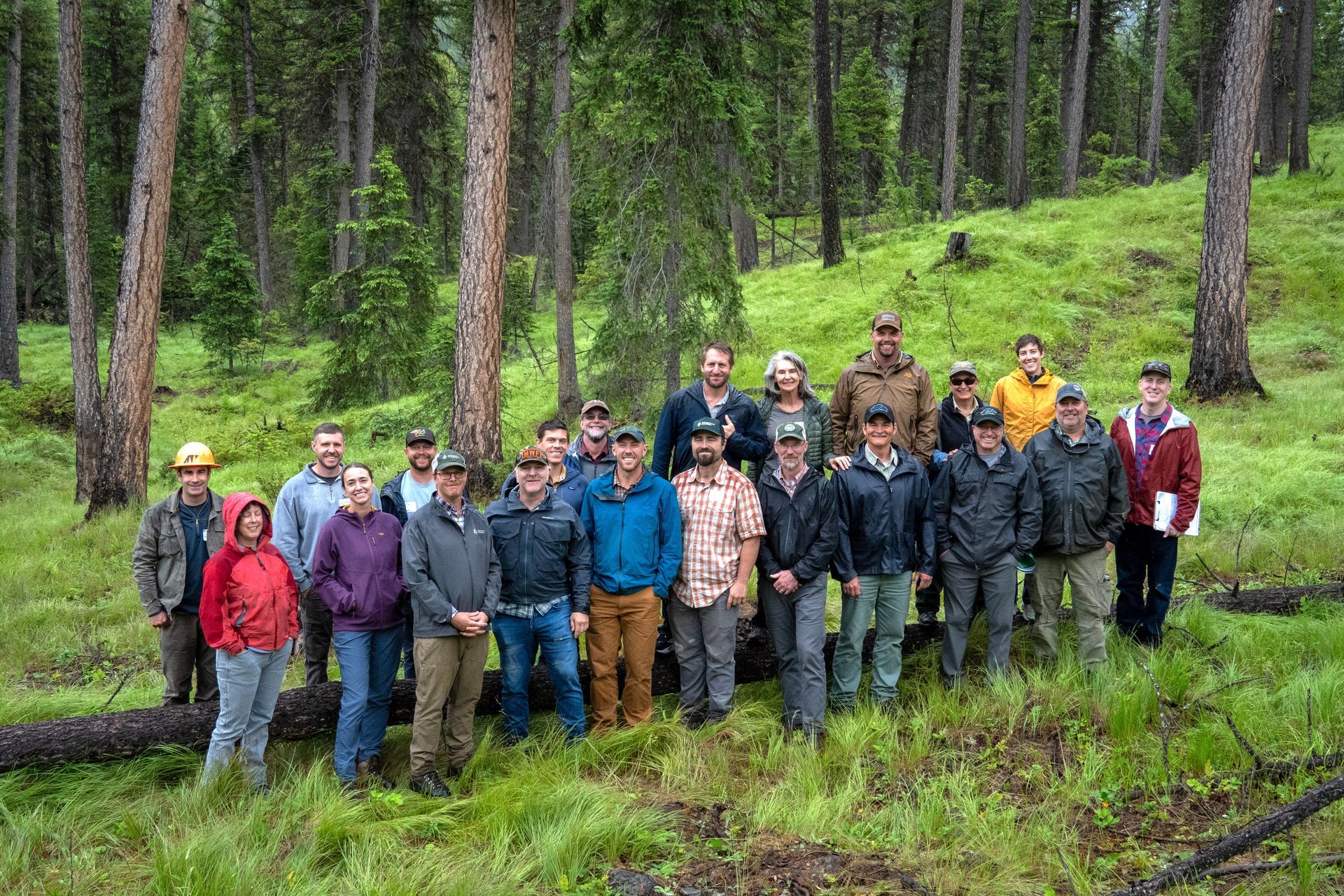
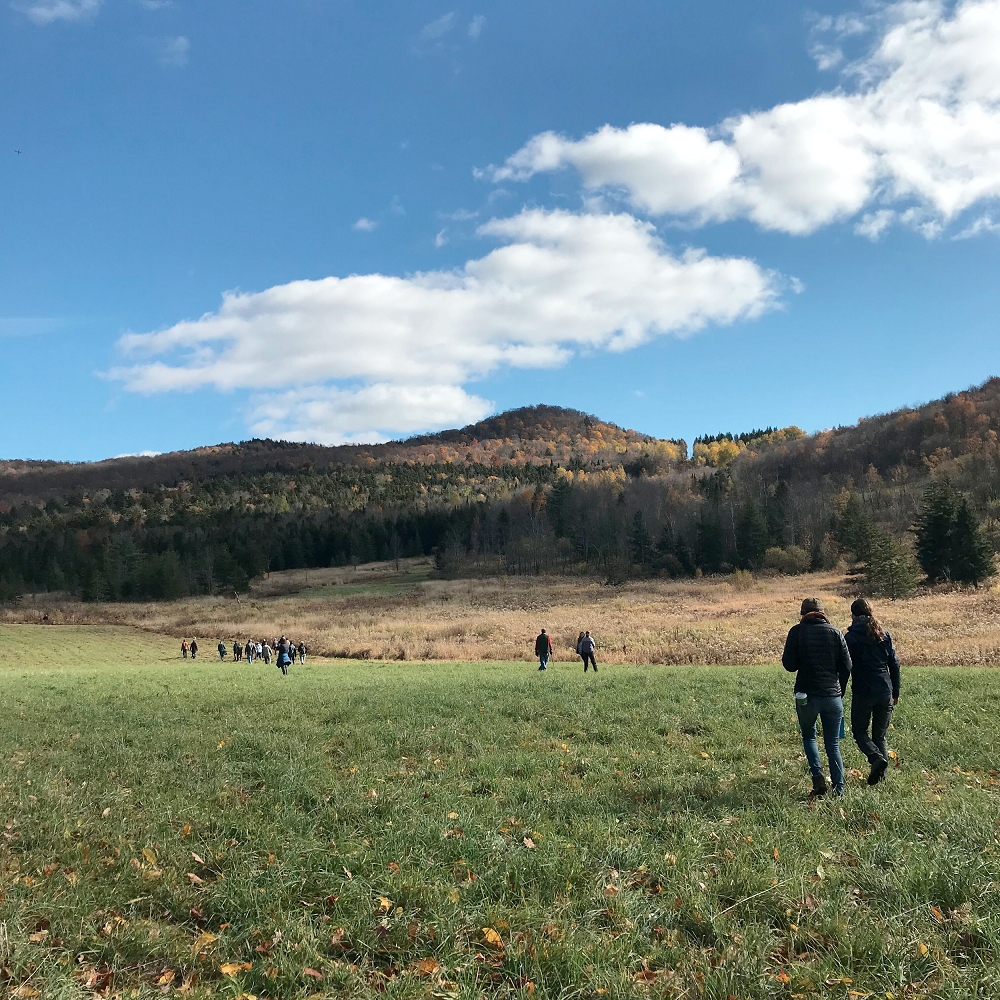
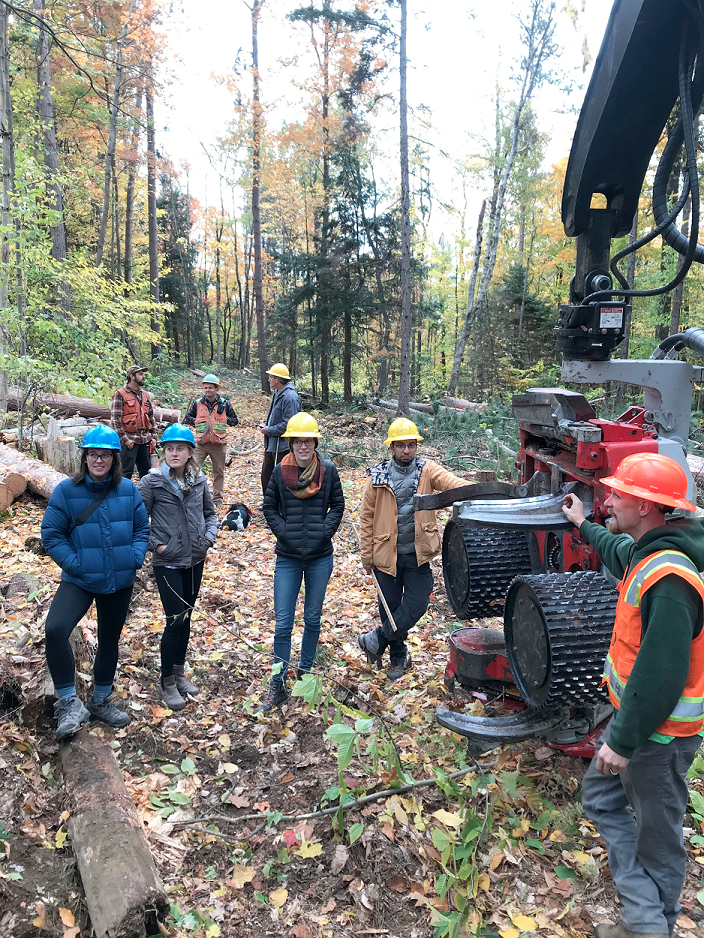
This past October our forestry program at the Yale School of Forestry and Environmental Studies was lucky enough to take a trip through Vermont. It was a chance to get out of the classroom and into the woods. After spending so much time thinking about abstract ideas and how to accomplish big picture environmental goals, this was a literal breath of fresh air. Myself and ten students left New Haven dark and early to go meet Guild member Alex Barrett from Longview Forest at an active harvest in Southern Vermont. Driving past old farm houses and big wolf trees on our way to the sale quickly reminded me of how much I loved Vermont. Growing up in Northeast Connecticut, I often took trips there as a child and ultimately moved to the state to attend the University of Vermont. Throughout the years I’ve built a strong connection to the State but have always struggled to articulate what exactly it was that created this sense of place I felt so aligned with. Maybe it was the mountains, their deep forests, world class beer & cheese, or just the friendly faces selling locally made goods. There’s really not a whole lot to dislike about Vermont.

My appreciation for the outdoors and rural communities has led me to study forestry, a profession I see as a way to help maintain healthy ecosystems and rural communities. Ironically, this pursuit brought me back to Connecticut. Pursuing my Masters has left me with all too little time to get back up north, so this trip was a chance to bridge two of my worlds.

Alex started off his tour by telling us a bit about Vermont’s current use program, how it requires landowners to actively manage their forest, and how the state supports this program by reimbursing municipalities for lost property taxes. Two things struck me about this program as compared to other current use programs which may not require any action, or even a management plan.

First, it creates a requirement for enrolled landowners to practice forest management. Many landowners then find themselves with questions like, “What’s going on with my woods, what should I be doing?”, “Wait a minute, wont cutting down trees be bad for the forest?”, or “What’s the best thing I can do for my woods, what’s the best way to manage them?”. This program not only helps to maintain a strong forest products industry or retain forest cover across the landscape, it also gives people like Alex an opportunity to answer those questions as they work with private landowners. We saw and met many people who demonstrated how this leads to a more educated and engaged community around forest management and the long-term health of their woods.

The second thing that struck me about this program is that the state supports it in so far as to make payments to municipalities. Recreation and tourism are a significant part of Vermont’s economy, and the state recognizes that scenic forests play a big part in that. That economic justification alone would be selling the state short, however. Vermont leads in a lot of innovative policies beyond just their current use program, like Act 250, Vermont’s notoriously rigorous development review process. While there are certainly top-down effects of strong policies like these, I think their support is maintained by a strong and active sense of civic engagement and community across the state. It is fair to say that the state cares about and supports a strong current use program and other policies that sustain forest cover because enough people do.

I spent a lot of time thinking about the feedback between policies and the institutions that shape communities, and those communities’ role in shaping those policies and institutions. The back and forth between top-down and bottom-up forces makes it hard to attribute a causal origin to the sociopolitical character of Vermont. Maybe I still struggle to articulate what captivates me about the Green Mountain State…

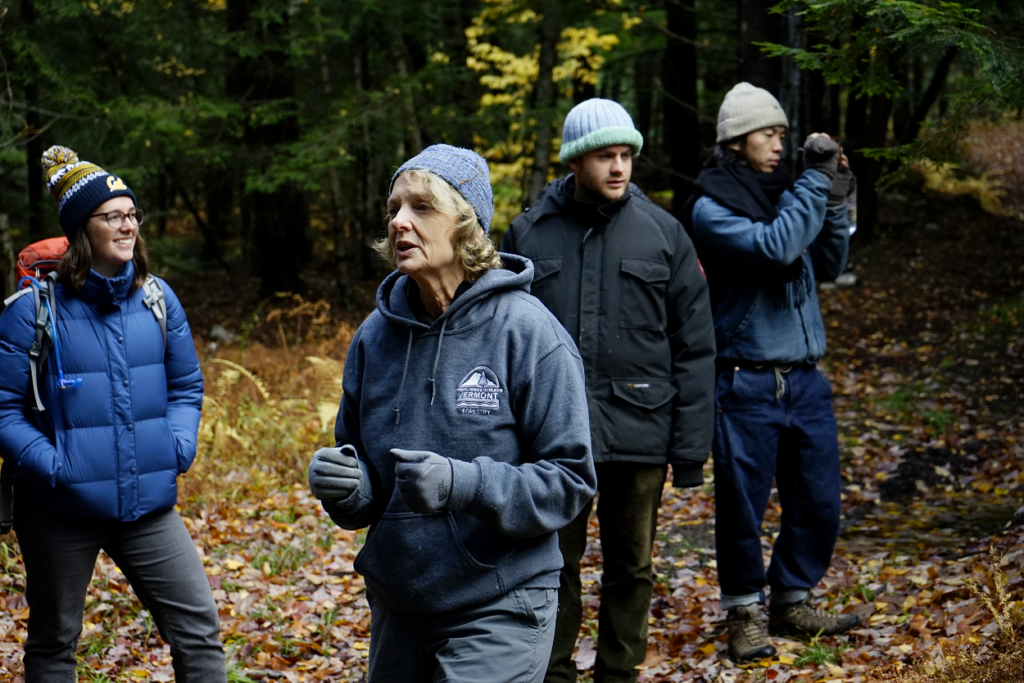
But one thing is clear, the community on the town level and people’s connections to their environments and livelihoods creates a remarkable place to live and work. Another such example was on our visit to Cold Hollow to Canada (CHC) with more Guild members, Nancy Patch and Charlie Hancock, to see some of the integrated forest management and conservation projects they’ve created with their woodlot’s groups – private landowners working with CHC to manage their property together at the landscape scale. Their most recent project has pulled together 13 landowners and over 8,000 acres to participate in a carbon credit program for a voluntary carbon market. This is one of the first carbon offset projects of its kind, coordinating collective management across private landowner’s forests, no easy task. Again, I think a strong sense of community built around a shared mission of sustainable forest management was central to accomplishing this task. For landowners to tie their forests up in a project with a timeline that will likely span multiple changes in ownership requires a lot of trust among the participants and in the organizations leading the effort. In this example, a small community of people is making an impact on a large public good – the climate – that goes well beyond their town’s boundaries.

Now that I am back in the classroom thinking things like “coordinated landscape-scale forest management and land use planning to mitigate climate change,” I look fondly back on our trip to Vermont and remember our lessons learned. Namely, the importance of building community in the successful implementation, adoption, and accomplishment of even our largest ambitions.

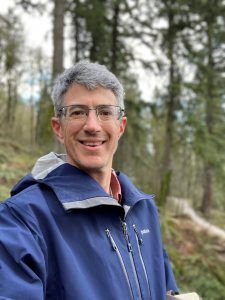
Editors note: Austin is a Guild member and Master of Forestry Candidate at the Yale School of Forestry and Environmental Studies. Thank you, Austin for your article and photos, and for being part of this community!

Recent Posts

By Aidan Juhl April 16, 2026
Written by Colleen Robinson
April 14, 2026
Written by Shannon Maes
April 14, 2026
In September 2025, the Guild launched a three-person Forest Stewards Apprenticeship (FSA) crew to work with the Penobscot Nation’s Department of Natural Resources (PN DNR). Over the course of their six-month season, apprentices Agenor Duhon, Gabe Stewart, and Jacob Baker shared a season of learning, collaboration, and hands-on stewardship of Penobscot Tribal lands.
April 14, 2026
This week, I stepped into the role of crew leader. We worked a full 40-hour week, splitting our time between Clifton Farms and a prescribed burn operation. On the first day in the field, we completed hack-and-squirt treatments on trees that had been marked the previous week. For the remainder of the week, we focused on marking trees for future hack-and-squirt work, maintaining a steady pace and ensuring accuracy in our selections.
April 7, 2026
As Guild members, our practice is fundamentally grounded in field observation. We know intuitively that forests are dynamic, living communities. Yet, for decades, the high-level systems used to value our work, specifically the carbon accounting ledgers tied to international frameworks like the Paris Agreement, have treated forests as static, quantifiable blocks of land. In a recent commentary published in One Earth, I argue that these legacy measurement, reporting, and verification (MRV) frameworks are failing. Ledger accounting relies on crude land-use delineations and outdated technology, effectively penalizing the natural, seasonal flux of the ecosystems we manage every day. By forcing landscapes into rigid “forest” versus “non-forest” binaries, such legacy systems miss the complex reality on the ground. But a major shift is underway.
March 18, 2026
Women have always been a part of forestry. Historically, women often helped guide family decisions about when to cut, which trees to save, and how best to steward their land for the next generation. Historical accounts from the Southern Appalachians describe women’s roles in decisions about timber harvesting and prioritizing long-term forest health. These often-uncredited contributions are even reflected in Aldo Leopold’s A Sand County Almanac (1949), in which describes his stewardship philosophy informed not only by his professional experience, but by shared responsibility, where the perspectives of his wife and daughters played an important role.
March 18, 2026
Although rural regions often host the highest concentrations of public and private forest land, they typically lack the sustainable workforce necessary for active management and stewardship. How do we address this foundational problem in forest conservation?
March 18, 2026
The Forest Stewards Guild has a unique dual mandate: practice and promote forest stewardship. Personally, I think the combination of practicing forest management and promoting best practices is what makes the Guild a vibrant and impactful organization.
February 17, 2026
We celebrate the remarkable career and legacy of Leslie (Les) Benedict, who has provided visionary leadership and dedicated service to the stewardship of forests, championing the preservation of the ecological and culturally important black ash. Benedict, a member of the Saint Regis Mohawk Tribe in Akwesasne, north of the Adirondacks in upstate New York, recently retired after serving as the Assistant Director of the Tribe’s Environment Division for over 35 years.
February 17, 2026
The Forest Stewards Guild has been working to support the National Park Service on forest stewardship projects throughout the eastern U.S. This month we are in the midst of a project to protect mounds at Effigy Mounds National Monument near Harpers Ferry Iowa. This site was designated as a National Monument in 1949 and preserves over 200 mounds built between 800 and 2,500 years ago. Mounds at this site include conical, linear, compound, and effigy mounds – constructed in the shape of animals. Please see the National Park Service page for more information about the mounds, the people who built them, and how to visit the site. The lidar images on that website of the Marching Bears and other mound groups are fascinating.
Show More