OSU’s Forest Stewards Guild Student Chapter Takes on New Heights at Mt. Hood Meadows

April 14, 2022

Written by Luke VanBuskirk, OSU Student Guild Chapter

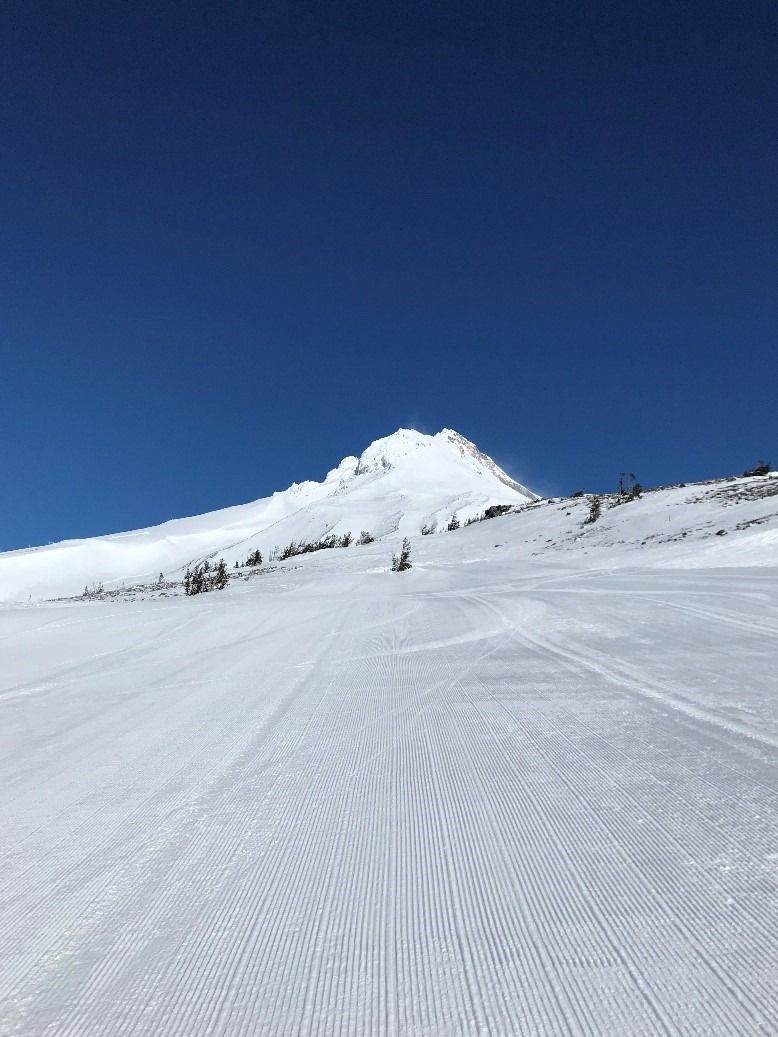
The trip to Mt. Hood was an amazing opportunity for the student chapter of the Forest Stewards Guild to learn about vegetation management in a busy outdoor recreation setting. It was also a good opportunity for professional development. The Mt. Hood Meadows ski area (Meadows) is an interesting case study of cooperation between a private entity and a federal agency. On this trip students were educated by Meadows staff and US Forest Service (USFS) members on how ecological, social, and economic values were balanced at the resort. Ski area project planning processes and federal regulations were also discussed. Students learned that Meadows leases Forest Service land and that resort actions must adhere to management standards set by the agency. Local tribal entities also inform the management of the resort. Every project, such as the building of the new Sahale lodge, must go through the National Environmental Policy Act (NEPA) planning process unless it falls under a categorical exclusion (CE). Efforts to improve recreation for resort visitors always consider the important plant and animal species on the mountain and conservation measures are applied.

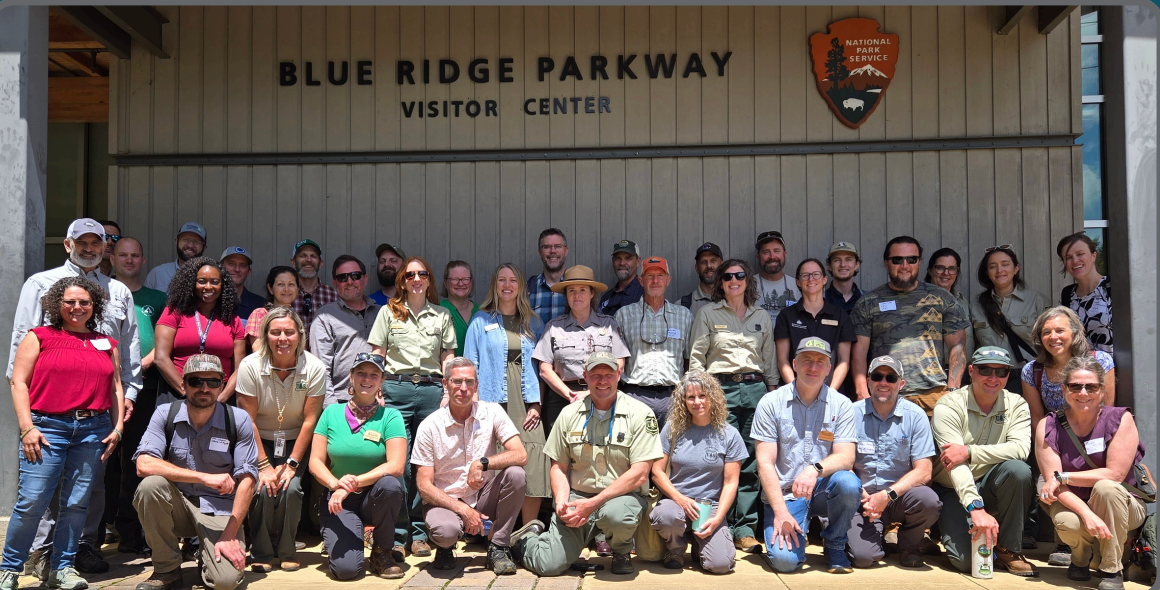
Students were also able to hear about each presenter’s academic and career paths and how they got to their current position. Each presenter had their own unique path and were able to share what advice they had for how to get into a natural resource career. The most strongly impressed idea was that of the accumulation of experience wherever students can get it. In total there were three Meadows staff, including CEO and Chairman – Matthew Drake, Heidi Logosz – Sustainability Manager & Executive Administrator, and Mel Toney – Vice President of Mountain Operations, as well as five USFS staff Allisson Sweeney – Mountain Resort Team Permit Administrator, Scott Kaden – Mountain Resort Team Ranger, Jessica Moot – Customer Service Representative, Kathy Mitchell – Communications Specialist, and Kameron Sam – Hood River District Ranger. Getting to have the whole day with that many industry professionals is a rare and incredibly valuable occurrence.

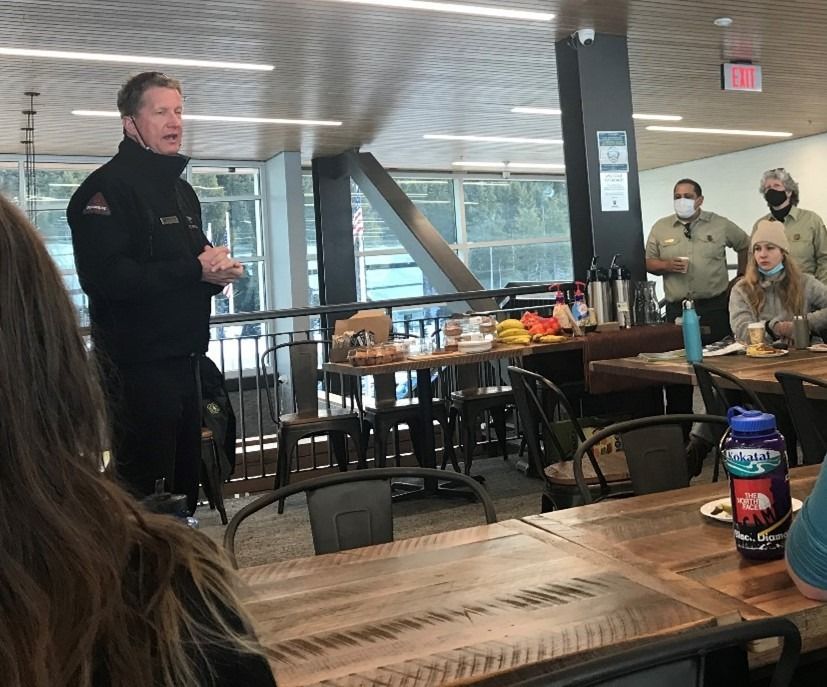
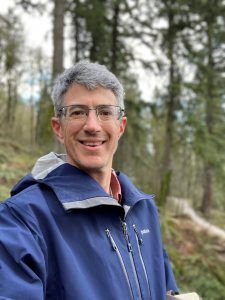
Meadows CEO and Chairman

After a lunch with all the ski area staff and Forest Service team, students and speakers made their way up the mountain and were able to talk one-on-one while enjoying the recreational activities provided on the mountain. Half the group were provided with a personalized ski tour with some of the Forest Service team and the other half enjoyed a snowshoe tour (many snowshoeing for the first time ever) with District Ranger Sam, Communications Specialist Mitchell, and the Snowshoe Program’s Team Lead – Debbie Bauer to Sahale Falls. It could not have been a more beautiful day to explore the snowy terrain, connect with Forestry professionals, and connect with each other.

When asked about the club outing and the experience, Noah Clark, a first-year student at OSU stated,

“If one trip could capture all the reasons why I joined the club this would have been it. Not only did we get to learn a lot of valuable information about how ski resorts work with the US Forest Service to manage the land to make a safe enjoyable experience for their guests, but we also got to hang out and explore some super cool parts of Oregon and soak in the national forest. To top it all off, the people I got to spend time with were incredible. Not only did I get to know some of my fellow guild members better, but I was also able to have one-on-one conversations with some of the US Forest Service employees. During these conversations they gave me insights on different management strategies and techniques they use in the area along with helpful tips on future potential employment with the Forest Service.”

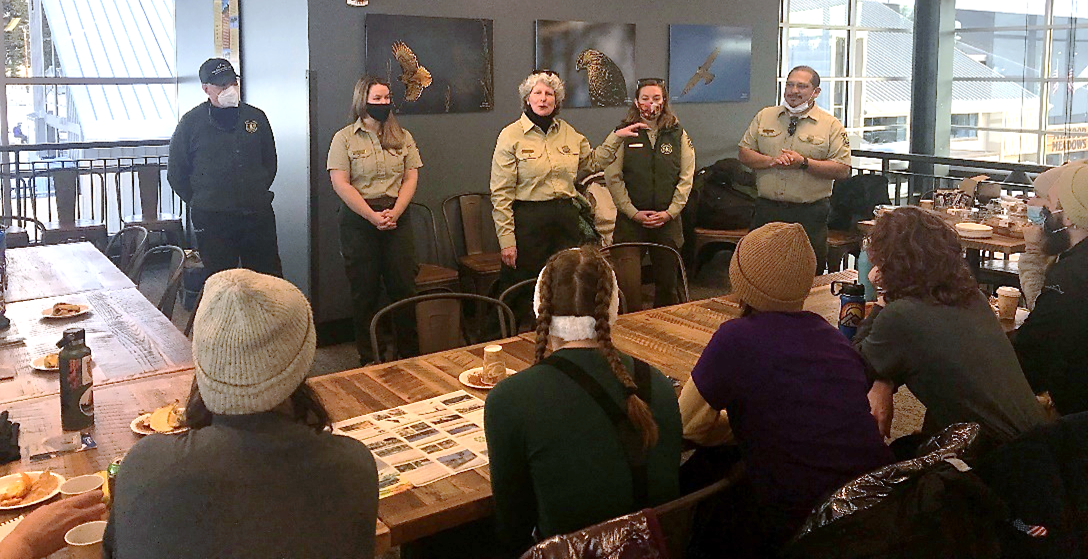
USFS staff

Noah was ecstatic to learn more about the details within the mountain’s operations. He also added about how the club outing gripped perspective to a place he has frequented since his younger years,

“I have been skiing at Meadows for most of my life and before this trip I had never thought about all the different agencies and guidelines that are working in the background to make the resort both fun for the guests while reducing the impact of recreation and development on the surrounding forest. Walking away from this trip I have a newfound appreciation for the intricacies of managing a ski resort at both the private and federal levels. I also gained a few rad stories and great friends!”

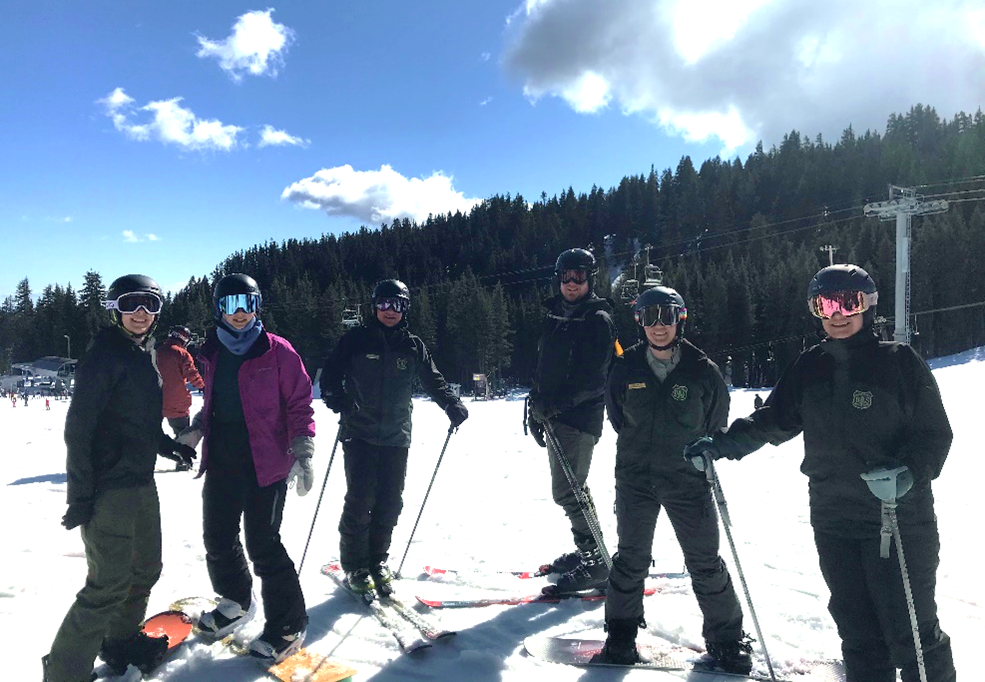
Skiing with staff

Not only was the outing a valuable experience for the 10 OSU and 1 professional Forest Stewards Guild Member in attendance, but it provided a lens for alternative forest management positions that students can apply their interests, skills, and passions in. Pulling all the necessary pieces together to make this trip feasible was immensely rewarding as a club leader. Luke VanBuskirk, the Vice President of the student chapter at OSU, commented:

“Being a part of the whole process from start to finish– including planning, sitting for hours with Oregon State University’s Student Organizations & Activities office members to help grant funding for the trip, booking the reservations, organizing the itinerary for travel, to leading into the whole experience at the mountain at a brand-new, breathtaking lodge on a bright, beautiful day at Mt. Hood made for an immaculate experience that will always be remembered.” Luke also added, “I wouldn’t be able to do this without the incredible support of the university, the college of forestry, other leaders of the club, and the members that attend club meetings on a bi-weekly basis. It really is one big family, and I will forever be grateful for the opportunity.”

As a student organization, our main goal is to find opportunities to learn outside the classroom and find time to apply knowledge learned in school to our chosen field. The Forest Stewards Guild has been an incredible source of opportunity for our club to reach these goals. We are incredibly thankful and humbled to Meadows Heidi Logosz and USFS’ Allison Sweeney for helping organize and connecting with our student group and sharing their knowledge and experience with us.

Recent Posts

By Aidan Juhl April 16, 2026
Written by Colleen Robinson
April 14, 2026
Written by Shannon Maes
April 14, 2026
In September 2025, the Guild launched a three-person Forest Stewards Apprenticeship (FSA) crew to work with the Penobscot Nation’s Department of Natural Resources (PN DNR). Over the course of their six-month season, apprentices Agenor Duhon, Gabe Stewart, and Jacob Baker shared a season of learning, collaboration, and hands-on stewardship of Penobscot Tribal lands.
April 14, 2026
This week, I stepped into the role of crew leader. We worked a full 40-hour week, splitting our time between Clifton Farms and a prescribed burn operation. On the first day in the field, we completed hack-and-squirt treatments on trees that had been marked the previous week. For the remainder of the week, we focused on marking trees for future hack-and-squirt work, maintaining a steady pace and ensuring accuracy in our selections.
April 7, 2026
As Guild members, our practice is fundamentally grounded in field observation. We know intuitively that forests are dynamic, living communities. Yet, for decades, the high-level systems used to value our work, specifically the carbon accounting ledgers tied to international frameworks like the Paris Agreement, have treated forests as static, quantifiable blocks of land. In a recent commentary published in One Earth, I argue that these legacy measurement, reporting, and verification (MRV) frameworks are failing. Ledger accounting relies on crude land-use delineations and outdated technology, effectively penalizing the natural, seasonal flux of the ecosystems we manage every day. By forcing landscapes into rigid “forest” versus “non-forest” binaries, such legacy systems miss the complex reality on the ground. But a major shift is underway.
March 18, 2026
Women have always been a part of forestry. Historically, women often helped guide family decisions about when to cut, which trees to save, and how best to steward their land for the next generation. Historical accounts from the Southern Appalachians describe women’s roles in decisions about timber harvesting and prioritizing long-term forest health. These often-uncredited contributions are even reflected in Aldo Leopold’s A Sand County Almanac (1949), in which describes his stewardship philosophy informed not only by his professional experience, but by shared responsibility, where the perspectives of his wife and daughters played an important role.
March 18, 2026
Although rural regions often host the highest concentrations of public and private forest land, they typically lack the sustainable workforce necessary for active management and stewardship. How do we address this foundational problem in forest conservation?
March 18, 2026
The Forest Stewards Guild has a unique dual mandate: practice and promote forest stewardship. Personally, I think the combination of practicing forest management and promoting best practices is what makes the Guild a vibrant and impactful organization.
February 17, 2026
We celebrate the remarkable career and legacy of Leslie (Les) Benedict, who has provided visionary leadership and dedicated service to the stewardship of forests, championing the preservation of the ecological and culturally important black ash. Benedict, a member of the Saint Regis Mohawk Tribe in Akwesasne, north of the Adirondacks in upstate New York, recently retired after serving as the Assistant Director of the Tribe’s Environment Division for over 35 years.
February 17, 2026
The Forest Stewards Guild has been working to support the National Park Service on forest stewardship projects throughout the eastern U.S. This month we are in the midst of a project to protect mounds at Effigy Mounds National Monument near Harpers Ferry Iowa. This site was designated as a National Monument in 1949 and preserves over 200 mounds built between 800 and 2,500 years ago. Mounds at this site include conical, linear, compound, and effigy mounds – constructed in the shape of animals. Please see the National Park Service page for more information about the mounds, the people who built them, and how to visit the site. The lidar images on that website of the Marching Bears and other mound groups are fascinating.
Show More