New Mexico’s First Annual Tribal Forest and Fire Summit

February 15, 2024

Written by Rachel Bean, Zander Evans, and Sam Berry 

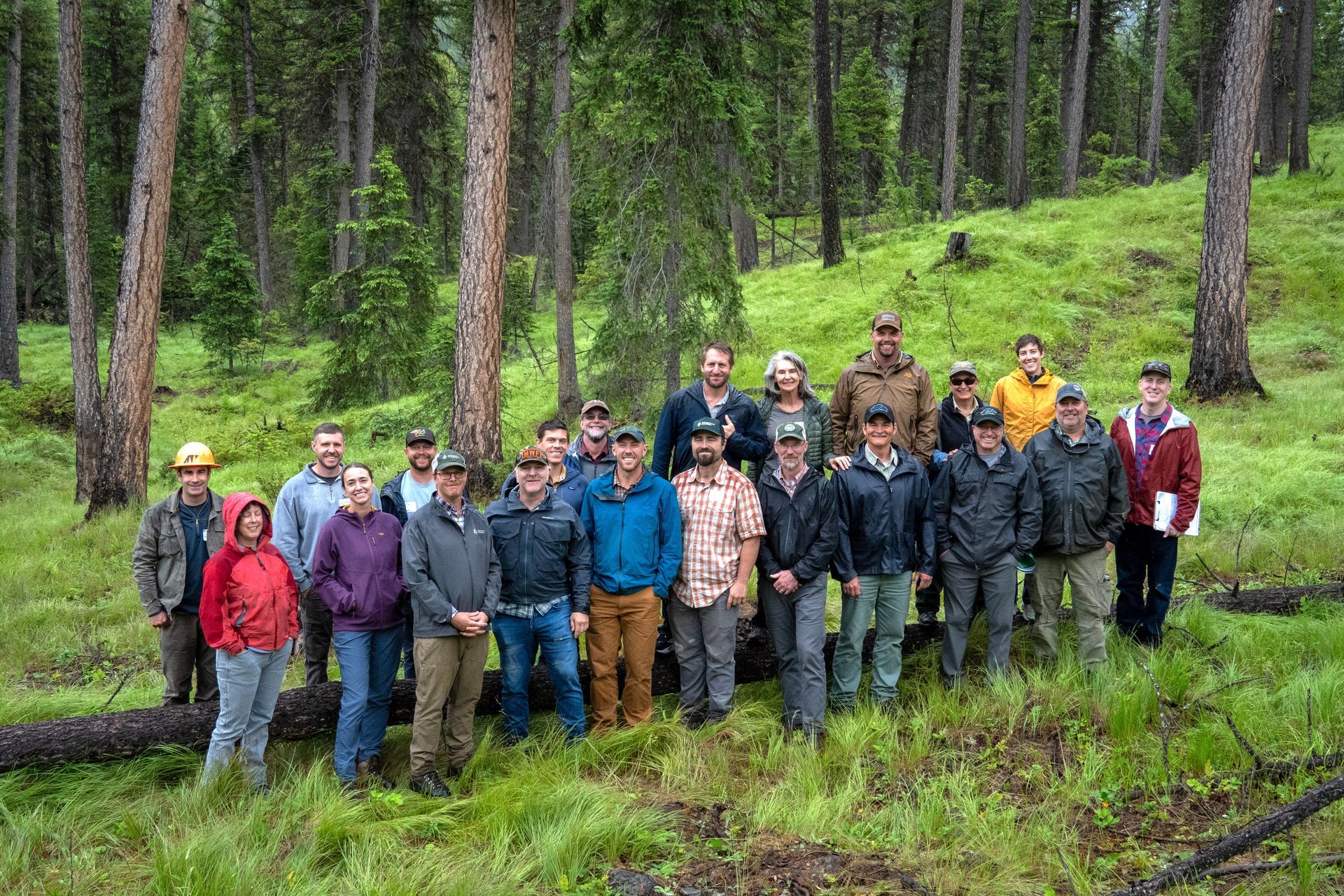
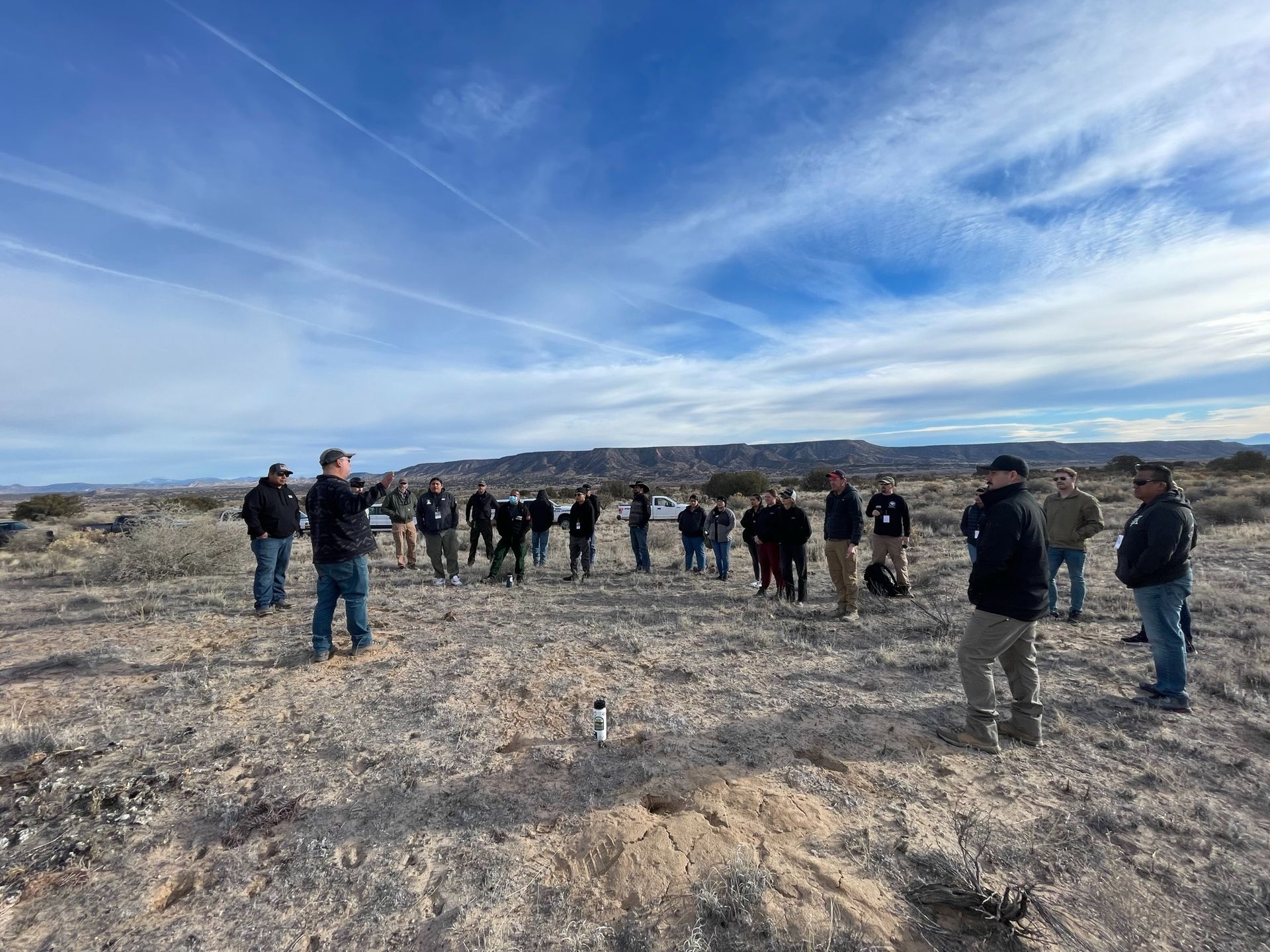
The Santa Ana Field Tour group stands outside

Earlier this month, a first-of-its-kind Tribal Forest and Fire Summit gathered 180 people to create connections for collaboration, learn from each other, and break barriers. The Guild joined Trees, Water, People, The Nature Conservancy, and New Mexico Forestry Division to host the three-day event at Santa Ana Star Casino on the traditional lands of Santa Ana Pueblo. Opportunities and challenges related to Tribal fire and forestry management practices, agreements, funding, and more were featured. The agenda was tailored to offer a variety of experiences and opportunities for discussion, including plenary sessions, long-form workshops, concurrent presentations, and field tours. 

After an opening statement and prayer from Santa Ana’s Govenor set the intent for the rest of the summit, attendees split up into two groups for separate forestry and fire workshops. The forestry side touched on various forest management topics, including project planning and funding, use of technology, and reforestation. The fire workshop, led by Sam Berry of the Guild, focused on planning for prescribed burning. This session provided an overview of the Bureau of Indian Affairs (BIA) burn plan process and covered the elements of an NWCG-aligned prescribed burn plan. It set the stage for future discussion of how Tribes can best work with BIA to create projects that are centered on their objectives and accelerate prescribed burning on Tribal Trust lands. 

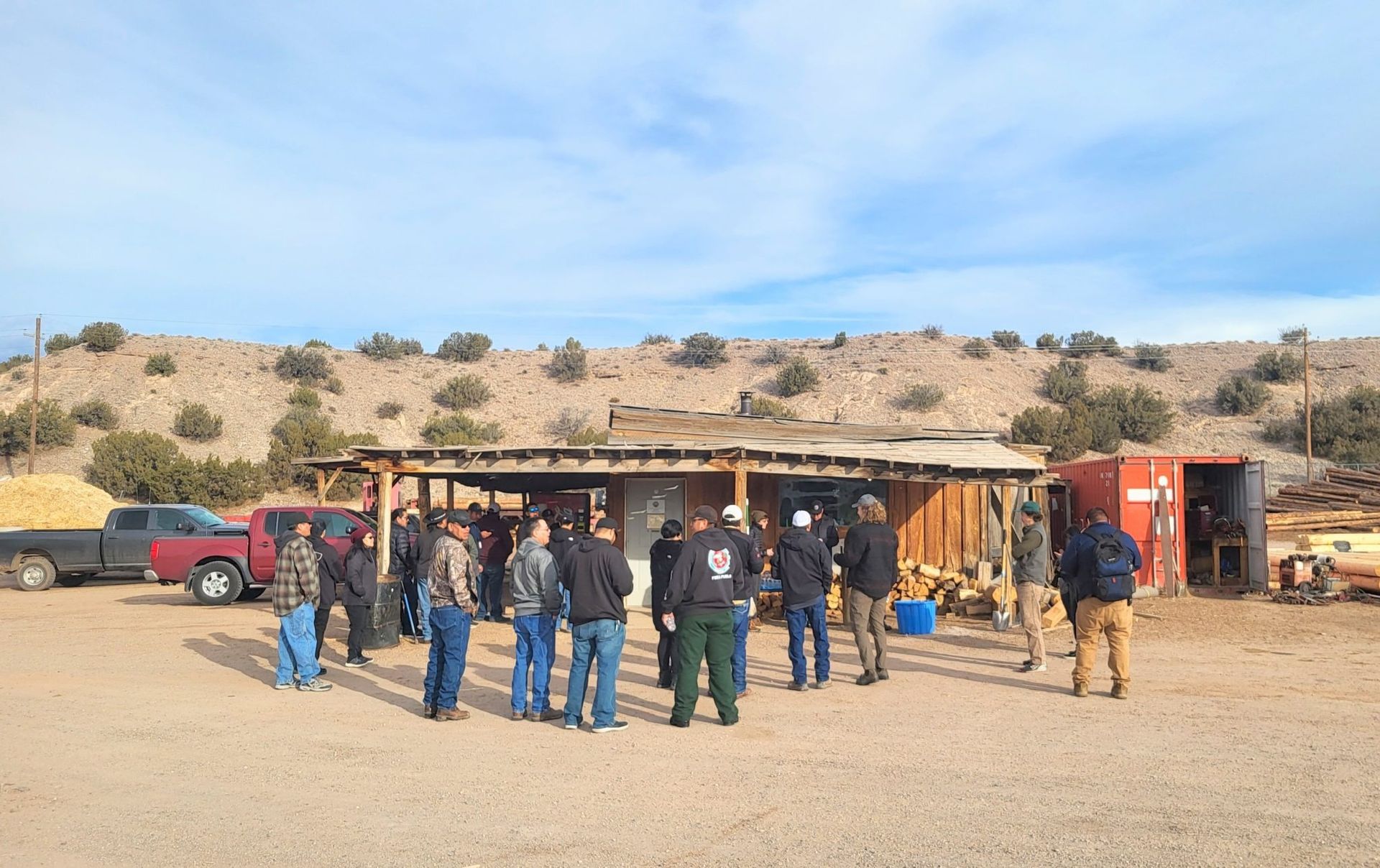
Field tour attendees gathered at Field tour at Walatowa Timber Industries

The New Mexico Tribal Fire Working Group held their third meeting, after the workshops. The Guild has provided scaffolding for this Tribally centered group as members work to advance prescribed and wildfire issues across the reservations and aboriginal lands of the Tribes, Pueblos, and Tribal Nations. Meeting during the summit allowed new members to join the group and bring new energy and ideas. 

Zander Evans, the Guild’s executive director, gave the welcome on the second day of the Summit. He emphasized opportunities for Tribes and Indigenous stewards to take advantage of new funding and policy opportunities. In one example, he spoke of the proposed National Old-Growth Amendment that instructs the Forest Service to “integrate Indigenous Knowledge and respect for the ethic of reciprocity and responsibility to future generations and directs land managers to advance co-stewardship, recognizing the importance of general trust responsibilities, treaty rights, and cultural, religious, and other Tribal interests and practices.” He highlighted the resources available through collaboration and the supporting role that non-Tribal partners must play in advancing Indigenous priorities. 

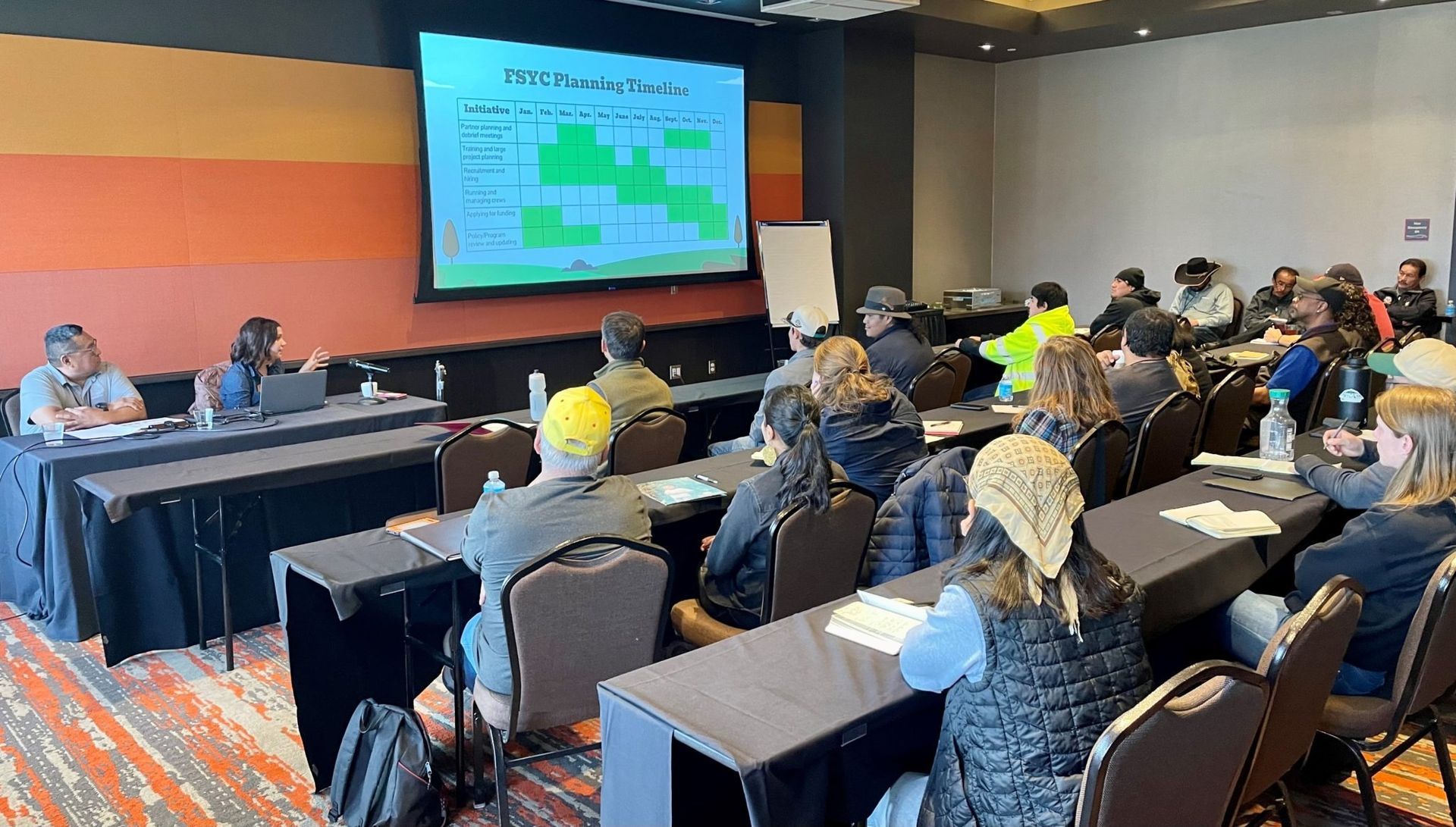
Cora and John presenting in a conference room on Forest Stewards Youth Corps

John Galvan, Guild board member and Jemez Pueblo Forester, and Cora Stewart, Guild Coordinator, teamed up on day two to share details about the Forest Stewards Youth Corps program at Jemez Pueblo. They showcased the work that Tribal youth complete every summer while learning about environmental stewardship close to home. John and Cora also walked through the history of the Guild’s Youth Corps and what it takes to employ 4-5 young adults every year, including diverse funding sources, a permanent program manager, the creation of programmatic plans, and consistent communication between the Pueblo, the Guild, and other partners. Summit attendees in the room asked insightful questions about the timeline and necessary steps to build their own Youth Corps programs. 

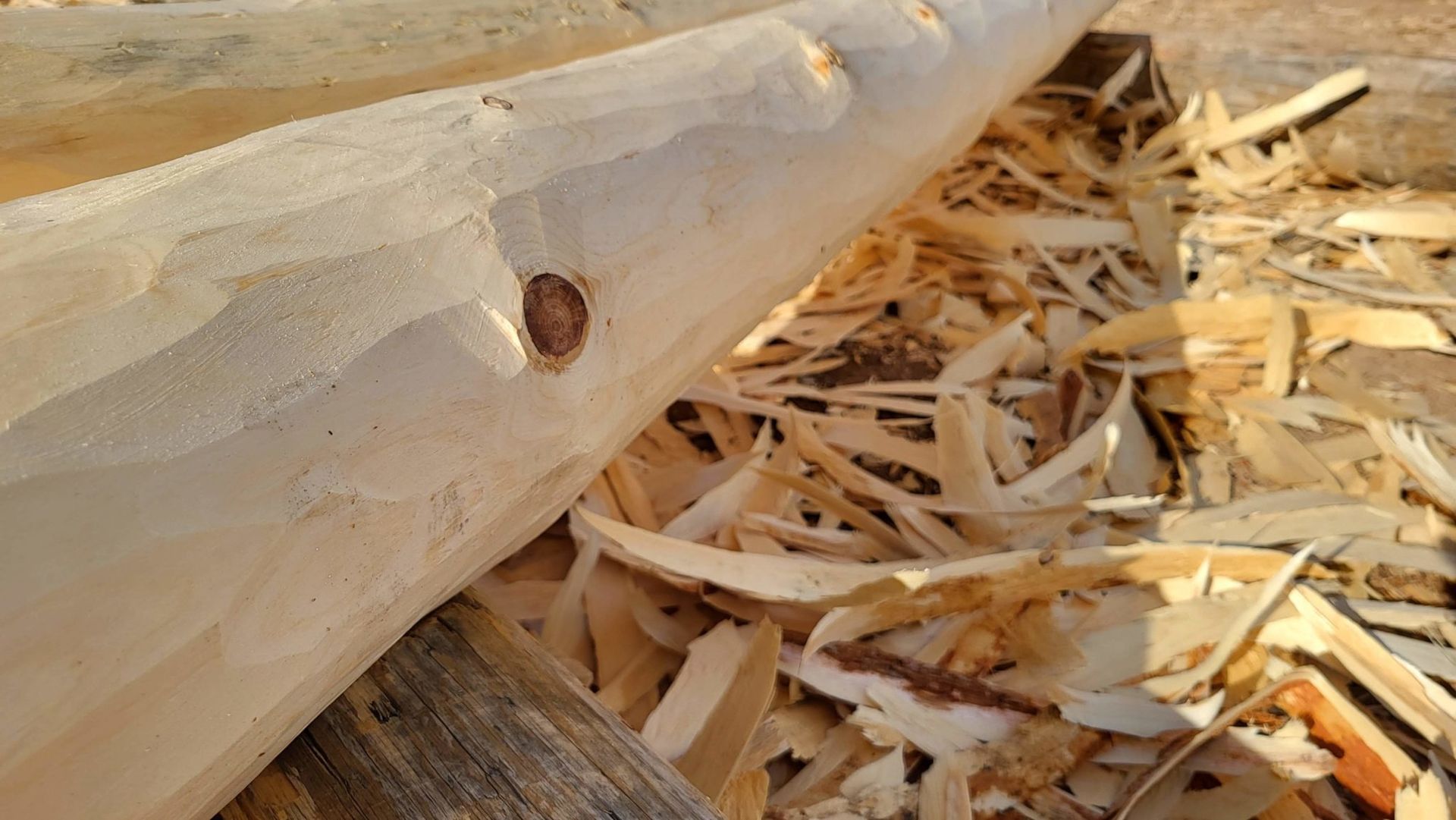
A log whose bark was hand peeled at Walatowa

The final day of the summit featured the lessons of the first two days put into action through field trips to nearby stewardship projects. Three available tours included a trip organized by Sam Berry as a follow-up to the first day’s fire-focused workshop and meeting. This trip went to a prescribed burn project in pinyon-juniper shrubland on Santa Ana Pueblo. The second trip went to Walatowa Timber Industries, a Jemez Pueblo owned and operated sawmill selling wood products sourced from small-diameter forest restoration thinning. The third visited a biochar operation and explanation at Sandia Pueblo. 

This summit only scratched the surface of the many forestry and fire opportunities and challenges for Tribal communities across New Mexico. It provided a valuable space for community members, practitioners, and researchers to meet, share stories and meals, and exchange information. These three days laid the foundation for both future collaborations and future summits. 

Recent Posts

By Aidan Juhl April 16, 2026
Written by Colleen Robinson
April 14, 2026
Written by Shannon Maes
April 14, 2026
In September 2025, the Guild launched a three-person Forest Stewards Apprenticeship (FSA) crew to work with the Penobscot Nation’s Department of Natural Resources (PN DNR). Over the course of their six-month season, apprentices Agenor Duhon, Gabe Stewart, and Jacob Baker shared a season of learning, collaboration, and hands-on stewardship of Penobscot Tribal lands.
April 14, 2026
This week, I stepped into the role of crew leader. We worked a full 40-hour week, splitting our time between Clifton Farms and a prescribed burn operation. On the first day in the field, we completed hack-and-squirt treatments on trees that had been marked the previous week. For the remainder of the week, we focused on marking trees for future hack-and-squirt work, maintaining a steady pace and ensuring accuracy in our selections.
April 7, 2026
As Guild members, our practice is fundamentally grounded in field observation. We know intuitively that forests are dynamic, living communities. Yet, for decades, the high-level systems used to value our work, specifically the carbon accounting ledgers tied to international frameworks like the Paris Agreement, have treated forests as static, quantifiable blocks of land. In a recent commentary published in One Earth, I argue that these legacy measurement, reporting, and verification (MRV) frameworks are failing. Ledger accounting relies on crude land-use delineations and outdated technology, effectively penalizing the natural, seasonal flux of the ecosystems we manage every day. By forcing landscapes into rigid “forest” versus “non-forest” binaries, such legacy systems miss the complex reality on the ground. But a major shift is underway.
March 18, 2026
Women have always been a part of forestry. Historically, women often helped guide family decisions about when to cut, which trees to save, and how best to steward their land for the next generation. Historical accounts from the Southern Appalachians describe women’s roles in decisions about timber harvesting and prioritizing long-term forest health. These often-uncredited contributions are even reflected in Aldo Leopold’s A Sand County Almanac (1949), in which describes his stewardship philosophy informed not only by his professional experience, but by shared responsibility, where the perspectives of his wife and daughters played an important role.
March 18, 2026
Although rural regions often host the highest concentrations of public and private forest land, they typically lack the sustainable workforce necessary for active management and stewardship. How do we address this foundational problem in forest conservation?
March 18, 2026
The Forest Stewards Guild has a unique dual mandate: practice and promote forest stewardship. Personally, I think the combination of practicing forest management and promoting best practices is what makes the Guild a vibrant and impactful organization.
February 17, 2026
We celebrate the remarkable career and legacy of Leslie (Les) Benedict, who has provided visionary leadership and dedicated service to the stewardship of forests, championing the preservation of the ecological and culturally important black ash. Benedict, a member of the Saint Regis Mohawk Tribe in Akwesasne, north of the Adirondacks in upstate New York, recently retired after serving as the Assistant Director of the Tribe’s Environment Division for over 35 years.
February 17, 2026
The Forest Stewards Guild has been working to support the National Park Service on forest stewardship projects throughout the eastern U.S. This month we are in the midst of a project to protect mounds at Effigy Mounds National Monument near Harpers Ferry Iowa. This site was designated as a National Monument in 1949 and preserves over 200 mounds built between 800 and 2,500 years ago. Mounds at this site include conical, linear, compound, and effigy mounds – constructed in the shape of animals. Please see the National Park Service page for more information about the mounds, the people who built them, and how to visit the site. The lidar images on that website of the Marching Bears and other mound groups are fascinating.
Show More