Landowner Assistance in Post-Fire Natural Resource Recovery: Lessons Learned from Oregon

August 16, 2021

Submitted by Kristen Purdy, Sustainable Northwest and Maura Olivos

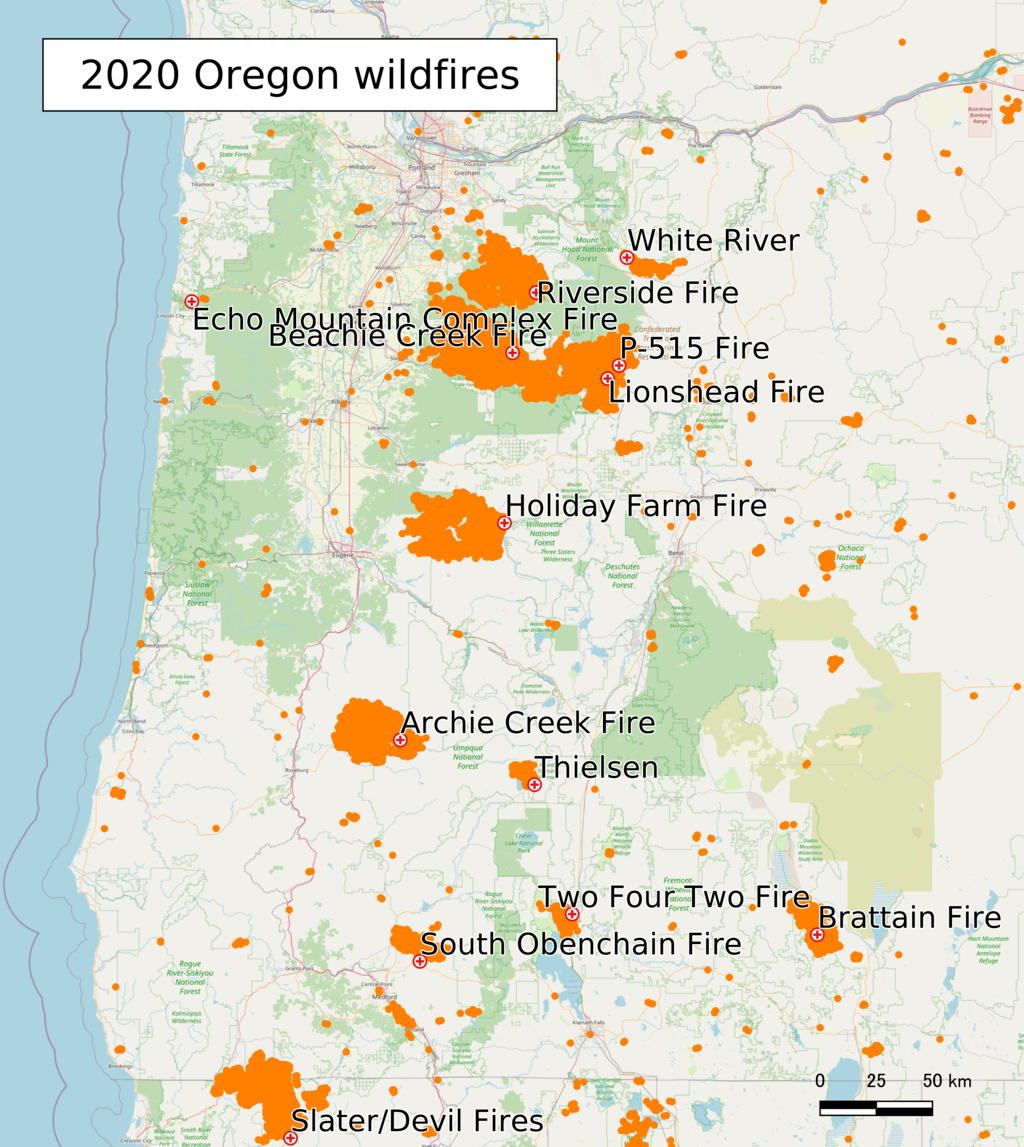
2020 Oregon Fires / By Phoenix7777

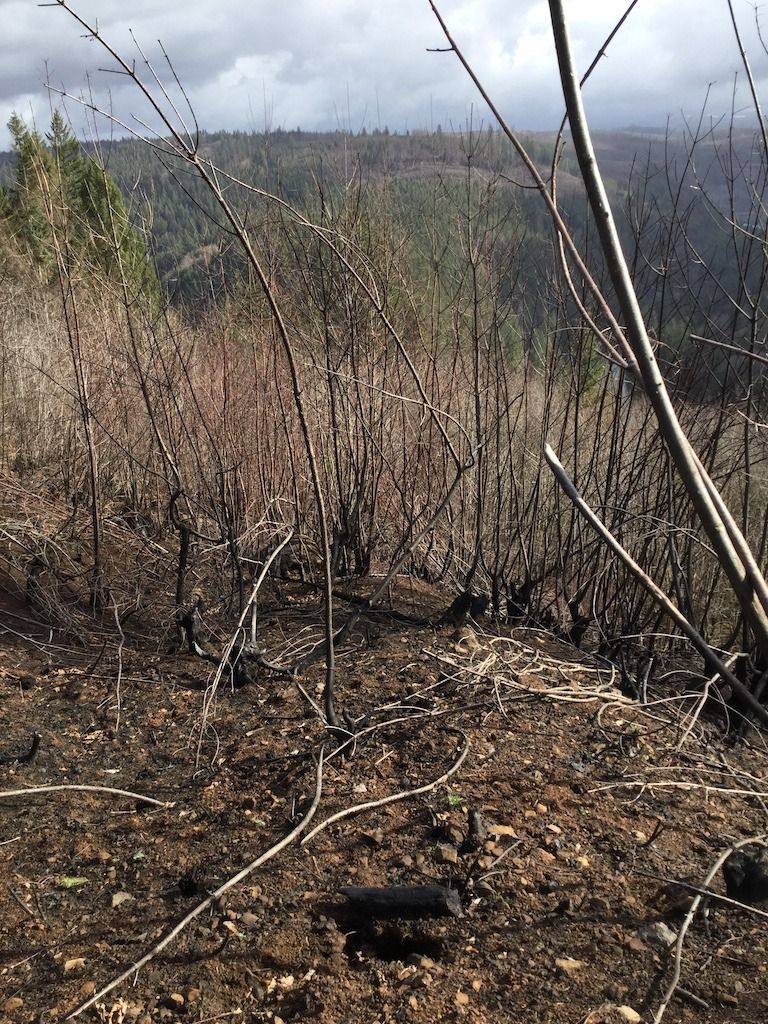
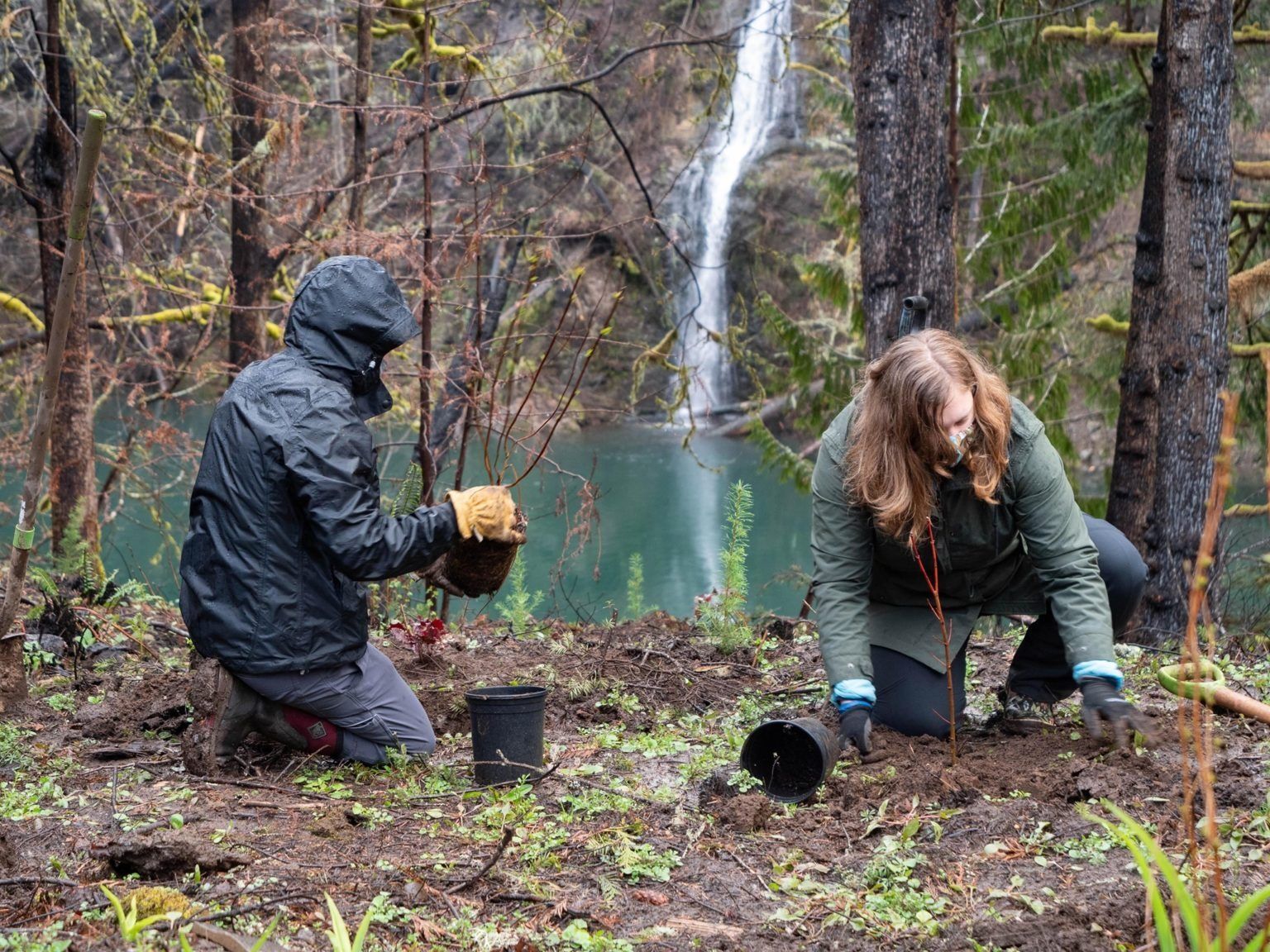
The 2020 wildfire season was unprecedented in Oregon. Communities are still in crisis, working to rebuild homes and meet basic needs. An estimated 797,000 acres of forestland burned in Oregon during the Labor Day fires of 2020. Of that land, roughly 119,000 acres were privately owned. As a result, there’s been a strain on current resources available to small non-industrial landowners when it comes to post-fire natural resource recovery. The Western Oregon Cascades Recovery Effort (WOCRE) formed to meet the urgent need for scaling forest recovery due to the 2020 wildfires. WOCRE is convening organizations who work directly with landowners to share resources and lessons learned and build resilience across Western Oregon. As we gathered to work on 2020 recovery, all while right in the middle of the 2021 Fire Season, we wanted to share lessons learned on post-fire natural resource recovery for landowners in hopes this might help other communities be more prepared.

The following advice has been shared with us from Eugene Water & Electric Board (EWEB). EWEB has been working hard on post-fire restoration to protect streams feeding into Eugene’s drinking water supply from the McKenzie River. Eugene and the surrounding areas were impacted by the Holiday Farm Fire, covering 173,393 acres and impacting the McKenzie River Valley (After the Fire, 2021). Based on their experience with the 2020 Fires, Karl Morgenstern and Nancy Toth from EWEB shared the following recommendations. 

Before the Fire…

Determine all the moving pieces in access agreements for landowners and try to streamline the process to one agreement (from EWEB)

A huge role we’re playing is contacting landowners impacted by the 2020 fires, providing information on services and assistance that we can provide and requesting access agreements, which legally enables us to survey land and help landowners access the resources they need for natural resource recovery. It is critical to keep in mind that landowners have just gone through (and are still going through) a traumatic time. Following the fires, several different agencies were contacting landowners and requesting access to their property for various reasons. Landowners were often confused as to which agency was doing what, and about the different agreements they were being asked to sign. It is important to understand the role each agency plays in post-fire response and be able to communicate this to landowners.

Being aware about the various access agreements someone might be exposed to (for example, counties may have their own requirements for access agreements) is crucial. To get ahead of this before the fires, take the time to set up an access agreement that fulfills the regulatory requirements for other local and state agencies working on recovery, and includes a variety of potential land management actions that landowners can choose by checking boxes within the agreement. Make sure you coordinate with other entities and agencies in the effort to develop a universal access agreement. We created an access agreement using DocuSign that worked for the project partners we were working with under our Pure Water Partners Program. Landowners found this easy to sign because it had all requirements in one access agreement, and the access agreement was mobile-friendly for those who did not have access to computers.

In addition to streamlining the agreement process, we recommend providing landowners with a single, consistent point of contact for the variety of tasks associated with recovery. It’s great if just one person works directly with a landowner, surveying their property, providing technical assistance, and connecting them with multiple resources.

Understand the FEMA process and triple-check to make sure you have authority (from EWEB)

In addition to streamlining access agreements, we learned the hard way that you need to triple-check to make sure you have the authority, according to the Federal Emergency Management Agency (FEMA), to do the work you’re doing. We ran into issues with trying to get reimbursements from FEMA. To avoid problems during post-fire recovery, before the fires, make sure you are aware of the FEMA approval process and understand what is required from landowners. One way to make sure you’re on track with FEMA is to contact your state’s Office of Emergency Management early on in the event, as they can help connect you to relevant contacts within FEMA, as well as the broad variety of federal agencies that will come to work within the FEMA structure.

Be actively involved in emergency preparedness and create standing contracts (from EWEB)

Being active in emergency preparedness–whether on a community-based management, whether it be on a community level, a local level, or on the state level–can open doors to access emergency funds. Because EWEB had a network of partners in place who already started working with landlords on other restoration activities prior to the fires, we were able to quickly approve $1 million in emergency funds, which helped kickstart the work of other programs. A huge, huge help is having standing contracts in place to do the work an emergency entails before the emergency hits. Now, we have rolling contracts.

After the Fire…

Make outreach materials and resources widely available (from EWEB)

We learned it’s crucial to be flexible with the outreach methods used. We used flyers, mail, and social media to share resources with community members impacted by wildfire. People were missing their phones and computers, having to leave them behind as they fled the fast-moving fires. Property damage and inaccessible roads made it difficult to get information out through mail. As a result, we identified key community centers that were being mobilized during the wildfires and during post-fire recovery, and printed out flyers for outreach staff to distribute.

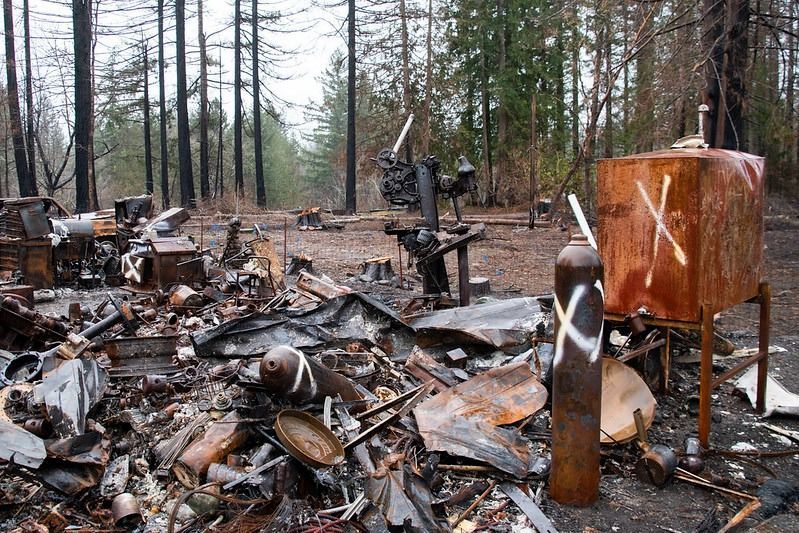
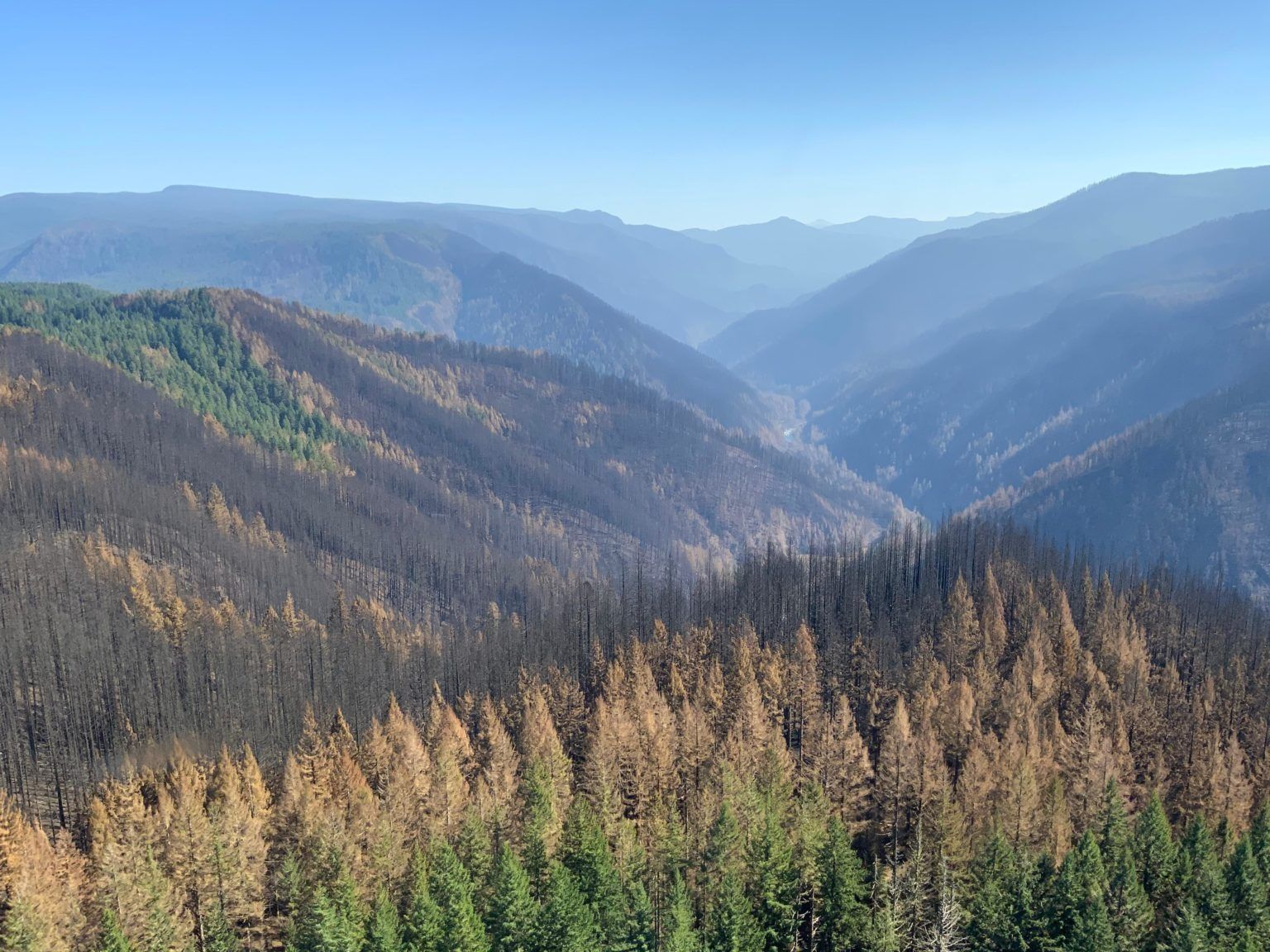
In Clackamas Co., Oregon, the Clackamas River Basin Council (CRBC) has been busy working on post-fire restoration projects. Clackamas County was impacted heavily during the Labor Day fires of 2020, including the Lionshead, Beachie Creek, and Riverside fires. Collectively, these fires burned over 500,000 acres (After the Fire, 2021). The CRBC has been working hard on post-fire restoration within the Clackamas Basin, and Ari Sindel from the Council had the following recommendation to share. 

Riverside Fire Damage from Above / By Inciweb

Cast a wide net for resources to fit community needs (From CRBC)

It’s important to look for diverse funding opportunities, because each program and grant we identified carried restrictions. We applied for a wildfire assistance grant through the Oregon Watershed Enhancement Board (OWEB), which secured funding for 2020 wildfire response. These grants were available to support recovery from 13 of the fires that affected our state. Fire incidents eligible for recovery funding were chosen with the assistance of public comment. In our basin, the largest fire of the 2020 season was the Riverside Fire, which was chosen for eligibility. With the emergency funds, we were able to make a huge difference for our community by providing assistance to private landowners who were not eligible for other programs. However, several private landowners impacted by the much smaller Dowty Road Fire, who were also ineligible for other programs, reached out to us for help. The Dowty Road Fire did a lot of damage to important natural areas, but the OWEB funding was not applicable. With creativity and gumption, we were able to help nearly all of the landowners who reached out to us. We continue to provide assistance, and each of the funding sources and recovery programs that we have identified have been a component of that effort. 

Moving Forward

One of the most crucial things WOCRE members suggested was that now, in the middle of fire season, is the best time to start writing down the things you wish you’d done for the next fire season. WOCRE will continue to work on 2020 wildfire recovery. Please feel free to share your lessons learned and stay safe, communicative and aware out there. For more information on WOCRE contact Kristen Purdy at kpurdy@sustainablenorthwest.org.

Recent Posts

By Aidan Juhl April 16, 2026
Written by Colleen Robinson
April 14, 2026
Written by Shannon Maes
April 14, 2026
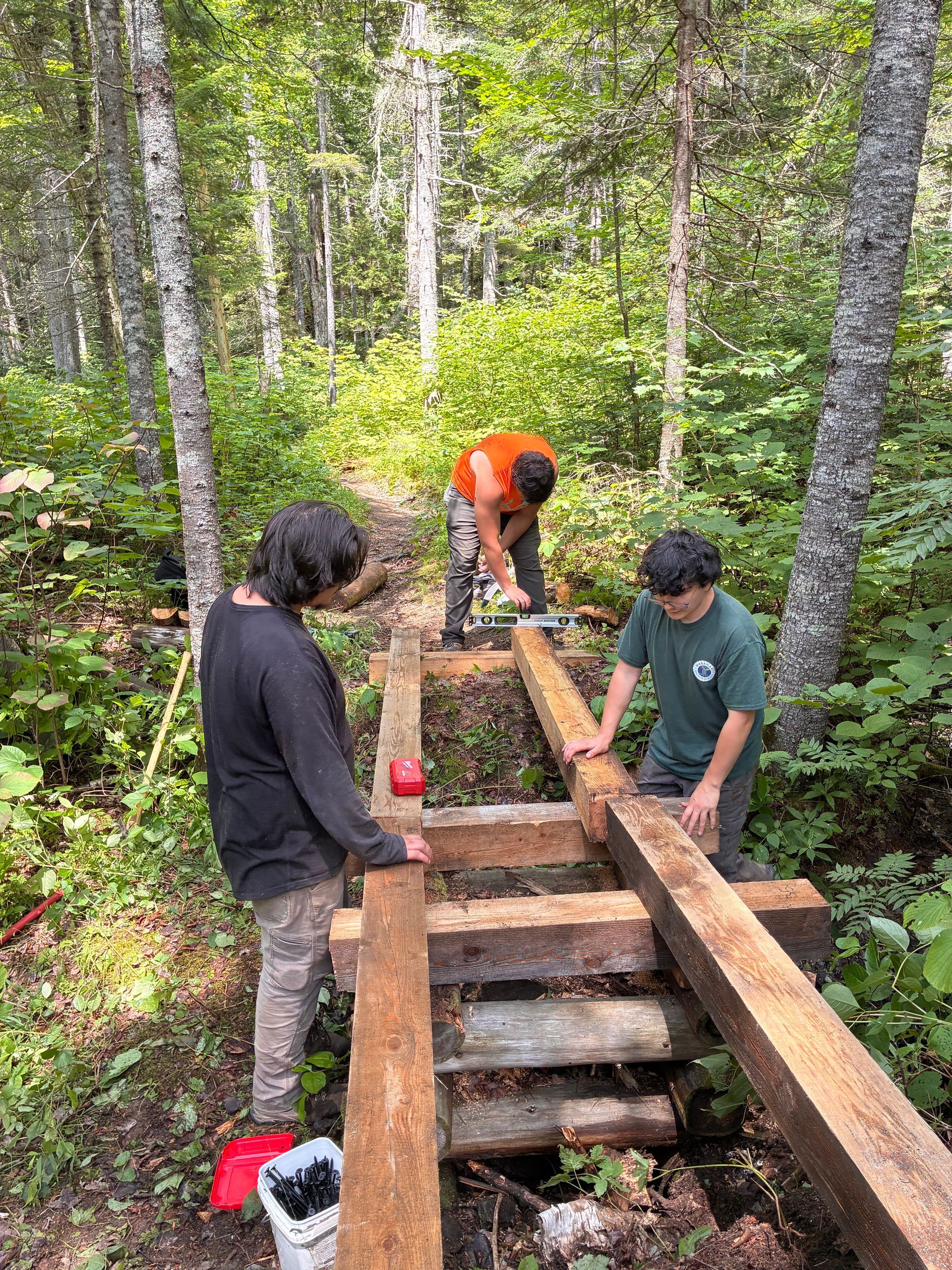
In September 2025, the Guild launched a three-person Forest Stewards Apprenticeship (FSA) crew to work with the Penobscot Nation’s Department of Natural Resources (PN DNR). Over the course of their six-month season, apprentices Agenor Duhon, Gabe Stewart, and Jacob Baker shared a season of learning, collaboration, and hands-on stewardship of Penobscot Tribal lands.
April 14, 2026
This week, I stepped into the role of crew leader. We worked a full 40-hour week, splitting our time between Clifton Farms and a prescribed burn operation. On the first day in the field, we completed hack-and-squirt treatments on trees that had been marked the previous week. For the remainder of the week, we focused on marking trees for future hack-and-squirt work, maintaining a steady pace and ensuring accuracy in our selections.
April 7, 2026
As Guild members, our practice is fundamentally grounded in field observation. We know intuitively that forests are dynamic, living communities. Yet, for decades, the high-level systems used to value our work, specifically the carbon accounting ledgers tied to international frameworks like the Paris Agreement, have treated forests as static, quantifiable blocks of land. In a recent commentary published in One Earth, I argue that these legacy measurement, reporting, and verification (MRV) frameworks are failing. Ledger accounting relies on crude land-use delineations and outdated technology, effectively penalizing the natural, seasonal flux of the ecosystems we manage every day. By forcing landscapes into rigid “forest” versus “non-forest” binaries, such legacy systems miss the complex reality on the ground. But a major shift is underway.
March 18, 2026
Women have always been a part of forestry. Historically, women often helped guide family decisions about when to cut, which trees to save, and how best to steward their land for the next generation. Historical accounts from the Southern Appalachians describe women’s roles in decisions about timber harvesting and prioritizing long-term forest health. These often-uncredited contributions are even reflected in Aldo Leopold’s A Sand County Almanac (1949), in which describes his stewardship philosophy informed not only by his professional experience, but by shared responsibility, where the perspectives of his wife and daughters played an important role.
March 18, 2026
Although rural regions often host the highest concentrations of public and private forest land, they typically lack the sustainable workforce necessary for active management and stewardship. How do we address this foundational problem in forest conservation?
March 18, 2026
The Forest Stewards Guild has a unique dual mandate: practice and promote forest stewardship. Personally, I think the combination of practicing forest management and promoting best practices is what makes the Guild a vibrant and impactful organization.
February 17, 2026
We celebrate the remarkable career and legacy of Leslie (Les) Benedict, who has provided visionary leadership and dedicated service to the stewardship of forests, championing the preservation of the ecological and culturally important black ash. Benedict, a member of the Saint Regis Mohawk Tribe in Akwesasne, north of the Adirondacks in upstate New York, recently retired after serving as the Assistant Director of the Tribe’s Environment Division for over 35 years.
February 17, 2026
The Forest Stewards Guild has been working to support the National Park Service on forest stewardship projects throughout the eastern U.S. This month we are in the midst of a project to protect mounds at Effigy Mounds National Monument near Harpers Ferry Iowa. This site was designated as a National Monument in 1949 and preserves over 200 mounds built between 800 and 2,500 years ago. Mounds at this site include conical, linear, compound, and effigy mounds – constructed in the shape of animals. Please see the National Park Service page for more information about the mounds, the people who built them, and how to visit the site. The lidar images on that website of the Marching Bears and other mound groups are fascinating.
Show More