Helping hemlocks, helping humans

June 16, 2020

Writtten by Hanusia Higgins, Guild student member

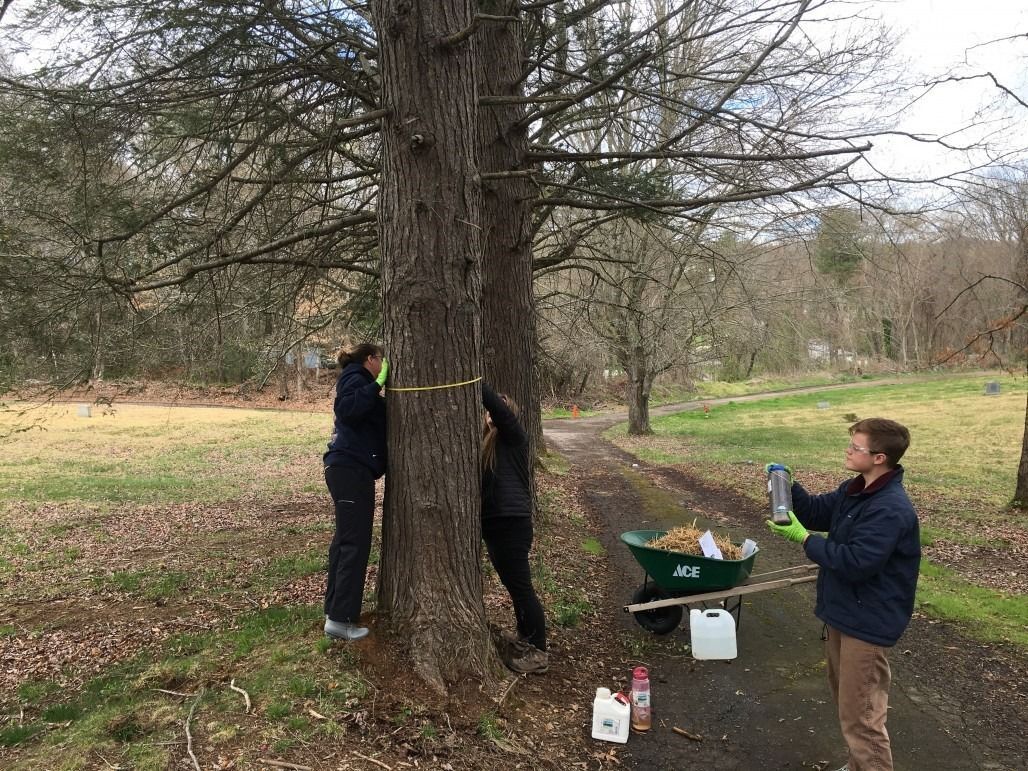
Last year, I served as an AmeriCorps member with the Hemlock Restoration Initiative of WNC Communities in Asheville, North Carolina. This small but mighty program’s mission is to protect and preserve the hemlock trees of western North Carolina from a devastating invasive pest: the hemlock woolly adelgid. I got to monitor for adelgid-eating beetles, educate landowners on how to save their trees, and treat hemlocks with chemical insecticide to protect them from the adelgid. Looking back on my yearlong term, one experience that stands out most is treating the majestic hemlocks of Violet Hill Cemetery.

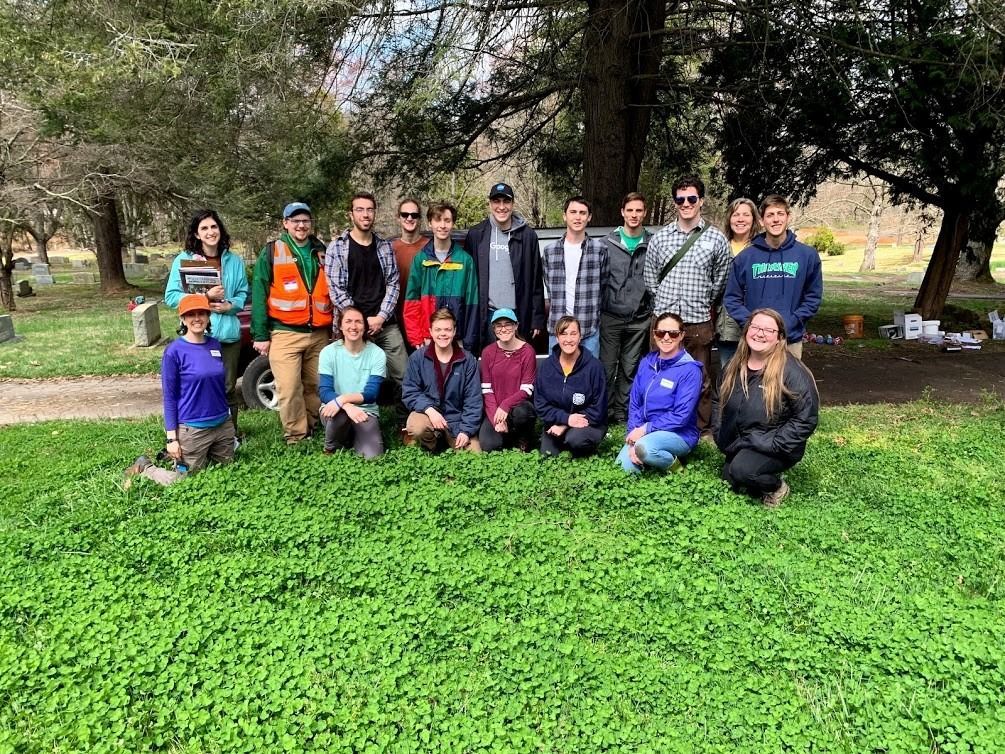
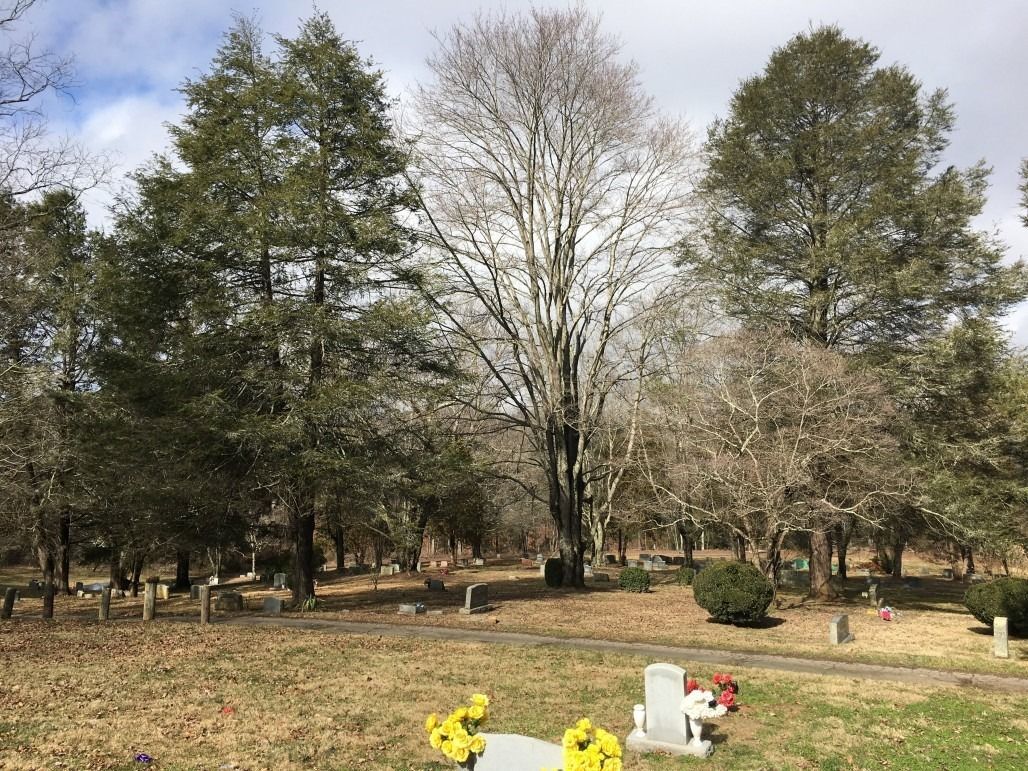
Sixteen eastern hemlocks, likely centuries old, have stood sentinel over this land as the human and ecological landscapes transformed around them. In the past few decades, they have faced their own battle with the invasive woolly adelgid. On a misty day last April, students from the University of North Carolina Asheville gathered to learn from the Hemlock Restoration Initiative team and treat the hemlocks of Violet Hill Cemetery with systemic insecticide. Our actions preserved the hemlocks for at least five years to come. Hopefully, advances in biological control and other conservation techniques will ensure their long-term health.

Violet Hill Cemetery, founded by Dr. L. O. Miller in 1932, is one of Asheville’s oldest African-American cemeteries. Since the days when even burial sites were segregated, it has been a serene resting place for the city’s Black community, with the large hemlock trees providing shade and tranquility. That community faced significant challenges throughout the 20th century; notably, Asheville was one of many cities to implement “urban renewal” projects in the 1950s -1970s, dividing and destroying predominantly Black neighborhoods to build new infrastructure. The construction of Patton Avenue severed Violet Hill Cemetery’s link to the nearby Burton Street Community. Today it bears witness to more strife, as the Asheville Police Department destroys medical supplies of community members protesting the murder of George Floyd and the widespread police brutality against Black Americans.

The fates of hemlocks and of humans are inextricably intertwined. These trees provide us with clean air, cool water, and countless other services. In return, we unknowingly introduced a pest that may lead to their demise, but we may also be their only chance at survival. On a larger scale, environmental protection is inseparable from racial justice. The history of racism in America has shaped every facet of our country, and the fields of forestry and conservation are not excepted from the racism that continues to this day. Like many others, I have been deeply affected by the protests and resurgence of the Black Lives Matter movement in the past few weeks. As fervently as I advocate and take action for ecological protection and curbing climate change, I must and I will show the same passion in working towards racial justice. In doing so, I hope to honor the legacy of the hemlocks at Violet Hill Cemetery.

About the author: Hanusia Higgins is a student member of the Guild, and a master’s student at the University of Vermont’s Rubenstein School of Environment and Natural Resources. She is studying the impacts of the emerald ash borer and of the management response to it on northern hardwood forests.

Recent Posts

By Aidan Juhl April 16, 2026
Written by Colleen Robinson
April 14, 2026
Written by Shannon Maes
April 14, 2026
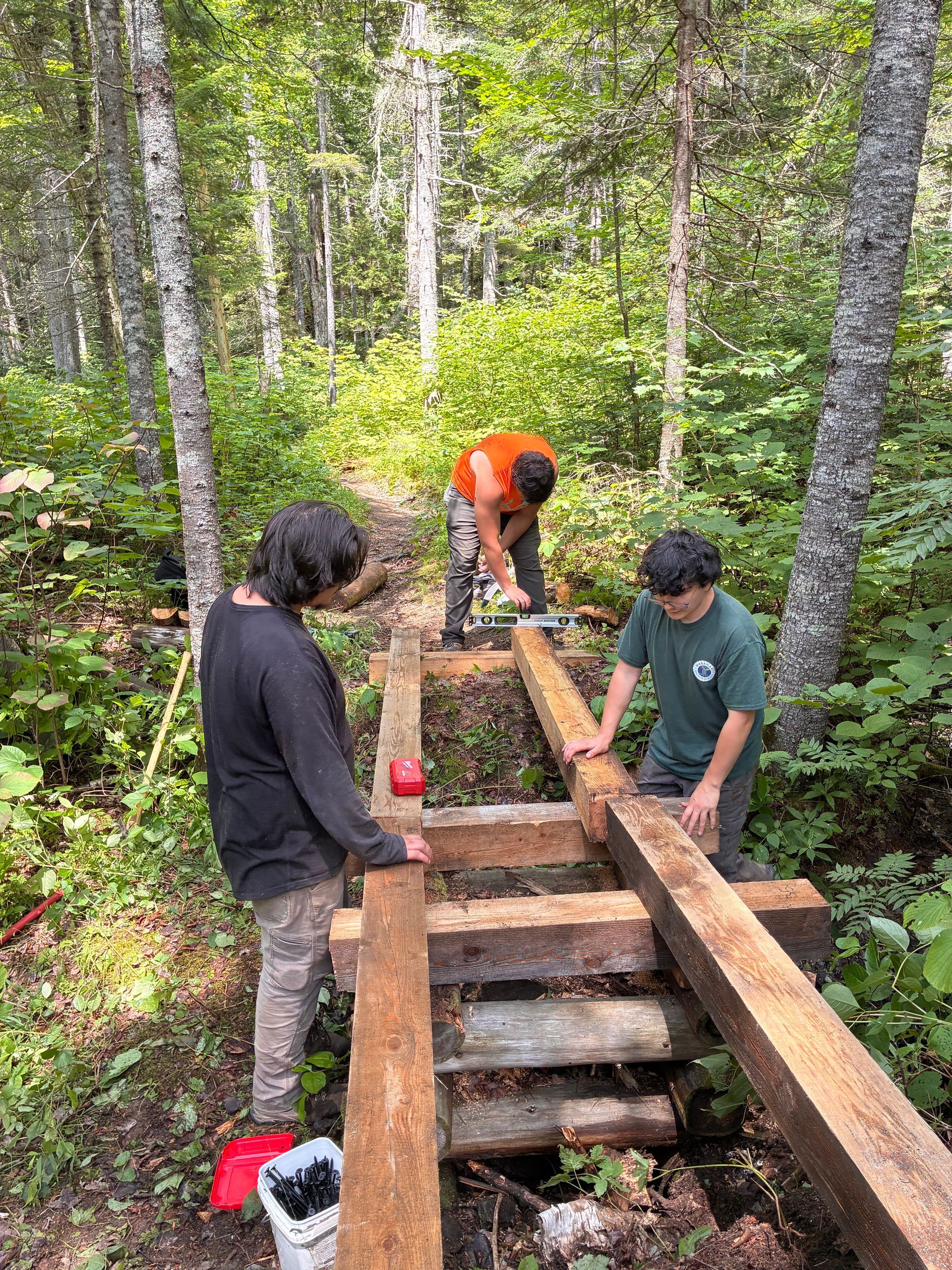
In September 2025, the Guild launched a three-person Forest Stewards Apprenticeship (FSA) crew to work with the Penobscot Nation’s Department of Natural Resources (PN DNR). Over the course of their six-month season, apprentices Agenor Duhon, Gabe Stewart, and Jacob Baker shared a season of learning, collaboration, and hands-on stewardship of Penobscot Tribal lands.
April 14, 2026
This week, I stepped into the role of crew leader. We worked a full 40-hour week, splitting our time between Clifton Farms and a prescribed burn operation. On the first day in the field, we completed hack-and-squirt treatments on trees that had been marked the previous week. For the remainder of the week, we focused on marking trees for future hack-and-squirt work, maintaining a steady pace and ensuring accuracy in our selections.
April 7, 2026
As Guild members, our practice is fundamentally grounded in field observation. We know intuitively that forests are dynamic, living communities. Yet, for decades, the high-level systems used to value our work, specifically the carbon accounting ledgers tied to international frameworks like the Paris Agreement, have treated forests as static, quantifiable blocks of land. In a recent commentary published in One Earth, I argue that these legacy measurement, reporting, and verification (MRV) frameworks are failing. Ledger accounting relies on crude land-use delineations and outdated technology, effectively penalizing the natural, seasonal flux of the ecosystems we manage every day. By forcing landscapes into rigid “forest” versus “non-forest” binaries, such legacy systems miss the complex reality on the ground. But a major shift is underway.
March 18, 2026
Women have always been a part of forestry. Historically, women often helped guide family decisions about when to cut, which trees to save, and how best to steward their land for the next generation. Historical accounts from the Southern Appalachians describe women’s roles in decisions about timber harvesting and prioritizing long-term forest health. These often-uncredited contributions are even reflected in Aldo Leopold’s A Sand County Almanac (1949), in which describes his stewardship philosophy informed not only by his professional experience, but by shared responsibility, where the perspectives of his wife and daughters played an important role.
March 18, 2026
Although rural regions often host the highest concentrations of public and private forest land, they typically lack the sustainable workforce necessary for active management and stewardship. How do we address this foundational problem in forest conservation?
March 18, 2026
The Forest Stewards Guild has a unique dual mandate: practice and promote forest stewardship. Personally, I think the combination of practicing forest management and promoting best practices is what makes the Guild a vibrant and impactful organization.
February 17, 2026
We celebrate the remarkable career and legacy of Leslie (Les) Benedict, who has provided visionary leadership and dedicated service to the stewardship of forests, championing the preservation of the ecological and culturally important black ash. Benedict, a member of the Saint Regis Mohawk Tribe in Akwesasne, north of the Adirondacks in upstate New York, recently retired after serving as the Assistant Director of the Tribe’s Environment Division for over 35 years.
February 17, 2026
The Forest Stewards Guild has been working to support the National Park Service on forest stewardship projects throughout the eastern U.S. This month we are in the midst of a project to protect mounds at Effigy Mounds National Monument near Harpers Ferry Iowa. This site was designated as a National Monument in 1949 and preserves over 200 mounds built between 800 and 2,500 years ago. Mounds at this site include conical, linear, compound, and effigy mounds – constructed in the shape of animals. Please see the National Park Service page for more information about the mounds, the people who built them, and how to visit the site. The lidar images on that website of the Marching Bears and other mound groups are fascinating.
Show More