Future stewards planting future forests

November 18, 2021

Written by Liz Bailey

An ambitious project requires an ambitious crew to carry out the work. Fortunately, when researchers from New Mexico State University (NMSU) recruited the Forest Stewards Youth Corps (FSYC) to plant over 8,000 trees as part of a landscape-scale reforestation research experiment this fall, they were able to overcome challenging conditions to get the job done.

If you’ve heard of reforestation efforts in the Southwest recently, it is likely that Owen Burney and the John T. Harrington Forestry Research Center (FRC) played a role in those projects. In addition to their many research projects, the FRC is the largest forestry seedling producer in the Southwest and provides trees for reforestation efforts across the Southwest and Intermountain West. For landscapes that have experienced catastrophic fire that left few or no remaining trees to produce seed, planting site-adapted trees can facilitate the regeneration of forested lands. Growing and outplanting tree seedlings remains an under-utilized practice and further research is needed to determine what techniques, conditions, and methods produce the highest rates of survival and propagation.

The Centers of Research Excellence in Science and Technology (CREST) project is a large, multi-institution collaboration conducting research to examine restoration of Southwestern forests in the context of changes in forest structure and composition. One part of the project consists of three separate experiments each testing variables related to regeneration of post-wildfire forests. The variables tested in these three experiments include: size and density of applied nucleation (strategically planted “islands” that spread outward over time), vegetation treatments (full mechanical reduction, partial mechanical reduction, no reduction), container size, season of planting, and protection from herbivory (fencing and shelters). The results from this research will inform land managers on factors that influence regeneration of forests post-wildfire and the best methods for carrying out plantings.

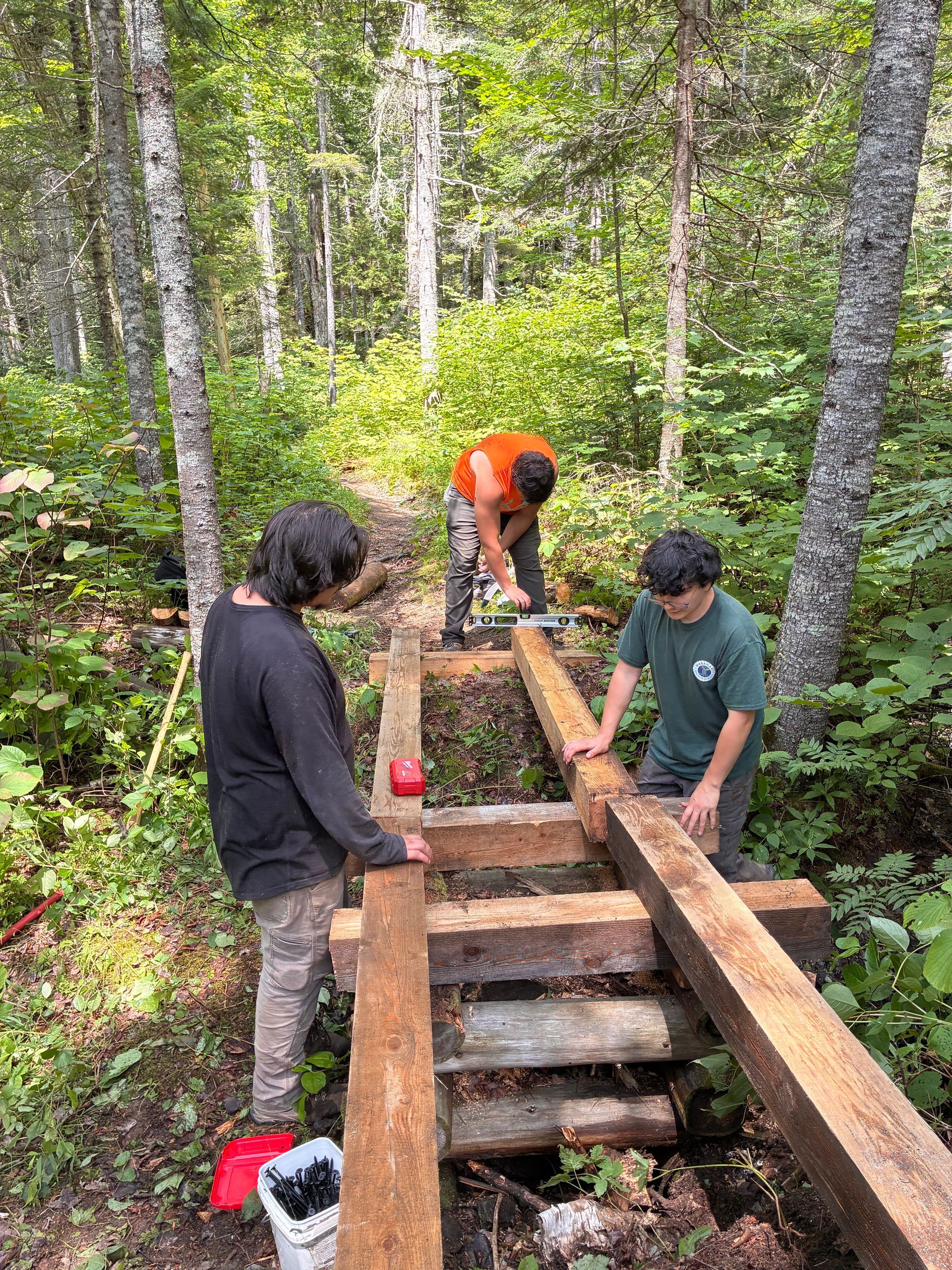
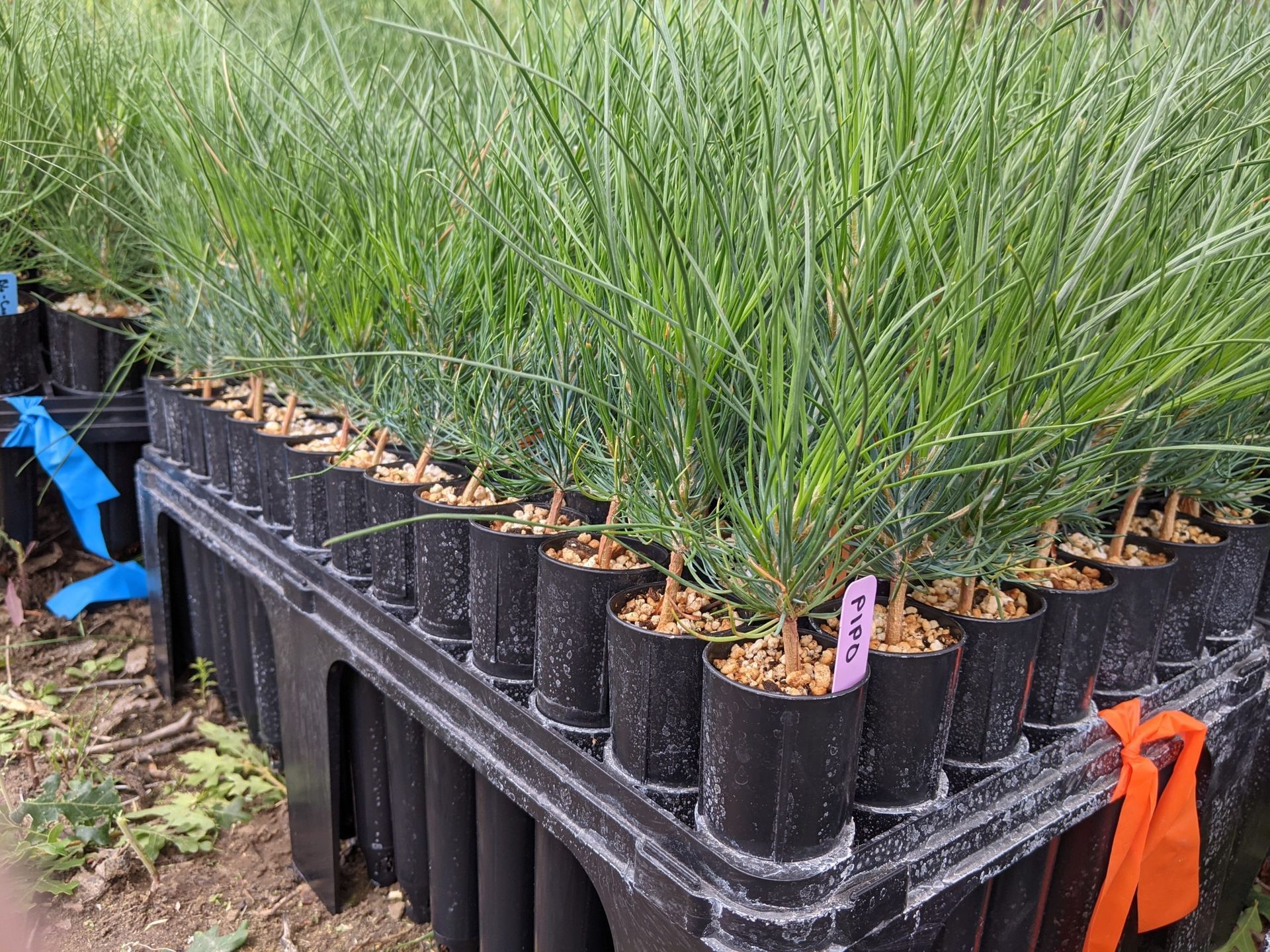
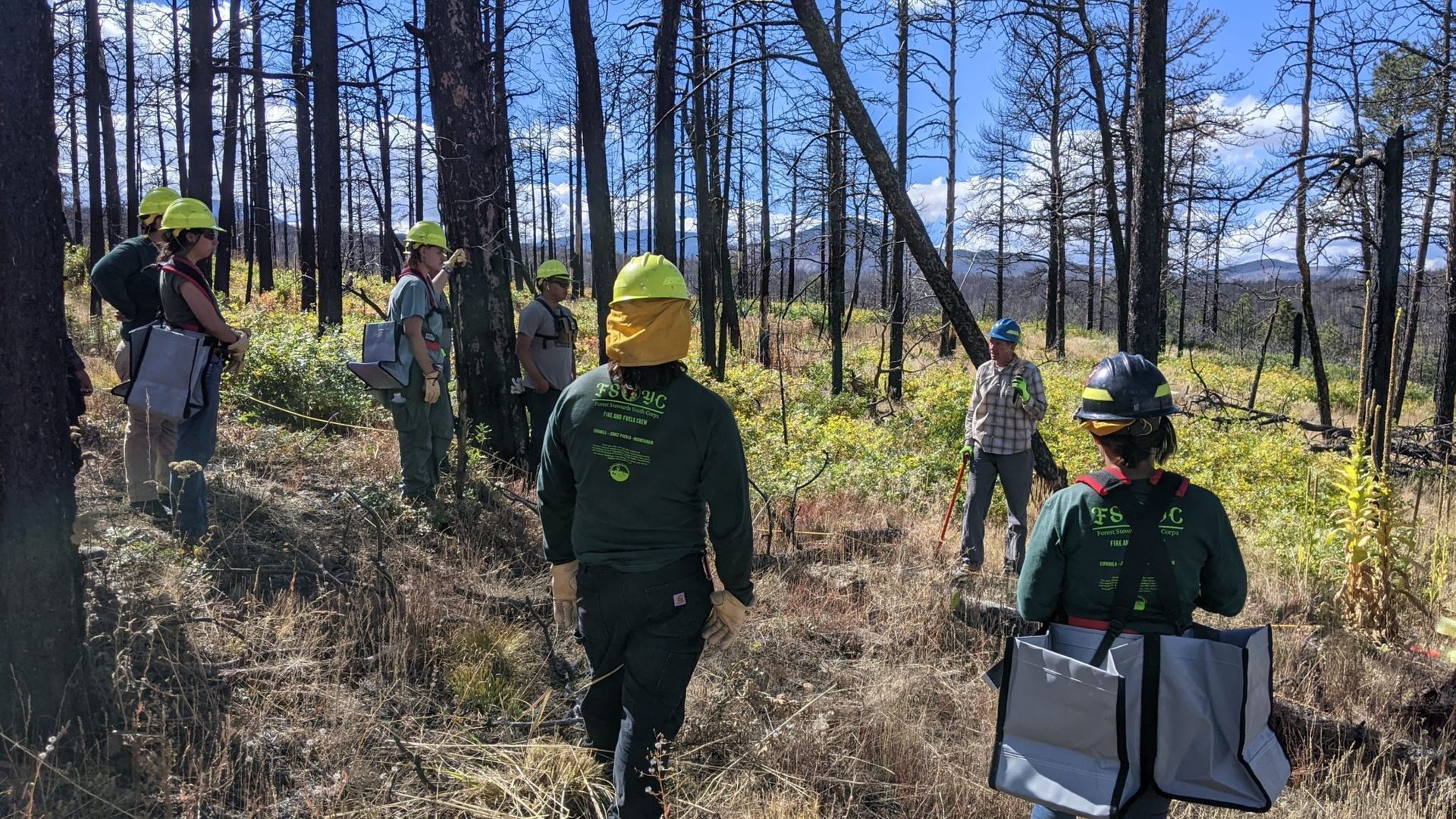
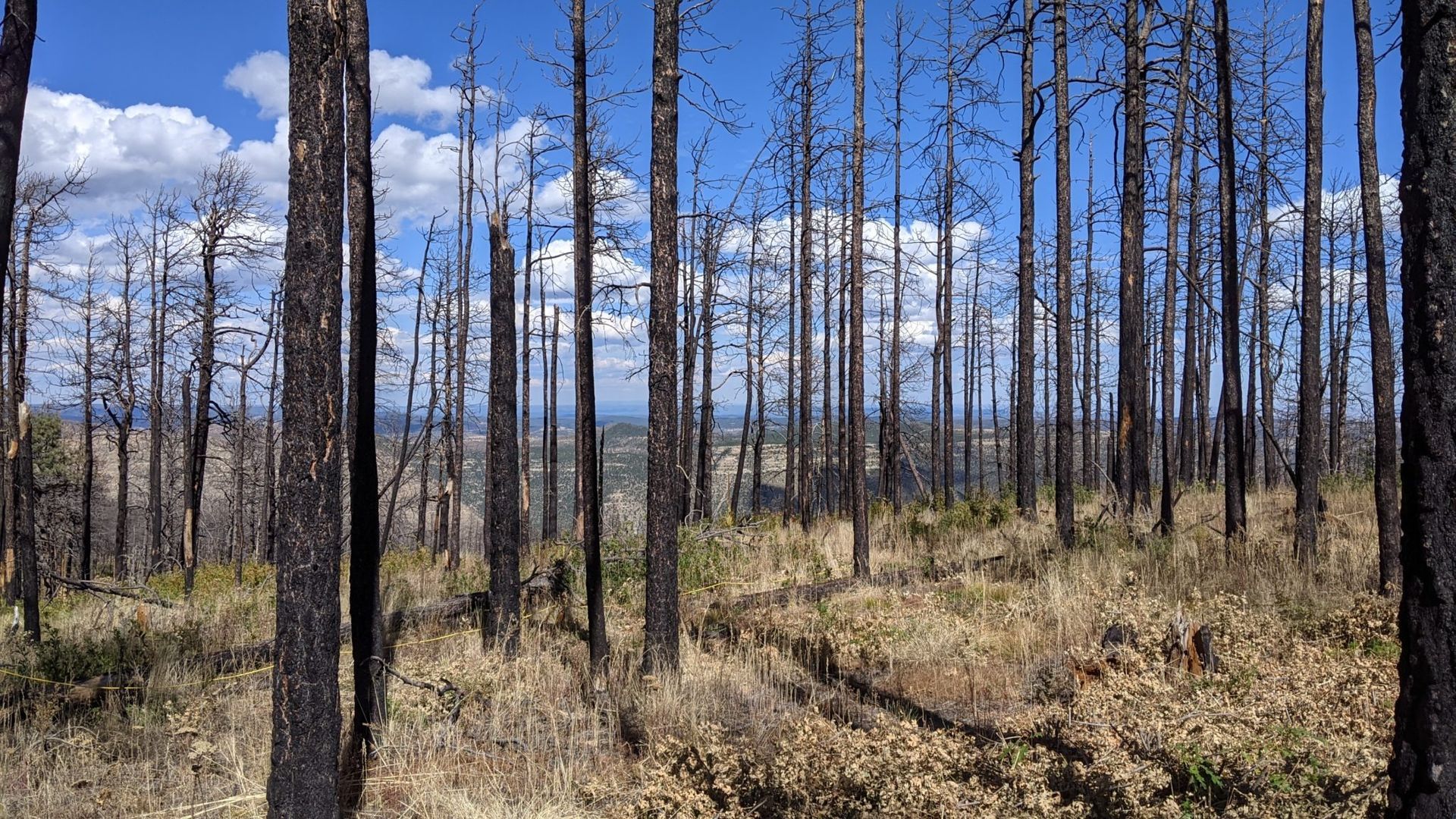
This fall, in the first two weeks of October, six-month old ponderosa pine (Pinus ponderosa) seedlings were planted in the burn scar of the Ute Park Fire (2018) on the Philmont Scout Ranch just outside of Cimmaron, New Mexico. Trees were planted in a grid within nucleation patterns of varying sizes and densities and each plant was sheltered to prevent herbivory. These plantings were completed by The Forest Stewards Guild’s three FSYC crews which operate out of the Jemez, Mountainair, and Espanola Forest Service Ranger Districts. Individuals on these crews are 18-25 years old with an interest in careers in forestry, fire, natural resources, ecology, or related fields.

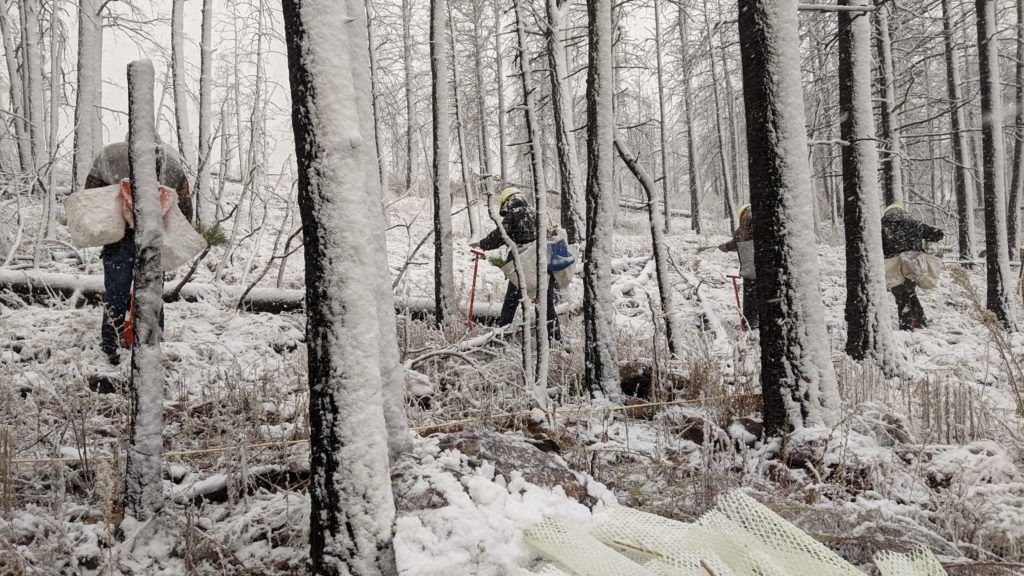
This project pushed these crew members outside of their comfort zone. There were days of intense wind which resulted in sleepless nights, broken tents, and conditions that prohibited planting. When the wind died down, crews worked through the first major snowfall of the season in cold and wet conditions. Camping for ten days straight presents a lot of challenges, particularly for our crew members who had little or no previous camping experience. There were times when morale was low and there was uncertainty as to whether we could get the work done in time, but our crews leaned on each other for support and worked hard until the very last tree was planted.

Being stewards of the land sometimes means braving harsh conditions to protect and improve our forests. This experience not only provided new learning opportunities and skills development for our crew members but fostered a new type of relationship with the land: playing an active role in restoring a landscape that would otherwise be unable to naturally recover from disturbance. Some day these crew members may return to this site, maybe with their own children, and find a forest that they themselves helped grow.

Recent Posts

By Aidan Juhl April 16, 2026
Written by Colleen Robinson
April 14, 2026
Written by Shannon Maes
April 14, 2026
In September 2025, the Guild launched a three-person Forest Stewards Apprenticeship (FSA) crew to work with the Penobscot Nation’s Department of Natural Resources (PN DNR). Over the course of their six-month season, apprentices Agenor Duhon, Gabe Stewart, and Jacob Baker shared a season of learning, collaboration, and hands-on stewardship of Penobscot Tribal lands.
April 14, 2026
This week, I stepped into the role of crew leader. We worked a full 40-hour week, splitting our time between Clifton Farms and a prescribed burn operation. On the first day in the field, we completed hack-and-squirt treatments on trees that had been marked the previous week. For the remainder of the week, we focused on marking trees for future hack-and-squirt work, maintaining a steady pace and ensuring accuracy in our selections.
April 7, 2026
As Guild members, our practice is fundamentally grounded in field observation. We know intuitively that forests are dynamic, living communities. Yet, for decades, the high-level systems used to value our work, specifically the carbon accounting ledgers tied to international frameworks like the Paris Agreement, have treated forests as static, quantifiable blocks of land. In a recent commentary published in One Earth, I argue that these legacy measurement, reporting, and verification (MRV) frameworks are failing. Ledger accounting relies on crude land-use delineations and outdated technology, effectively penalizing the natural, seasonal flux of the ecosystems we manage every day. By forcing landscapes into rigid “forest” versus “non-forest” binaries, such legacy systems miss the complex reality on the ground. But a major shift is underway.
March 18, 2026
Women have always been a part of forestry. Historically, women often helped guide family decisions about when to cut, which trees to save, and how best to steward their land for the next generation. Historical accounts from the Southern Appalachians describe women’s roles in decisions about timber harvesting and prioritizing long-term forest health. These often-uncredited contributions are even reflected in Aldo Leopold’s A Sand County Almanac (1949), in which describes his stewardship philosophy informed not only by his professional experience, but by shared responsibility, where the perspectives of his wife and daughters played an important role.
March 18, 2026
Although rural regions often host the highest concentrations of public and private forest land, they typically lack the sustainable workforce necessary for active management and stewardship. How do we address this foundational problem in forest conservation?
March 18, 2026
The Forest Stewards Guild has a unique dual mandate: practice and promote forest stewardship. Personally, I think the combination of practicing forest management and promoting best practices is what makes the Guild a vibrant and impactful organization.
February 17, 2026
We celebrate the remarkable career and legacy of Leslie (Les) Benedict, who has provided visionary leadership and dedicated service to the stewardship of forests, championing the preservation of the ecological and culturally important black ash. Benedict, a member of the Saint Regis Mohawk Tribe in Akwesasne, north of the Adirondacks in upstate New York, recently retired after serving as the Assistant Director of the Tribe’s Environment Division for over 35 years.
February 17, 2026
The Forest Stewards Guild has been working to support the National Park Service on forest stewardship projects throughout the eastern U.S. This month we are in the midst of a project to protect mounds at Effigy Mounds National Monument near Harpers Ferry Iowa. This site was designated as a National Monument in 1949 and preserves over 200 mounds built between 800 and 2,500 years ago. Mounds at this site include conical, linear, compound, and effigy mounds – constructed in the shape of animals. Please see the National Park Service page for more information about the mounds, the people who built them, and how to visit the site. The lidar images on that website of the Marching Bears and other mound groups are fascinating.
Show More