
Forestry for Minnesota Birds: Efforts for a Healthy Habitat
Written by Christian Nelson

Minnesota is home to 18 million acres of forests, nearly 1/3 of the state, that support a 17 billion dollar forest-products industry and approximately 64,000 jobs in the state. These same forests also help support a nearly 600 million dollar wildlife-watching tourism economy, including bird watching. Hiking, cross-country skiing, mountain biking, hunting, ATV, and snowmobile trails crisscross our forests and campgrounds, and parks are spread throughout. Forests also help moderate the climate, clean the air and water, provide habitat for many animals, reptiles, and amphibians, and provide numerous other benefits. The importance of Minnesota’s forests to Minnesota’s residents and visitors cannot be overstated.
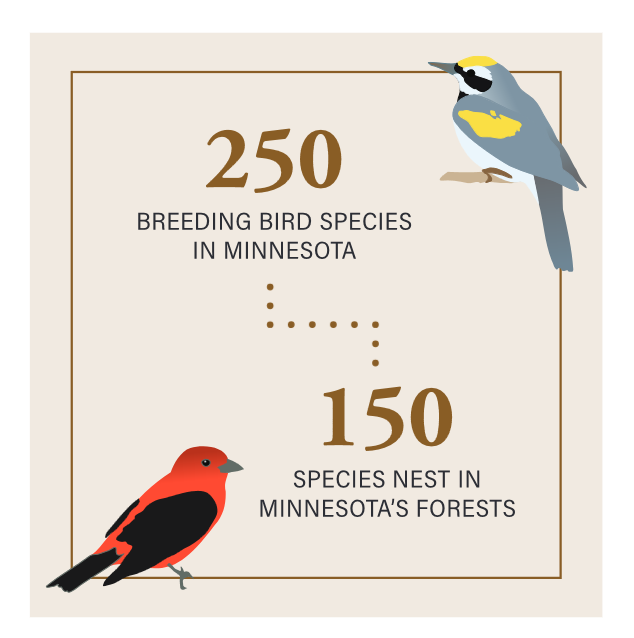
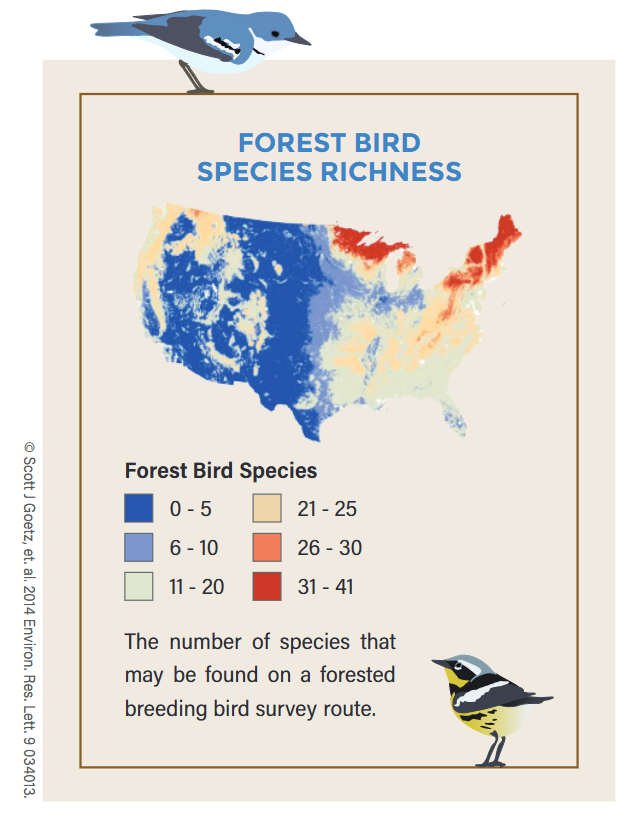
Minnesota is also home to approximately 250 bird species that breed in the state, 150 of which breed in Minnesota’s forests. Some species, like the Golden-winged Warbler, a species that has declined dramatically across the U.S., are still doing relatively well in the state. Without forests, these forest-reliant birds would likely simply disappear. And without birds, these same forests may decline as they become overrun with insects or other pests, or as trees fail to have their seeds dispersed or their flowers pollinated.
Nearly 3 billion birds, or approximately 1 in 4 birds, have disappeared from the U.S. since the 1970s. A variety of factors are responsible, including habitat loss and fragmentation from human development, habitat quality decline from climate change, invasive species, or other factors, collisions with power lines and windows, light pollution that can disrupt nighttime migration, predation by house cats, a decline in insects populations, or problems in the bird’s wintering grounds, just to name a few.
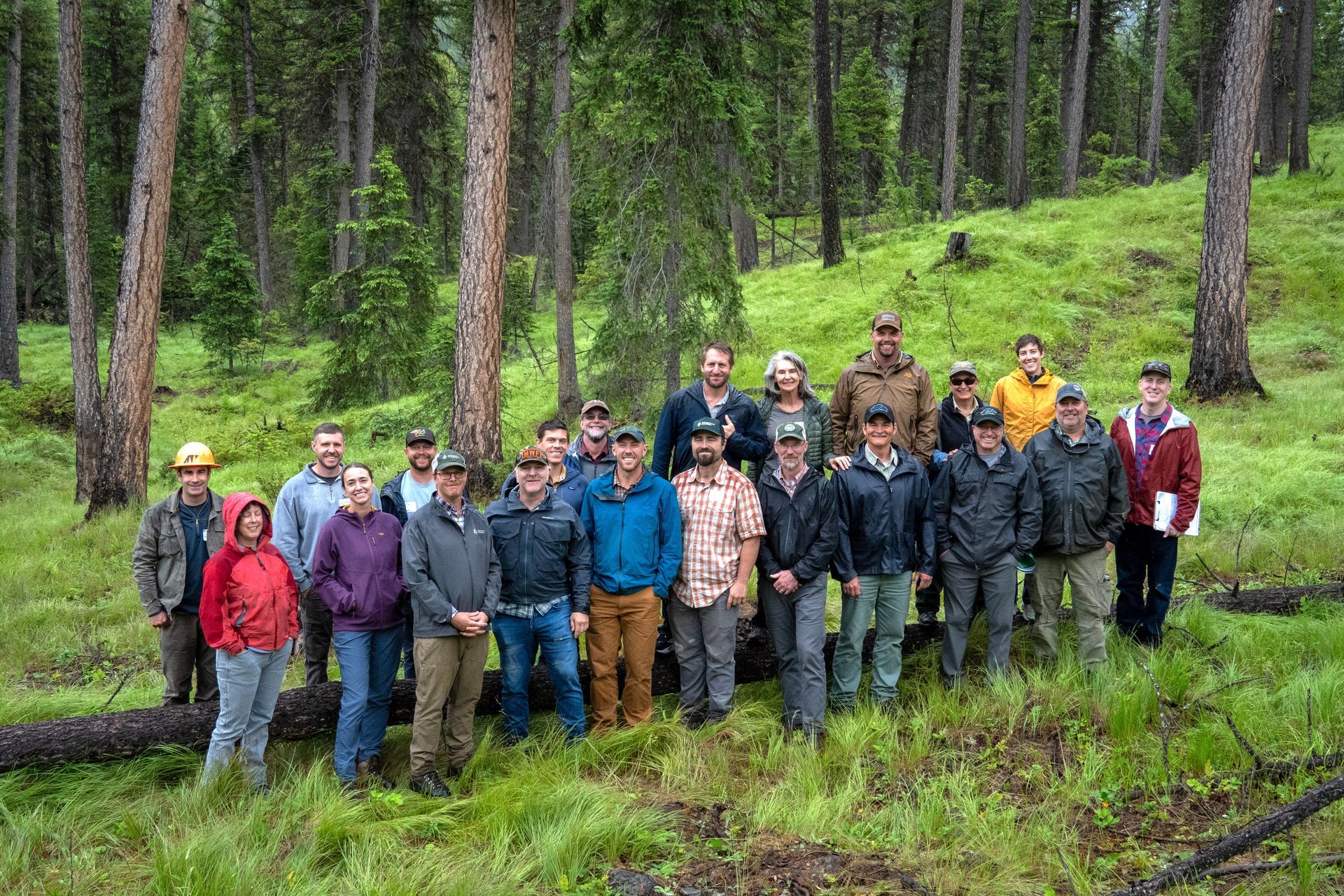
Recently, a group of bird biologists and researchers, professional forest and wildlife managers, and citizen groups, got together over the course of a year to create the Forestry for Minnesota Birds program and a conservation guidebook recommending the best forest management practices to-date to help increase quality forest bird habitat in the state and slow or reverse the decline of forest birds in the state.
The Forestry for the Birds program isn’t new. Several states have implemented their own programs to help improve bird habitat and to educate and engage the public on ongoing problems and potential solutions. In 2008, for example, the Forest Stewards Guild, in partnership with other agencies like Maine Audubon, helped create the Maine Forestry for the Birds program. Minnesota’s recent efforts build on the success of other programs across the country.
The Forestry for Minnesota Birds program has several goals: keep common forest birds common, increase the population of declining birds, and to educate foresters, wildlife managers, loggers, and the public on the best, most up-to-date, scientifically backed forest management practices aimed at improving bird habitat and ideally breeding success.

In addition to workshops, webinars, and news articles like this one, a 60-page Forestry for Minnesota Birds Conservation Guidebook was recently published. Inside this guide you will find management recommendations and biological information for 18 forest songbird species, four primary and seven secondary forest types, information related to forest ecology, native plant communities, and other habitat features, as well specific silvicultural recommendations for a number of different forest types and goals. There is also a robust collection of resources for additional information and landowner assistance programs and a worksheet professionals and others can use to help assess important aspects in their own forests.
View a digital copy of the Minnesota Guidebook and register for our upcoming event.
You may also watch a 1-hour webinar recently hosted by the University of Minnesota – Extension’s Fridays with a Forester series that provides an overview of the Guidebook, its development, and content.
With efforts like the Forestry for Minnesota Birds program, we can work together to protect both birds and the forests they call home.
Recent Posts