Following the young life path of an interest in Environmental Science

June 16, 2021

Written by Ralph Green, Pace University

Background and introduction to the Guild community

When I reflect on my childhood, it only made sense that I would build a professional career in the field of environmental science. I refer to the field of environmental science broadly, because I’m still learning a lot about myself and what I want to do, though I have somewhat narrowed it down. When one says they’re from New Jersey I’d assume others begin to think about the Jersey Shore, expanses of urbanized towns and cities, and traffic on the Garden State Parkway. That’s not the case with the northwestern portion of the state, which is where I call home and the place that played an enormous part in my journey into the field. From a young age most of my free time was spent either in recreational sports or, more often, in the woods with my father. This was especially true during deer season when I was a spectator for many years, until I reached the state’s legal hunting ageThose countless hours spent in the forest, either sitting in a tree stand or on the ground against the base of one, lit the spark for my passion in forest ecology and conservation, as well as wildlife conservation and management. I found the most peace in my life sitting there just appreciating all of the natural world.

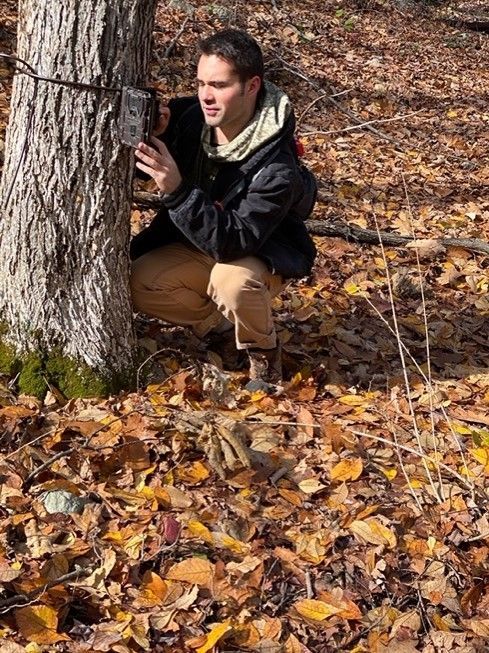
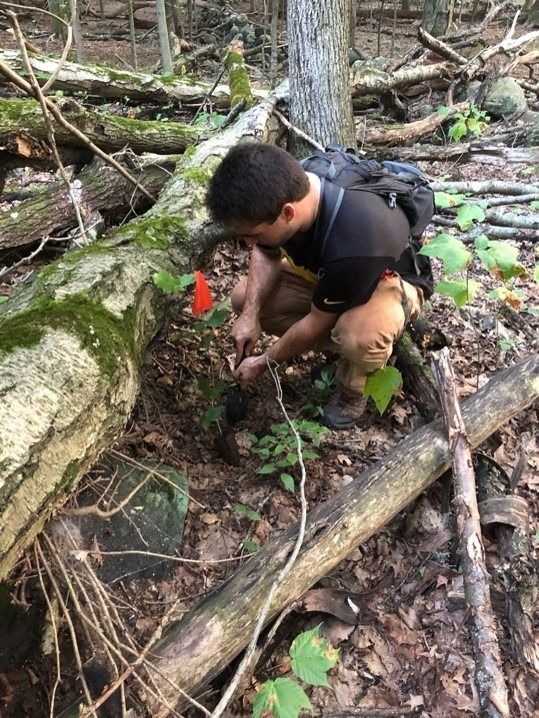
As I grew older, education and athletics started taking away from hunting time, and I didn’t begin to adventure and long-distance hike until college.. I took a junior-year elective  class in high school, Environmental Science & Ecology, right around the time guidance counselors began pushing college choices. That’s how I decided upon Environmental Studies at Pace University as an undergraduate, and I graduated in 2019. I did have to do a capstone: White-tailed deer herbivory and the probability of seedling survival: a field study on how deer browsing impacts forest regeneration. It centered around monitoring deer browse at two separate locations in Westchester and Dutchess counties in New York, experiencing higher and lower deer densities. To do so, I planted over 200 red oak seedlings in different cluster densities to see how this and the accompanying deer densities impacted their survival. I was left wanting more after that project and after working some seasonal jobs in the field, so immediately after graduating I enrolled in the Master of Environmental Science program at Pace University.

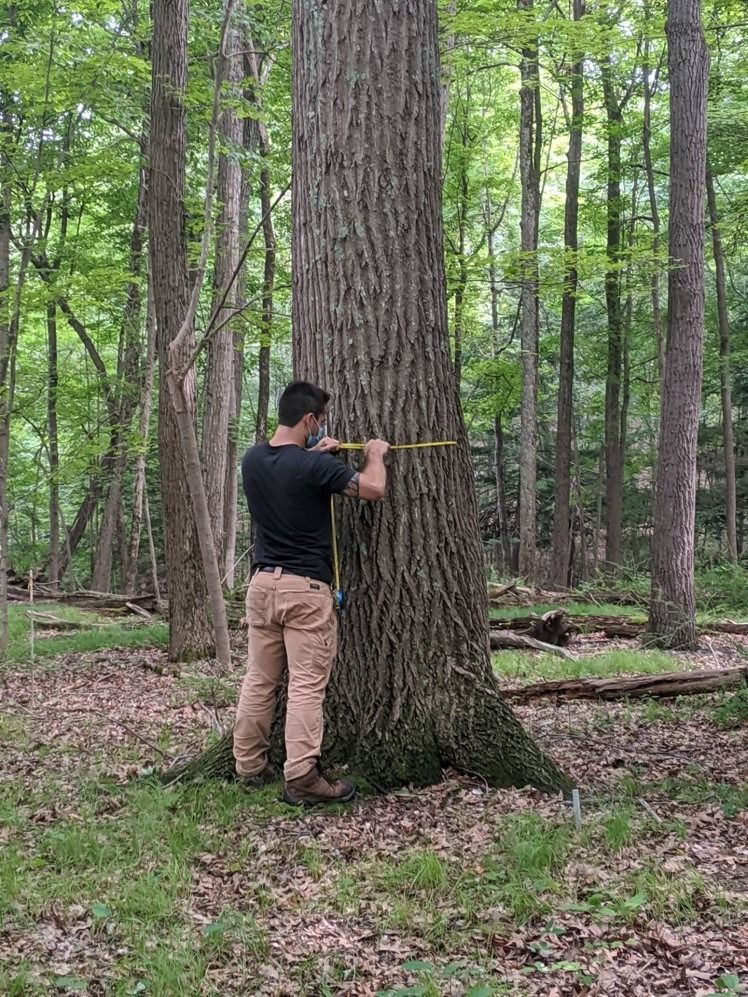
This is where I really came into my own in the field and knew it was right where I wanted to be. Working with my current mentor, I am wrapping up my graduate thesis: White-tailed Deer Harvest Success and its Impact on Forest Understory Vegetation: Evaluating Management Program Efficacy in Southeastern New York. Being as ambitious as I am, this is where I took the next step and wanted to evaluate regional deer management and its impact on the forest. Deer abundance and management have always been intriguing topics to me, but I also really wanted to know what impacts it was having on our forests. Numerous strategies are employed by land managers throughout the Hudson Valley region of New York to manage deer via lethal means. This study aims to better understand the effectiveness of different white-tailed deer removal programs (i.e., culling, archery, and firearms seasons) compared to no management in improving forest understory conditions across seven nature preserves in the Hudson Valley. To do so, I compiled historical harvests, density estimates, and vegetation data, as well as collecting supplemental data, and then curated it all into a uniform format for analysis since methods varied by site. I plan on finishing this project and defending it by the end of this summer, as well as presenting it to a handful of conferences later this year (see below for details).

Looking forward

I’m very interested in forest ecology and conservation, as well as wildlife conservation and management. I would like to advance my career and work within those topics, but I have always remained open to new things and am a true student – always willing to learn. I currently work for the Mohonk Preserve in Gardiner, NY as a Forest Vegetation Technician. I believe it will be a great step for me, as I love to collect data and conduct research centered around forest health. I would like to continue pursuing the field of deer management because it is very relevant as we continue to develop and take away from our wild areas.

I would also like to know what other factors are impacting our forest and their regeneration. Invasions of pests and invasive species have been on my radar for some time and I would love to learn more on the topic and perhaps work on mitigating their impacts. As a Forest Stewards Guild member, I’m wondering what everyone else’s opinion is on the matter in this community? What really is the greatest threat to our forests? Discussing this with other members is one thing I’d get the most out of by being a Guild member. I’ve always wanted to make a difference no matter how big or small. I know that we are not given much time in this life, but giving future generations the same opportunity to fall in love with the forest like I have would be enough for me.

Editor’s note: Ralph will be presenting his research at the following virtual conferences this year. I’m sure he’d be honored to have attendance and feedback from Guild members.

  • June 28: Black Rock Hudson Highlands Research Symposium, presentation time TBD
  • August 5: The Ecological Society of America’s Annual Conference, 1:30 – 2:30 p.m. PT
  • October 5 – 8: Student Conference on Conservation Science-New York, time TBD
  • November 3: The Wildlife Society’s Annual Conference, 2:00 – 3:00 p.m. ET

Recent Posts

By Aidan Juhl April 16, 2026
Written by Colleen Robinson
April 14, 2026
Written by Shannon Maes
April 14, 2026
In September 2025, the Guild launched a three-person Forest Stewards Apprenticeship (FSA) crew to work with the Penobscot Nation’s Department of Natural Resources (PN DNR). Over the course of their six-month season, apprentices Agenor Duhon, Gabe Stewart, and Jacob Baker shared a season of learning, collaboration, and hands-on stewardship of Penobscot Tribal lands.
April 14, 2026
This week, I stepped into the role of crew leader. We worked a full 40-hour week, splitting our time between Clifton Farms and a prescribed burn operation. On the first day in the field, we completed hack-and-squirt treatments on trees that had been marked the previous week. For the remainder of the week, we focused on marking trees for future hack-and-squirt work, maintaining a steady pace and ensuring accuracy in our selections.
April 7, 2026
As Guild members, our practice is fundamentally grounded in field observation. We know intuitively that forests are dynamic, living communities. Yet, for decades, the high-level systems used to value our work, specifically the carbon accounting ledgers tied to international frameworks like the Paris Agreement, have treated forests as static, quantifiable blocks of land. In a recent commentary published in One Earth, I argue that these legacy measurement, reporting, and verification (MRV) frameworks are failing. Ledger accounting relies on crude land-use delineations and outdated technology, effectively penalizing the natural, seasonal flux of the ecosystems we manage every day. By forcing landscapes into rigid “forest” versus “non-forest” binaries, such legacy systems miss the complex reality on the ground. But a major shift is underway.
March 18, 2026
Women have always been a part of forestry. Historically, women often helped guide family decisions about when to cut, which trees to save, and how best to steward their land for the next generation. Historical accounts from the Southern Appalachians describe women’s roles in decisions about timber harvesting and prioritizing long-term forest health. These often-uncredited contributions are even reflected in Aldo Leopold’s A Sand County Almanac (1949), in which describes his stewardship philosophy informed not only by his professional experience, but by shared responsibility, where the perspectives of his wife and daughters played an important role.
March 18, 2026
Although rural regions often host the highest concentrations of public and private forest land, they typically lack the sustainable workforce necessary for active management and stewardship. How do we address this foundational problem in forest conservation?
March 18, 2026
The Forest Stewards Guild has a unique dual mandate: practice and promote forest stewardship. Personally, I think the combination of practicing forest management and promoting best practices is what makes the Guild a vibrant and impactful organization.
February 17, 2026
We celebrate the remarkable career and legacy of Leslie (Les) Benedict, who has provided visionary leadership and dedicated service to the stewardship of forests, championing the preservation of the ecological and culturally important black ash. Benedict, a member of the Saint Regis Mohawk Tribe in Akwesasne, north of the Adirondacks in upstate New York, recently retired after serving as the Assistant Director of the Tribe’s Environment Division for over 35 years.
February 17, 2026
The Forest Stewards Guild has been working to support the National Park Service on forest stewardship projects throughout the eastern U.S. This month we are in the midst of a project to protect mounds at Effigy Mounds National Monument near Harpers Ferry Iowa. This site was designated as a National Monument in 1949 and preserves over 200 mounds built between 800 and 2,500 years ago. Mounds at this site include conical, linear, compound, and effigy mounds – constructed in the shape of animals. Please see the National Park Service page for more information about the mounds, the people who built them, and how to visit the site. The lidar images on that website of the Marching Bears and other mound groups are fascinating.
Show More