Filters in the Forest

February 18, 2021

Written by Philip ‘Henry’ Pitts, Guild student member, University of Alabama

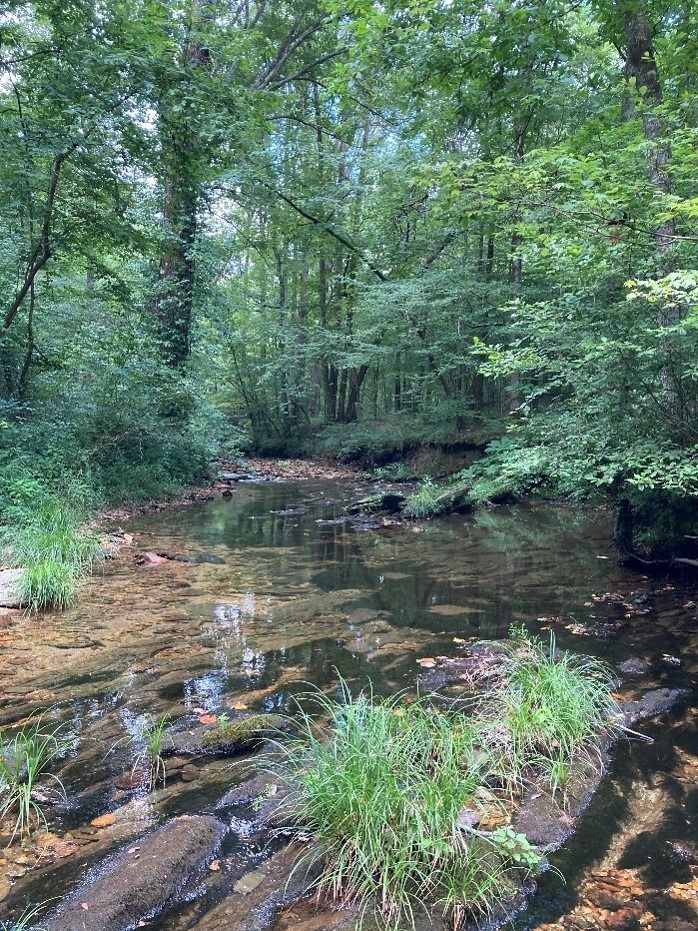
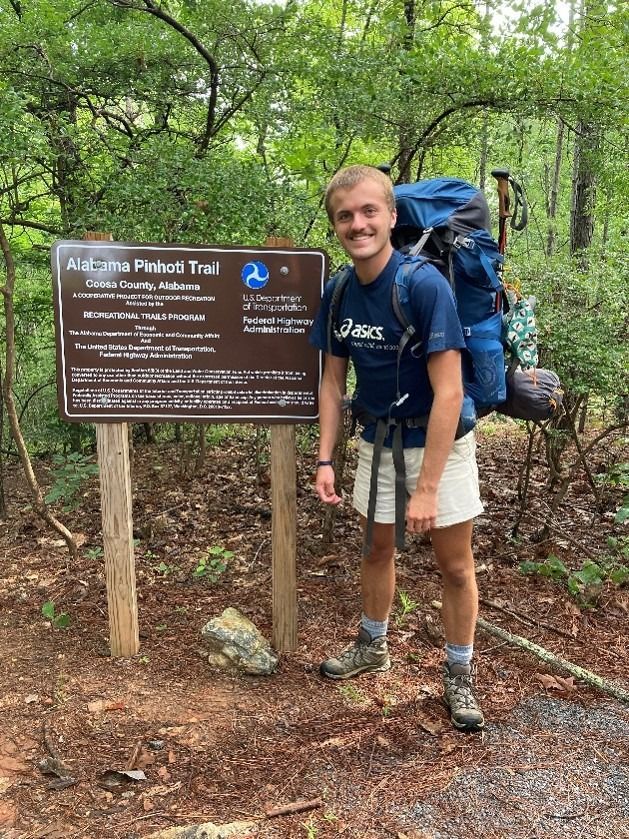
The lake emerged from behind the asphalt as if it were an oasis, a shimmering blue pool amongst shining SUVs, inviting me to replenish my dry Nalgenes and take refuge on its shores from the scorching Alabama sun. It was July of 2020 and I was attempting a through-hike of the Pinhoti, which stretches through the Talladega National Forest to join the southern terminus of the great Appalachian trail in Georgia. I was two days into the journey, having spent the first night caught in a rainstorm, and the second day marching along 11 miles of boiling rural highway, warding off country dogs and rattlesnakes with my trekking poles. Joy Lake, a manmade lake centering a small subdivision on the outskirts Sylacauga, had been my aim all day, with the trusty trail guide announcing in all caps that after this urban watering place there were “NO RELIABLE WATER SOURCES FOR 15.5 MILES !!” Despite this dire warning after one look at the water, I decided I’d rather take my chances with any intermittent streams that might have sprung up after the previous day’s showers once I was back in the forest. The concrete jungle that drained the surrounding area of the lake accumulated enough litter, oil slicks, and high levels of suspended sediments that I found myself longing for the restorative filtering efforts of forest litter and soils.

Effective forest management should address and prioritize the continued protection of riparian zones, as these areas provide invaluable habitat for endangered species, mitigate the effects of flooding, efficiently drain the catchment system, and filter any water in situ. Luckily for me Talladega National Forest benefits from effective management as I was able to find shallow, yet clear and seemingly clean water to stock up on for the blistering days ahead, despite extremely dry conditions prior to the rainfall event. Though my research interests during term time typically aligned more with water policy and water governance on a larger scale, my time on the Pinhoti fostered a newfound appreciation for the essential role of forests in water management.

Recent Posts

By Aidan Juhl April 16, 2026
Written by Colleen Robinson
April 14, 2026
Written by Shannon Maes
April 14, 2026
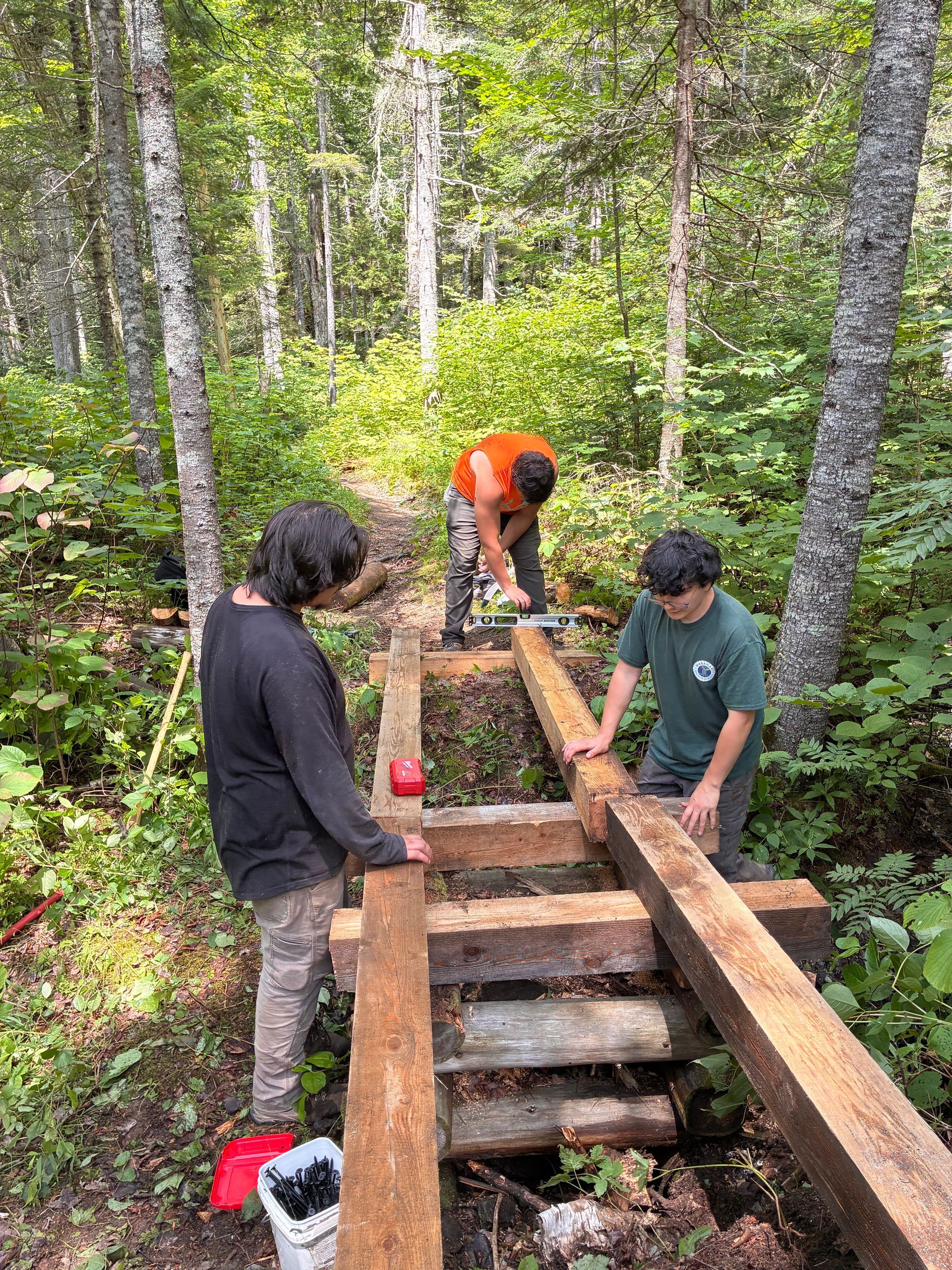
In September 2025, the Guild launched a three-person Forest Stewards Apprenticeship (FSA) crew to work with the Penobscot Nation’s Department of Natural Resources (PN DNR). Over the course of their six-month season, apprentices Agenor Duhon, Gabe Stewart, and Jacob Baker shared a season of learning, collaboration, and hands-on stewardship of Penobscot Tribal lands.
April 14, 2026
This week, I stepped into the role of crew leader. We worked a full 40-hour week, splitting our time between Clifton Farms and a prescribed burn operation. On the first day in the field, we completed hack-and-squirt treatments on trees that had been marked the previous week. For the remainder of the week, we focused on marking trees for future hack-and-squirt work, maintaining a steady pace and ensuring accuracy in our selections.
April 7, 2026
As Guild members, our practice is fundamentally grounded in field observation. We know intuitively that forests are dynamic, living communities. Yet, for decades, the high-level systems used to value our work, specifically the carbon accounting ledgers tied to international frameworks like the Paris Agreement, have treated forests as static, quantifiable blocks of land. In a recent commentary published in One Earth, I argue that these legacy measurement, reporting, and verification (MRV) frameworks are failing. Ledger accounting relies on crude land-use delineations and outdated technology, effectively penalizing the natural, seasonal flux of the ecosystems we manage every day. By forcing landscapes into rigid “forest” versus “non-forest” binaries, such legacy systems miss the complex reality on the ground. But a major shift is underway.
March 18, 2026
Women have always been a part of forestry. Historically, women often helped guide family decisions about when to cut, which trees to save, and how best to steward their land for the next generation. Historical accounts from the Southern Appalachians describe women’s roles in decisions about timber harvesting and prioritizing long-term forest health. These often-uncredited contributions are even reflected in Aldo Leopold’s A Sand County Almanac (1949), in which describes his stewardship philosophy informed not only by his professional experience, but by shared responsibility, where the perspectives of his wife and daughters played an important role.
March 18, 2026
Although rural regions often host the highest concentrations of public and private forest land, they typically lack the sustainable workforce necessary for active management and stewardship. How do we address this foundational problem in forest conservation?
March 18, 2026
The Forest Stewards Guild has a unique dual mandate: practice and promote forest stewardship. Personally, I think the combination of practicing forest management and promoting best practices is what makes the Guild a vibrant and impactful organization.
February 17, 2026
We celebrate the remarkable career and legacy of Leslie (Les) Benedict, who has provided visionary leadership and dedicated service to the stewardship of forests, championing the preservation of the ecological and culturally important black ash. Benedict, a member of the Saint Regis Mohawk Tribe in Akwesasne, north of the Adirondacks in upstate New York, recently retired after serving as the Assistant Director of the Tribe’s Environment Division for over 35 years.
February 17, 2026
The Forest Stewards Guild has been working to support the National Park Service on forest stewardship projects throughout the eastern U.S. This month we are in the midst of a project to protect mounds at Effigy Mounds National Monument near Harpers Ferry Iowa. This site was designated as a National Monument in 1949 and preserves over 200 mounds built between 800 and 2,500 years ago. Mounds at this site include conical, linear, compound, and effigy mounds – constructed in the shape of animals. Please see the National Park Service page for more information about the mounds, the people who built them, and how to visit the site. The lidar images on that website of the Marching Bears and other mound groups are fascinating.
Show More