Cassidy McCarty describes her internship experience

September 14, 2022

Written by Cassidy McCarty

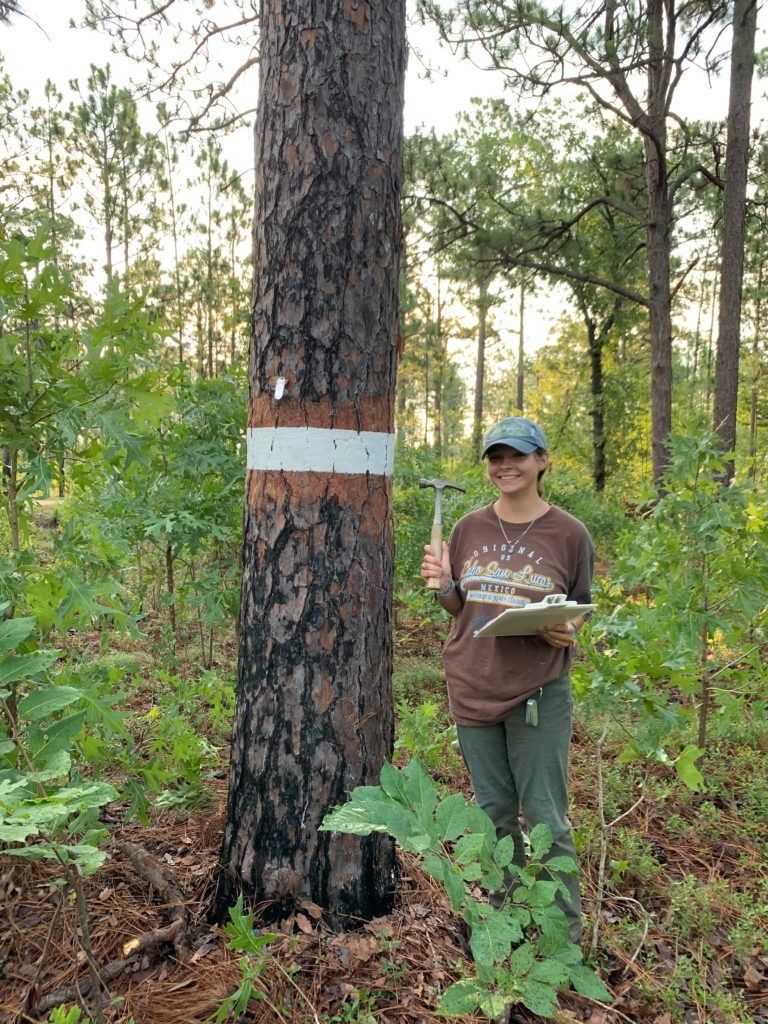
Cassidy refreshing marking paint

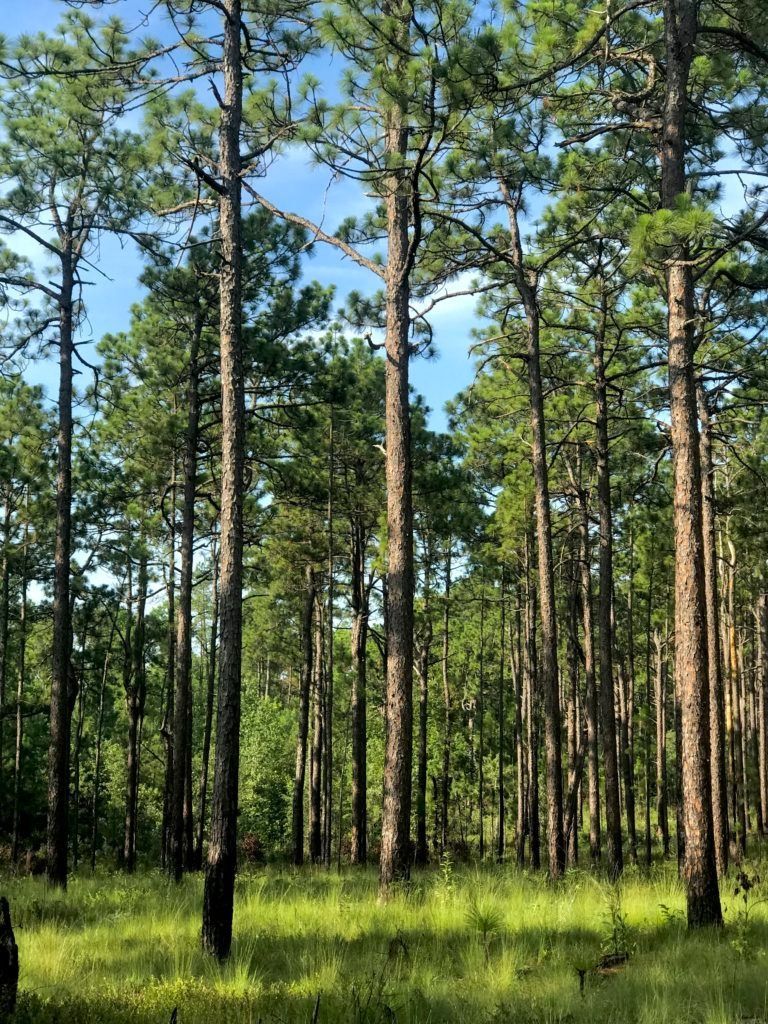
This summer I had the opportunity to spend my time in the beautiful Sandhills region of South Carolina at the Carolina Sandhills National Wildlife Refuge (CSNWR). The Sandhills are a unique longleaf pine and wiregrass ecosystem, home to many endemic and endangered species, including the Red-cockaded Woodpecker and the Pine Barrens treefrog. This was a forest community that I had never seen before, so I was shocked by the sheer number of pine trees and sand that wasn’t beside the ocean. I also didn’t know anything about the dynamics of the Sandhills before getting here, like its dependence on prescribed fire or its history of intense agricultural use.

I am currently a third-year senior studying Environmental Science at North Carolina State University in Raleigh, with minors in Forest Management and Wildlife Science. Like many other college freshmen, I entered college not knowing what I wanted to do. After some twists and turns and a change of major I came to environmental science, a broad degree that allowed me to choose a focal area and narrow in on something that interested me. With some more deliberation, I finally landed on Forestry and fell in love with it after taking a few classes, including GIS. These classes introduced me to some of the equipment and concepts I ended up using this summer but I was nowhere near accomplished in this field. I came to CSNWR eager to apply what I learned in the classroom and dive deeper into the world of conservation forestry, especially in the public sector.

Trees at CSNWR

While I was at CSNWR, I worked under the Forester and with two other interns; Hope (also from the Guild) and Christopher. Our days were mostly filled with marking and cruising timber as a part of
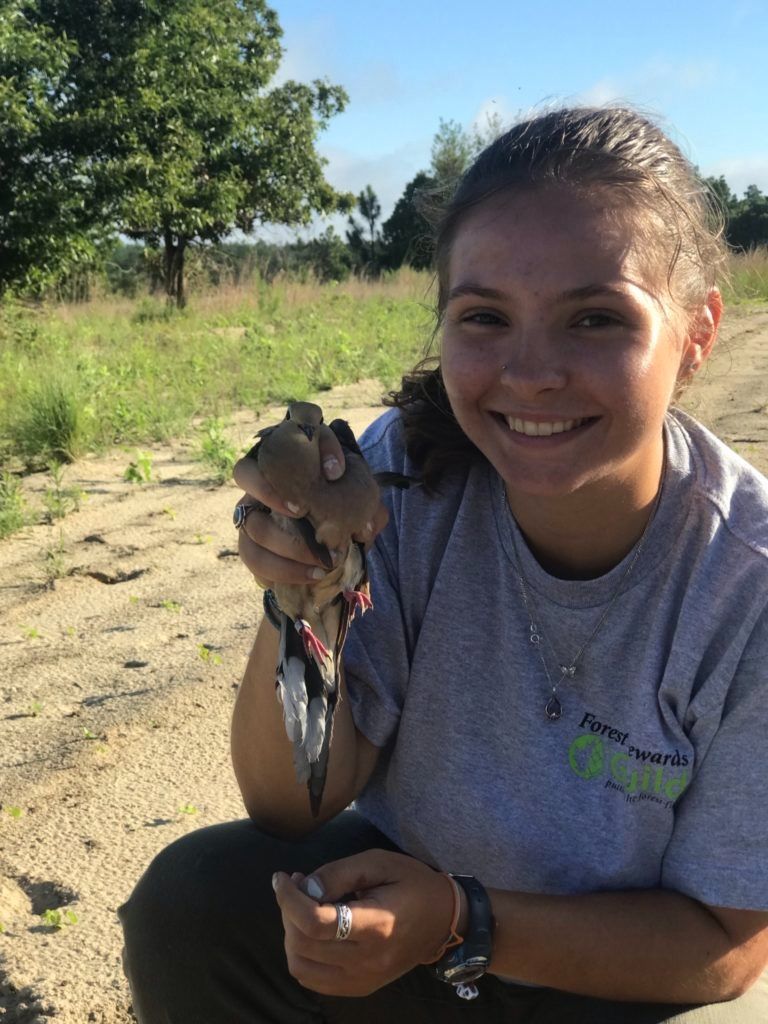
our bobwhite quail focal area prescription for the South Carolina Bobwhite Initiative. We were marking approximately 200 acres down to a 40-50 basal area, which promotes grass growth, the preferred cover for quail. We also marked 250 acres of timber for a regular sale at our sister refuge, Pee Dee NWR, in Wadesboro, North Carolina. Our other major projects were managed by the wildlife biologist. The Red-cockaded Woodpecker trees are identified with a white band painted at breast height around the cavity trees. Our job was to repaint the trees that were due for fresh paint, which led us to almost every corner of the refuge because the clusters are scattered throughout the 47,850 acres that make up CSNWR. We also banded 100 doves for the SCDNR, which involved setting traps at dawn, then aging, sexing, and recording each dove. When we weren’t doing any of that, we did miscellaneous tasks for refuge management and visitor experience, including lots of lawn care (I learned how to use a zero-turn lawn mower – one of the highlights of my summer), trail maintenance, boundary painting, compound water level control, and even refolding brochures on rainy days. Most importantly, I spent every day learning from my coworkers, who all had different backgrounds and taught me something unique (everything from reptile ID to using ratchet straps) and applying topics I had learned in my classes in the field.

Cassidy McCarty

As for my future, I would love to do something similar to what I did at Carolina Sandhills. I’m currently enrolled in a Wildlife Habitat Management course and am loving every bit of it! I would love to work for some governmental organization doing something that improves habitat and the environment through forestry practices. I’m also in the process of getting my NWCG Firefighter Type 2 certification and would love to work as a Forestry Tech for fire after graduating.

I want to fulfill my goal of having a career outdoors that I love. I am incredibly grateful for my time at Carolina Sandhills and for the Forest Stewards Guild for giving me this opportunity! If you would like to contact me with any questions or comments, my email is csmccart@ncsu.edu !

Editor’s note: The Forest Stewards Guild has partnered with the US Fish and Wildlife Service for the last several years to provide students with hands-on experiences to learn how forestry and wildlife management work together on public lands. These 12-week positions are hired by the Guild and supervised and based at the Carolina Sandhills National Wildlife Refuge in McBee, South Carolina. 
 
Cassidy McCarty and Hope Knoll were selected from a strong pool of applicants for these positions and both interns did a wonderful job. We are featuring articles written by each of them. Check back next month for Hope’s article. We wish them both all the best as they complete their education and enter the work force. 
 
We will be offering this 12-week summer internship again in 2023. Be on the lookout for a posting next spring at 
http://foreststewardsguild.org /jobs . Pease also check this page for other opportunities with the Guild and our terrific partners. If you would like to help recruit well-deserving and potentially interested students, or if you would like to apply yourself and have questions, please contact Shawn Swartz at shawn@forestguild.org or 828-216-6470.

Recent Posts

By Aidan Juhl April 16, 2026
Written by Colleen Robinson
April 14, 2026
Written by Shannon Maes
April 14, 2026
In September 2025, the Guild launched a three-person Forest Stewards Apprenticeship (FSA) crew to work with the Penobscot Nation’s Department of Natural Resources (PN DNR). Over the course of their six-month season, apprentices Agenor Duhon, Gabe Stewart, and Jacob Baker shared a season of learning, collaboration, and hands-on stewardship of Penobscot Tribal lands.
April 14, 2026
This week, I stepped into the role of crew leader. We worked a full 40-hour week, splitting our time between Clifton Farms and a prescribed burn operation. On the first day in the field, we completed hack-and-squirt treatments on trees that had been marked the previous week. For the remainder of the week, we focused on marking trees for future hack-and-squirt work, maintaining a steady pace and ensuring accuracy in our selections.
April 7, 2026
As Guild members, our practice is fundamentally grounded in field observation. We know intuitively that forests are dynamic, living communities. Yet, for decades, the high-level systems used to value our work, specifically the carbon accounting ledgers tied to international frameworks like the Paris Agreement, have treated forests as static, quantifiable blocks of land. In a recent commentary published in One Earth, I argue that these legacy measurement, reporting, and verification (MRV) frameworks are failing. Ledger accounting relies on crude land-use delineations and outdated technology, effectively penalizing the natural, seasonal flux of the ecosystems we manage every day. By forcing landscapes into rigid “forest” versus “non-forest” binaries, such legacy systems miss the complex reality on the ground. But a major shift is underway.
March 18, 2026
Women have always been a part of forestry. Historically, women often helped guide family decisions about when to cut, which trees to save, and how best to steward their land for the next generation. Historical accounts from the Southern Appalachians describe women’s roles in decisions about timber harvesting and prioritizing long-term forest health. These often-uncredited contributions are even reflected in Aldo Leopold’s A Sand County Almanac (1949), in which describes his stewardship philosophy informed not only by his professional experience, but by shared responsibility, where the perspectives of his wife and daughters played an important role.
March 18, 2026
Although rural regions often host the highest concentrations of public and private forest land, they typically lack the sustainable workforce necessary for active management and stewardship. How do we address this foundational problem in forest conservation?
March 18, 2026
The Forest Stewards Guild has a unique dual mandate: practice and promote forest stewardship. Personally, I think the combination of practicing forest management and promoting best practices is what makes the Guild a vibrant and impactful organization.
February 17, 2026
We celebrate the remarkable career and legacy of Leslie (Les) Benedict, who has provided visionary leadership and dedicated service to the stewardship of forests, championing the preservation of the ecological and culturally important black ash. Benedict, a member of the Saint Regis Mohawk Tribe in Akwesasne, north of the Adirondacks in upstate New York, recently retired after serving as the Assistant Director of the Tribe’s Environment Division for over 35 years.
February 17, 2026
The Forest Stewards Guild has been working to support the National Park Service on forest stewardship projects throughout the eastern U.S. This month we are in the midst of a project to protect mounds at Effigy Mounds National Monument near Harpers Ferry Iowa. This site was designated as a National Monument in 1949 and preserves over 200 mounds built between 800 and 2,500 years ago. Mounds at this site include conical, linear, compound, and effigy mounds – constructed in the shape of animals. Please see the National Park Service page for more information about the mounds, the people who built them, and how to visit the site. The lidar images on that website of the Marching Bears and other mound groups are fascinating.
Show More