Black Lake Prescribed Burn 2024 Summary

December 17, 2024

Written by Sam Berry

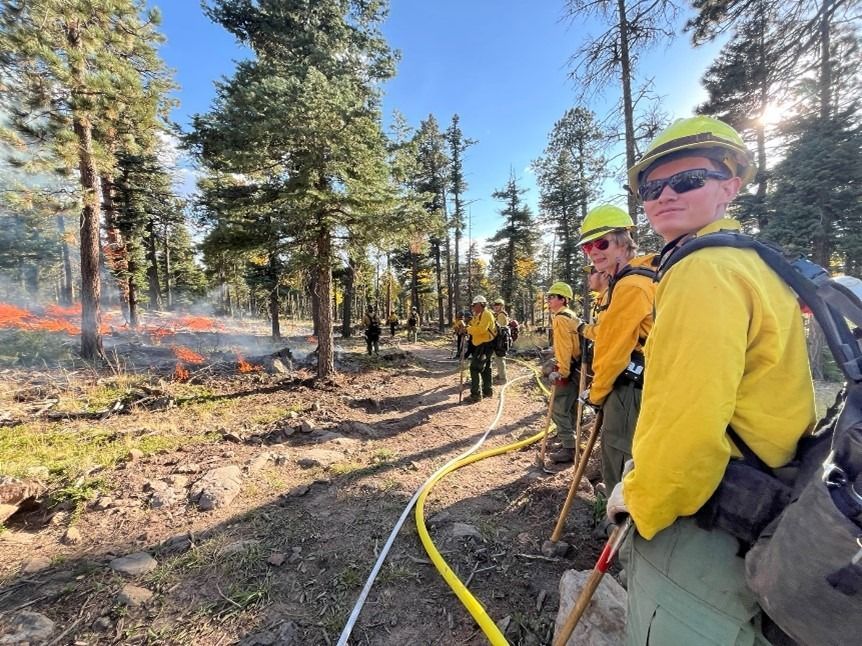
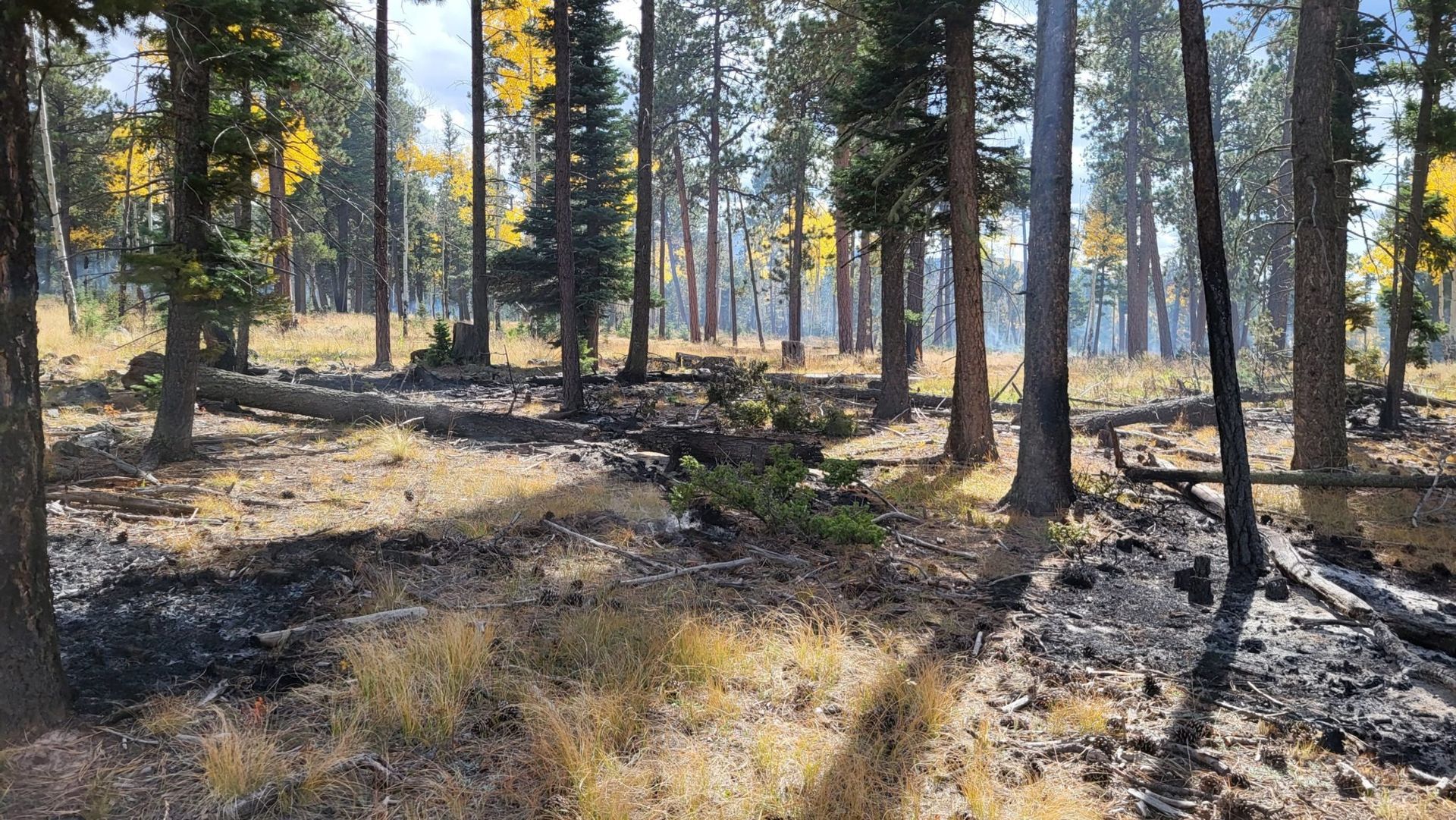
On Monday afternoon October 14, 2024, people in boots and green pants were geared up. Pumps were running. The first fire hit the ground in the top corner of the prescribed burn unit that this team had been making plans to burn for 4 years. What we called the Belly unit is 270-acres within the Black Lake area of New Mexico State Land Office (SLO) lands. The area has been managed for years to its current state as a beautiful mix of ponderosa pine savannah and mixed conifer forests with pockets of aspen. After a wet summer, thigh-high grass stood in most of the unit, obscuring the slash from previous logging operations that created the open forest. It was a prime example of a fire adapted ecosystem lacking fire, until now.

Many iterations of forest management have occurred here, including collaborative prescribed burns dating back as far as 2013. Many of the lower elevation areas have been burned already, but the rolling hill of the Belly was just a little out of reach. During the last burn in 2021 a mix of partners successfully burned to the south and east of the Belly, but the north line of the Belly bordered a thick drainage that hadn’t been treated and had the potential to turn any escaped fire in that drainage into a roaring head fire. 

In 2023 the Forest Stewards Guild with SLO and partners from the Nature Conservancy and local fire departments including Angel Fire Fire Department, and Moreno Valley Fire Department, took a closer look at how to implement the burn and worked to prep the unit. Using a dozer line and moving heavy concentrations of fuel away from the lines to the interior of the unit to lessen fire intensity, we mitigated the risk on the north line. We were ready to mobilize in October last year but never found a weather window as an early, wet winter set in. We had to set our sights for the fall of 2024, and a redo of all of our preparations and public meetings.

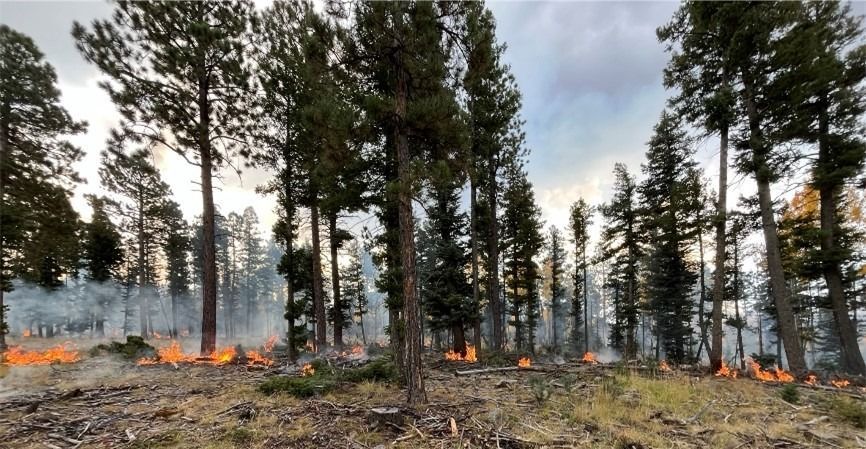
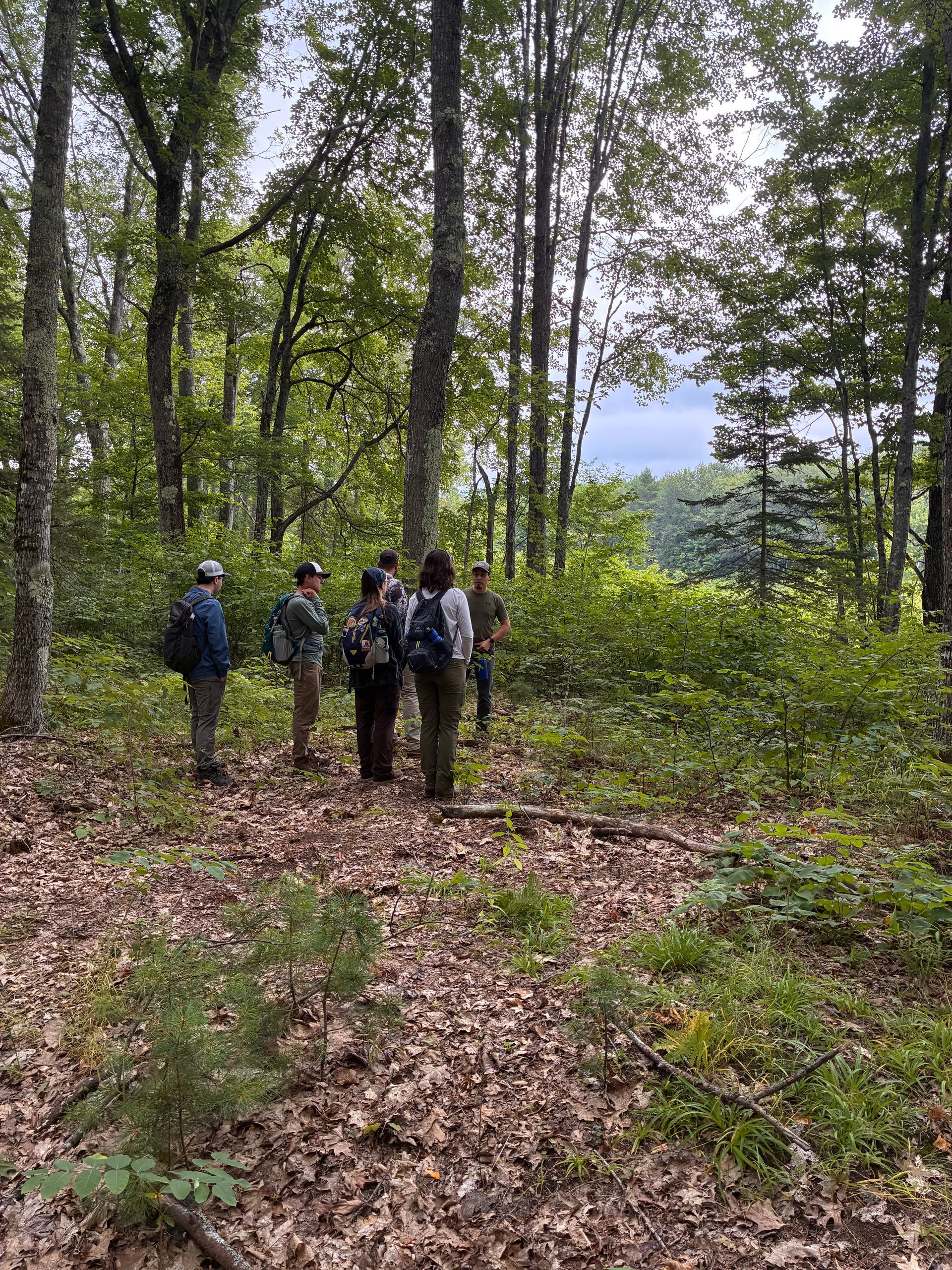
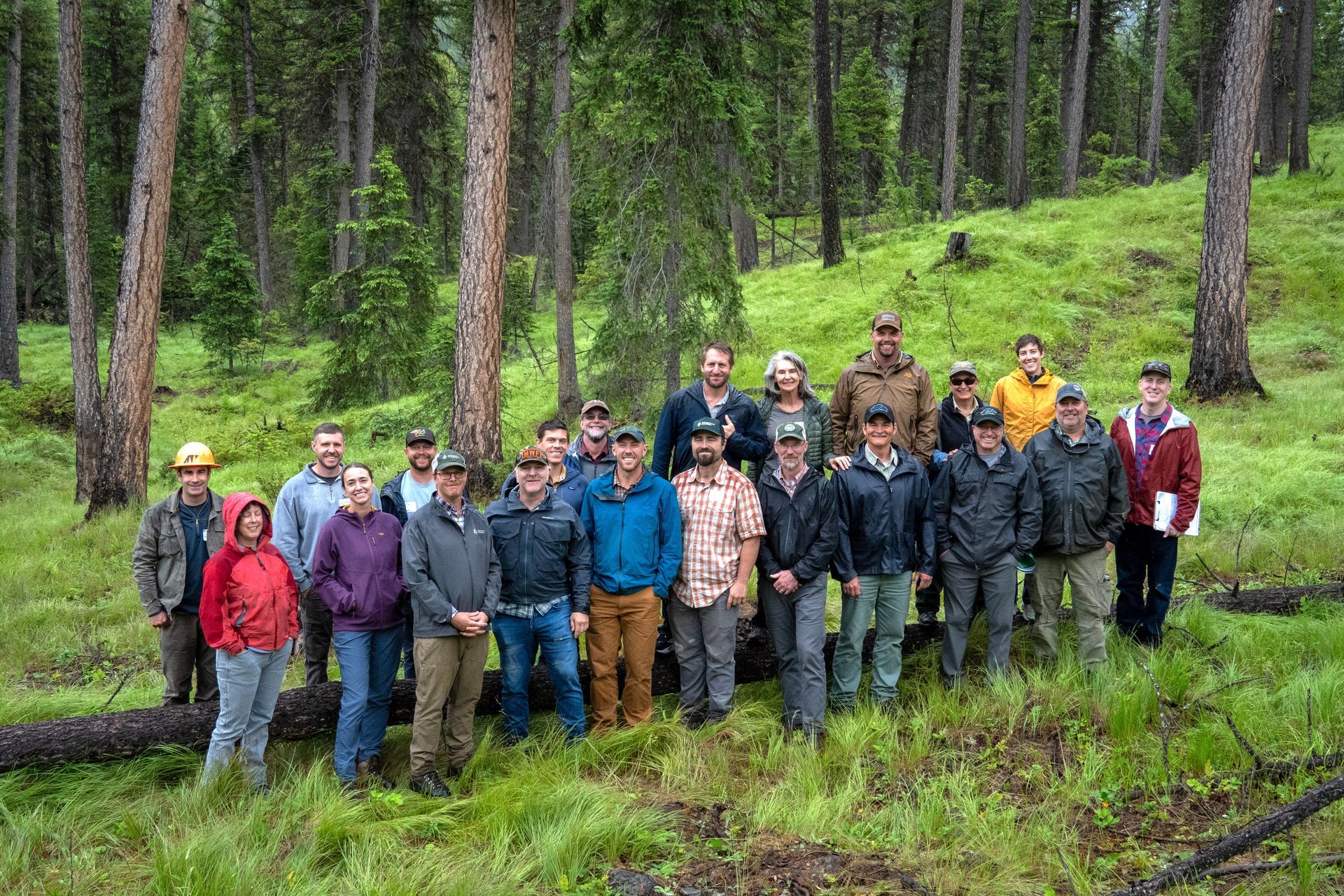
So, on this more recent Monday afternoon, members of the Forest Stewards Youth Corps, freshly trained in wildland fire, with seasoned staff from the Guild, AFFD, Santa Clara Pueblo, TNC, and Moreno Valley Fire Department, stood by anxiously for the conclusion of briefing and for the first fire to be lit. The test fire went well with fire consuming the old logging slash and heating some of the surrounding trees, but with minimal scorching. The high grass that looked so flammable beforehand, had just enough green in its stems from the wet summer, to prevent it from burning as quickly as we expected. The test fire successfully showed us the deviations between our expectations and reality, and got everyone ready for burning for the rest of the week.

A cold front was moving in later that week bringing precipitation, and in the hours leading up to it, high winds that could test our control lines. Collaborative burns are tricky to get all the people and equipment from a wide array of organizations in the same place at the same time and have the weather cooperate as well. Our good forecast from the week before when we decided to mobilize was starting to look less than ideal.

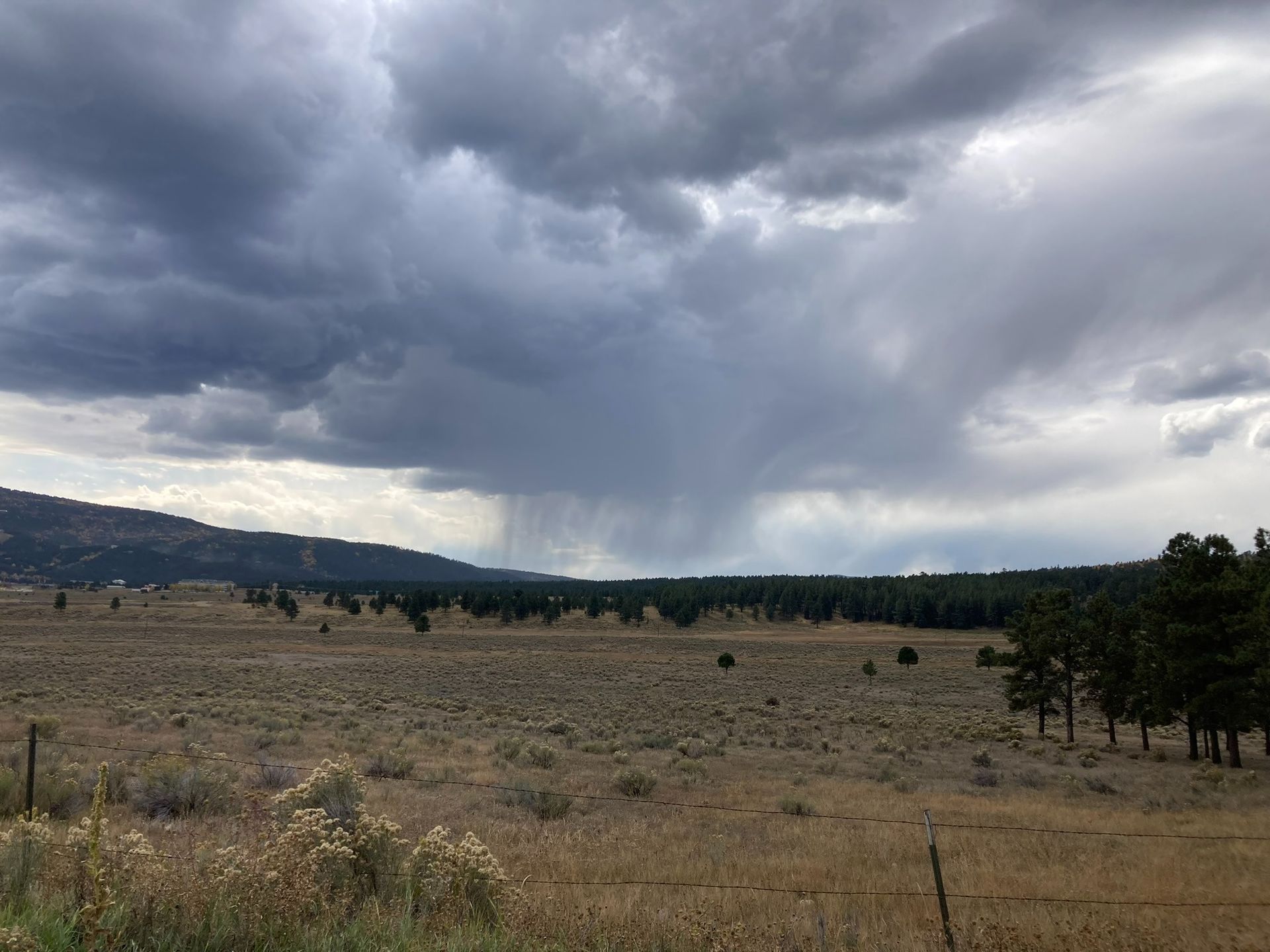
After weighing the risks, and some long discussions, the burn boss from TNC, Jeremy Bailey, and his Trainee, Chris Romo from AFFD, mobilized us to continue from the test fire, and the firing bosses and holding bosses worked in tandem to bring fire along the flanks of the unit. With only a small chance of rain in the forecast we leapt into action and started creating our black lines along the edges of the unit. Everything was going great until that small chance of rain materialized in the form of brief sprinkles and the unit got wet enough that only the largest, driest logs and snags were catching fire. However, to capitalize on having so many people there and ready to work, a quick-thinking holding boss, Sarah DeMay, put everyone to work piling and burning heavy fuels along the edge of the burn. Our hopes dampened by not knowing if we’d get a chance to keep burning the rest of the Belly, this at least allowed us to burn up a lot more fuel that could cause problems with future burns in this unit. Since these forests experience fires as frequently as every 7 years, we knew our efforts today would benefit us when we come back to burn the unit again. The sprinkles ended as quickly as they started. The forecast looked positive for the next day. 

The third day started with slightly overcast skies and tempered expectations. The sun just peaked out as the firing bosses (Will Joy from the Nature Conservancy and Sam Berry of the Guild), and their trainees resumed their plans to burn along the edges of the unit. Although the grass wasn’t burning, pockets of dry needles and slash were taking fire well. The sun came out in full force briefly in the afternoon and the winds picked up and we rallied to start sending burners through the interior of the Belly, to return fire to those big old ponderosas that probably hadn’t seen fire in a hundred years. Just as that organized grid of 10 ignitors made their way through the unit and were going for a turn back through, the fire effects monitors called over the radio that a storm was spotted moving our way and the first drops of rain started plinking on our hardhats again, sending our sprits down again.

The next day was spent securing the burn before rain chased us off the hill and made the roads too slick to drive. Although our fire effects were not what we would have hoped for, it was a good first entry to a previously unburned unit, and strong collaborative burn effort. The team of folks, some of whom had never been on a burn nor worked together, performed a smooth operation. We also removed a great deal of fuel from the edges of the Belly, where we had anxiously made plans earlier that summer for how to carefully apply fire when we had the worst fire behavior in mind. This makes future burning in the Belly a safter proposition. The burn was also a huge success with training of burn boss, firing boss, engine boss, and fire effects monitor trainees, plus many people learning a wide variety of skills, from using a drip torch, to effectively putting out a burning stump hole, and even how to avoid hypothermia in the wild swings of New Mexico weather. Although the weather is out of our control and less predictable every year, the foundation of a strong burn team is a wise investment to carry this work together into the future. 

Recent Posts

By Aidan Juhl April 16, 2026
Written by Colleen Robinson
April 14, 2026
Written by Shannon Maes
April 14, 2026
In September 2025, the Guild launched a three-person Forest Stewards Apprenticeship (FSA) crew to work with the Penobscot Nation’s Department of Natural Resources (PN DNR). Over the course of their six-month season, apprentices Agenor Duhon, Gabe Stewart, and Jacob Baker shared a season of learning, collaboration, and hands-on stewardship of Penobscot Tribal lands.
April 14, 2026
This week, I stepped into the role of crew leader. We worked a full 40-hour week, splitting our time between Clifton Farms and a prescribed burn operation. On the first day in the field, we completed hack-and-squirt treatments on trees that had been marked the previous week. For the remainder of the week, we focused on marking trees for future hack-and-squirt work, maintaining a steady pace and ensuring accuracy in our selections.
April 7, 2026
As Guild members, our practice is fundamentally grounded in field observation. We know intuitively that forests are dynamic, living communities. Yet, for decades, the high-level systems used to value our work, specifically the carbon accounting ledgers tied to international frameworks like the Paris Agreement, have treated forests as static, quantifiable blocks of land. In a recent commentary published in One Earth, I argue that these legacy measurement, reporting, and verification (MRV) frameworks are failing. Ledger accounting relies on crude land-use delineations and outdated technology, effectively penalizing the natural, seasonal flux of the ecosystems we manage every day. By forcing landscapes into rigid “forest” versus “non-forest” binaries, such legacy systems miss the complex reality on the ground. But a major shift is underway.
March 18, 2026
Women have always been a part of forestry. Historically, women often helped guide family decisions about when to cut, which trees to save, and how best to steward their land for the next generation. Historical accounts from the Southern Appalachians describe women’s roles in decisions about timber harvesting and prioritizing long-term forest health. These often-uncredited contributions are even reflected in Aldo Leopold’s A Sand County Almanac (1949), in which describes his stewardship philosophy informed not only by his professional experience, but by shared responsibility, where the perspectives of his wife and daughters played an important role.
March 18, 2026
Although rural regions often host the highest concentrations of public and private forest land, they typically lack the sustainable workforce necessary for active management and stewardship. How do we address this foundational problem in forest conservation?
March 18, 2026
The Forest Stewards Guild has a unique dual mandate: practice and promote forest stewardship. Personally, I think the combination of practicing forest management and promoting best practices is what makes the Guild a vibrant and impactful organization.
February 17, 2026
We celebrate the remarkable career and legacy of Leslie (Les) Benedict, who has provided visionary leadership and dedicated service to the stewardship of forests, championing the preservation of the ecological and culturally important black ash. Benedict, a member of the Saint Regis Mohawk Tribe in Akwesasne, north of the Adirondacks in upstate New York, recently retired after serving as the Assistant Director of the Tribe’s Environment Division for over 35 years.
February 17, 2026
The Forest Stewards Guild has been working to support the National Park Service on forest stewardship projects throughout the eastern U.S. This month we are in the midst of a project to protect mounds at Effigy Mounds National Monument near Harpers Ferry Iowa. This site was designated as a National Monument in 1949 and preserves over 200 mounds built between 800 and 2,500 years ago. Mounds at this site include conical, linear, compound, and effigy mounds – constructed in the shape of animals. Please see the National Park Service page for more information about the mounds, the people who built them, and how to visit the site. The lidar images on that website of the Marching Bears and other mound groups are fascinating.
Show More