Another Guild Gathering to remember

June 14, 2019

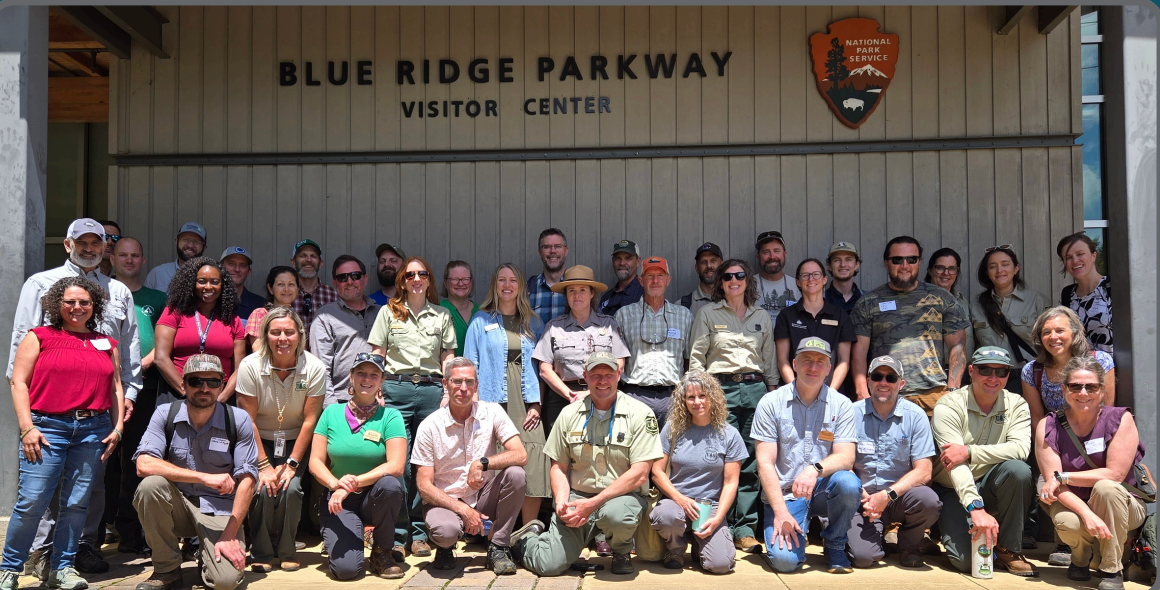
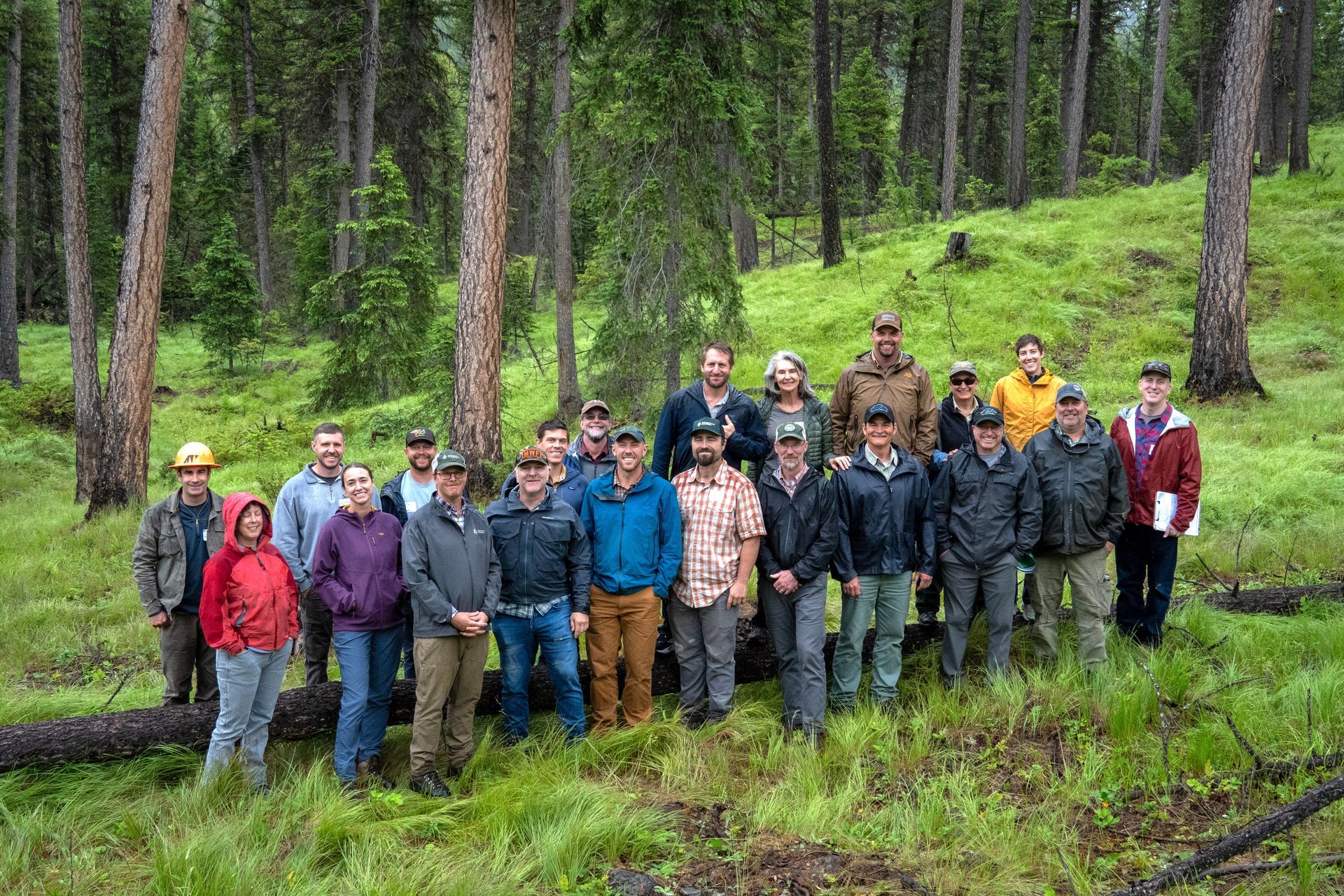
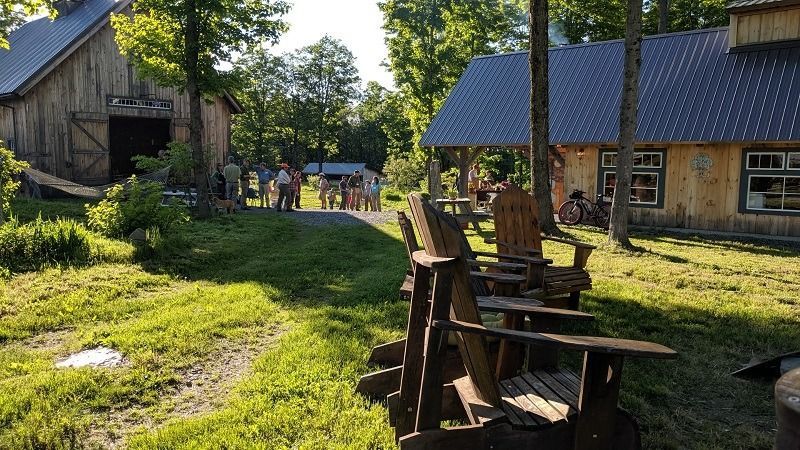
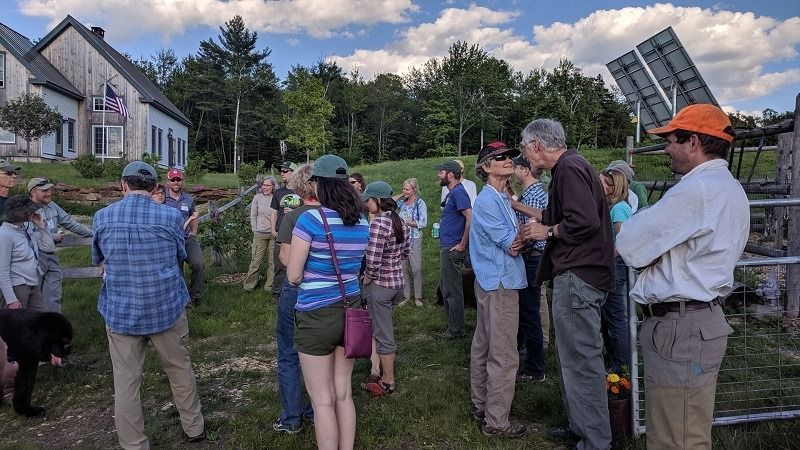
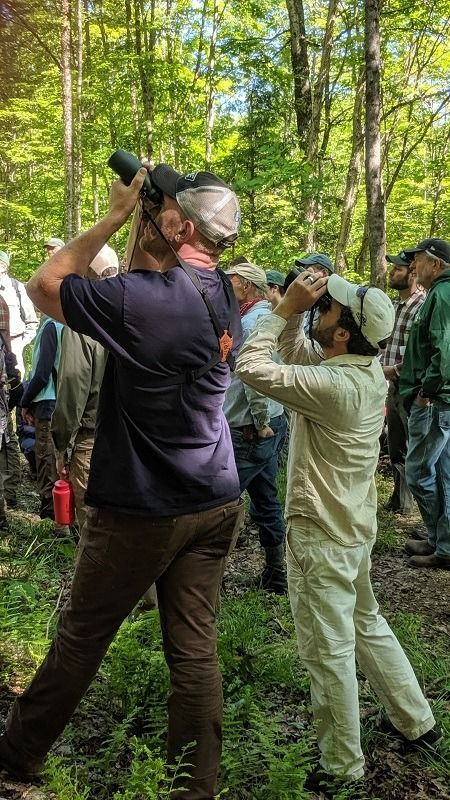
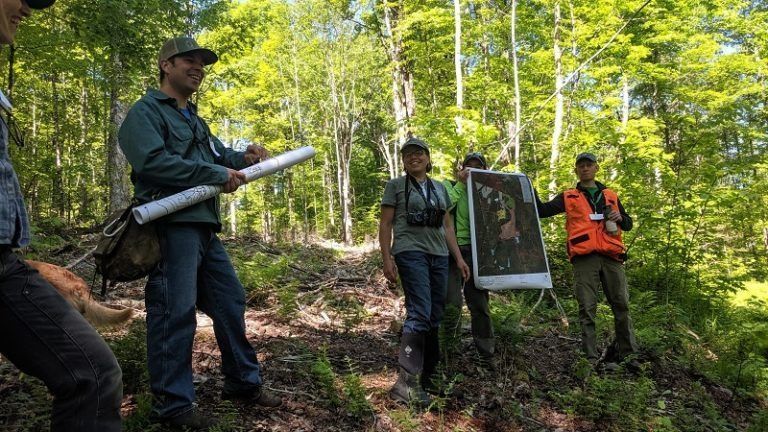
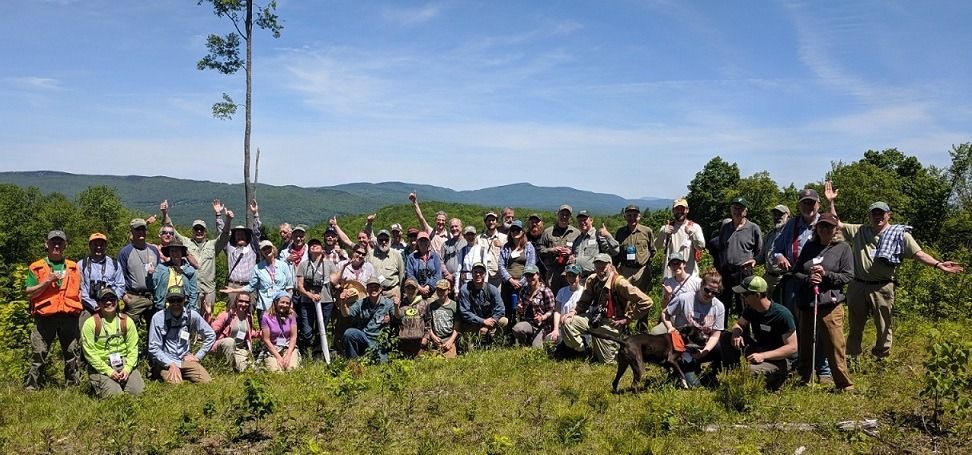
In early June, in rural New Hampshire, accompanied by beautiful weather and kind people, more than 50 Guild members and friends gathered to do one of the things we do best – learn from each other and the land.

The setting was the stunning Stone Fence Farm, owned by Guild members Laura French and Jeremy Turner of Meadowsend Timberlands, Ltd. Laura and Jeremy know their property well, as if they have spent every meal, workday and playtime hour with it, getting to know its features and nuances. In fact, I think they have spent all that time focused on their property, and others like it, which offer countless opportunities to model responsible forestry and help the landscape become more resilient.

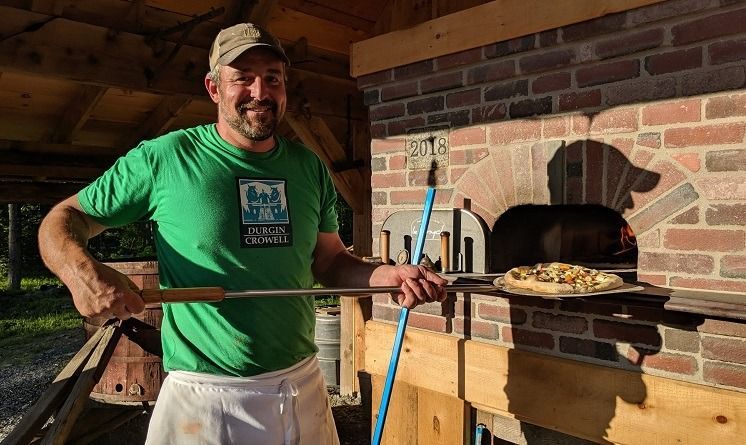
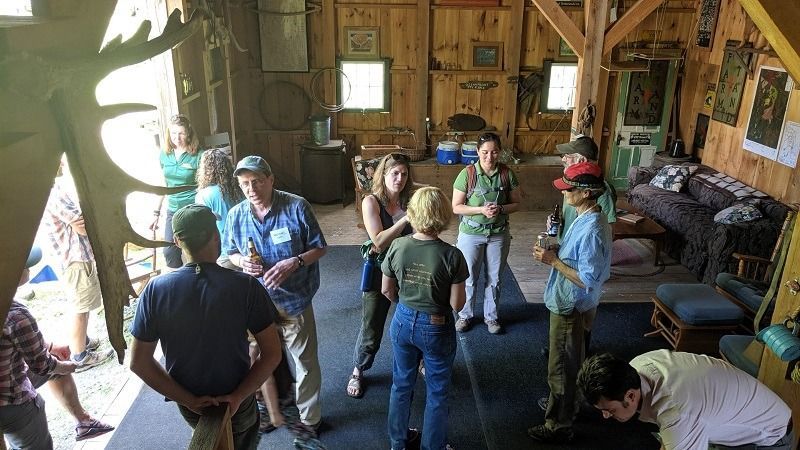
A garden and orchard dedicated to their own food production and eventual sales and educational tours, a quality home built sustainably with love from many contributors, the nicest sugar house I’ve ever seen, and a barn you could call home with site-specific historical artifacts, make up just one small part of this overall property. It’s the part where we gathered for wood fired meals from the wood oven at the sugar house, a campfire, tent camping and barn sleeping, general visiting, and petting the resident dogs.

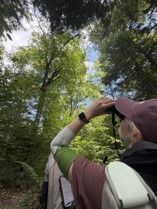
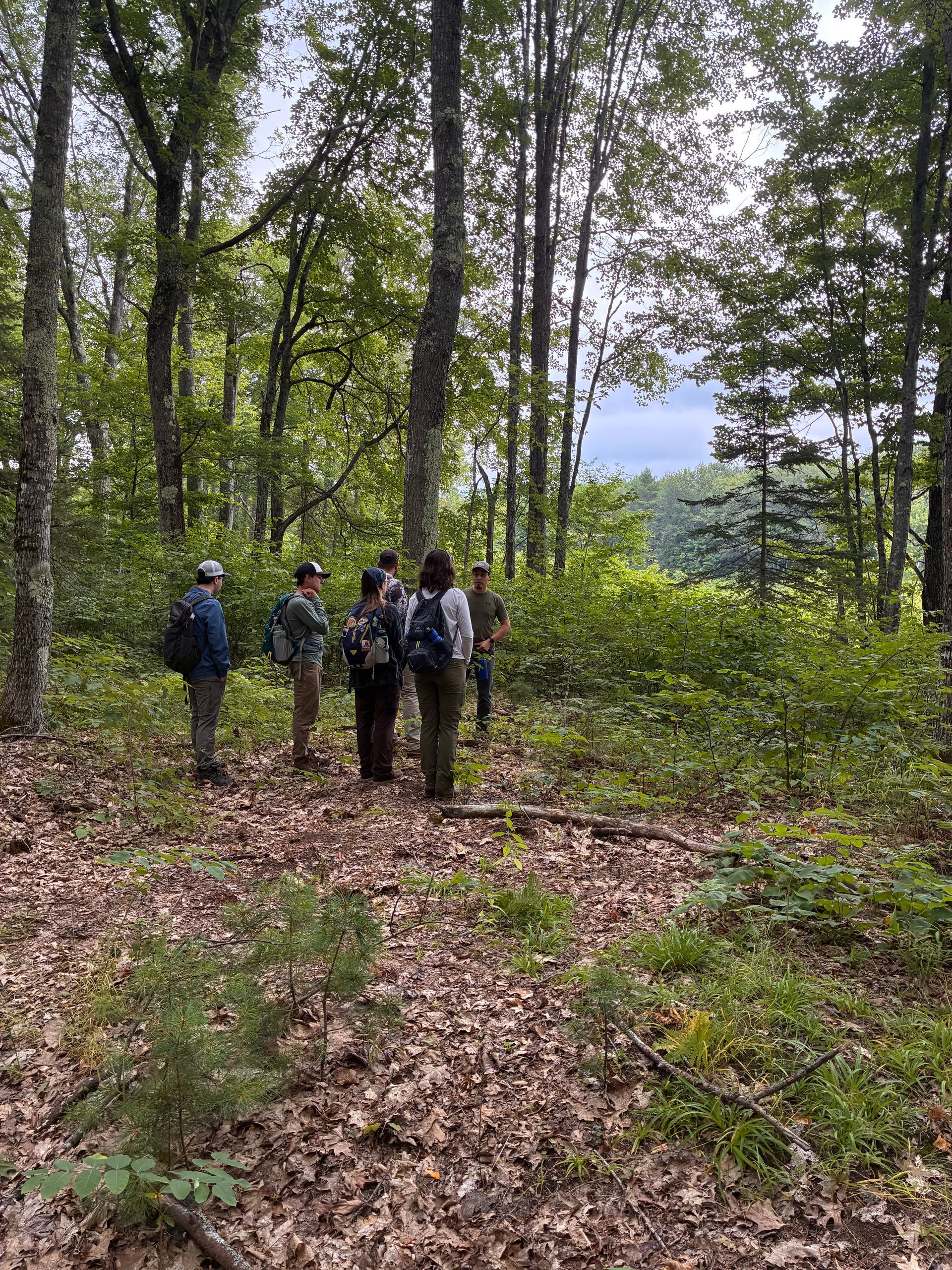
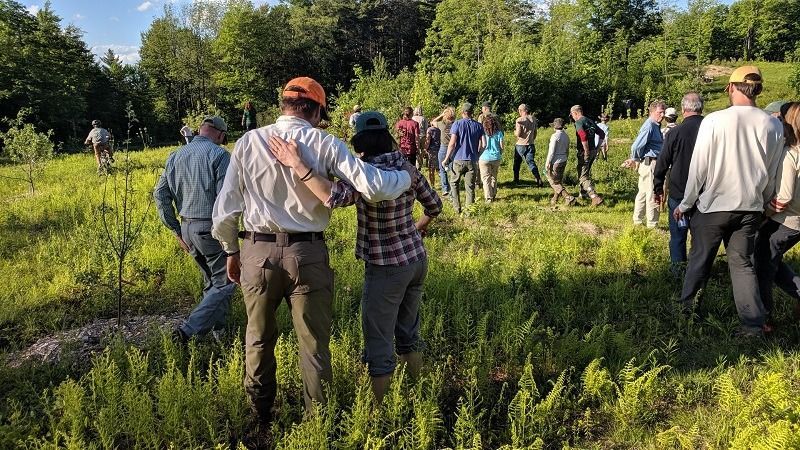
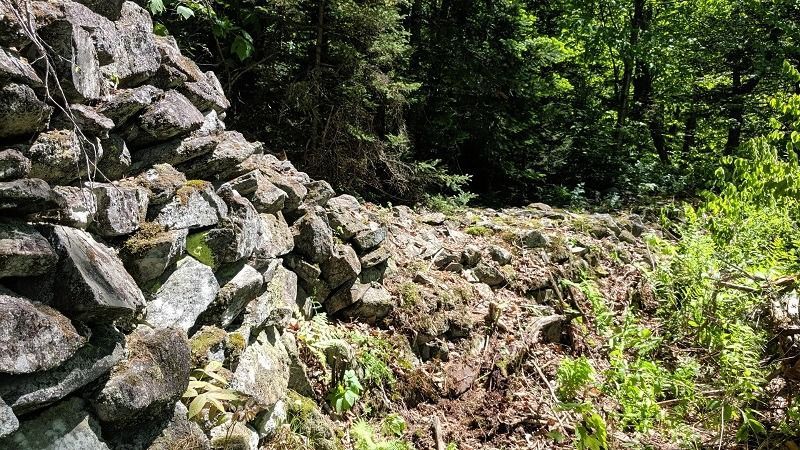
The rest of the property ranges from sugar maple stands slated for maple syrup production, to spruce-fir stands that Laura and Jeremy are helping to revive as they manage the area to offer them a second chance in a crowded section of forest. They have wildlife very much in mind too. We heard a nearly constant collection of bird songs and visited small and large gaps created to help them and other species thrive with the use of these additional respites in the landscape. The gaps were created strategically and helped make other management projects on the property easier to complete. Thoughtful management includes plans for activities, such as the sugar bush, in areas that can make use of the best historical logging roads on the property, limiting erosion potential. Much thinning and one prescribed burn have occurred on the property in the ten years Laura and Jeremy have owned it and in all cases they were intimately involved with choosing the companies and people who did the work. This property is graced with owners who understand that the land has so much to teach us, and in turn, the management they do on this land is designed to maintain those teachings. Laura showed us specific trees they made sure were left in thinning operations, careful work after thinning to reinforce and hold the land and soils newly exposed, and examples of hard hours spent creating fire breaks in dense shrubland.

So many ideas were shared. Laura and Jeremy asked for input the entire two days, taking advantage of the wealth of expertise present in their woods for this event. Guild members in attendance included state and federal agency employees, foresters, wildlife managers, biologists, landowners, Guild Board, Founding, and Membership and Policy Council members, students, Guild staff, other non-profit employees, retired professionals in natural resources and many more. Even young children and plenty of canine companionship made the event richer!

As for what it all meant for those present, I’ll paraphrase some of what we heard in closing on the last day:

1. “In conversations throughout the day I’m reminded of how many perspectives there are regarding management. Sharing and discussing these has us think more deeply about our work and choices.”

2. “Its never too late to learn something new. Thank you for completely opening your property to all of us. We have a diverse group here; climate scientists from down south, people from Oregon and the Midwest. This has been really cool.”

3. “This property is the best candidate for the National Best Tree Farm designation, and it would be New Hampshire’s first.”

4. “The tightness between the original dreams of what a few people might be able to do, and what has just been done ‘yesterday’ is remarkable and it has longevity written all over it.”

5. “For me its always been about the people. There is something completely different about this sub-species of natural resource professionals. There is an intellectual enthusiasm for the practice of forest management. Most other foresters I deal with are just going through the motions and doing what they are told. Age, gender, expertise, and geographical diversity in the Guild is well beyond most forestry organizations. I’m reassured emotionally that I am part of a group.”

6. “Very well-planned, well-executed field tour. I’m struck by seeing regeneration in the forest as a sign of sustainable management and looking at our own organization’s growth and inclusion of young people in the same way.”

7. “Having you here has been so humbling. We feel so honored.” – Laura

8. “As a young, early-career person this gave me a chance after a cross-country move to re-engage in a community like this to see where my science careers could fit into this world.”

9. “Being able to talk to people from across the country and locally and bounce ideas off of people who are just as interested in what I’m doing as I am in what they are doing is really revitalizing.”

10. “The narrative of this place is an amalgamation of people and circumstances. It’s the people here today directly and indirectly that have made it possible. Its really rewarding to see what is going on through the lens of people like you.” – Jeremy

11. “I have a lot in my environmental education world telling me I could throw in the towel because young people want to play video games and we must protect them from Lyme Disease, etc. This event validates my beliefs that stray from that – children have a natural connection to environment, and it is a huge disservice to society to not nurture those connections. They were nurtured well here. I appreciate the work the Guild does to consider and support the next generation of forest stewards all the way down to simply including them in events when they are young and feeding that passion and whatever they are interested in. And I appreciate the model Laura and Jeremy have provided in letting children be children, dogs be dogs, and the forest be the forest, not in a hands-off way, but from a perspective that they all have as much to teach us as we have to offer them. It’s a way of thinking that is sustainable in the woods and out.”

Thank you to all who were involved with this event. It was truly unique and a Guild Gathering to remember.

Recent Posts

By Aidan Juhl April 16, 2026
Written by Colleen Robinson
April 14, 2026
Written by Shannon Maes
April 14, 2026
In September 2025, the Guild launched a three-person Forest Stewards Apprenticeship (FSA) crew to work with the Penobscot Nation’s Department of Natural Resources (PN DNR). Over the course of their six-month season, apprentices Agenor Duhon, Gabe Stewart, and Jacob Baker shared a season of learning, collaboration, and hands-on stewardship of Penobscot Tribal lands.
April 14, 2026
This week, I stepped into the role of crew leader. We worked a full 40-hour week, splitting our time between Clifton Farms and a prescribed burn operation. On the first day in the field, we completed hack-and-squirt treatments on trees that had been marked the previous week. For the remainder of the week, we focused on marking trees for future hack-and-squirt work, maintaining a steady pace and ensuring accuracy in our selections.
April 7, 2026
As Guild members, our practice is fundamentally grounded in field observation. We know intuitively that forests are dynamic, living communities. Yet, for decades, the high-level systems used to value our work, specifically the carbon accounting ledgers tied to international frameworks like the Paris Agreement, have treated forests as static, quantifiable blocks of land. In a recent commentary published in One Earth, I argue that these legacy measurement, reporting, and verification (MRV) frameworks are failing. Ledger accounting relies on crude land-use delineations and outdated technology, effectively penalizing the natural, seasonal flux of the ecosystems we manage every day. By forcing landscapes into rigid “forest” versus “non-forest” binaries, such legacy systems miss the complex reality on the ground. But a major shift is underway.
March 18, 2026
Women have always been a part of forestry. Historically, women often helped guide family decisions about when to cut, which trees to save, and how best to steward their land for the next generation. Historical accounts from the Southern Appalachians describe women’s roles in decisions about timber harvesting and prioritizing long-term forest health. These often-uncredited contributions are even reflected in Aldo Leopold’s A Sand County Almanac (1949), in which describes his stewardship philosophy informed not only by his professional experience, but by shared responsibility, where the perspectives of his wife and daughters played an important role.
March 18, 2026
Although rural regions often host the highest concentrations of public and private forest land, they typically lack the sustainable workforce necessary for active management and stewardship. How do we address this foundational problem in forest conservation?
March 18, 2026
The Forest Stewards Guild has a unique dual mandate: practice and promote forest stewardship. Personally, I think the combination of practicing forest management and promoting best practices is what makes the Guild a vibrant and impactful organization.
February 17, 2026
We celebrate the remarkable career and legacy of Leslie (Les) Benedict, who has provided visionary leadership and dedicated service to the stewardship of forests, championing the preservation of the ecological and culturally important black ash. Benedict, a member of the Saint Regis Mohawk Tribe in Akwesasne, north of the Adirondacks in upstate New York, recently retired after serving as the Assistant Director of the Tribe’s Environment Division for over 35 years.
February 17, 2026
The Forest Stewards Guild has been working to support the National Park Service on forest stewardship projects throughout the eastern U.S. This month we are in the midst of a project to protect mounds at Effigy Mounds National Monument near Harpers Ferry Iowa. This site was designated as a National Monument in 1949 and preserves over 200 mounds built between 800 and 2,500 years ago. Mounds at this site include conical, linear, compound, and effigy mounds – constructed in the shape of animals. Please see the National Park Service page for more information about the mounds, the people who built them, and how to visit the site. The lidar images on that website of the Marching Bears and other mound groups are fascinating.
Show More