
An Innovative Approach to Reforestation in the Rockies

April 19, 2023

Written by Katelynn Martinez, Director of Operations and Business Development, OneCanopy

Seedlings in growing trays at OneCanopy

Amid a global pandemic in the fall of 2020, thick black skies and sidewalks riddled with crisp pine needles blanketed the northern Colorado Front Range. Two of what would become Colorado’s largest wildfires in history, the Cameron Peak Fire and the East Troublesome Fire, roared across the Colorado front range swallowing up vast swaths of forest, habitat, and homes in their wake. The devasting impacts of climate change were knocking on Colorado’s doorstep.

A few months following those seemingly apocalyptic events, The Nature Conservancy and United States Forest Service released a study exploring the country’s aggressive reforestation goals. The researchers concluded that the U.S. needs to produce more than 30 billion trees to adequately address large-scale deforestation from climate change and human-induced disturbances, which requires “additional investments to expand capacity for seed collection, seedling production, workforce development, and improvements in pre- and post-planting practices” (Fargione et al., 2021). In Colorado alone, there’s more than three million acres of reforestation potential and at the time of publication, existing tree producers could only meet 20% of the need, even when operating at full capacity.

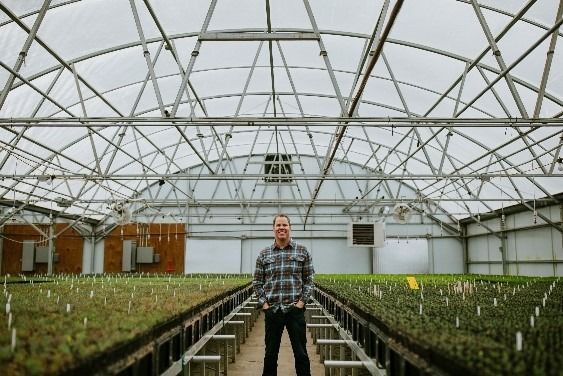
Kevin Brinkman, Founder & CEO of OneCanopy, stands amidst the 34,000-square-foot nursery in Loveland, Colorado.

Upon reading the article, Colorado-based entrepreneur and passionate conservationist Kevin Brinkman felt compelled to act and founded OneCanopy, Colorado’s first reforestation company. Envisioning a world in which human’s relationship with the environment is symbiotic and supportive, the company aims to engage in all facets of the reforestation pipeline, beginning with a seedling nursery growing plants that are native to the Rocky Mountain region. In their inaugural year, OneCanopy has produced over 300,000 seedlings which will go to support wildfire and river restoration, soil conservation, and food sovereignty efforts.

The flexibility that comes with being a private entity allows OneCanopy to broaden collaborations and tailor their services to meet the needs of their customers . OneCanopy’s client list is broad and includes federal, state, and local governments, nonprofits, tribal agencies, and private landowners. Over time, OneCanopy plans to add project financing and implementation, seed collection, outplanting, and post-project monitoring to their list of services. Their goal is to serve as a “one stop shop” for reforestation in the Rocky Mountains.

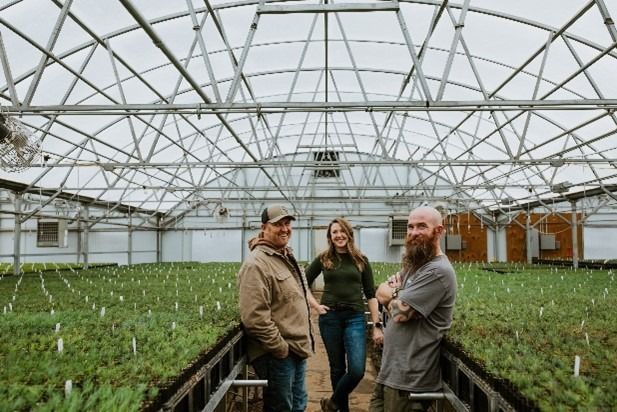
Photo of One Canopy staff in the greenhouse

Recognizing the importance of community within reforestation, OneCanopy has positioned itself as a social enterprise where profits are reinvested in the company in order to expand their reforestation and restoration potential. They also have community impact goals focused on education, volunteer opportunities, nonprofit support, and skilled workforce training, to further strengthen the larger reforestation community and pipeline.

As the climate continues to change and instances of catastrophic disturbance increase, human-assisted reforestation is proving critical to sustaining our forested ecosystems. Innovative and sustainable solutions are needed to address this complex and pressing issue. OneCanopy hopes to serve as a model for how private industry can play a role in reforestation in the Rocky Mountain region. 

References:


Fargione, J., Haase, D., Burney, O., Kildisheva, O., Edge, G., Cook-Patton, S., Chapman, T., Rempel, A., Hurteau, M., Davis, K., Dobrowski, S., Enebak, S., De La Torre, R., Bhuta, A., Cubbage, F., Kittler, B., Zhang, D. and Guldin, R. (2021). Challenges to the Reforestation Pipeline in the United States. Frontiers in Forests and Global Change, 4. https://doi.org/10.3389/ffgc.2021.629198

Recent Posts

By Aidan Juhl April 16, 2026
Written by Colleen Robinson
April 14, 2026
Written by Shannon Maes
April 14, 2026
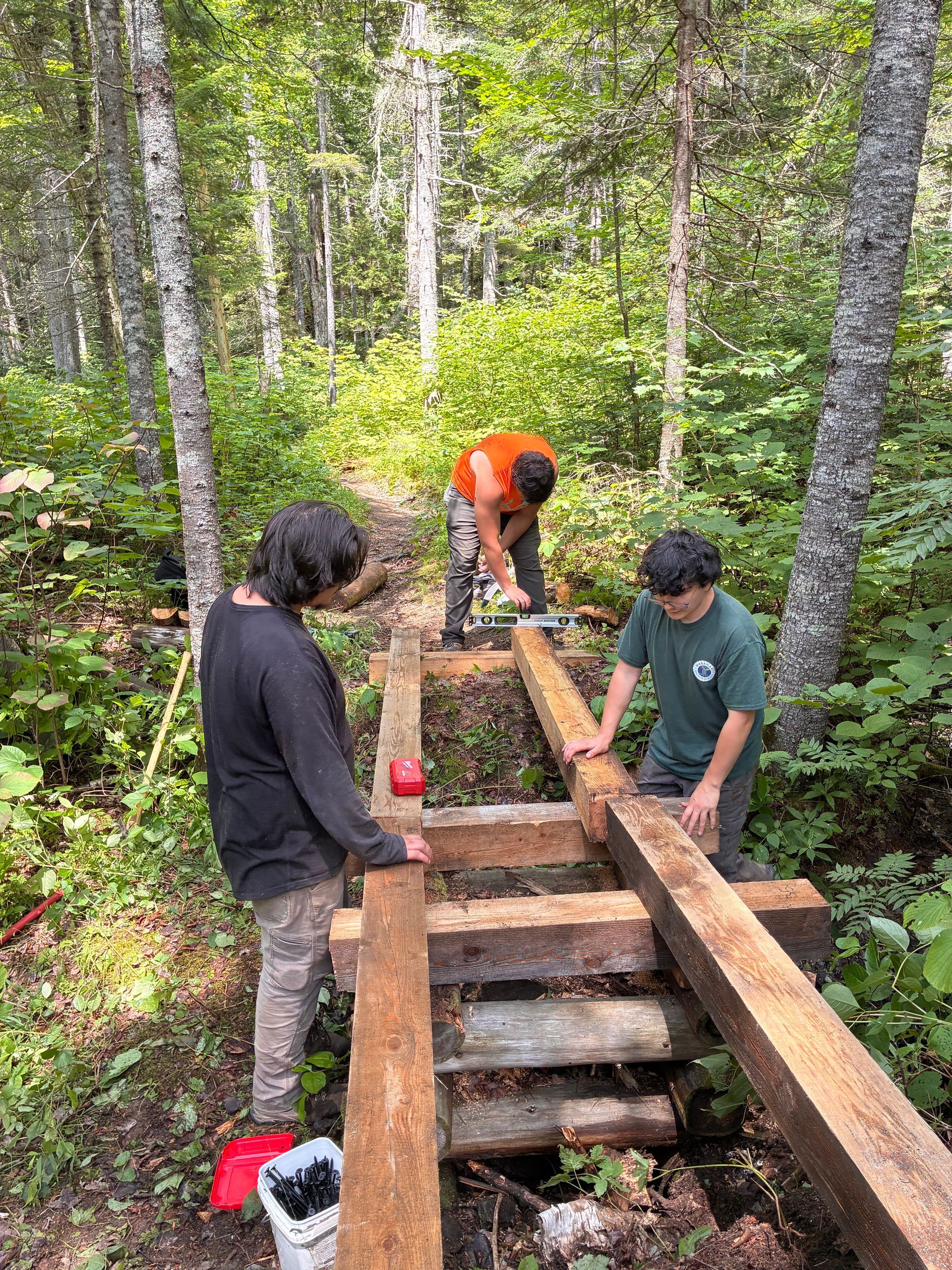
In September 2025, the Guild launched a three-person Forest Stewards Apprenticeship (FSA) crew to work with the Penobscot Nation’s Department of Natural Resources (PN DNR). Over the course of their six-month season, apprentices Agenor Duhon, Gabe Stewart, and Jacob Baker shared a season of learning, collaboration, and hands-on stewardship of Penobscot Tribal lands.
April 14, 2026
This week, I stepped into the role of crew leader. We worked a full 40-hour week, splitting our time between Clifton Farms and a prescribed burn operation. On the first day in the field, we completed hack-and-squirt treatments on trees that had been marked the previous week. For the remainder of the week, we focused on marking trees for future hack-and-squirt work, maintaining a steady pace and ensuring accuracy in our selections.
April 7, 2026
As Guild members, our practice is fundamentally grounded in field observation. We know intuitively that forests are dynamic, living communities. Yet, for decades, the high-level systems used to value our work, specifically the carbon accounting ledgers tied to international frameworks like the Paris Agreement, have treated forests as static, quantifiable blocks of land. In a recent commentary published in One Earth, I argue that these legacy measurement, reporting, and verification (MRV) frameworks are failing. Ledger accounting relies on crude land-use delineations and outdated technology, effectively penalizing the natural, seasonal flux of the ecosystems we manage every day. By forcing landscapes into rigid “forest” versus “non-forest” binaries, such legacy systems miss the complex reality on the ground. But a major shift is underway.
March 18, 2026
Women have always been a part of forestry. Historically, women often helped guide family decisions about when to cut, which trees to save, and how best to steward their land for the next generation. Historical accounts from the Southern Appalachians describe women’s roles in decisions about timber harvesting and prioritizing long-term forest health. These often-uncredited contributions are even reflected in Aldo Leopold’s A Sand County Almanac (1949), in which describes his stewardship philosophy informed not only by his professional experience, but by shared responsibility, where the perspectives of his wife and daughters played an important role.
March 18, 2026
Although rural regions often host the highest concentrations of public and private forest land, they typically lack the sustainable workforce necessary for active management and stewardship. How do we address this foundational problem in forest conservation?
March 18, 2026
The Forest Stewards Guild has a unique dual mandate: practice and promote forest stewardship. Personally, I think the combination of practicing forest management and promoting best practices is what makes the Guild a vibrant and impactful organization.
February 17, 2026
We celebrate the remarkable career and legacy of Leslie (Les) Benedict, who has provided visionary leadership and dedicated service to the stewardship of forests, championing the preservation of the ecological and culturally important black ash. Benedict, a member of the Saint Regis Mohawk Tribe in Akwesasne, north of the Adirondacks in upstate New York, recently retired after serving as the Assistant Director of the Tribe’s Environment Division for over 35 years.
February 17, 2026
The Forest Stewards Guild has been working to support the National Park Service on forest stewardship projects throughout the eastern U.S. This month we are in the midst of a project to protect mounds at Effigy Mounds National Monument near Harpers Ferry Iowa. This site was designated as a National Monument in 1949 and preserves over 200 mounds built between 800 and 2,500 years ago. Mounds at this site include conical, linear, compound, and effigy mounds – constructed in the shape of animals. Please see the National Park Service page for more information about the mounds, the people who built them, and how to visit the site. The lidar images on that website of the Marching Bears and other mound groups are fascinating.
Show More