A Guild Inspired Business Offers Opportunities

February 15, 2019

Transfer to new leadership is occurring each year, as many business owners near retirement. This includes privately-owned forest-based businesses inspired by the goals and values of the Forest Stewards Guild.

It is critical to protect the spectrum of values that many small businesses offer to forests by providing management and critical operational services, producing useful wood products, and adapting to meet the challenges of today’s economy. It is important that these businesses continue and prosper, which requires especially hard-working and motivated people.

Successful transition can be difficult and depends on finding people with a high level of interest, a wide range of skills, leadership, and drive to succeed. And support from on-the-job training, mentoring, and initial finances.

Such opportunities are available now at Greenleaf Forest and Wood Products in Colorado. Guild members and those who share the vision of the Guild are especially encouraged to explore what is possible by reading more here and getting in touch.

Read on to learn a little background on the business and the current opportunity.

Written by Len Lankford, owner of Greenleaf Forest and Wood Products: In 1975, as a young college-trained forester, I moved to Westcliffe, Colorado with my family. There I founded and molded a private forestry company, based in the small mountain town. It was a true pioneering effort, where no one knew what a private forester was, let alone understood the potential that awaited fulfillment on substantial areas of private forest land.

I had to develop a consulting practice and find ways to operate as a business. Research was done, advice found, contacts cultivated, obstacles and skepticism surmounted and allies formed. It took three years to get the first client! Then more came along, generally within a 100 mile radius that included rural mountains to tracts and subdivisions in the Black Forest, near Colorado Springs.

In 1993, I was invited to be a founding member of the Forest Stewards Guild. The first meeting in Santa Fe was very powerful. The Guild and National Network of Forest Practitioners (NNFP) inspired me over subsequent years of meetings and tours to convert my consulting and private forest management business in Colorado into a unique combination of professional forestry operations and wood manufacturing.

They instilled in me the mission of community and “putting the forest first.” That meant all of it. By the mid – 1990’s I aimed to better practice what I learned at Yale School of Forestry (Master of Forestry – silviculture), Stephen F. Austin (Bachelor of Forestry – forest management), and from nearly 20 years of on-the-ground experience managing private Colorado forests.

Broader community objectives, and innovative wood product utilization and marketing, were added – including nursery and forestry operations, and especially a sawmill. But this was not an ordinary small band-sawmill. It featured huge circular antique saw blades. The mill, a pole peeler, and other equipment were all run by diesel engines, off the grid.

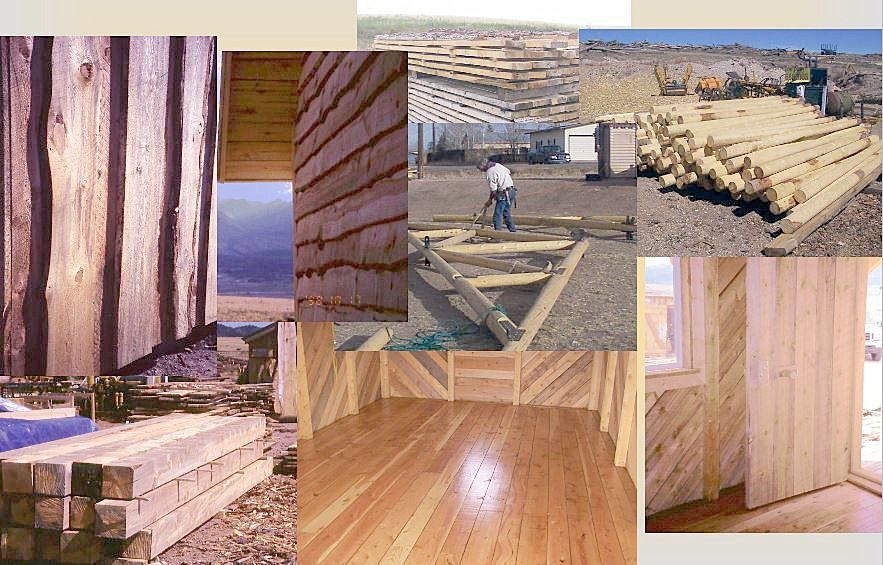
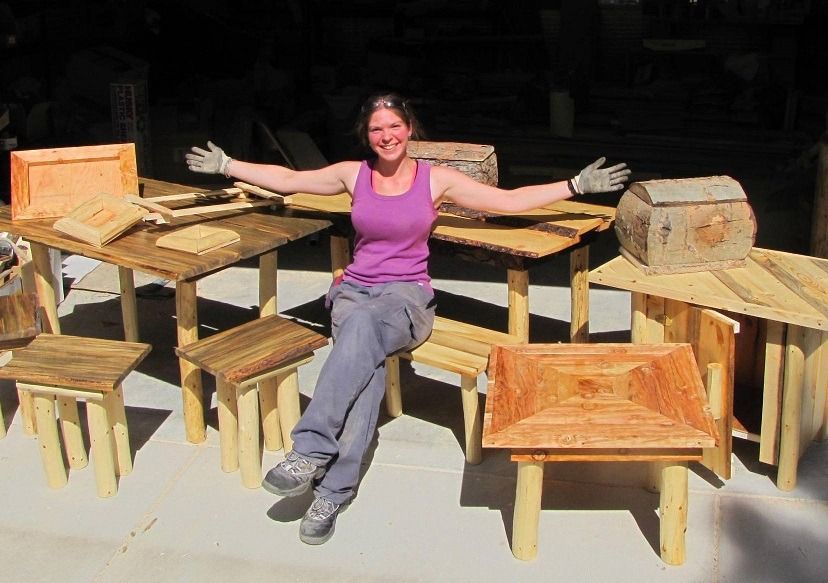
Since 1994 this enterprise has grown into a full-circle integrated private forestry business offering circular-sawn, roundwood, and other wood products. It allows harvesting and utilization of lower-grade timber that other mills will not accept, but that are important for forest improvement – “putting the forest first!”

Trees are harvested using selective, environmentally responsible and aesthetic forest treatments that mimic and complement natural processes. Wood processing is inherent for value-added character, not volume. Wood cut and “rescued” after wildfire and beetle infestation is especially valuable. Some private forests thinned 30-40 years ago are ready for another selective harvest, and nurseries planted continuously for 25 years provide young trees for transplant tree sales.

This is a sustainable enterprise integrating the values and attributes of community, environment and economics. All in dynamic balance – all in operation in 2019.

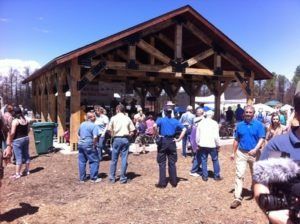
Four decades of legwork and development have created the physical and economic framework of sustainable service and product work. There are amazing forest results in four Colorado counties. And examples of grant-funded park pavilions in Westcliffe and Black Forest demonstrating use of small diameter wood and larger timbers sawmilled from the 2013 Black Forest Fire.

Hundreds of projects in private homes and businesses, in Colorado and across the Nation, utilize many tree species and products coming from Greenleaf for cabins, barns, furniture, mantels, accent walls, paneling, and decorative wood uses. Locals come almost daily for firewood.

In 2004, I gave an invited Power Point presentation to the US Forest Service Chief’s Office on a vision of Integrated Community-Based Private Forestry, sharing these ideas also with the Congressional Conference Committee staff leader. I advocated that grants should not only go to agencies and non-profits, but also to small businesses that could achieve important, sustainable forestry goals in local communities.

The U. S. Forest Products Lab began to offer such grants, and in 2006 Greenleaf was awarded a Woody Biomass Utilization Grant (WBUG). The equipment purchased with that grant is still in use and very important to our success.

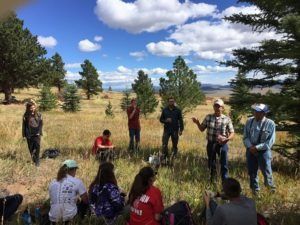
Giving back to the community has included young people from the US and from other countries gaining valuable experience through Greenleaf’s Summer Intern Program. Greenleaf has trained large numbers of forest and mill employees over the years, and educated many landowners and woodcutters.

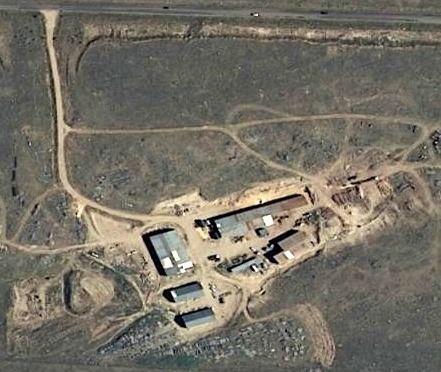
The business now has an 80-acre campus with five buildings housing the sawmill, a large log and lumber yard, and other operations in Westcliffe, a workforce of 3-5 people, several subcontractors, cooperating loggers, timber contracts and service work on private forests, nurseries, a leased retail outlet in the Colorado Springs area, and a huge potential for continued growth.

It proudly serves local forest landowners and nationwide wood product customers. It is a for-profit business, thankful for initial grant support, and is now self-sufficient and innovative. It thrives with loyal clients, customers, and workforce.

The business is open for transition to new leadership and possible gradual ownership. It may take building a leadership team. With mentoring, training, and financial help.

  • Is it difficult and challenging? Yes.
  • Does it have hands-on involvement? Yes.
  • Is it worth it? Yes!

Why do this? First to live and work in beautiful mountains and forests. Next, to be your own boss and work in the private sector, and to practice hands-on real forestry including the personal rewards of serving small and large landowners who prize every square inch of their property. And, perhaps most important, is to serve a mission beyond one’s self — practicing truly integrated community-based forestry. Concept details are explained in the online  www.greenleafforestry.com  “About Us” pages.

This is a limitless opportunity that will be shaped by the applicant’s abilities and vision. If you are interested, submit your resume and introduction letter to Len Lankford,  len.at.greenleaf@gmail.com  , and call him at 719-429-4404.

Recent Posts

By Aidan Juhl April 16, 2026
Written by Colleen Robinson
April 14, 2026
Written by Shannon Maes
April 14, 2026
In September 2025, the Guild launched a three-person Forest Stewards Apprenticeship (FSA) crew to work with the Penobscot Nation’s Department of Natural Resources (PN DNR). Over the course of their six-month season, apprentices Agenor Duhon, Gabe Stewart, and Jacob Baker shared a season of learning, collaboration, and hands-on stewardship of Penobscot Tribal lands.
April 14, 2026
This week, I stepped into the role of crew leader. We worked a full 40-hour week, splitting our time between Clifton Farms and a prescribed burn operation. On the first day in the field, we completed hack-and-squirt treatments on trees that had been marked the previous week. For the remainder of the week, we focused on marking trees for future hack-and-squirt work, maintaining a steady pace and ensuring accuracy in our selections.
April 7, 2026
As Guild members, our practice is fundamentally grounded in field observation. We know intuitively that forests are dynamic, living communities. Yet, for decades, the high-level systems used to value our work, specifically the carbon accounting ledgers tied to international frameworks like the Paris Agreement, have treated forests as static, quantifiable blocks of land. In a recent commentary published in One Earth, I argue that these legacy measurement, reporting, and verification (MRV) frameworks are failing. Ledger accounting relies on crude land-use delineations and outdated technology, effectively penalizing the natural, seasonal flux of the ecosystems we manage every day. By forcing landscapes into rigid “forest” versus “non-forest” binaries, such legacy systems miss the complex reality on the ground. But a major shift is underway.
March 18, 2026
Women have always been a part of forestry. Historically, women often helped guide family decisions about when to cut, which trees to save, and how best to steward their land for the next generation. Historical accounts from the Southern Appalachians describe women’s roles in decisions about timber harvesting and prioritizing long-term forest health. These often-uncredited contributions are even reflected in Aldo Leopold’s A Sand County Almanac (1949), in which describes his stewardship philosophy informed not only by his professional experience, but by shared responsibility, where the perspectives of his wife and daughters played an important role.
March 18, 2026
Although rural regions often host the highest concentrations of public and private forest land, they typically lack the sustainable workforce necessary for active management and stewardship. How do we address this foundational problem in forest conservation?
March 18, 2026
The Forest Stewards Guild has a unique dual mandate: practice and promote forest stewardship. Personally, I think the combination of practicing forest management and promoting best practices is what makes the Guild a vibrant and impactful organization.
February 17, 2026
We celebrate the remarkable career and legacy of Leslie (Les) Benedict, who has provided visionary leadership and dedicated service to the stewardship of forests, championing the preservation of the ecological and culturally important black ash. Benedict, a member of the Saint Regis Mohawk Tribe in Akwesasne, north of the Adirondacks in upstate New York, recently retired after serving as the Assistant Director of the Tribe’s Environment Division for over 35 years.
February 17, 2026
The Forest Stewards Guild has been working to support the National Park Service on forest stewardship projects throughout the eastern U.S. This month we are in the midst of a project to protect mounds at Effigy Mounds National Monument near Harpers Ferry Iowa. This site was designated as a National Monument in 1949 and preserves over 200 mounds built between 800 and 2,500 years ago. Mounds at this site include conical, linear, compound, and effigy mounds – constructed in the shape of animals. Please see the National Park Service page for more information about the mounds, the people who built them, and how to visit the site. The lidar images on that website of the Marching Bears and other mound groups are fascinating.
Show More