A Career Highlight of Guild Member Michael T. Mangum

May 15, 2024

Written by Michael T. Mangum 

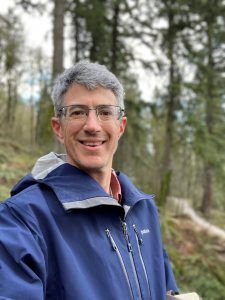
I retired April 1, 2024 after 47 years (1977-2024) of a fulfilling career in Ocean County Parks & Recreation Department. After attending the University of Vermont and obtaining a degree in Parks & Recreation with a minor in Forestry, I started at the bottom as a Park Naturalist and worked my way up to Director in 2003.

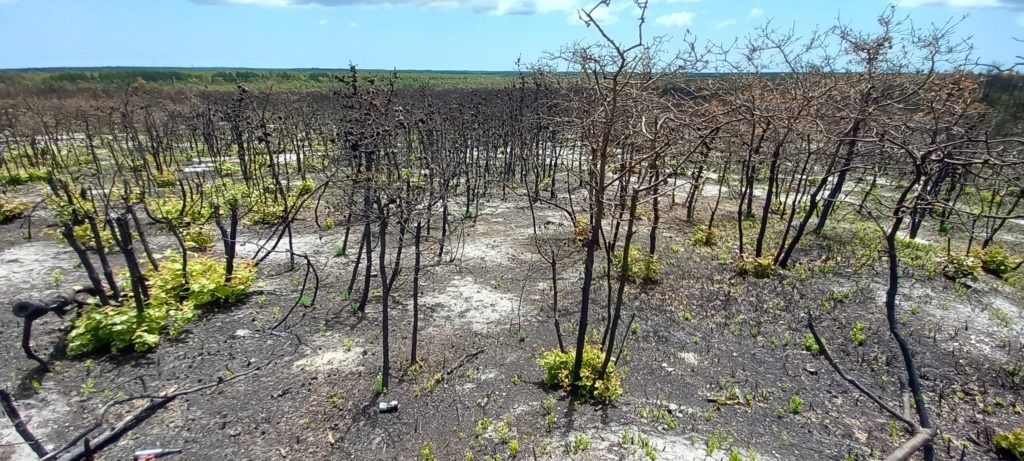
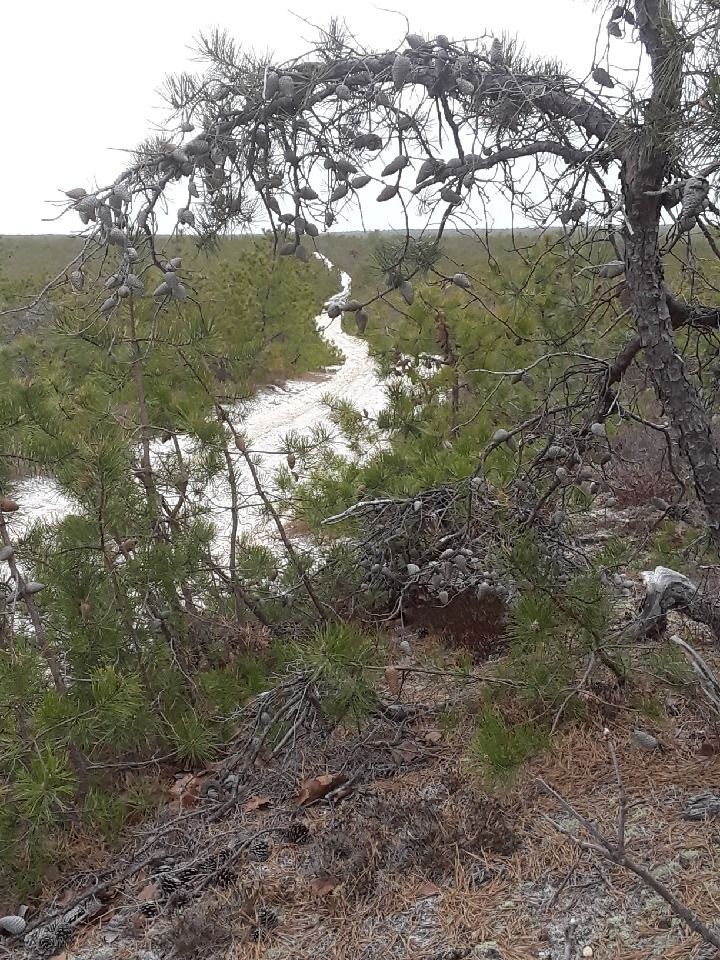
The Ocean County Parks system consists of about 35,000 acres, most of which are undeveloped forest lands. Ocean County sits on the eastern side of South Jersey along the Atlantic Ocean and barrier islands. Maritime Forest is an important component of this area, however, the bulk of our forest lands are within the New Jersey Pine Barrens and the Pinelands National Reserve. The New Jersey Pine Barrens are one of the most volatile fire dependent forests in the country. While about 60% of the County is preserved by Federal, State, County, Municipal and Non-profit lands, the population of the County has exploded in recent decades. This development has caused the Wildland Urban Interface to increase dramatically, presenting many challenges. When I grew up in Ocean County it was mostly forests and farms. Forest fires were always a part of our culture. I have never forgotten one event from when I was 8 years old that has guided me in my career. April 20, 1963 is “Black Saturday,” when 127 fires burned 183,000 acres over 3 days in this area. 400 structures were destroyed. Development was sparse then. Today these circumstances would be an incredible disaster.


The NJ Pine Barrens have had a long history of fire. Today many environmentalists think the forest should remain untouched. These ideas have led to overstocked, unhealthy forests with high fuel loads which increase the potential for disaster. The idea of keeping fire out of the forest began with Gifford Pinchot. One of his first jobs as a professional forester was as a forest consultant to the NJ Dept. of Geology – the forerunner of the Dept. of Environmental Protection. He saw the devastation that fire created in South Jersey first hand. When he became the first head of the US Forest Service he believed fire needed to be kept off the landscape. Eventually he changed his view, but this influenced decades of policy here in South Jersey.

The NJ Pine Barrens have had a long history of fire. Today many environmentalists think the forest should remain untouched. These ideas have led to overstocked, unhealthy forests with high fuel loads which increase the potential for disaster. The idea of keeping fire out of the forest began with Gifford Pinchot. One of his first jobs as a professional forester was as a forest consultant to the NJ Dept. of Geology – the forerunner of the Dept. of Environmental Protection. He saw the devastation that fire created in South Jersey first hand. When he became the first head of the US Forest Service he believed fire needed to be kept off the landscape. Eventually he changed his view, but this influenced decades of policy here in South Jersey.

The Pine Barrens were always a human influenced forest. Native Americans were here when it was tundra. As the glaciers receded from northern NJ and forests began to grow they burned them on an annual basis to improve hunting, ease travel, and for agricultural reasons. This shaped the landscape and favored fire dependent species. When the settlers first came they found a forest similar to a healthy Ponderosa Pine Forest – open and interspersed by grass and elk. Today, due to overstocked forests the threat of wildfire is greater than ever. These forests are also more susceptible to Southern Pine Beetle, Spongy Moth, and Pine Looper infestations and other issues. In addition, the loss of historical habitats has caused species like Bob White Quail to all but disappear and forced endangered species to fringe areas.

I believe we have a responsibility to manage our forest lands to improve forest health and mitigate the danger of wildfire in the W.U.I. Over 30 years, I built a close relationship with the NJ Forest Fire Service (one of the oldest Wildland Fire Fighting Agencies in the country). We work closely with them mitigating hazards and putting fire back on the landscape. The work we do with them has a secondary benefit of improving forest health. My department develops burn plans and trains staff to conduct prescribe burns with the Forest Fire Service. In addition to my work with the County, I also serve as a Special District Fire Warden. My department has developed and implements Forest Stewardship Plans. A current one encompasses almost 13,000 acres in the Forked River Mountains Area (they are hills under 200 ft.). The objectives include improving forest health, improving conditions for endangered species, and wildfire mitigation.

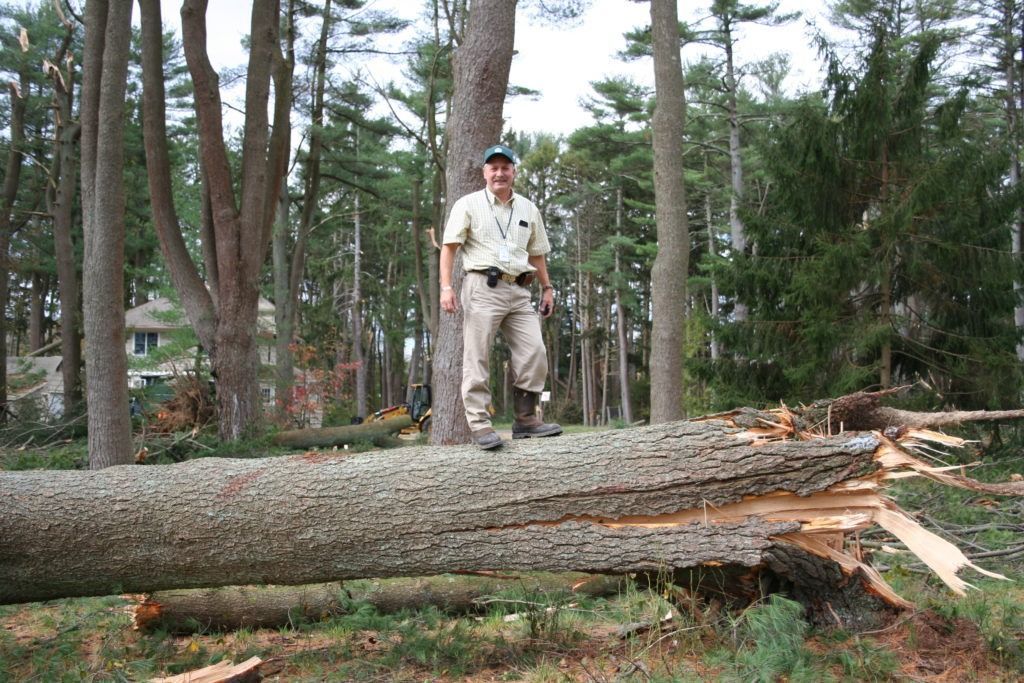
One of my greatest challenges as Director was the aftermath of Hurricane Sandy which devastated Ocean County. In addition to extensive damage to the Park System’s infrastructure, tens of thousands of trees were blown over or damaged which caused parks to be closed for many months. Urban forestry and hazard tree mitigation is a daily part of life when running a park system. However, Hurricane Sandy overwhelmed our ability as a department to deal with the cleanup. In addition, while Pitch Pine is a resilient and very adaptable tree, prolonged saltwater inundation after Sandy stressed these trees and led to a Southern Pine Beetle infestation along the coastal forests which killed a significant percentage of these pines. These forests are just now recovering.

Lastly, I would be remiss without mentioning the role environmental and historical education/interpretation plays in our Park System. With so many new people moving to our county who have not grown up with an understanding of how our ecosystems work and the role humans play, educating the public is one of our prime missions. Among the many things we teach through our environmental education facilities is the role fire plays, Pine Barrens ecology, folklore, and traditional uses of the landscape.

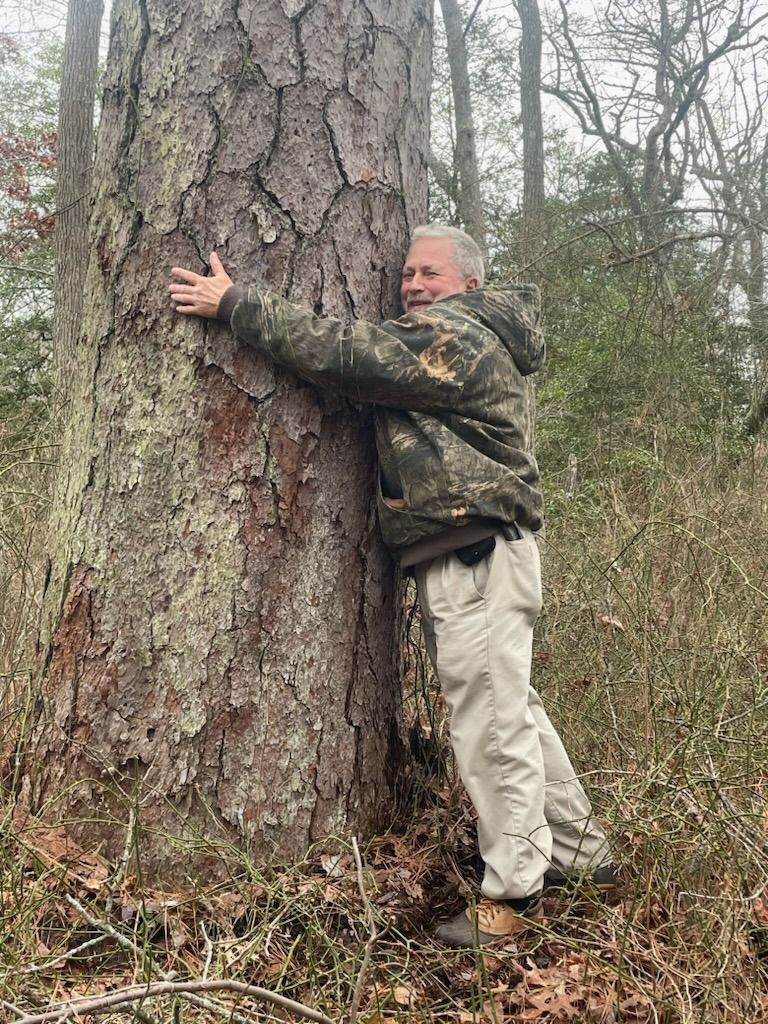
I plan to keep active in retirement. I enjoy fishing, hunting, camping, hiking & sea kayaking. I will be busy on the County Natural Lands Trust and Shade Tree Commission. I lived the dream with the support of my family and worked with many phenomenal staff over the years to accomplish many things. I am truly blessed by God!

Recent Posts

By Aidan Juhl April 16, 2026
Written by Colleen Robinson
April 14, 2026
Written by Shannon Maes
April 14, 2026
In September 2025, the Guild launched a three-person Forest Stewards Apprenticeship (FSA) crew to work with the Penobscot Nation’s Department of Natural Resources (PN DNR). Over the course of their six-month season, apprentices Agenor Duhon, Gabe Stewart, and Jacob Baker shared a season of learning, collaboration, and hands-on stewardship of Penobscot Tribal lands.
April 14, 2026
This week, I stepped into the role of crew leader. We worked a full 40-hour week, splitting our time between Clifton Farms and a prescribed burn operation. On the first day in the field, we completed hack-and-squirt treatments on trees that had been marked the previous week. For the remainder of the week, we focused on marking trees for future hack-and-squirt work, maintaining a steady pace and ensuring accuracy in our selections.
April 7, 2026
As Guild members, our practice is fundamentally grounded in field observation. We know intuitively that forests are dynamic, living communities. Yet, for decades, the high-level systems used to value our work, specifically the carbon accounting ledgers tied to international frameworks like the Paris Agreement, have treated forests as static, quantifiable blocks of land. In a recent commentary published in One Earth, I argue that these legacy measurement, reporting, and verification (MRV) frameworks are failing. Ledger accounting relies on crude land-use delineations and outdated technology, effectively penalizing the natural, seasonal flux of the ecosystems we manage every day. By forcing landscapes into rigid “forest” versus “non-forest” binaries, such legacy systems miss the complex reality on the ground. But a major shift is underway.
March 18, 2026
Women have always been a part of forestry. Historically, women often helped guide family decisions about when to cut, which trees to save, and how best to steward their land for the next generation. Historical accounts from the Southern Appalachians describe women’s roles in decisions about timber harvesting and prioritizing long-term forest health. These often-uncredited contributions are even reflected in Aldo Leopold’s A Sand County Almanac (1949), in which describes his stewardship philosophy informed not only by his professional experience, but by shared responsibility, where the perspectives of his wife and daughters played an important role.
March 18, 2026
Although rural regions often host the highest concentrations of public and private forest land, they typically lack the sustainable workforce necessary for active management and stewardship. How do we address this foundational problem in forest conservation?
March 18, 2026
The Forest Stewards Guild has a unique dual mandate: practice and promote forest stewardship. Personally, I think the combination of practicing forest management and promoting best practices is what makes the Guild a vibrant and impactful organization.
February 17, 2026
We celebrate the remarkable career and legacy of Leslie (Les) Benedict, who has provided visionary leadership and dedicated service to the stewardship of forests, championing the preservation of the ecological and culturally important black ash. Benedict, a member of the Saint Regis Mohawk Tribe in Akwesasne, north of the Adirondacks in upstate New York, recently retired after serving as the Assistant Director of the Tribe’s Environment Division for over 35 years.
February 17, 2026
The Forest Stewards Guild has been working to support the National Park Service on forest stewardship projects throughout the eastern U.S. This month we are in the midst of a project to protect mounds at Effigy Mounds National Monument near Harpers Ferry Iowa. This site was designated as a National Monument in 1949 and preserves over 200 mounds built between 800 and 2,500 years ago. Mounds at this site include conical, linear, compound, and effigy mounds – constructed in the shape of animals. Please see the National Park Service page for more information about the mounds, the people who built them, and how to visit the site. The lidar images on that website of the Marching Bears and other mound groups are fascinating.
Show More